

Hollywood’s 2025 box office made one thing very clear. When studios trust filmmakers and stop chasing every worn-out brand, audiences respond. Variety’s own box office report card” shows that Warner Bros. did exactly that, and it paid off in a way Disney and others could not match.
Variety opens its piece with a simple snapshot of the year: “In 2025, family films flourished, video game adaptations triumphed, and superheroes flew too close to the sun.” That one line sums up a marketplace where families and gamers showed up, while caped franchises struggled to justify massive budgets. Inside that landscape, Warner Bros. is described as having “enjoyed an epic run at the box office, fielding hits as diverse as a vampire flick set in the Jim Crow South (‘Sinners’), an old-school star-driven racing drama (‘F1: The Movie’) and a sandbox-game-turned-big-screen-smash (‘A Minecraft Movie’).”
And those numbers were not small. Variety’s studio breakdown lists “A Minecraft Movie” at $958 million on a $150 million budget, “Sinners” at $367 million on a $90 million budget, and “F1: The Movie” at $631 million with Apple fronting a production bill above $250 million. “Final Destination Bloodlines” pulled in $315 million on $50 million, “Superman” made $616 million on $224 million, and “Weapons” earned $268 million on just $38 million. In other words, Warner Bros. combined strong openings with budgets that did not spin completely out of control.
Seven releases in a row, from video game hit A Minecraft Movie to Ryan Coogler’s vampire thriller Sinners, “opened above $40 million domestically, a first in Hollywood history.” The Paul Thomas Anderson film One Battle After Another was not a financial win at $204 million on a $140 million budget. In fact, it may have earned its failure due to its left-wing nihilistic take on the world, but it still achieved a milestone by getting adult audiences to theaters for original fare and is currently a leading Oscar contender.
Variety’s score for Warner Bros. a straight A.
Compare that to Disney’s report card. Variety lists three likely billion-dollar hits: live-action Lilo & Stitch at $1.03 billion on a $100 million budget, Zootopia 2 at $1.31 billion on $150 million, and Avatar: Fire and Ash at $506 million and still climbing on a budget above $250 million. The article concedes that Disney “stands out as the only studio to cross a combined $6 billion globally” in 2025. Yet the same piece warns that the rest of the slate is weighed down by underperformers: Captain America: Brave New World at $415 million on $180 million, Snow White at $205 million on $250 million, Elio at $154 million on $150 million, Tron: Ares at $142 million on $180 million, Predator: Badlands at $181 million on $105 million, and Ella McCay at $4 million on $35 million, which was so bad, Disney opted to cancel some overseas runs for it.
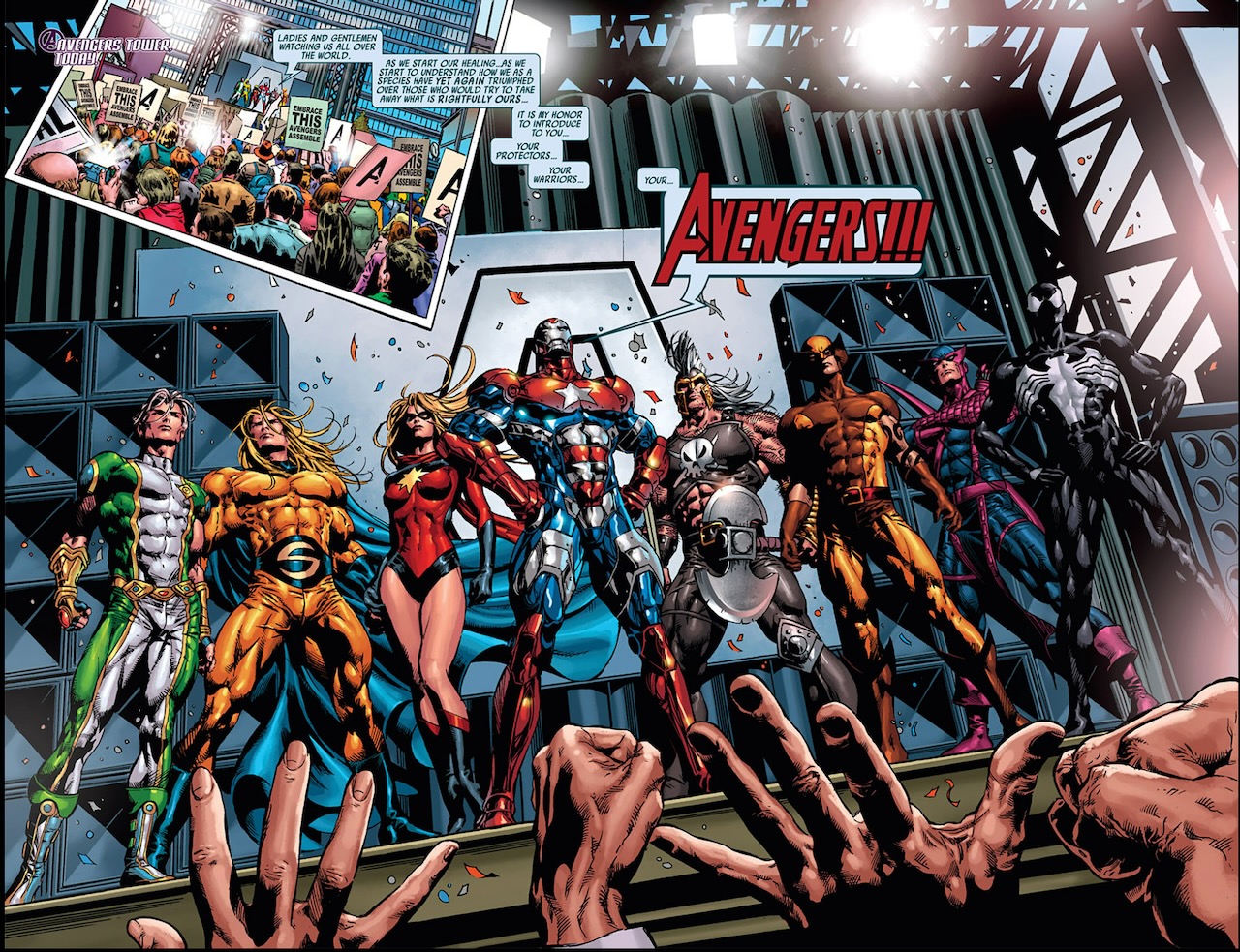
Disney deserves some props for its billion-dollar winners, like Lilo & Stitch, Zootopia 2, and the new Avatar, but long dependable Marvel continued its lousy streak, with three consecutive bombs including Captain America: Brave New World, and a gay-coded animated movie like Elio proved that Pixar can no longer launch fresh original hits. As for Snow White, Tron: Ares, and Predator: Badlands, to a lesser degree, proved some aging properties are better left in the vault. Variety points out what should be obvious: “Brand recognition doesn’t equal box office dollars.” Variety still labels Disney’s overall grade a “B,” but the write-up reads more like a caution than a victory lap.
Paramount didn’t fare much better. Variety credits the studio with a few modest winners: Smurfs at $124 million on a $58 million budget, The Naked Gun at $102 million on $42 million, and Regretting You at $90.4 million on $30 million. But the big swings hurt. Mission: Impossible – The Final Reckoning is listed at $598 million against a huge $400 million cost, and The Running Man made $68 million on $105 million. The studio spent much of the year in limbo while regulators reviewed the sale to Skydance, and that executives who expected to be pushed out were simply treading water. The days of Tom Cruise being handed a blank check are over at Paramount. Can new management get their grade above a C?
Outside the traditional “Big Three,” and the picture was also mixed. Sony avoided disaster by keeping costs under control and leaning into anime, with titles like Demon Slayer: Infinity Castle and Chainsaw Man delivering strong returns on modest budgets, and mid-priced projects like One of Them Days, Karate Kid: Legend, and I Know What You Did Last Summer managing “modest grosses” instead of outright flops. As Variety said, Sony had “no home runs” but “also avoided any strikeouts,” which is another way of saying the studio played small ball while others chased giant tentpoles that sometimes collapsed. Universal, by contrast, doubled down on sequels and reboots with How to Train Your Dragon, Jurassic World Rebirth, Wicked: For Good, and Five Nights at Freddy’s 2, and Donna Langley’s team allowed their established franchises to “deliver in a big way” while keeping the failures like Wolf Man and M3GAN 2.0 relatively cheap.
A24 tried to move up into major-studio territory and learned how unforgiving that move can be. “The Smashing Machine,” with Dwayne Johnson in a darker, dramatic role, and Ari Aster’s COVID-era satire “Eddington” were two expensive gambles that did not attract either mainstream crowds or enough art-house support, turning them into some of the year’s bigger misses. At the same time, A24 still found its old magic with lower-cost titles like Materialists, Bring Her Back, and Eternity, and the studio is hoping table-tennis drama Marty Supreme can “end things on a high note” and earn “extra credit.”
Disney leaned heavily on familiar brands and billion-dollar expectations, then watched a long list of expensive projects stall or bottom out. Warner Bros. stuck to a different playbook, backing directors, original stories, and a mix of genre bets that did not depend on tired franchises. They earned that “A” by giving viewers something new. Disney and Paramount are still trying to convince audiences that the same old formula is worth the ticket price. Taken together with Warner Bros.’ “A,” Disney’s uneasy “B,” Sony’s steady “B,” Universal’s “B+,” Paramount’s “C,” and A24’s “B-,” Variety’s report card reads less like a Hollywood victory parade and more like a warning: audiences are rewarding disciplined budgets, fresh ideas, and real variety, not endless nostalgia and bloated franchise spending.
***
---01.jpg)








 English (US) ·