
Family, Damage Control, and the Mess Peter Cannot Punch Away
The Amazing Spider-Man #33 is a great example of how a Spider-Man comic can juggle superhero spectacle with deeply personal drama. Joe Kelly gives us an energetic battle against Jack O’Lantern, the beginning of a complicated relationship with Damage Control, an emotional continuation of the Cormac Crane revelation, and a heartbreaking look at what Dr. Maira Osmani-Milton and her son Kenji are enduring. Ed McGuinness, Mark Farmer, and Marcio Menyz bring all of it to life with appropriately huge action and surprisingly intimate character work.
PROS
CORMAC CRANE CONTINUES TO COMPLICATE THE PARKER FAMILY
The biggest strength of this issue is how it handles Cormac Crane, the man recently revealed to be the son May and Ben Parker were told had died at birth. Cormac is charming, generous, successful, and genuinely interested in reconnecting with May.
That makes Peter’s discomfort far more interesting.
Peter does not necessarily hate Cormac, but he does not know what to do with him. Here is a stranger entering the most important relationship in Peter’s life, calling May family and giving her the kind of financial security Peter has never been able to provide. Cormac even offers enough money to keep F.E.A.S.T. operating for decades, explaining that wealth means little if it cannot be used to help people.
It is almost too perfect.
The most painful moment comes when Peter returns and silently watches May embrace Cormac. Hearing her refer to him as her son clearly affects Peter. He knows she will turn around, smile, and welcome him too, but he slips away instead. Peter is not being replaced, yet emotionally, it briefly feels that way. It is a quiet, complicated reaction that feels completely human.
SPIDER-MAN DUTY INTERRUPTS PETER PARKER’S LIFE—AGAIN
There is something wonderfully classic about Peter attending an important family gathering in borrowed clothes, attempting to behave normally, only for a nearby emergency to drag him away.
Cormac jokingly asks whether Peter has to “work,” fully aware that Peter is Spider-Man. Peter tries to remain with May, but once the sirens begin, he cannot ignore them. May understands immediately and gives him permission to go.
That single sequence captures Peter Parker perfectly. He wants to be present for his family. He knows May is going through something enormous. Yet when people are in danger, leaving is not really a choice. Responsibility wins again, even when answering the call may cost him another important personal moment.
THE JACK O’LANTERN FIGHT IS BIG, FAST, AND SMART
Ed McGuinness was born to draw a sequence like this.
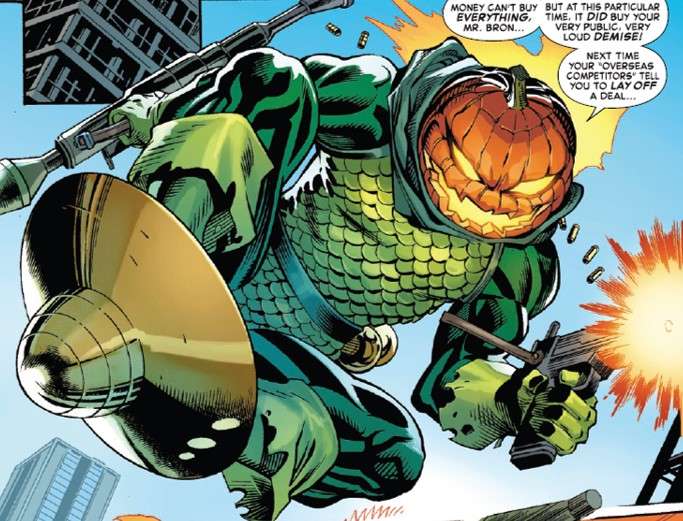
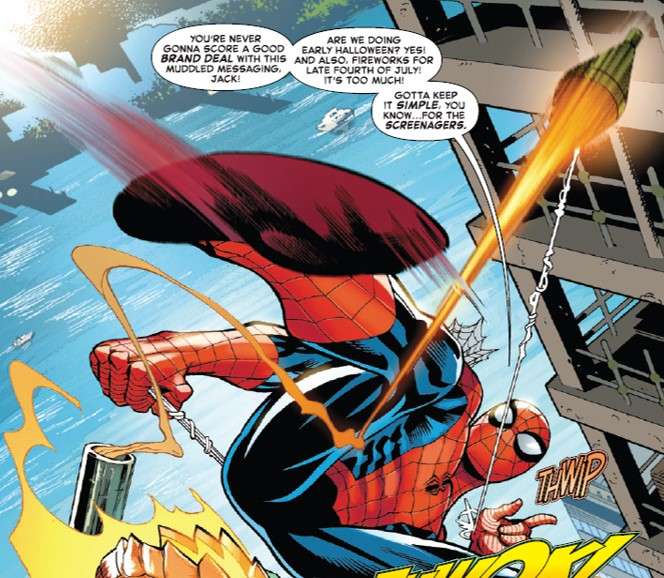
Jack O’Lantern barrels through the city with guns, explosives, rockets, and enough firepower to turn the fight into complete chaos. Spider-Man moves through it all with speed and elasticity, webbing weapons, redirecting attacks, and constantly joking even while calculating how to survive.
The best part is that Peter does not win through strength alone. It is a very Spider-Man solution: reckless-looking improvisation backed by a brilliant scientific mind…. with a little help from his friends.
Peter’s quips also work because they feel natural rather than inserted simply to remind us that Spider-Man is funny. His jokes, annoyance at the missiles, and running commentary give the action personality without weakening the danger.
DAMAGE CONTROL IS MORE THAN A BACKGROUND ORGANIZATION
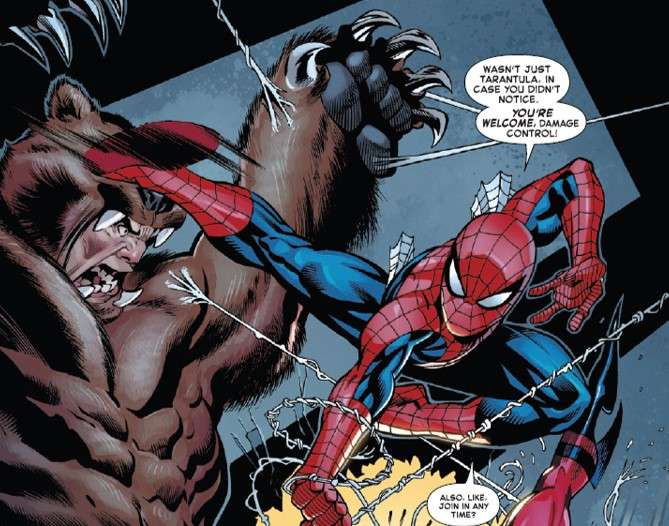
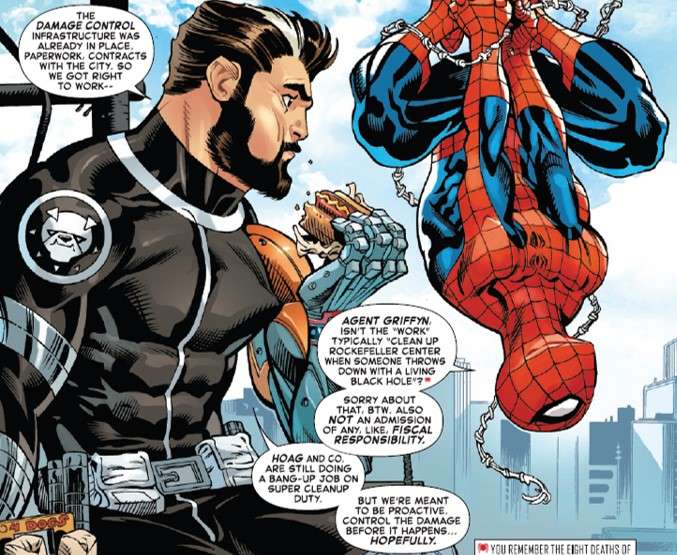
Agent Griffyn and the new proactive Damage Control program introduce one of the issue’s most interesting ideas.
Damage Control is no longer content to arrive after a superhero battle and repair whatever was destroyed. Griffyn wants the organization to prevent destruction by identifying threats and intervening before villains can cause widespread damage. With city resources stretched thin, the program is being positioned as another line of defense.
Naturally, Peter is suspicious.
To him, Damage Control resembles a private police force with advanced equipment and questionable authority. Peter has seen what happens when powerful organizations claim that control and public safety justify everything they do. Griffyn, however, is not presented as a cartoonishly sinister government agent.
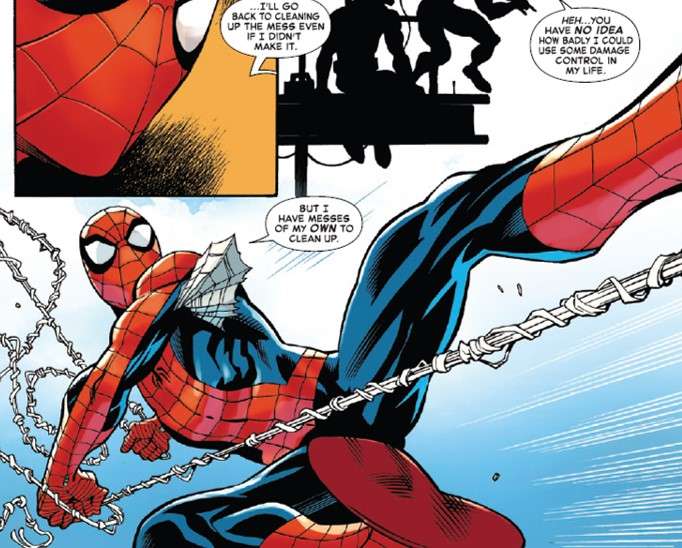
The conversation between Peter and Griffyn becomes a clash between two philosophies. Griffyn believes damage can be controlled before it happens. Peter knows that life will always create messes, and that protecting people means accepting responsibility when control fails.
Their interaction gives the superhero action thematic weight. Both men want to protect ordinary people. They simply disagree about how far an institution should go to accomplish that goal.
THE OSMANI-MILTON AND KENJI SCENES ARE HEARTBREAKING
The quieter visit to Dr. Maira Osmani-Milton’s home may be the issue’s most emotionally affecting subplot.
Maira is exhausted by professional disaster, personal guilt, and her son Kenji undergoing chemotherapy. She admits that she is tired of disease finding its way into every corner of her life. Her pain is intensified by the belief that Kenji hates her.
Peter does not offer a magical solution. He listens, sympathizes, and tries to help in the only ways available to him.
This also reflects Peter’s situation with May and Cormac. Both sections are about families damaged by secrets, separation, and years of lost time. Neither relationship can be repaired instantly. Healing begins through small acts of kindness rather than one dramatic declaration.
ED McGUINNESS DELIVERS BOTH POWER AND EMOTION
The artwork is excellent throughout.
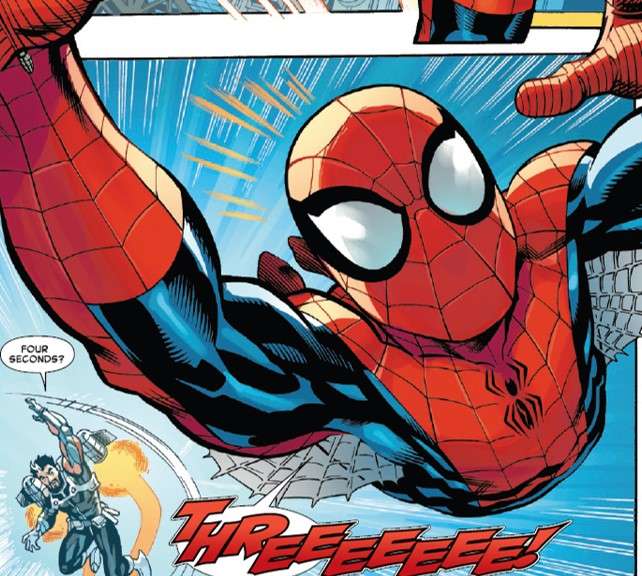
McGuinness makes Jack O’Lantern look massive and dangerous while giving Spider-Man the exaggerated flexibility and momentum the character needs. Mark Farmer’s inks keep the action clean despite the weapons, explosions, webbing, and flying bodies filling the panels. Marcio Menyz’s bright colors make the superhero sequences explode off the page.
Just as importantly, the quieter expressions work. Peter’s unease around Cormac, May’s happiness and vulnerability, Maira’s exhaustion, and Kenji’s silent sadness are all communicated clearly. The issue never feels as though the artists are waiting for the next punch-up. The family scenes receive just as much attention as the action.
CONS
The issue is carrying a lot of storylines at once, and the structure occasionally feels crowded. The closing battle arrives so quickly that it feels more like the opening pages of the next chapter than a satisfying final movement for this one. None of these threads is uninteresting, but giving one or two of them more room would have made the emotional beats land even harder.
FINAL VERDICT
The Amazing Spider-Man #33 successfully balances old-school Spider-Man action with a more vulnerable exploration of Peter’s family life. Jack O’Lantern provides the visual spectacle, Damage Control introduces a compelling ideological conflict, and the Cormac Crane storyline creates the kind of emotional problem Peter cannot solve with webs or punches.
The strongest moment is not Spider-Man defeating a villain. It is Peter watching May embrace the son she believed she had lost and quietly walking away before she can see him.
That is Spider-Man: saving everyone else while struggling to understand where he belongs in his own family.
RATING: 8.5/10








 English (US) ·