

There was a time when Hollywood knew exactly who it was talking to. Raiders of the Lost Ark did not hide it. It did not apologize for it. It was built from the ground up for a western male audience, and that clarity is exactly why it worked. The movie is still today a cinematic masterpiece that redefined the action-adventure genre. Directed by Steven Spielberg and executive produced by George Lucas, the film introduced the world to the iconic, whip-cracking, unapologetically masculine, archaeologist Indiana Jones.
Go back to the 80s. American movies ruled the world. Starting around 1981, studios pushed out hit films like Raiders of the Lost Ark, Conan the Barbarian, The Road Warrior, Escape from New York, Clash of the Titans, Superman II, and For Your Eyes Only. Keeping the trend up well into the 80’s with hits like Die Hard, Rocky III, Lethal Weapon, and Top Gun. These were not confused films. They were driven by male leads who acted, decided, and moved the story forward. Audiences showed up because they recognized the point of view.

Compare that to today. Major studios are increasingly run and staffed by people, mostly women and male-feminists who openly reject that same audience. They troll it or lecture it. They reshape stories to fit a worldview that treats masculinity as a problem to fix instead of a force that once carried the film industry, and then they wonder why the results keep falling short.
I was recently reminded of a brief moment in Raiders of the Lost Ark. Indiana Jones walks into Marion’s bar and she tells him, “I was a child, I was in love. It was wrong and you knew it.” He fires back, “You knew what you were doing. how many times can I apologize, can we move on?” In 1981, that played as rogue hero meets feisty ex. It moved the story forward. It added edge without stopping the momentum.
Raiders of the Lost Ark Meeting Marion 1981 HD
Watch it today and something shifts. You start asking questions the movie never cared about answering. How old was she if she “was a child”? What really happened? That’s the point. But the film isn’t confused. It’s told from his perspective. Her pain exists inside his story, not the other way around. That POV clarity is what modern Hollywood has abandoned.
Viewers didn’t become more sensitive. The entire lens flipped. Male perspective storytelling has given way to female perspective storytelling. That same scene from Raiders today wouldn’t move on. It would stop, explain, unpack, and turn into a lecture. Undoubtedly, the film’s pacing would collapse. The main character would shrink and the audience would check out. And we are seeing that play out in real time.
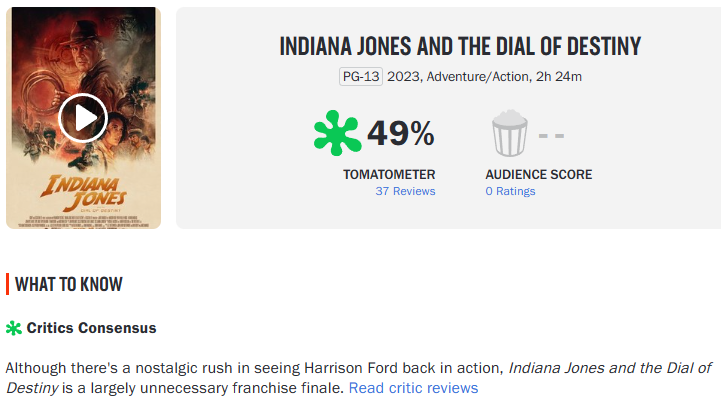
Modern blockbusters strain under the weight of messaging. Compare the clean, forward drive of Raiders of the Lost Ark to the bloated self-awareness of films like Indiana Jones and the Dial of Destiny. One trusted the audience. The other second-guessed us at every step.
This same pattern shows up everywhere. Top Gun became Top Gun: Maverick and succeeded because it returned to discipline, competence, and male-driven stakes. Meanwhile, other franchises are twisting themselves into knots trying to correct, soften, deconstruct, or reframe their masculine heroes. And what happens? Audiences stay home.

This is not complicated. When studios build stories while resenting the people they need to buy tickets, the result is confusion on screen. Characters hesitate. Plots stall. The energy disappears. When films like Rocky or Predator hit theaters, nobody wondered who the movie was for. That confidence translated directly into cultural impact.
So what changed? The people in charge changed and the studio’s priorities changed. The desire to tell a story from a single, unapologetic, masculine perspective disappeared. In its place came a need to balance, correct, and virtue signal. That’s not storytelling. That’s negotiation, and the audience can feel it. They always have. The success of these older films was never an accident. It was the result of clear intent. The failure of many modern films is no mystery either. It is the result of losing that intent.
The question now is whether Hollywood will ever get back to what worked, or will it keep chasing an audience it does not understand while pushing away the one that built it?
***











 English (US) ·