
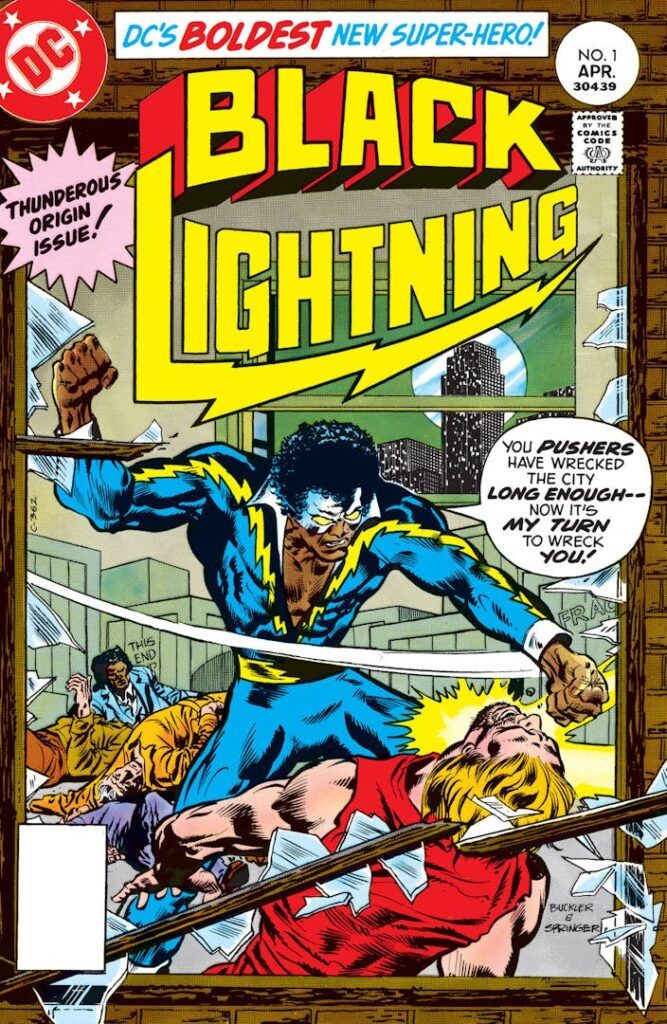
Black Lightning #1 stands as a landmark moment in DC Comics history, marking the first time a Black superhero headlined his own series at the publisher. When readers first picked up this issue in January 1977, they were introduced to Jefferson Pierce, a man whose Olympic gold medals couldn’t shield him from the systemic rot of his hometown. This debut didn’t just give us a new set of powers; it gave the DC Universe a grounded, socially conscious hero who fought for the streets of Metropolis as much as he fought for the world.
The Creative Powerhouse Behind the Spark
To understand why this character resonated so deeply, we must look at the creative team that brought him to life. DC Comics assembled a talented group of creators to ensure this launch felt unique. The series was written by Tony Isabella, who had already made a name for himself working on diverse characters at other publishers. He was joined by a very young Trevor Von Eeden on pencils, whose dynamic layouts gave the book a kinetic energy unlike anything else on the stands at the time.
The full creative breakdown for this historic issue includes:
- Writer: Tony Isabella
- Artist (Pencils): Trevor Von Eeden
- Inker: Frank Springer
- Colorist: Liz Berube
- Letterer: Denise Wohl
- Editor: Jack C. Harris
What to Expect in Black Lightning #1
The story begins with Jefferson Pierce returning to his old neighborhood, the Southside section of Metropolis, famously known as Suicide Slum. After winning Olympic gold as a decathlete, Jefferson returns with his wife, Lynn Stewart, and daughter, Anissa, to take over as principal of Garfield High School. However, his return is heavy with the memory of his father, Alvin Pierce, a renowned journalist who was murdered in these very streets.
Upon his arrival, Jefferson realizes that the neighborhood is being strangled by a criminal organization known as the 100. This gang, led by the formidable Tobias Whale, has corrupted local politicians and corporations alike. Pierce initially tries to help through his role as an educator, but the violent murder of one of his students, Earl Clifford, forces his hand.
A Hero Reborn in Suicide Slum
While Jefferson was born a metahuman, he had spent years suppressing his abilities. His mentor and family friend, the tailor Peter Gambi, helped him manage his electrical powers from a young age. When the 100 becomes too dangerous to handle as a civilian, Gambi encourages Jefferson to embrace his gifts. He presents him with the iconic suit and a quote that defines the hero’s mission: “Justice, like lightning, should ever appear to some men hope, to other men fear.”
Taking on the mantle of the costumed hero, Jefferson officially becomes the lead character of Black Lightning #1. In addition to his raw power, Jefferson brings a sense of morality and community leadership that was often missing from the high-flying adventures of the Justice League. If you enjoy looking back at these classic stories, you know that the “Bronze Age” of comics was defined by this shift toward more mature, grounded storytelling.
The debut of Jefferson Pierce wasn’t just about flashy lightning bolts; it was about a man reclaiming his home from the shadows. The legacy of this issue continues to be felt today, from his leadership in the Outsiders to his various television and film appearances. Whether you are a fan of modern storytelling or a collector of vintage comic book covers, this issue remains a cornerstone of the medium. For more history on DC’s legendary lineup, you can visit the official DC Comics website.
Conclusion
Ultimately, Black Lightning #1 redefined what a street-level hero could look like in the DC Universe. By blending high-stakes superhero action with the very real struggles of urban life and education, Tony Isabella and Trevor Von Eeden created a character with staying power. Jefferson Pierce proved that you don’t need a cape to be a hero, but sometimes, a little lightning goes a long way in the fight for justice.
What did you think of this issue? Join the conversation on X and tag us @comicbookaddt!
Follow Comic Book Addicts on Social Media:






 English (US) ·