
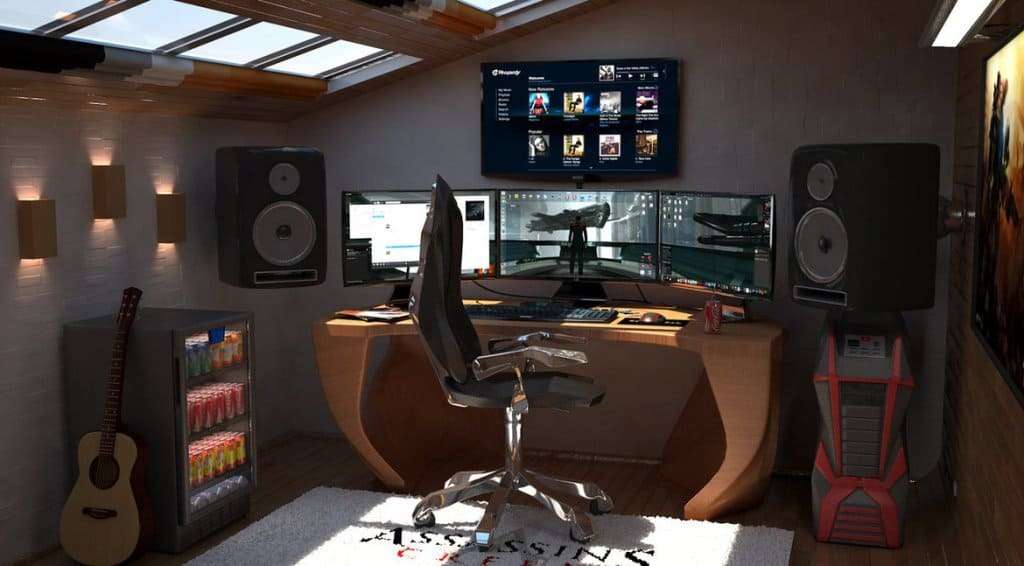
Most gaming rooms look the same. A desk, a monitor, an RGB strip from a budget kit. That setup gets boring fast. If you want a space that actually feels like yours, you need to think past the hardware and start treating the room like a design project.
This guide breaks down the practical steps that separate a generic setup from a standout one.
Start With the Layout, Not the Decor
Before you buy anything new, map out the room. Desk placement matters more than most people think. Avoid facing a window directly behind your monitor. Glare ruins visibility and adds eye strain during long sessions.
Cable routing is the next priority. Run cables along the wall using clips or a raceway channel. A clean floor changes how the whole room feels, even before any decoration goes up.
Average US gamers now play around 14.5 hours a week, and 71% of US consumers play video games in some form, according to Circana’s 2024 U.S. Gamer Segmentation report. That’s a lot of hours in one chair, facing one wall. The room you build needs to hold up under daily use, not just look good in a single photo.
Lighting Is the Foundation
Lighting does more work than any poster or figure. It sets mood, defines zones, and photographs well if you ever stream or post setup pics.
Layer your lighting instead of relying on one source:
- Ambient light from a ceiling fixture or bias lighting behind the monitor
- Accent light from LED strips along desk edges or shelving
- Statement light from a centerpiece fixture that defines the room’s identity
For the statement piece, neon signs work better than standard LED strips because they hold a fixed shape and color. A custom sign with your gamertag, a favorite phrase, or a simple icon gives the room a focal point that doesn’t change every time you adjust an app setting. Mount it at eye level on the wall behind your chair so it shows up in webcam shots and stream overlays.
Keep your color palette to two or three tones max. Five different LED colors fighting for attention reads as cluttered, not vibrant.

Acoustic Treatment Matters More Than You Think
Hard surfaces bounce sound around the room. If you’re streaming, recording voice chat, or just want better audio from your speakers, treat the room before you upgrade the mic.
A few foam panels on the wall behind your monitor cut echo significantly. A rug under the desk absorbs floor reflections. Curtains over a window do double duty, blocking glare and softening sound.
You don’t need a full studio build. Three or four strategically placed panels make a noticeable difference in recorded audio quality.
Build Vertical Storage and Display
Floor space disappears fast once you add a desk, chair, and console stand. Vertical storage solves this without shrinking your play area.
Floating shelves work well for consoles, controllers, and figures. Pegboard panels give you adjustable storage for headsets and cables. Wall-mounted monitor arms free up desk space for keyboard and mouse movement.
If you collect trading cards, board games, or physical media, display them instead of boxing them away. A shadow box or open shelf turns a collection into part of the room’s design. For anyone storing valuable cards, decent card sleeves protect the cards from dust, light damage, and handling wear while they sit on display. Cheap sleeves yellow and crack over time, especially under LED lighting that runs for hours each day.
Personalize Without Overdoing It
A gaming room should reflect what you actually play, not a generic aesthetic pulled from a catalog. Pick a theme tied to a franchise, genre, or color scheme you genuinely like, then commit to it across the room.
Mixing five unrelated themes makes the space feel unfinished. One cohesive direction, even a simple one, reads as intentional.
Small details carry weight here. A coaster set matching your color scheme, a desk mat with subtle branding, or a single framed piece of art tied to your favorite game all add up. These details cost little but make the room feel curated instead of assembled.
Plan for Growth
Hardware changes. Monitors get bigger, consoles get replaced, and new peripherals show up every year. Build your room with flexibility in mind.
Use modular shelving instead of fixed built-ins where possible. Choose a desk with extra surface area rather than one sized exactly to your current setup. Leave wall space open for future additions instead of filling every inch on day one.
A standout gaming room isn’t about spending the most money. It’s about layout, lighting, and details that work together instead of competing. Get the basics right first. Cable management, lighting layers, and acoustic treatment do more for the room than any single decoration ever will.
******


















 English (US) ·