

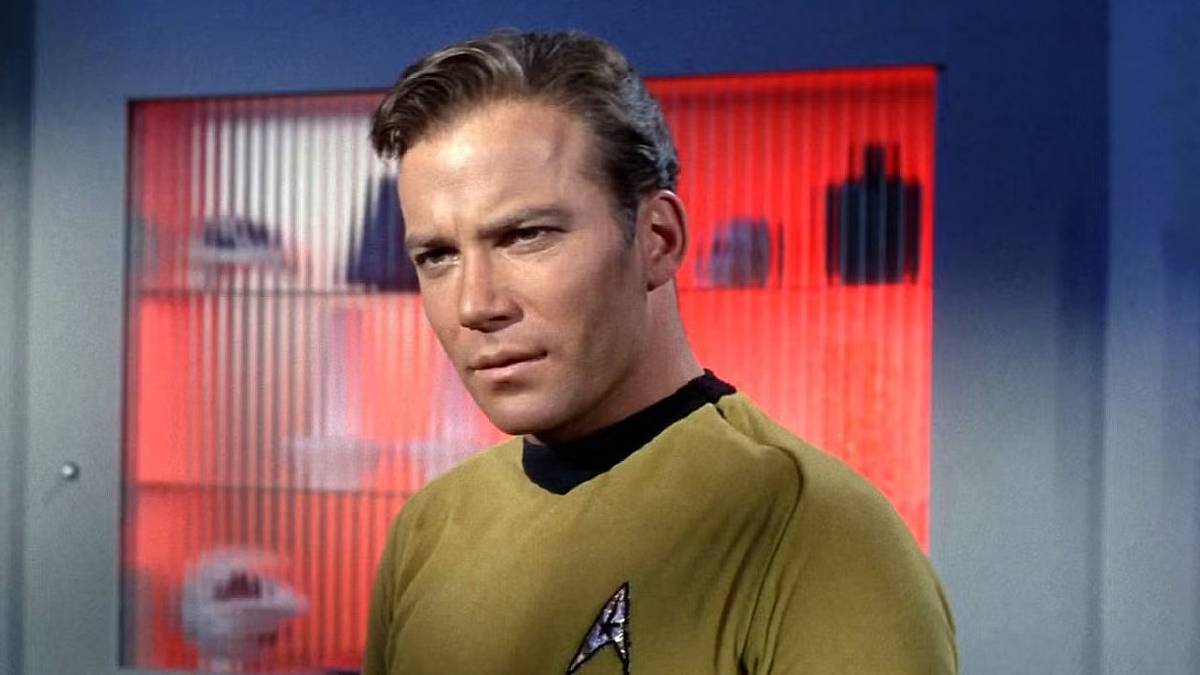
For six decades, Captain James T. Kirk has stood at the center of Star Trek. William Shatner’s version of the character did not just lead a crew. He defined what leadership looked like in a science fiction universe that once respected strength, risk, and personal responsibility. Now, as the franchise drifts into another so-called reset, the question is not whether Kirk’s story is over. The real question is why modern Star Trek seems so eager to move past what made it work in the first place.
Kirk was not complicated in the way modern writers prefer. He was decisive. He took command. He carried the burden of choice without apology. That was the appeal. In Star Trek: The Original Series and its films, Shatner’s Kirk showed a form of masculinity that was clear and unapologetic. He protected his crew. He made hard calls. He accepted consequences. That formula built a global franchise.

Fast forward to today, and the tone has shifted. Modern entries like Star Trek: Discovery and Star Trek: Strange New Worlds claim to honor the past, but they rarely reflect the same values. Even when Kirk appears, such as Paul Wesley’s version introduced in 2022, the character feels more like a placeholder than a driving force. The focus has moved elsewhere, often toward characters and themes that push a different message.
Consider the broader direction. Paramount is winding down Star Trek: Strange New Worlds with a fifth and final season expected in 2027. Plans for projects like Star Trek: Year One have stalled. The Kelvin Timeline films, once led by Chris Pine as an alternate Kirk, are effectively dead. At the same time, the studio signals a shift toward new characters and a soft reboot. But if the new direction sidelines the very traits that built the brand, what exactly is left?

Modern Star Trek keeps circling back to legacy characters while reshaping the tone around them. Star Trek: Discovery leaned heavily on a wildly out of character version of Spock. Star Trek: Starfleet Academy introduced a gay Klingon character that broke sharply from the established norms, feeling more like a statement than a continuation of lore. Even Star Trek: Lower Decks couldn’t resist constant callbacks and bad jokes. Was this an evolution, or just a franchise unsure of its own identity?

Meanwhile, Shatner himself, now in his 90s, has said he is still open to returning. The only way to make that happen would be to undo Kirk’s death in Star Trek Generations. That idea has been floated before, but why resurrect the character only to place him in a universe that no longer values what he represents? Kirk’s legacy endures because it was built on something simple and effective. A strong captain. A clear moral center. A willingness to act. Strip that away, and the name remains, but the meaning fades. Modern Star Trek seems determined to redefine that foundation, often by elevating new priorities at the expense of the old ones.

So here we are. The legacy franchise moves forward, but it does so by stepping away from the very qualities that made it successful. Kirk may be gone from the timeline, but the larger shift is harder to miss. When a series stops valuing the core traits that built its audience, it risks losing that audience altogether. The question is not whether Star Trek can survive without Kirk. It’s whether it understands why he mattered in the first place.
***








 English (US) ·