

In Part 1 of this essay, I credited Stan Lee with founding Marvel Comics. This does not mean that I think he created every Marvel character or even necessarily oversaw every development during his period of peak creativity from roughly 1961 to 1972. But I consider the opposite position– that either Jack Kirby or Steve Ditko did everything and that Lee just took the credit– to be utterly moronic. The slightly more nuanced view that Lee allowed Kirby and Ditko to maximize their creativity while he just kibitzed a little isn’t much better. But it does at least touch on an important truth, one that impacts on how Lee’s Marvel saved the comics industry from going the way of an extinct phenomenon like the Big Little Book (a comparison advanced by Big Name Fan Dwight Decker in the pages of AMAZING HEROES).
Stan Lee as a writer did not possess the raw creativity of Kirby or Ditko, but in some cases his creative instincts were better than theirs and of anyone else in his employ. He was an editor first and a writer second, but since it’s an editor’s job to oversee a company’s offerings to its customer base, that meant that he always had to see the Big Picture. And his oversight, starting with FANTASTIC FOUR #1 in 1961, can be summed up in one word: connectivity, “the state of being connected.”
In most of my earlier writings on Early Marvel, I’ve asserted that there were two factors that made Marvel appealing across several generations to fans of all ages. Factor One was that of continuity, the notion that all the Marvel characters existed in the same world and could all potentially interact with one another, even if some encounters might require traversing time, or space, or both. Factor Two was that of deeper characterization, at least for the superhero genre in comics.

Now, I would see those two factors as manifestations of one phenomenon, that of connectivity. Continuity as practiced by Stan Lee might be described as “outer connectivity:” the physical interactions brought about by assorted superbeings occupying the same world. This might range from various heroes just popping up in one another’s features to detailed histories about (say) how ex-Nazi Baron Strucker launched terrorist cabals like Hydra and AIM. (Curiously, this history was first set forth in the ultra-obscure Marvel war-title CAPTAIN SAVAGE AND HIS LEATHERNECK RAIDERS.)
Factor Two, that of more detailed characterization, may be fairly termed “inner connectivity.” This was a much more radical innovation for comics, for the broad tendency in all genre-comics was to subordinate character to plot. There were a few exceptions– the Golden Age BATMAN comics, the occasional contretemps between the Human Torch and the Sub-Mariner, and the better-conceived EC short stories. But at 1960s Marvel, it became de rigeur for creators to keep the characters consistent– which is a more commonplace way of saying that all the characters’ traits connected with one another logically.

Quick example: by the time of AMAZING SPIDER-MAN ANNUAL #3, the Spider-Man readership was aware of the way the hero’s character shaped up. Everything about Peter Parker stemmed logically from his history as a put-upon nerd: his insecurities, his sardonic sense of humor, and his occasional flareups of bad temper. The main story of the Annual concerns the Avengers deciding to nominate Spider-Man for membership, though once they agree to do so, they have to find him to inform of the honor. Lee could have chosen any of six heroes to stumble across Spidey, but the editor chose Thor, who as an alpha male best contrasted with Parker. In a sequence lasting only about two pages, the arachnid adventurer hits all of his consistent tropes.

First Spider-Man gets a trifle quarrelsome when Thor asserts that candidates must be tested, then he gets insecure about the ramifications, and finally he seeks to defuse the pressure with the humorous line, “Come up for air, helmet head.” Thor for his part holds up his end by being slightly pushy but still coming off as ultimately fair-minded. This story shows Lee’s genius at the art of “inner connectivity” with respect not only to the main hero and his avenging guest-stars, but also to his support-characters and the added attraction of The Incredible Hulk.

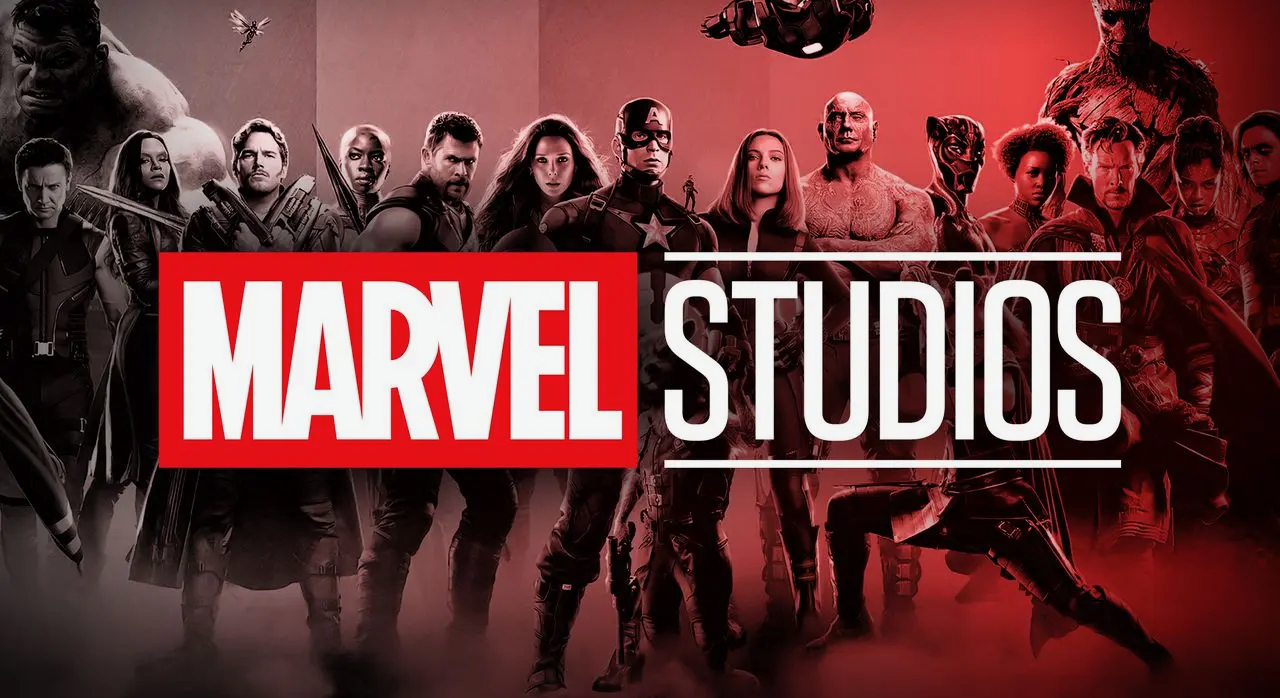
At a time when Marvel Comics was limited as to how many titles their distributor would accept, the company’s most popular titles started cutting in on DC’s action. Further, Marvel’s characters had an archetypal quality not seen in comic books since the decline of the Golden Age in the 1940s, and thus many characters remained evergreen for future generations, or even became received more sophisticated treatment by later raconteurs (Frank Miller on DAREDEVIL, Chris Claremont on X-MEN). Marvel’s success story was that of the scrappy underdog who wins the day, and thus even people who weren’t hardcore comics-nerds understood the rudiments of Marvel’s new standard and of some of the more appealing characters.
The perennial attractiveness of Marvel Connectivity forced DC and other companies to attempt to cope with the audience’s new expectations. This resulted in a more dynamic direct market, which resulted in both small-press successes and major, adult-themed releases from the big companies, not least WATCHMEN and DARK KNIGHT RETURNS. Keeping genre-comics viable may not have lightened the hearts of elitists like Gary Groth, but the survival of comics ensured that by the 1990s and 2000s Hollywood finally invested major money in adaptations of comic book properties. Thus more artists, even those that hated Stan Lee (paging Alan Moore) reaped the benefits of Lee’s entrepreneurial skills. The medium of comic books may still perish, but if that happens, said medium will have reached a point of superior vantage from where it was in 1961.
***









 English (US) ·