
 Faora Hu-Ul Action Comics 471 First Appearance Cover
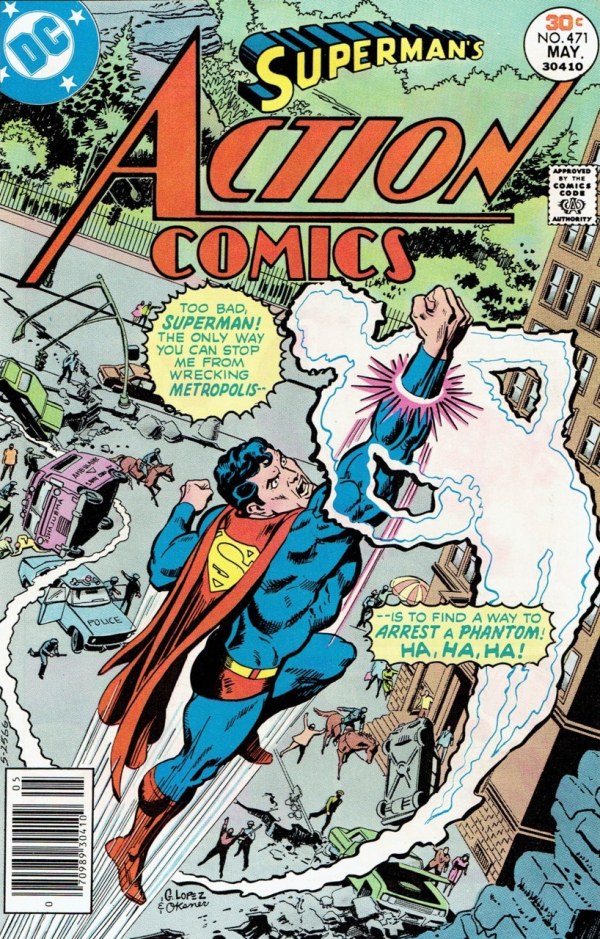
Faora Hu-Ul officially entered the DC Multiverse on this day, February 24, 1977, bringing a level of psychopathic intensity to the pages of Action Comics #471 that was virtually unprecedented for a female antagonist in the Bronze Age. Introduced by the visionary creative team of writer Cary Bates and legendary artist Curt Swan, she was presented not as a misguided revolutionary, but as a cold-blooded killer. Her introduction expanded the lore of the Phantom Zone, proving that the shadows of Superman’s homeworld contained monsters far worse than simple political rivals.
The creative team responsible for this historic debut includes:
- Writer: Cary Bates
- Artist: Curt Swan
- Inker: Tex Blaisdell
- Publisher: DC Comics
The origin of Faora Hu-Ul is rooted in an unexplained and absolute hatred for men. This pathological drive led her to create a secret concentration camp on Krypton, where she tortured and killed 23 men. Her crimes were so heinous that the Kryptonian Science Council sentenced her to 300 years in the Phantom Zone—the second longest term ever handed down, surpassed only by the mass murderer Jax-Ur. This sentencing would define her character for decades, establishing her as a fundamental piece of the Superman mythos.
 Faora Hu-Ul Action Comics 471 First Appearance Cover
The Lethal Martial Art of Faora Hu-Ul
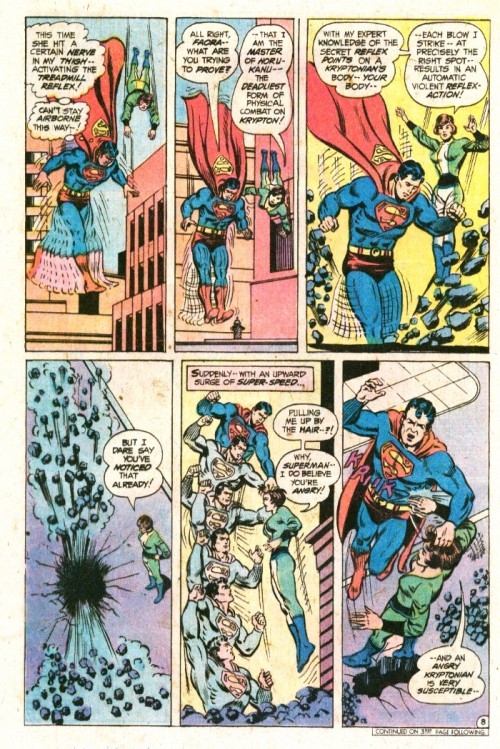
What readers should understand about Faora Hu-Ul is that her danger extends far beyond her Kryptonian physiology. Unlike many Phantom Zone prisoners who rely solely on their raw power under a yellow sun, Faora is a master of the ancient Kryptonian martial art known as Horo-Kanu. This discipline focuses on the manipulation of pressure points on the Kryptonian body, allowing a practitioner to paralyze or even kill an opponent with a single touch.
When she first encountered Superman, the Man of Steel was completely unprepared for her tactical brilliance. Utilizing Horo-Kanu, she was able to bypass his invulnerability by attacking his nervous system directly. Consequently, Superman—the most powerful being on Earth—was forced to flee from their first encounter. This moment remains a milestone in the history of new comics of the era, as it proved that even a god can be humbled by superior skill and a lack of moral restraint.
The Phantom Zone and the Destruction of Krypton
The visual storytelling of the 1970s often utilized the Phantom Zone as a convenient plot device, but for Faora Hu-Ul, it was a cruel stroke of irony. While her imprisonment was meant to be a punishment, it actually served as her salvation. When Krypton exploded, the physical bodies of the prisoners were destroyed, but their consciousnesses survived as invisible, ghostlike forms within the Zone. This transformation allowed her to witness the death of her world while plotting her eventual revenge against the House of El.
Furthermore, her time in the Phantom Zone was frequently depicted as a series of sinister alliances. She was often seen plotting alongside General Zod and Jax-Ur, forming a triumvirate of evil that haunted Superman throughout the Bronze Age. For fans who spend their time tracking comic book covers, the art featuring the “Phantom Zone Three” is highly sought after for its atmospheric and often terrifying depiction of Kryptonian malice. It is a mathematical certainty that without Faora’s contributions, the Phantom Zone would be a much less intimidating concept.
As the industry transitioned into more modern eras, the character of Faora Hu-Ul was reimagined several times. Following Crisis on Infinite Earths, elements of her personality were blended into the character of Zaora and later into the Faora seen in the Man of Steel film. Despite these changes, the core of her character—a woman whose beauty hides a bottomless well of hate—remains the gold standard for Kryptonian villains. For those exploring our This Day in Comics archive, her debut stands as a reminder of the dark potential inherent in the Superman legend.
In conclusion, Faora Hu-Ul is an essential piece of DC history, representing a shift toward more complex and disturbing antagonists. From her debut as a concentration camp operator on Krypton to her status as a master of Horo-Kanu, she reflects the enduring power of the “evil Kryptonian” archetype. Whether she is appearing as a ghost in the Phantom Zone or a physical threat on the streets of Metropolis, her legacy is one of violence, precision, and absolute terror.
📢 Join the Conversation
Who do you think is the deadlier Kryptonian: Faora or General Zod? Should the “men-only” concentration camp origin be kept in modern retellings? Join the conversation on X and tag us @comicbookaddt to share your thoughts on the deadliest woman of the Phantom Zone!
Follow our community for more updates:











 English (US) ·