
Piñatas are those papier-mâché objects that blindfolded children are encouraged to beat with a stick until they give them candy.
“Papier-mâché is the hoity-toity way the French spell the name of the common children’s art class stuff piñatas are made of. Though the word looks high-falootin’, it means “chewed paper,” another thing that happens in children’s art classes.
Piñatas were traditionally in the form of a donkey or a satellite, but more recently, they are available in the shape of everything from superheroes to risque anatomical objects. (There is metaphorical logic in whacking a piñata shaped like the afore-linked anatomical object until it gives up its contents, but we’ll leave that topic for another writer.)
According to Wikipedia, the basic piñata tradition originated in China (as did the invention of both paper and papier-mâché—I’m not sure if they invented chewing). It then migrated to the Middle East, then Europe, and eventually was brought to the “New World” (same age as the “Old World,” so, not really new) by that heavily armed gaggle of pale-skinned ambassadors who kindly offered to decimate numerous, enormous, complex cultures and rebuild the country to their liking and call it Mexico.
But get this: An extremely similar tradition already existed among the Aztecs to celebrate Huitzilopochtli's birthday, the main god of the inhabitants of Tenochtitlan, the capital of the Aztec Empire, now called Mexico City. (Unlike Foldeundertøj, I didn’t make up that Aztec god’s name.)
To this day, children the world over, even those who cannot pronounce the name of that god, will doubtless have ample opportunities to beat something with a stick until it coughs up its contents.
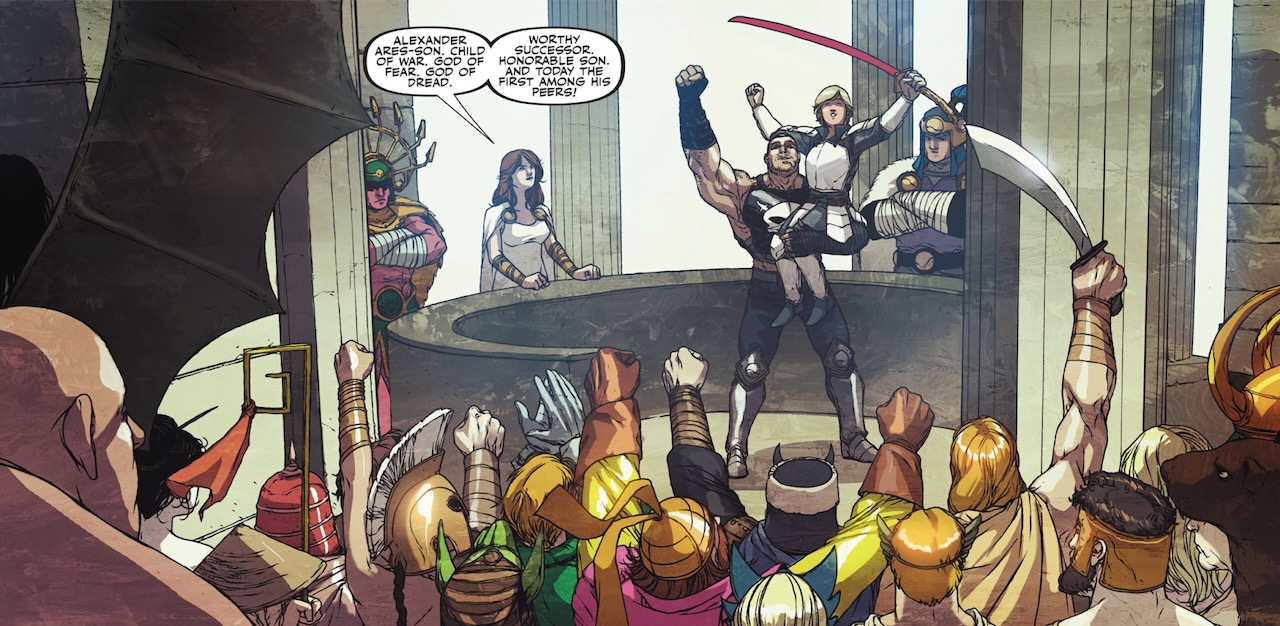
In the cartoon above, I’ve used a piñata as a stand-in for the famed Trojan Horse, which was not only my high-school buddy Rick’s nickname (earned for his uncanny ability to secure numerous opportunities to use a condom), but also a thing from Greek mythology. Obviously, my comic is based on a combo of the Greek and Mexican versions.
I only mentioned all of that because I wonder if it has been wise to train children for thousands of years to beat things until they get candy. Some children inevitably grow up to be politicians, and some of those seem to still think this is a good way to get what they want.
I’m skeptical of the long-term wisdom of that approach.












 English (US) ·