
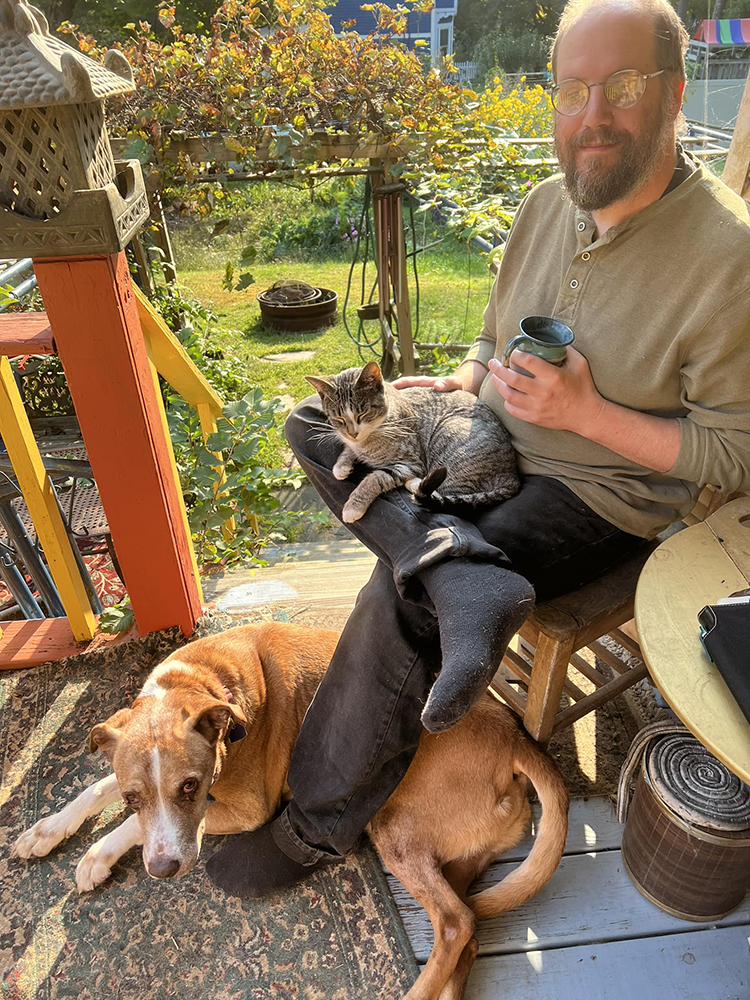
 Hans Rickheit with pets. (photo courtesy of artist)
Hans Rickheit is known for highly inventive and offbeat work. A career spanning over twenty-five years, Rickheit has created compelling comics, punctuated by absurd humor, surrealist wit and profound melancholy. Best known for his landmark work, The Squirrel Machine, published by Fantagraphics in 2009, Rickheit continues to expand his quirky vision.
You’re lucky if, as a cartoonist, you create any characters that break through, become known and take on a life of their own, having the luxury of evolving over time. So is the case with Rickheit’s Cochlea & Eustachia, two young women who wander within the confines of dank and spooky old mansions and such. Within Rickheit’s body of work, these two lasses take up a floor all to themselves. Who are they and what do they want? That is one among several questions I pose to the artist. Who is Hans Rickheit and what does he want? Well, at the time of this interview, Rickheit had just hosted an opening reception at a gallery showcasing his art and he had recently launched Volume 2 of his Cochlea & Eustachia comics.
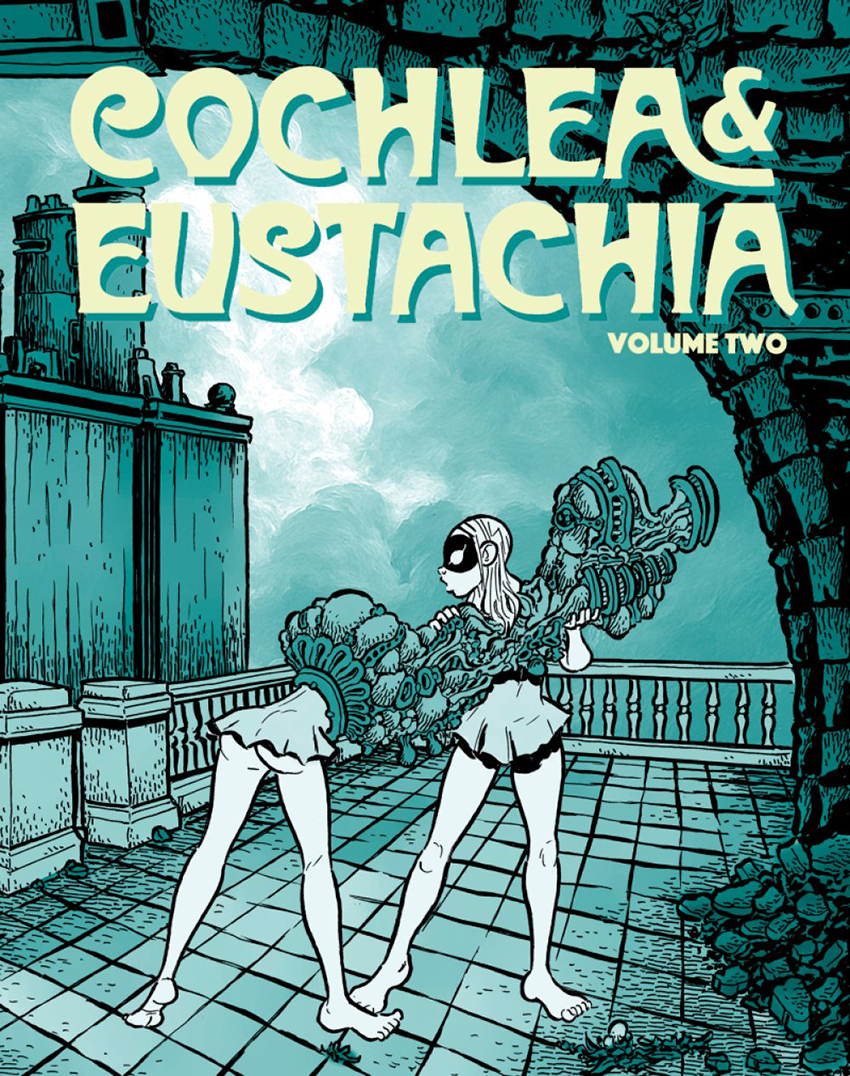
I first spotted Rickheit’s work at the annual MoCCA comics festival in 2005, where I instantly gravitated to his mini-comic series, Chrome Fetus and to his Xeric Grant Award-winning graphic novella, Chloe. I was from Seattle and could not help but notice this new provocative and wildly original new comic strip, Cochlea & Eustachia, featured in our hometown alt-weekly, The Stranger. So, having enjoyed that and then seeing Rickheit, and his work, in person, made me a lifelong fan. I followed along and reviewed his work whenever I got a chance. When Rickheit decided to try his hand at more adult material with The Gloaming, beginning in 2018, I was equally unsure and intrigued. Ultimately, it’s part of the Rickheit canon and has had time to settle in. I appreciate it along with everything else in Rickheit’s growing oeuvre.
For this interview, I did my best to create a proper interview of record that does justice to Rickheit’s work. This is an artist with a relentless mind and heart. This interview was conducted over Zoom, on March 30, 2026.
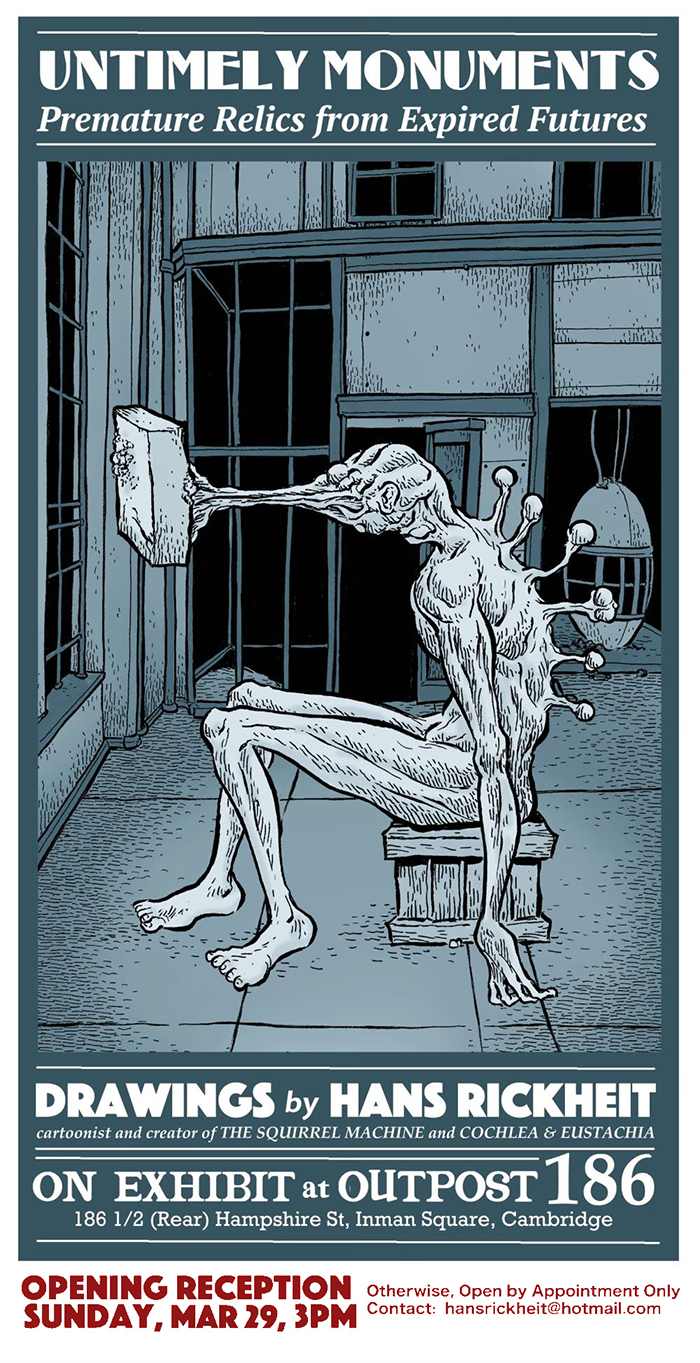
HENRY CHAMBERLAIN: You have a gallery show of work entitled, “Untimely Monuments,” at Outpost 186, in Massachusetts. How did the opening go?
HANS RICKHEIT: By my parameters, it went very well. Maybe about a dozen people showed up. I was just happy that people showed up and liked what they saw. I sold some work. So, I’m happy. I get to live for another month.
What is on view?
These are drawings I’ve been doing for a few years which I composite with some backdrops. I have the backdrop and then I can add a character to it later. For example, there’s this one (indicates artwork), “The Lady with the Broken Back.”
I have a good relationship with the gallery, Outpost 186, in Cambridge. It used to be the Zeitgeist Gallery. That was its third location. Back in the ‘90s, I lived in the basement of the Zeitgeist Gallery. I was still in my twenties. I lived the gallery troll existence.
That sounds wonderful. I would have loved that.
It was fun when you’re in your twenties, but it had its challenges. It was in the basement and there was this septic pipe just in the other room that sometimes burst open. It didn’t really have a kitchen. Or a shower. I would have to go down to the Dance Complex in Central Square, a dance school that I think still exists. And I would sneak in and use their showers. Maybe I was thirty pounds lighter than I am now, but I didn’t have the physique of the dancers there. So, they would see me and wonder what dance class I was taking! I’ve always led a semi-feral existence: living in attics, basements and abandoned factory buildings because I never could get a proper full-time job or proper income, living off free food and whatever I could scrounge up. A partial existence. Well, that’s me rambling.
I’m happy to remain completely quiet and let you say whatever you like. I love the flavor. People eat that stuff up. When you’re in your twenties, you romanticize everything. I’m sure this hard scrabble existence has made it into your comics.
Maybe. I was such an awful person in my twenties. I was kind of arrogant. I’m trying not to be that way now. I learned how to draw better back then because I was exposed to a lot of people who could draw better than me. I was also exposed to a lot of people who were worse artists than me. And that, in a weird way, made me a better artist because I learned what not to do.
I enjoyed being part of that art scene and trying to affect some minimal amount of change in what I thought people should be doing with art. But you must remember, I was an arrogant twenty-something, and telling people what they should be creating is not a good thing to do.
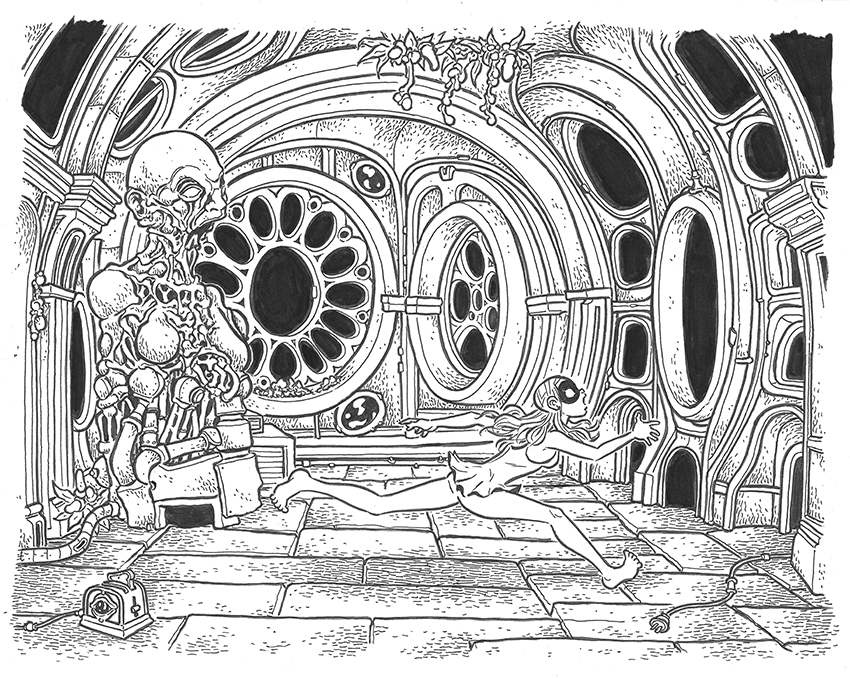
What can you share with us about Cochlea & Eustachia, Volume 2?
It got out of hand. I did Volume 1 and that took about a couple of years. I was determined to do the next one faster. And then it took eleven years to draw. It becomes part of your daily routine, adding another page to this long narrative. Every time I got a new idea, I would just put it in there. It’s really a hodge podge, isn’t it? I’m happy with it because I think it’s a better read than the first one. I’m happy with a lot of the drawings. And then there’s things about it that managed to coalesce. It wasn’t very plotted. I’m trying to work on that. The new comics that are on my drawing table right now are much more tightly plot-driven.
For the porno comic, The Gloaming, I sat down and wrote out a very formulaic plot structure to it. I figured this is a porno comic so, if the plot starts to falter, no one has any serious expectations for it.
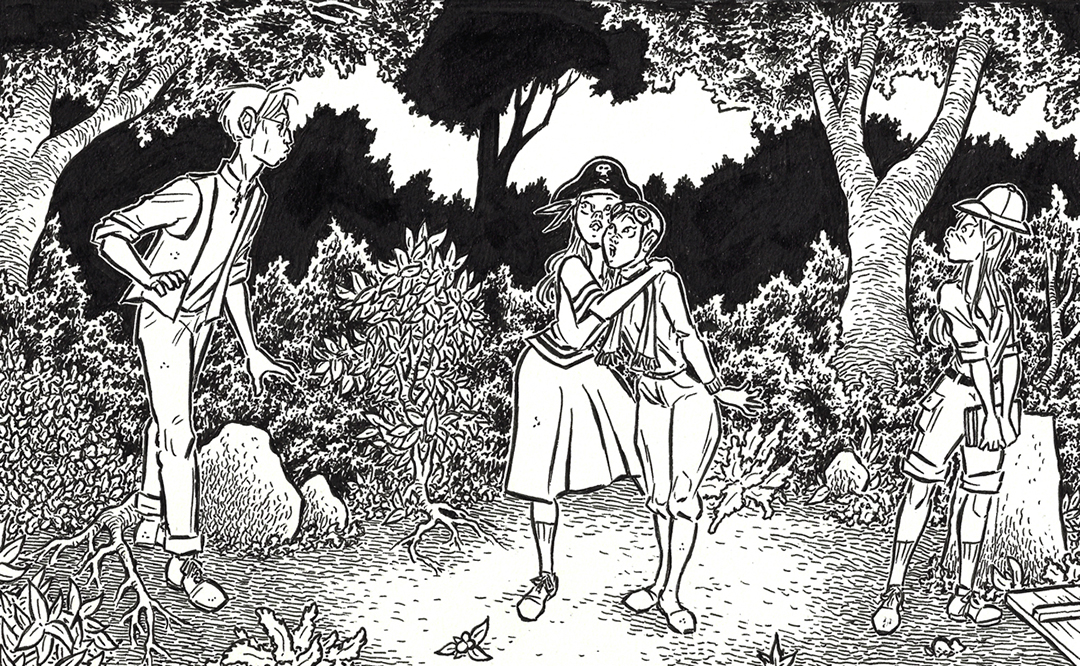 From The Gloaming.
The Gloaming still falls within the Hans Rickheit body of work, right? Or are you distancing yourself from it a bit, as it being more of an anomaly, or fun side project?
I’m not distancing myself from it. It’s a fun comic. It certainly began as a fun project and now it seems to be an accumulation of all my Freudian anxieties. The last volume, which I’m working on now, will end up looking more like a horror comic.
Is there more you can tell us about the new stuff you’re working on?
I wish I could. It seems like I really can’t describe my work at all. I prefer to have other people describe it to me and maybe then I could figure out what the fuck it was about! I’m not a great interview subject because of this.
Well, I’m going to make sure that you are because my interview technique is just magical.
Oh, okay!
Tell us about Cochlea and Eustachia. These are your most popular characters, and they figure fairly early on in your work. They’ve always been around. What can you tell us about them?
I didn’t know they were popular.
Of course they are!
If it's true, it's because I’ve been drawing them so much. Way back when I was a young cartoonist, I was visiting some relatives, and somebody told me I should create some characters that I could license and market and so forth. The best that I could come up with was Cochlea and Eustachia. Initially, it was just going to be one character. But I figured, if I have two of them, they could talk to each other. And they could be twins so I wouldn’t have to draw a second character. It would just be the same character twice, because I’m lazy.
I couldn’t think of names for each of them. At the time, I was learning how to draw by copying photos from old medical journals of deformed people because I thought they made more interesting subjects to learn anatomy from. I stumbled upon looking at parts of the ear. Cochlea and Eustachia sounded like good names for girls, so I stuck with that. I thought they might be marketable.
I think they are.
They seem to get me in trouble too.
I have something to say about that. In reviews I’ve written of your work, I always come back to saying that Cochlea and Eustachia are more than objects to gaze upon. I see them as inviting readers to lose their inhibitions as they’re guided through a deep dark secret underworld. Am I on the right track to say that?
Sure, that’s a nice one. That is nice. But they do get me into trouble. I briefly moved to Philadelphia with my then girlfriend. They were having puppet shows, of all things, at the Roundhouse, which is in the heart of West Philly. And I was invited to do projections of my comics. I got an opaque overhead projector, and I transferred all the comics panels onto transparent acetates. I made this scroll to scroll them through and project them on a wall. And my girlfriend, who was an avant garde violinist, and another musician, provided the music. I displayed three Cochlea & Eustachia comics.
I’m a feminist or least think of myself as one. And everyone in the audience, it’s safe to say were feminists. But there are the kind of feminists who didn’t appreciate Cochlea & Eustachia at all. I was suddenly beset upon by an angry crowd of people, some of whom threatened to beat me up, calling me a white rapist. I went into a deep depression directly afterwards. I was kind of naïve and didn’t think anyone would be upset by my comics. But apparently, they were very upset, crossing the street to avoid me when they saw me walking down the road. We all belonged to this food co-op. My girlfriend, who worked there, suddenly lost her job. We were basically iced out of the city. This is not a reflection of all of Philadelphia. There are some cool cartoonists there. They’re very nice. They have a weekly comics jam there. Anyone in the area should join up.
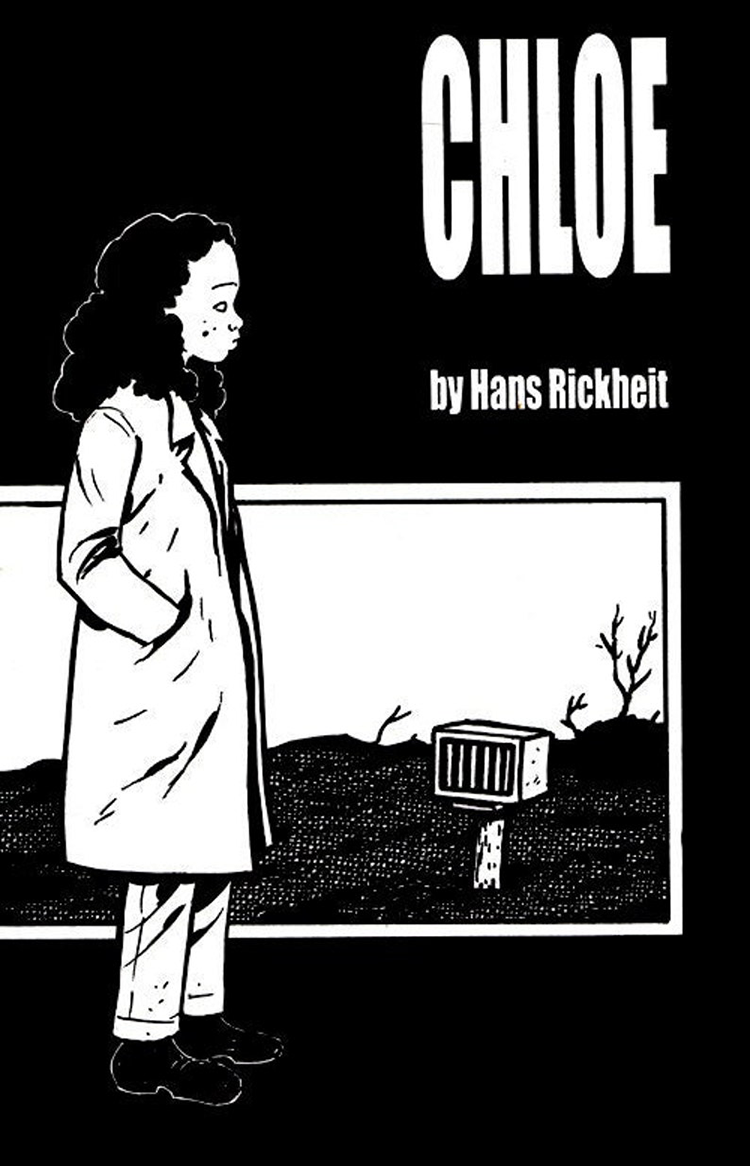
Cochlea & Eustachia are part of what I see as the misfit theme running throughout your work beginning with Chloe. You had a very early start in comics. You were drawing and self-publishing when you were still in high school. Years go by and Chloe hits the scene, winning the Xeric Grant Award (created by Peter Laird, the co-creator of the Teenage Mutant Ninja Turtles). It was the much-coveted award by indie cartoonists long before there was Kickstarter. It’s 2002, and at age 29, you’ve won this award. Chloe reminds me a bit of Stephen King’s Carrie, the ultimate misfit. Chloe is a teenager who falls in love with this mysterious dwarf who lives out in the woods and has some connection with the underworld. It’s an incredible story. I believe that Cochlea and Eustachia fit right in with that misfit theme. What do you think?
When I did Chloe, it was sort of about writing about my own teenage years. At the time, it was an unconscious activity to make peace with things that I had to endure when I was younger. Creating this comic was a weird kind of way of doing that. It’s a screwy book when I look at it now. “Did I really do that?”
That was the book that won the Xeric Award. I had applied many times and gotten rejected many times, so I was bowled over when I finally was accepted!
I received the letter of approval on 9/11. That was a strange, strange day. I had to drive my girlfriend into Boston, and the timing belt in the car exploded, killing it. We managed to catch a train into the city. Because of the day’s occurrences, the entire city was like a ghost town - no people or cars. The only people walking around were obvious G-men on some kind of patrol with their cellphones in hand, looking very urgent.
I was supposed to take my girlfriend to Logan Airport, which was shut down for obvious reasons. She managed to arrange a carrier to her destination in Ryland with some friends, leaving me to hitchhike back home to the house we had in Vermont.
It took forever, and as I walked the backroads to home, it was past midnight. The whole world seemed to have gone crazy overnight. War planes were zooming overhead to a nearby Army base, and explosions could be heard in the distance. I had the very self-centric notion that the delicate balance of our reality had to be broken into in order to allow me to finally publish my weirdo comics. Perhaps I had entered an alternate reality by mistake?
I remember reading it back in the day and just got a new copy of it and found it to hold up perfectly well. Let me ask you next about your development and influences and keeping up with your contemporaries, if you do that.
Oh, I’m a total comics geek, in terms of alternative comics. I know that the books that Fantagraphics put out when I was a kid, I followed all of that. And I was eager to be published by Fantagraphics at some point because they produce all the best comics and still do.
I remember Jim Woodring’s dream comics. And that’s what set me off on my path. I kept a dream journal for the longest time and started creating comics based on them. And that’s kind of what I’m still doing. It’s just that I’m a boring comic book character. Having other characters doing things is much more fun.
I also remember being deeply into the films of the Brothers Quay. They were being shown late at night on public television when I was a kid. The Street of Crocodiles animation is a favorite. And I found a VHS of the work of Jan Švankmajer. I loved the way it looked and felt. I think what I’m doing is just imitative of all that. I’ll have an original idea here and there. Most of it is a conglomeration of things I’ve absorbed.
I think my brain does work differently from other folks. My memory is vague, but I recall as a child that I didn’t learn to speak until I was almost six years old. At the time, my parents believed it was due to hearing impairment, but I’m not sure about that. It’s kind of complicated.
Regardless, I think that may have something to do with my stilted development as a person. When I was seven, my mother bought me some comics which had The Incredible Hulk, because I was obsessed with the tv show. I think I imprinted on the comics - my reading skills shot way past my classmates because I was determined to read what was going on in these colorful picture books.
When comic shops started opening up in my area, like most budding comics geeks, I was elated. There, I discovered mini-comics that people were independently making. I started making my own xeroxed comic books at the age of eleven.
As I got older, I got more interested in underground comix and surrealist art. A lot of my awkward teenage comics at the time reflected that. Truth is, although my drawing abilities might’ve improved somewhat since then, my subject matter and storytelling habits haven’t changed much.
Is there any Twilight Zone influence? I did a graphic novel focusing on The Twilight Zone so I’m very sensitive to work that is set sometime within the Victorian era up to mid-century using certain science fiction and horror tropes.
I love The Twilight Zone! I loved it as a kid and recently did a binge of that and The Outer Limits. Those are fun. And so are all my trashy sci-fi books. If I pan around a bit, you can see shelves just full of this trashy science fiction. That’s all I absorb. I never read anything that would improve me as a human being.
Well, I know you’re joking. Some of the best writing is science fiction; there’s some truly wonderful writing.
Agreed!
What can you tell us about your working methods?
I feel like only in the last year have I graduated to using better art materials. Prior to that, I was mostly using really cheap materials, whatever I could afford and was portable. I spent many years drawing in coffee shops. Of course, that’s not totally true. I’m thinking more of in the last decade. In your twenties, months can feel like years and, when you’re older, years can feel like months.
Are you mostly analog with some digital?
Everything’s on paper. As much as possible. I have to do it all on paper. Get it all drawn on paper, cut it up as needed, paste it up as I go. When someone buys an original of mine, they’re sort of getting a 3-D diorama of sorts. Lately, I’ve been practicing more with painting with a brush and that remains a work-in-progress. Painting with a brush can be a lot faster.
I was hired to do some work for Bob Burden. It’s a project I hope ends up working out. He’s really savvy about how to work quickly. He had to pick up the pace with his output of Flaming Carrot.
My usual process, after scribbling some nearly illegible layouts on a piece of scrap paper, is to carefully pencil out the figures for any given panel on some cheap sheet of Xerox paper. I scan these drawings and composite them together in Clip Art Studio on my old desktop computer. I usually collage together backdrops from photographs I’ve taken of toys, objects and locations. I print these out and use a light-box to ink onto slightly better paper.
Although I make layouts in advance, I frequently make changes when rendering a page. I fully draw and ink one panel before I begin pencilling the next - to accommodate my tendency to follow my whims, regardless of whether or not it undermines my original plot outline.
I use pretty cheap pens - Pilot V-Balls, which I can get a dozen for about $15 online. Lately, I’ve switched over to using a brush, which helps speeds things up.
I used to be painfully meticulous and use rulers and templates to get precise illustrations. Just last year, I decided to stop using rulers in the drawings. My pencils nowadays are almost just scribbles. It’s a lot less stressful and so far, I’m enjoying the results.
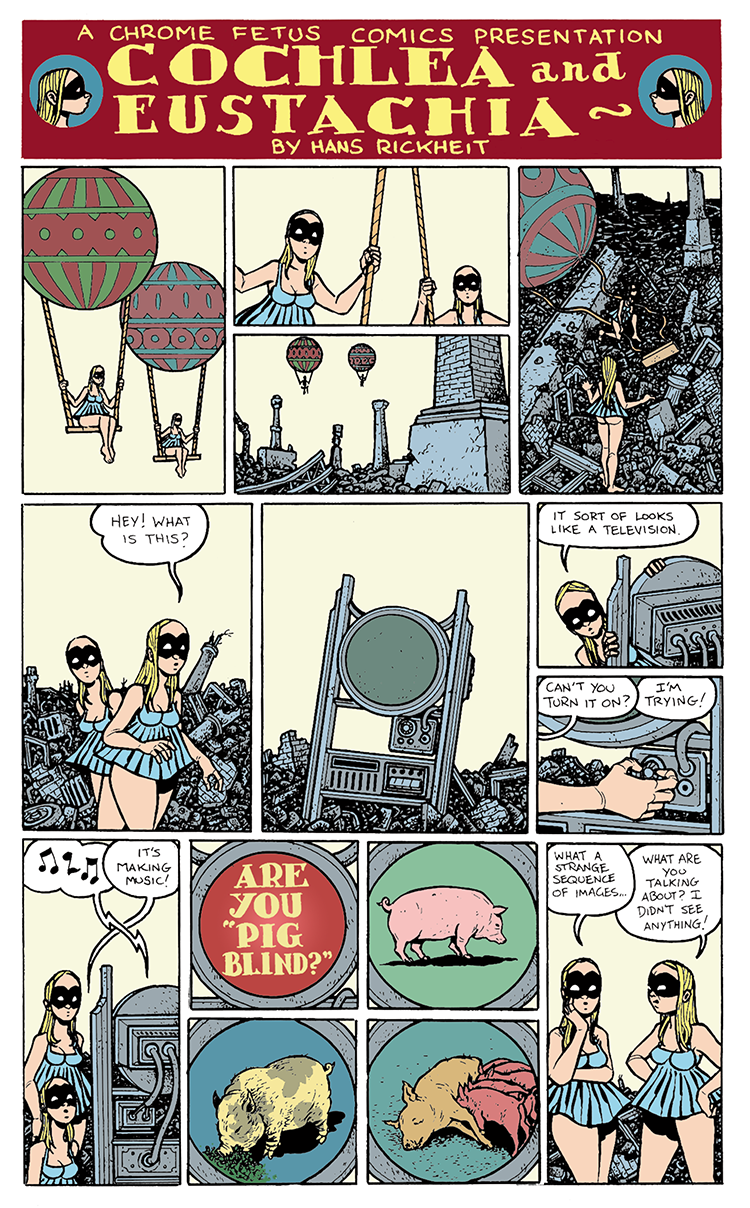 From Folly.
Let’s turn to your working with The Stranger. On the strength of Chloe and your ongoing series, Chrome Fetus, The Stranger took notice. Suddenly, you’ve got Cochlea & Eustachia comics in the grand ole Seattle alt-weekly, The Stranger, and it’s a turning point for you, a whole new readership opens up for you.
First off, I went to the very first MoCCA comics art festival (2002) and those comic strips in The Stranger happened to be running at the same time. I had drawn them a couple of months before. Everyone was abuzz over them. They thought it was going to be this ongoing strip. They didn’t know it was only a six-week stint. And I didn’t say anything to dissuade them from thinking that. It was a magical time when it felt like everyone was reading my weird-ass comics.
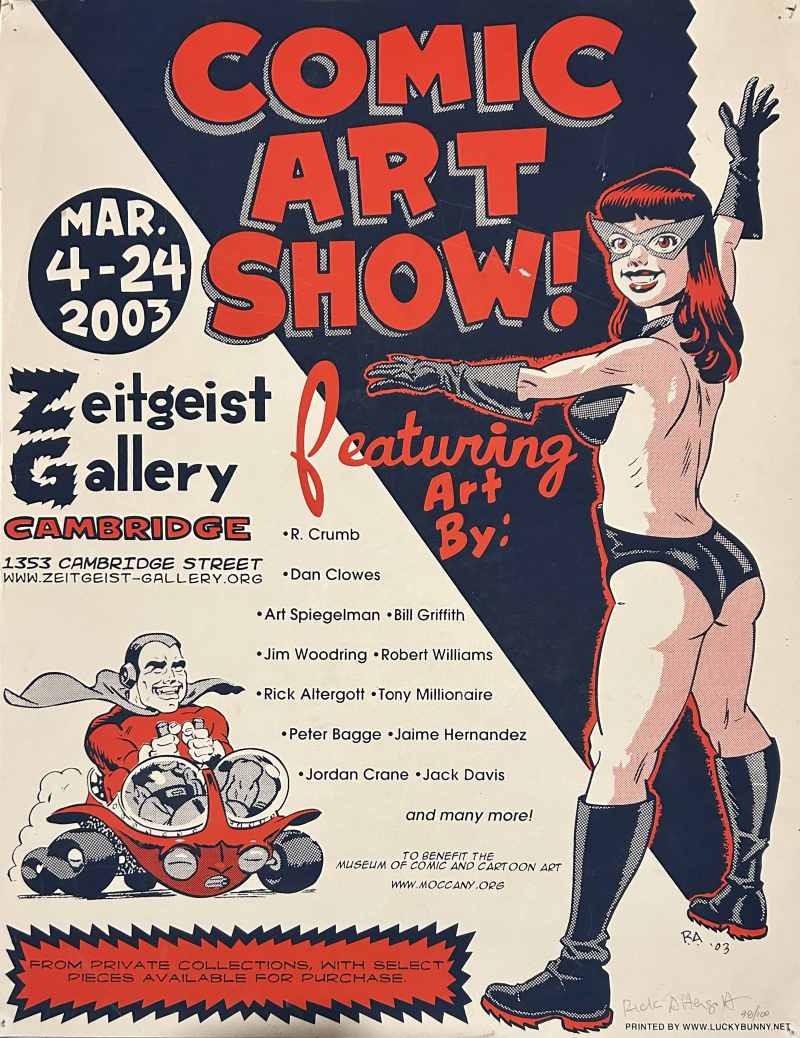
It all goes back to my being part of the Zeitgeist Gallery. The original location had burnt down and relocated to another part of town. This was in Cambridge, on main street and Broadway. Bob Cronin had a collection of comics art and wanted to do an exhibit there. He was connected with some well-established cartoonists. Alan, the owner, suggested that I be included in the show and Cronin agreed. One of the cartoonists involved was Rick Altergott. He had just moved into the area (Providence, Rhode Island). I loved his comic, Doofus. He and his wife, cartoonist Ariel Bourdeaux, were publishing Raisin Pie through Fantagraphics. I was thrilled to meet him, and he liked my work. It was Rick who contacted The Stranger about me. They had a new opening for a new cartoonist. So, it was thanks to Rick that I got my first professional gig as a cartoonist. I put a lot of work into those comics. It was the first time that I digitally scanned my work and colored it in Photoshop. I haven’t looked at them in years. Maybe they look pretty primitive.
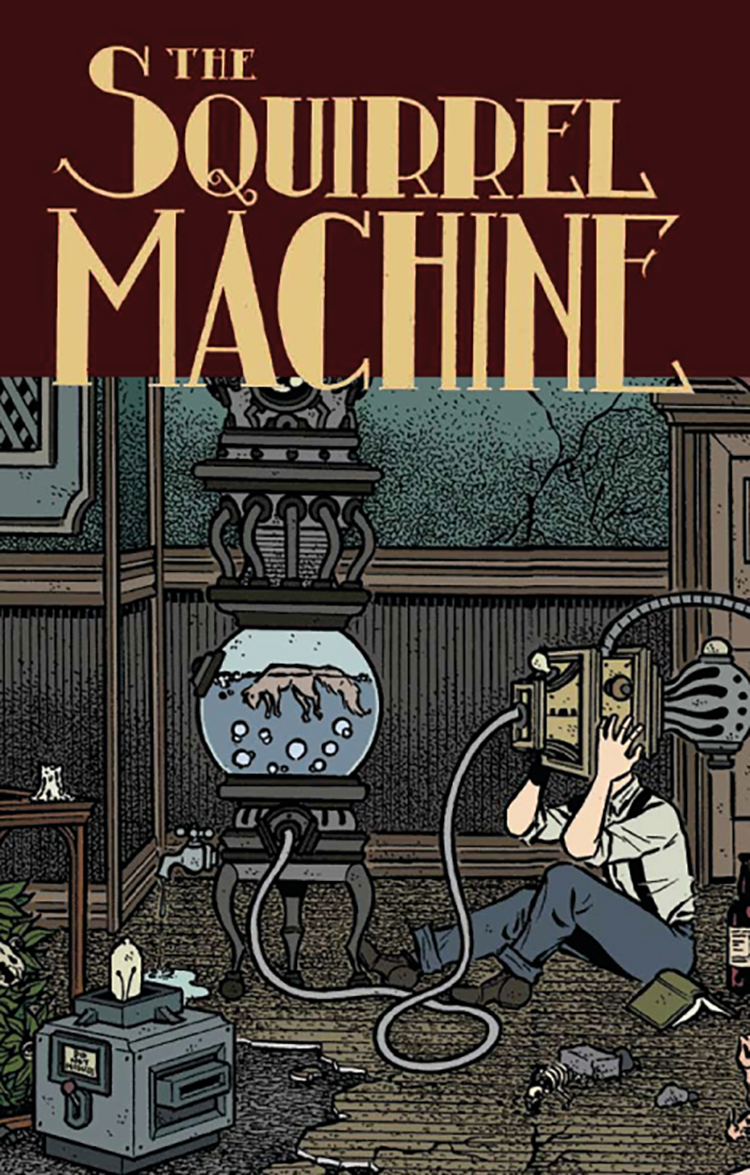
Well, on the strength of those comic strips, Fantagraphics took notice. A few years later, The Squirrel Machine is published, which is your masterwork. What can you tell us about that experience?
The Squirrel Machine took eight years to draw. I was continuously working on it. At the time, I was in a tumultuous relationship with an avant-garde musician. We were constantly moving. For a time, we were living in the basement of an abandoned factory. I just kept working on the book. Fantagraphics was set to launch a comics anthology series, and I proposed they might want to serialize my book. They responded they wanted to publish it as a book. So, I rushed to get to the ending.
It was so strange. By the time that the book was printed, I wasn’t ready to see such a beautifully designed book with embossed drawings on the inside covers. It was a magical time. I recall I was working this miserable job back then. I remember I went to MoCCA that year. I was spending the night in a flop house in the Bowery. It was early in the morning, and I was looking for a place to get some coffee. I walked by this street lined with bookstores. And there’s my book in the window. I go inside and find my book right alongside R. Crumb’s Genesis. It was so strange.
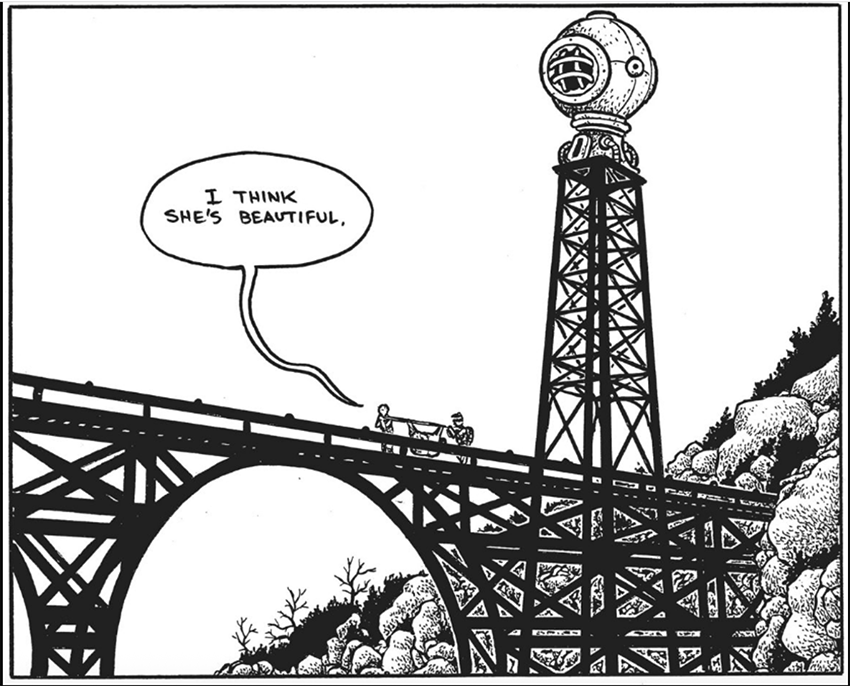 From The Squirrel Machine.
The characters in The Squirrel Machine, the teenagers Edmund and William, are such tender misfits. Edmund and William are very reclusive, being raised by their single mother, who looks old enough to be their grandmother. It’s a stifling small town and the boys stand out as the local eccentrics. Through a portal in their little home, they are transported to the strange mansion on the hill where they find inspiration for bizarre musical instruments made from the corpses of farm animals. Edmund inevitably becomes involved with a young woman his own age, a respectable girl curious about eccentrics. William becomes involved with another young woman who is the town’s curiosity, The Pig Lady. Ultimately, things go horribly wrong and it peaks at a scene in comics that I think is probably the most heartbreaking I’ve ever seen. Any thoughts on this?
It’s all like Chloe, a regurgitation of my formative years. I joke that it’s what it’s like growing up in rural New England. I was the town’s misfit. Massachusetts is a pretty liberal state but, when you go out in the central part, the parts of the state that nobody talks about, it’s very conservative. That’s where I grew up. My father was very conservative, a Republican. He had a wall-sized portrait of Reagan’s head in his office, Even as a youngster, at 11 years-old, I started figuring out this wasn’t a role model.
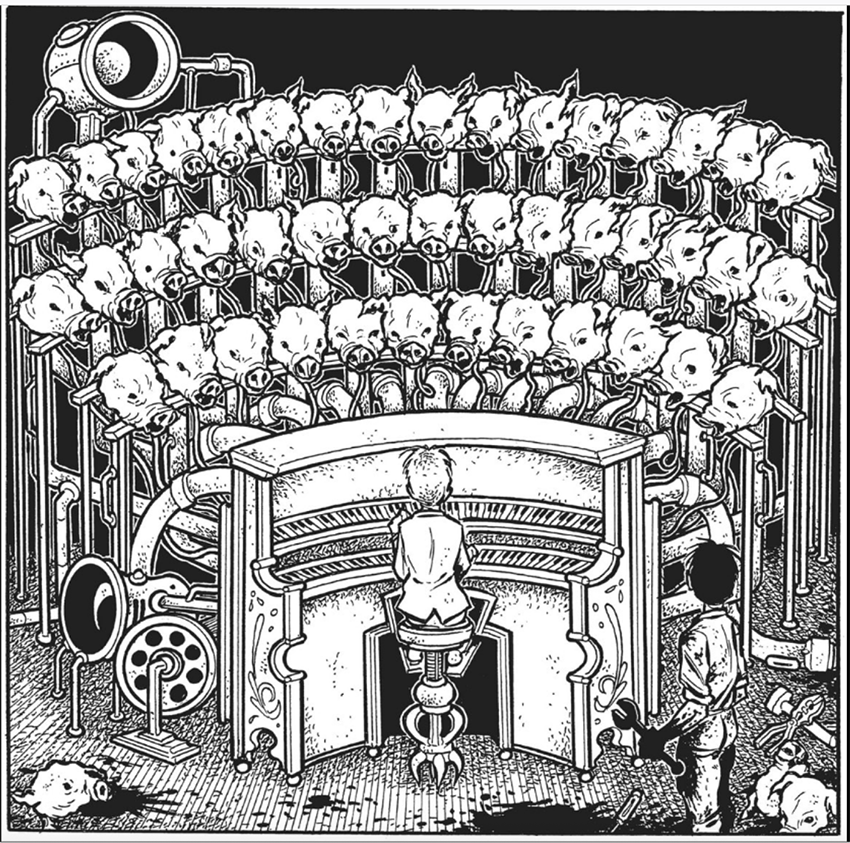 From The Squirrel Machine.
I befriended the other town weirdo, who the character Edmund is loosely based on. And I guess the town made up their own story and decided we were these two gay drug dealers. He would make art out of roadkill and found objects. We would be seen harvesting things and setting them on fire. We’d make smelly experiments in a parent’s driveway. So, the story is reminiscing about a fictitious personal history. A lot of it was about how we’d like to break into abandoned buildings and explore a bit. The reality of, say, breaking into an abandoned fire station is nowhere near as interesting as what I imagined it would be like. Basically, it’s a dirty old building with things we can steal. We were teenagers.
When we were young, that sort of thing was an amazing adventure but today you see that on YouTube. The weird and mysterious has become commonplace, accepted, and co-opted, by the mainstream.
The things that were sort of subculture then are now ordinary and normal. I was becoming vaguely aware of that kind of subculture as a kid. I’d get Factsheet Five, the zine that covered all kinds of independent publications. If you look, you’ll find issues that carry reviews of my high school comics. It’s like teenage poetry and you don’t really want people reading your high school poetry!
I remember a zine called, Infiltration, about somebody who would break into old abandoned buildings and train stations, take photographs and write about it. I don’t believe I ever got a hold of a copy but that’s the sort of things that we did. We were just scavengers. We didn’t have much money. We just scavenged materials for things that we wanted to make.
I was just watching the documentary on Renaldo & the Loaf, these outsider musicians. They were signed by Ralph Records, who also signed The Residents. These were English kids who aspired to make electronic music and did the best they could with the materials they had available. They would splice tape and do all these rudimentary things. And what’s great is that their music is far more interesting than the electronic music they were attempting to make. I guess I like stuff that is more handmade or appears to be handmade.
You don’t have to change your working methods. Just keep doing what you’re doing.
The backdrops I showed you, they’re all based on photos. I’ll take the camera with me whenever we go to a flea market, or a yard sale, or the dump. I’ll take photos of old things that are discarded. Most of the backdrops are based on photo collages of those things. I’m totally motivated by what I think is visually interesting more than whether it makes sense plot-wise.
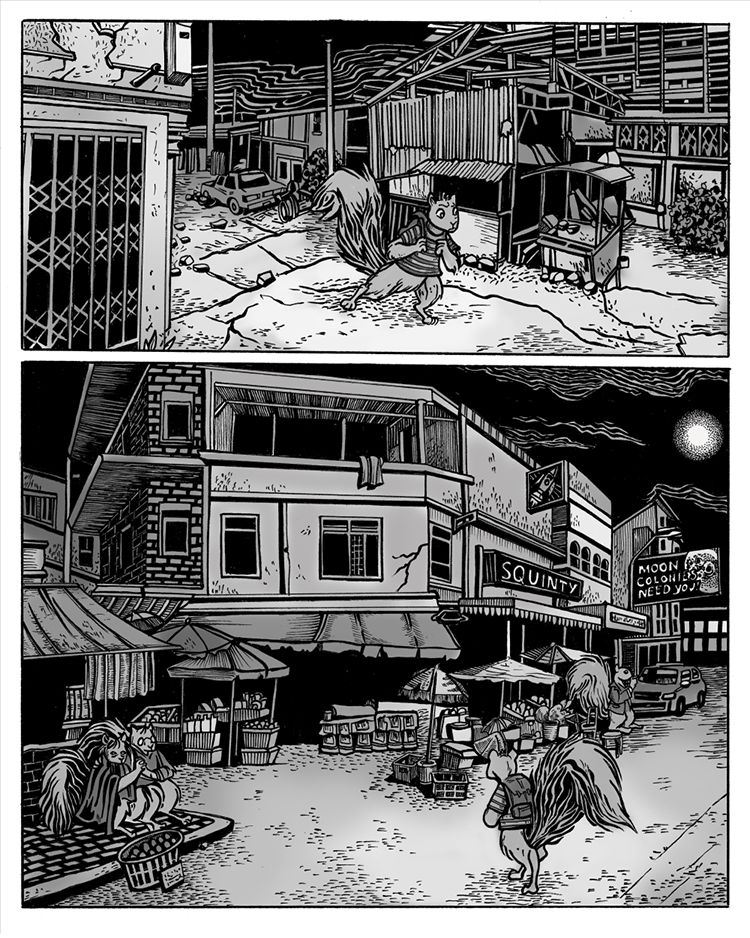 From Delia.
Next, in something that proves truth to be stranger than fiction, or art imitating life, or just a beautiful occurrence, you meet your future wife through your comics. You meet Krissy Dorn who loves your work and has an idea for a book that works off The Squirrel Machine. What can you share with us about that?
Krissy, who was a squirrel aficionado, happened upon The Squirrel Machine. She sent me a drawing - a self-portrait - which impressed me. Since she lived not too far from me at the time, we began a relationship which led to marriage. That was more than ten years ago, and we’re still happily together in our inexpensive Victorian home in Central Massachusetts, collecting debris and making art!
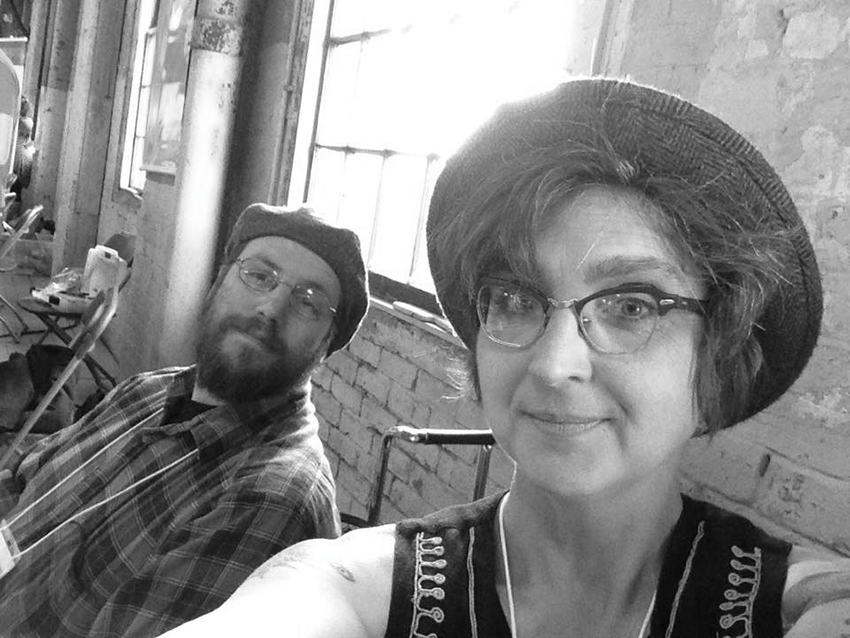 Hans Rickheit and Krissy Dorn. (photo courtesy of the artist)
Krissy is the best person. She knows how to use tools. She’s talented and smart and very well-read. She can read long articles and relay the information in a linear fashion which I’m incapable of doing. She’s a very good artist. She’s multi-faceted. She can do sculpture and painting and metalwork. She plays the accordion. She can draw. So, I put her to work. She was very gracious to ink the Delia comic. She loves squirrels. I made sure all the characters are squirrels.
I’m very happy that she’s willing to do the work. The penciled pages that I give her are very sparse. What you are seeing is most of her handiwork. She might disagree. Delia was a fun comic. We’re working on Volume 2 right now. And it’s all online. Pretty much everything I’ve done is online, I think. I want people to read the stuff.
Fantagraphics published Folly in 2012, which highlights your early work, Cochlea & Eustachia, the first volume, in 2014, and Delia in 2022. And you also created a series, The Gloaming, which is your first venture into more adult comics, for fans that want to take things a bit further. Looking back on your body of work, including your latest Volume 2, what do you think of where you are now in your career?
I’m constantly creating work. I’ll wonder about my limitations. I don’t think I’m autistic but sometimes my wife thinks I am. I spend all these hours drawing as that is what my mind seems to like to do the most. I don’t tend to look in the rearview mirror. Currently, I’m working on these wordless comics and don’t have a plot for them. When I watch a typical mainstream movie, I’m so bored by the standard story arc. I tend to be attracted to things that don’t care about plot. That said, I’m figuring out how to get a better handle on plotting, specifically for this wordless comics project.
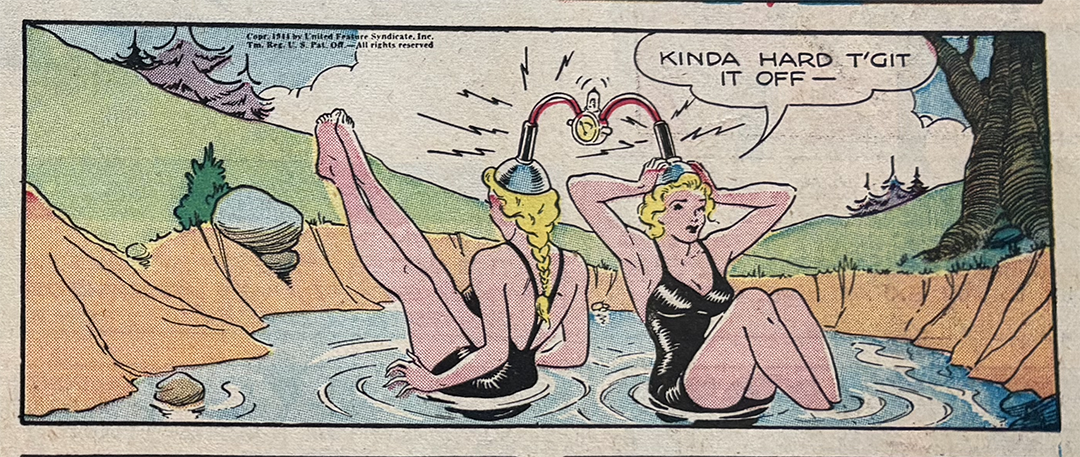 From Li'l Abner, by Al Capp, June 18, 1944.
Another look at Cochlea and Eustachia in regards to where you think they fit into the larger world of comics, I happened upon a Li’l Abner Sunday comic strip from the 1940s and, in it, Daisy Mae is attached to her clone by some contraption. It’s all very strange. My only conclusion is that Al Capp must have time travelled and gotten familiar with Cochlea and Eustachia. What do you think?
Perhaps it’s just part of the collective unconscious. I might have to steal that. I think I’m going to be stuck with this theme of more than one of the same character. I do that again in The Gloaming. Instead of drawing a hundred different girls, I keep to making clones of the first one.
Beyond the pin-up art, and the body horror, at its core, your stories are about misfits.
Oh, totally. Misfits are more interesting than normal people, right? I never thought I fit in. I never know how to act like a normal human. I frequently put my foot in my mouth in social situations. I guess I personally relate to misfits better.
Misfits can often be the best humans.
I’m not sure about that! No, not always.
People are people. I think we’re all misfits in one way or another.I hope these sorts of conversations are helpful to other people. Occasionally, people approach me and “accuse” me of “making weird art for the sake of being weird.” My response is usually, “yeah. So?”
Of course, “weird” is completely relative. And in time, my comics may look perfectly ordinary. Nonetheless, in the present moment, I’m still interested in things that possess a certain profound strangeness that retains its oddness no matter how many times you regard it. I find that to be an entirely worthwhile pursuit.
Yeah, we do the best we can. I’m just working with my own limitations.
I was watching this video of this musician, Ron Geesin. He does avant-garde music. There was an interview he did where he talks about the guitar being a limitation and how he works with that. That made me think of A.I. and having no limitations to work with, which makes it boring. At first, what it churned out was batshit crazy, which I enjoyed. But fast forward a few years and A.I has had time to process this immense amount of unlimited information, and it churns out this very bland result. It’s the limitations that make things interesting. We need to embrace our limitations, lean into them.
...





 English (US) ·