
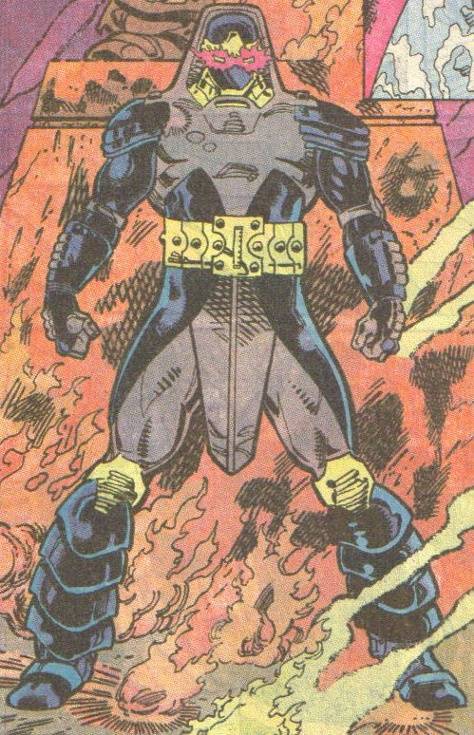
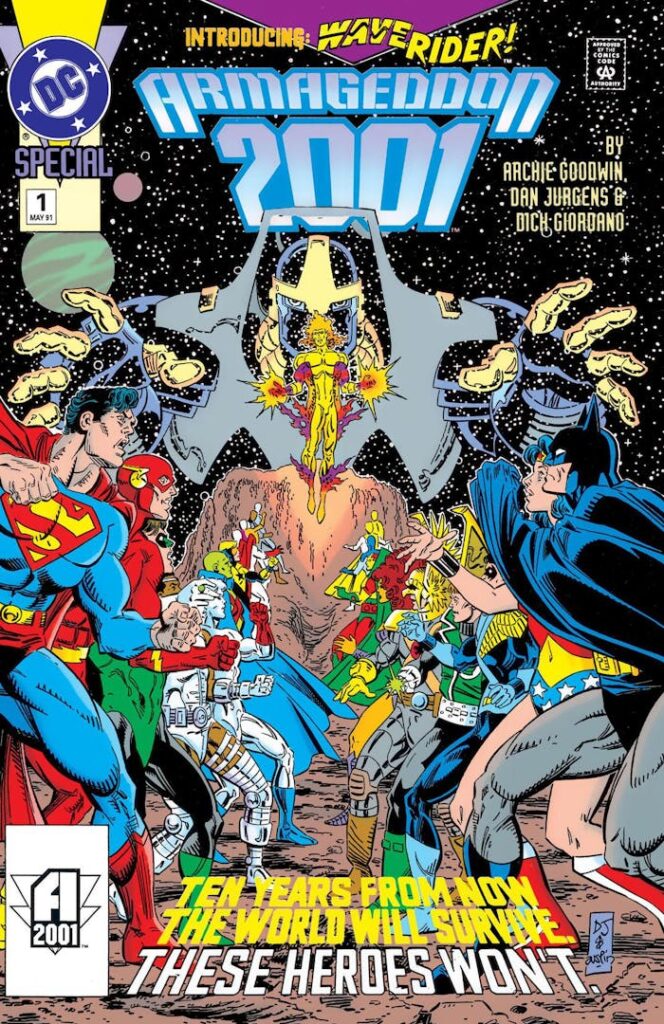
Monarch officially descended upon the DC Universe on this day, March 12, 1991, launching one of the most ambitious and pensive crossover events of the 1990s. Making his first appearance in the pages of Armageddon 2001 #1, the character represented an oppressive and dystopian future where a former hero had betrayed their ideals to enslave humanity. Created by the powerhouse duo of Archie Goodwin and Dan Jurgens, the villain provided a definitive portal into the high-stakes world of temporal studies and the fragility of the superheroic spirit.
The creative engine and authority behind this historic debut includes:
- Writers: Archie Goodwin & Dan Jurgens
- Artist/Penciler: Dan Jurgens
- Inker: Dick Giordano
- Publisher: DC Comics
The history of Monarch is rooted in a bleak future, specifically the year 2030 AD. On this Earth, the hero community has been eradicated by a maniacal ruler who once stood among their ranks. Unhappy with his rule, a brilliant scientist named Matthew Ryder—an expert in temporal studies—became convinced he could use his technology to travel back in time and prevent the tyrant from ever rising to power. Consequently, Ryder’s journey from a desperate survivor to the cosmic being Waverider highlights the vibrant and flexible nature of DC’s Copper Age lore.
The Temporal Game in Armageddon 2001
What readers should understand about the March 12th anniversary is the tactical complexity Monarch displayed from the very beginning. As Matthew Ryder mutated into a form of living temporal energy, he arrived in 1991 with the intent to discover the tyrant’s identity. However, it was revealed that the villain had been monitoring Waverider’s every move in the past. This created a hierarchy of suspense, as the villain merely waited for the perfect moment to step through the rift and stop the hero from erasing his existence.
The pacing of the event allowed for a deep dive into the lives of the Justice League, with Waverider touching various heroes to see their possible futures. This narrative structure gave readers a pensive look at what their favorites might become, but the real explosion occurred when the villain entered the timeline for a physical confrontation. Transitioning from a psychological mystery to an all-out plans-breaking war, the issue established a level of dread that few crossovers of the era could match.
The Tragedy of Hawk and the Rise of the Tyrant
Visually, the comic book covers and interior art by Dan Jurgens in Armageddon 2001 #1 created an immediate icon. The massive, golden-masked armor provided a spectacular sense of menace. However, the most pensive detail of the character’s debut is the controversy regarding his secret identity. While the original intention was for Captain Atom to be revealed as the future ruler, a high-profile leak forced a last-minute creative pivot. The mantle instead fell upon Hank Hall, better known as the hero Hawk.
In a heartbreaking sequence, Monarch retreated from the Justice League, taking Dawn Granger (Dove) with him. When Hank Hall caught up to them, he witnessed the villain kill Dawn in front of his eyes. Being created as two beings whose natures were supposed to maintain an absolute balance, Hank’s warlike spirit became uncontainable without his partner’s pacifist influence. Enraged, he beat the villain to death, only to realize the terrible truth: he was the one destined to wear the armor.
Seeing the dead body and the device designed to enslave humanity, Hank mused that the world would need someone to keep the balance. He donned the armor and continued building the machine, ensuring the mathematical certainty of the timeline. For those exploring our This Day in Comics archive, this revelation remains one of the most debated twists in comic history. Transitioning from a champion of order to the architect of a global oppressive regime, Hank Hall’s tragedy is a study on the corruptive nature of power and grief.
In conclusion, Monarch is an essential, if often polarizing, pillar of the DC mythos. From his debut as a mysterious future threat to his status as a recurring cosmic adversary in events like Extreme Justice and Countdown, he reflects the experimental spirit of 90s storytelling. Whether he is haunting the possible futures of the JLA or engaging in a pensive duel with Waverider, his legacy is one of armor, irony, and absolute tactical brilliance. Don’t miss this portal into the “Armageddon” era when you revisit the classics this month!
📢 Join the Conversation
Do you think Hank Hall was the right choice for the reveal, or should they have stuck with Captain Atom? Is the Monarch armor the coolest design of the 90s? Join the conversation on X and tag us @comicbookaddt to share your thoughts on the temporal tyrant!
Follow our community for more updates:








 English (US) ·