
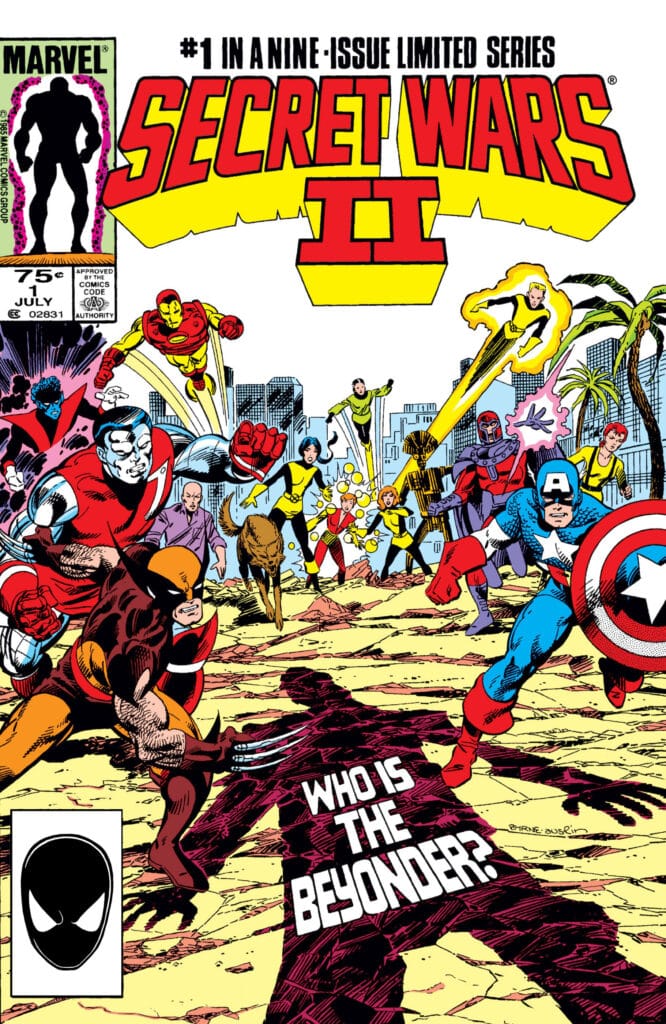
Secret Wars II is officially remembered as the pensive and often polarizing sequel to the most omnipotent event in the history of Marvel Comics. Launched in July 1985, this nine-issue limited series was intended to be a spectacular follow-up to the battle royale that redefined the industry. However, despite the massive marketing push and a house ad campaign that spanned the entire line, the consensus among fans remains that it didn’t quite live up to the hype.
The creative authority and engine behind this 1985 milestone includes:
- The Writer: Jim Shooter (Editor-in-Chief)
- The Artist: Al Milgrom (The Avengers, West Coast Avengers)
- The Inker: Steve Leialoha & Josef Rubinstein
- The Publisher: Marvel Comics
The history of Secret Wars II is rooted in the success of the first Secret Wars (1984), which was a tightly contained narrative designed to sell action figures. By contrast, the sequel attempted something far more pensive and experimental: it brought the god-like Beyonder to Earth to learn what it means to be human. Consequently, the transition from the high-stakes adventure of Battleworld to the mundane streets of New York City created a disconnect that many readers found unpredictable and ultimately frustrating.
The Humanization Gap in Secret Wars II
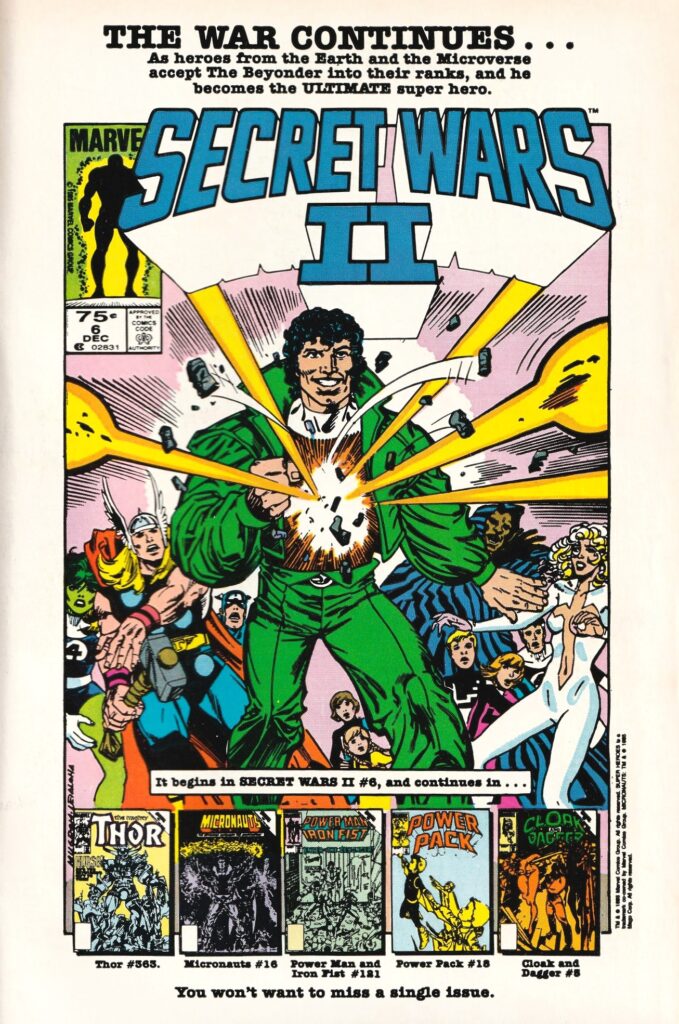
What readers should understand about the failure of Secret Wars II is the pensive shift in its protagonist. In the original series, the Beyonder was an unseen, vulnerable-less voice of cosmic authority. In the sequel, he adopted a human form modeled after Steve Rogers, complete with a distinctive jerry-curled hairstyle and a white leisure suit. This visual choice immediately lowered the character’s prestige in the eyes of the speculator market.
The pacing of the series was also heavily criticized. Rather than a cohesive reading order, the story felt like a series of disconnected vignettes. We saw the Beyonder learning how to use a toaster, eating a cheeseburger with Spider-Man, and attempting to find sexual fulfillment. While these moments were intended to be a study of enlightenment, they often came across as campy and tonally inconsistent with the latest releases of the era. For fans who track comic book covers for their epic scope, seeing an all-powerful being struggle with basic hygiene was a “swing and a miss.”
The Invention of Event Fatigue
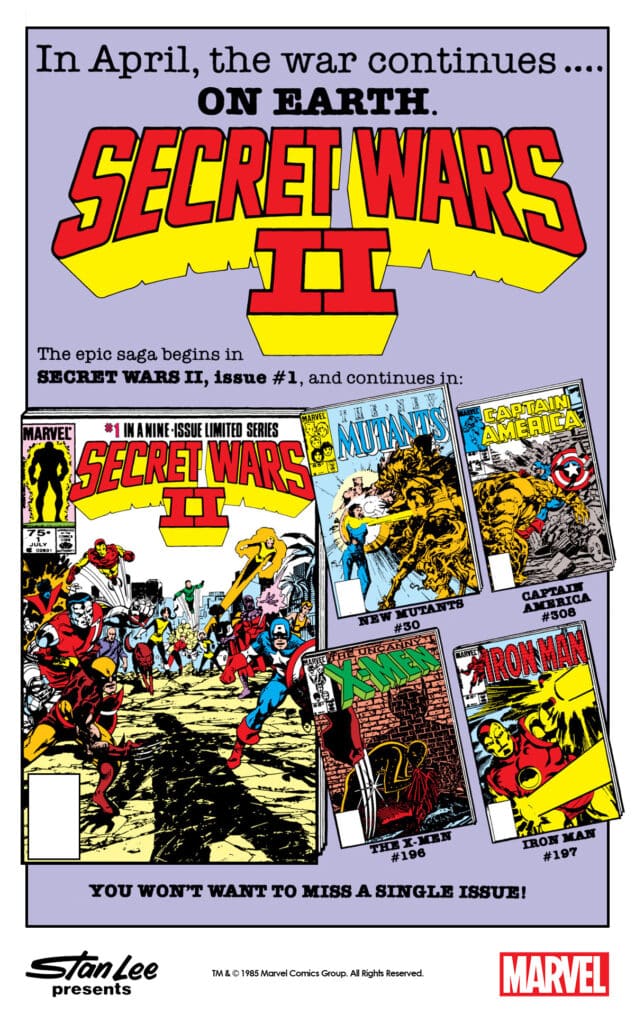
Visually and narratively, Secret Wars II is often cited as the birth of “event fatigue.” Unlike the first series, which was largely contained within its own title, the sequel forced its presence into almost every ongoing Marvel title. From Captain America to The Avengers and Uncanny X-Men, the tie-ins were inescapable. This checklist-driven approach meant that fans had to buy dozens of extra issues to understand a story that many already felt was lacking intellectual weight.
Furthermore, the climax involving Molecule Man and the death of the Beyonder felt like a mathematical certainty rather than a hard-earned victory. The scale of the destruction was so immense that it lacked the personal foundations of the previous war. As CBR notes, the series became a victim of its own ambition, prioritizing cross-marketing over character growth. Transitioning from the innovative success of the first event to the bloated hierarchy of the second remains a cautionary tale for modern editors.
In conclusion, Secret Wars II remains an essential piece of comic history, if only for the lessons it taught the industry. While Al Milgrom’s art and Jim Shooter’s concepts were spectacular in scope, the execution lacked the focus that makes an event truly legendary. Don’t miss this portal into the “Copper Age” of Marvel when you revisit the archives of the mid-80s!
📢 Join the Conversation
Do you think Secret Wars II is unfairly maligned, or was the jerry-curled Beyonder a step too far? Which tie-in issue was actually better than the main series? Join the conversation on X and tag us @comicbookaddt to share your thoughts on the most controversial Marvel sequel!
Follow our community for more updates:







 English (US) ·