
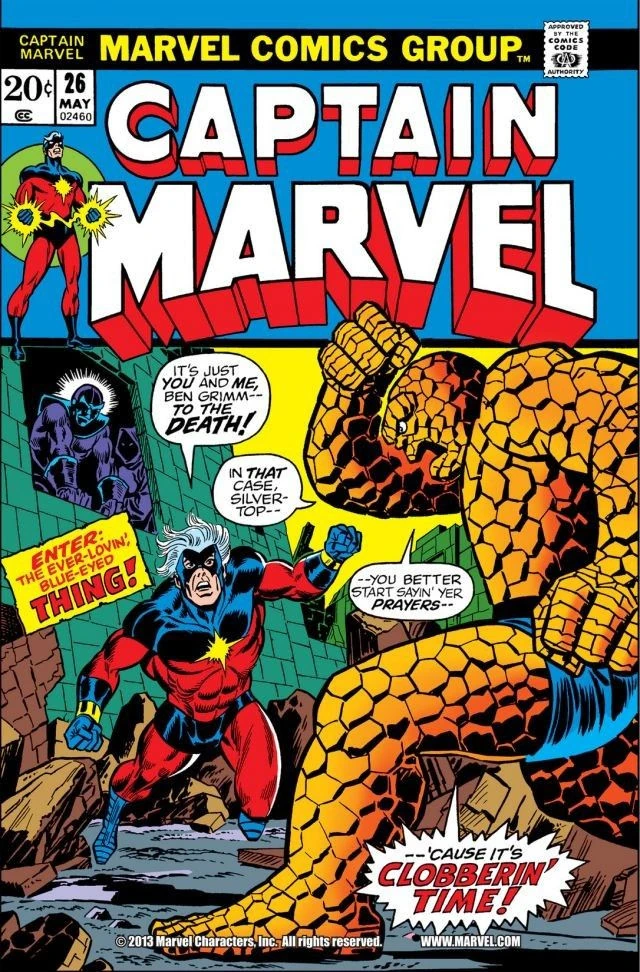
 “Death Captain Marvel #26 Debut Cover Marvel Comics
Death is officially recognized as one of the most powerful and enigmatic abstract entities in the Marvel Universe. Debuting on this day, February 23, 1973, in the pages of Captain Marvel #26, she arrived as the literal embodiment of the end of life. Created during a period of intense cosmic experimentation at Marvel, she serves as the fundamental opposite to Eternity, the entity representing the totality of the universe itself. Her presence isn’t merely a threat; it is a necessary balance to the existence of all things.
The creative team responsible for this landmark debut includes:
- Writer: Mike Friedrich
- Artist/Co-Plotter: Jim Starlin
- Inker: Dave Cockrum
- Publisher: Marvel Comics
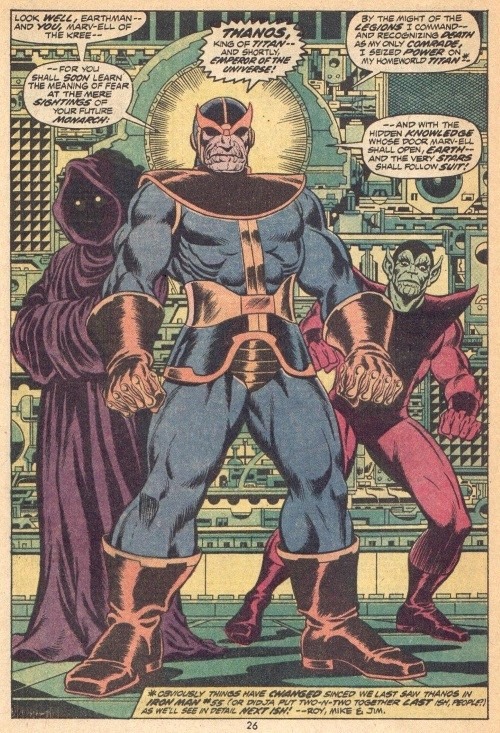
In her primary form, she is depicted as a skeleton cloaked in a heavy black or purple robe, a visual shorthand for the traditional “Grim Reaper.” However, she is a shapeshifter of immense capability, frequently appearing as a Caucasian human female to interact with those who obsess over her. This duality between her monstrous true form and her deceptive beauty has driven some of the most destructive narratives in the history of the medium, most notably the rise of the Mad Titan, Thanos.
The Cosmic Obsession with Death
What makes Death so unique among Marvel’s pantheon is her silent influence. She rarely speaks, yet her desires (or perceived desires) have motivated Thanos to commit acts of genocide on a universal scale. Thanos’s entire quest for power—specifically his obsession with the Infinity Gems and the Cosmic Cube—is rooted in a desperate, psychopathic need to prove his love for her. He believes that by extinguishing all life, he can finally be worthy of her affection and stand as her equal in the void.
During her debut arc in Captain Marvel #26, the scale of this obsession became clear. Thanos sought to conquer the universe not for political gain, but as a wedding gift for his silent mistress. This narrative introduced a level of philosophical depth to the new comics of the era, exploring the intersection of nihilism and romance. Transitioning from a standard cosmic villain to a worshiper of the end, Thanos elevated the stakes of the Marvel Universe beyond simple world domination.
The Cosmic Cube and the Abandonment of Thanos
The visual storytelling of the 1970s reach a critical mass during this conflict. After Thanos successfully obtained the artifact known as the Cosmic Cube, he appeared to have achieved his goal of universal control. However, the nature of Death is as fickle as it is final. When Thanos was eventually defeated by the combined might of Captain Marvel, Drax the Destroyer, and the Avengers, his silent lover simply abandoned him. Her lack of loyalty to her champion highlighted the cold, dispassionate reality of her existence—she does not seek a partner; she only waits for the inevitable.
Furthermore, the comic book covers of this era, particularly Jim Starlin’s work, utilized heavy shadows and cosmic vistas to emphasize her authority. She is often seen standing in the background of major battles, a mathematical certainty watching the players move toward their destined end. For fans who explore our This Day in Comics archive, her debut remains a pivotal moment that expanded the Marvel mythos into the realm of abstract personifications.
In addition to her role in the Thanos saga, she has appeared in various forms throughout the years, interacting with characters like Deadpool and the Silver Surfer. Her relationship with Deadpool, in particular, added a layer of dark comedy to her character, as the Merc with a Mouth became the only being she genuinely seemed to enjoy. This versatility ensures that she remains a relevant force in latest releases, even as the universe undergoes multiple reboots and expansions.
In conclusion, Death is far more than a villain; she is a fundamental constant of the Marvel Multiverse. From her debut in Captain Marvel #26 to her status as the silent architect of Thanos’s madness, she represents the ultimate mystery that every hero and villain must eventually face. Whether she appears as a hooded specter or a beautiful queen, her legacy is one of silence, power, and finality.
📢 Join the Conversation
Who do you think is the best host for a story involving Death: Thanos, Deadpool, or the Silver Surfer? Do you think Thanos was ever truly loved by her, or was he just a tool? Join the conversation on X and tag us @comicbookaddt to share your thoughts on Marvel’s cosmic personification of the end!
Follow our community for more updates:









 English (US) ·