
Valerio Stivé | March 4, 2026
It seems impossible, considering the proportions that the festival has reached so far, but Lucca Comics is growing year after year. And it is almost embarrassing to see people complaining every year about how things are not the way they used to be anymore. It is so obvious.
Ahh, when it was only about comics ... and people back then were probably complaining about the arrival of manga and cosplayers.
Aah, when it was only in the (small) sports arena … oh c’mon, your now favorite publishers and authors weren’t even a thing back then. Oohh, when it was only comics and no movie stars … no just don’t go to the movie theater and avoid them. Uuhh, when there were no cosplayers, and you could easily walk around without being stabbed by a fake sword … c’mon, I know your phone is full of pictures of cosplayers. Aahh, when you used to listen to Hugo Pratt singing songs and playing guitar at night ... well, I have no idea what people used to complain about at the time, but I am almost certain that 90% of the people that come to the festival now weren’t even born at the time.
And what was there to complain about this time?
All this and so much more. Because we Italians are Olympic champions in the discipline of complaining.
Among the hundreds of guests for this year’s edition, there were some that were undeniably huge: Hokuto no Ken (Fist of the North Star) co-creator Tetsuo Hara, and Hideo Kojima, creator of the games Death Stranding and Metal Gear Solid, who was there as part of his Death Stranding 2 tour. I’ve had the chance to listen to both of them at public events and press conferences. For people of my generation, who grew up during the '80s and '90s, being in the proximity of someone like Tetsuo Hara is hard to explain, and seeing his exhibition was truly mind-blowing and, at the same time, almost touching.
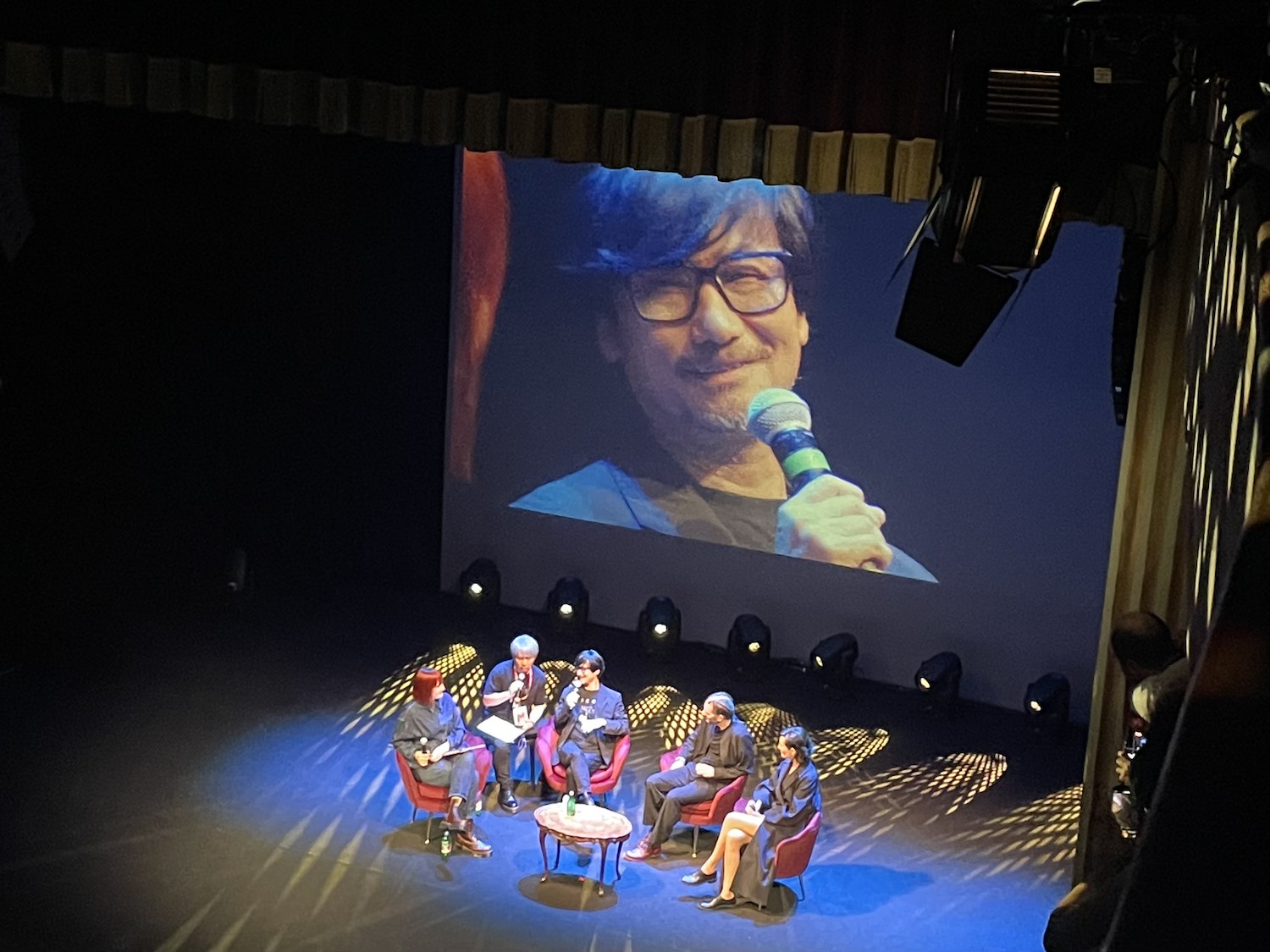 interviewer Eva Carducci (left) and Hideo Kojima (with his translator), Luca Marinelli and Alissa Jung (from left to right).
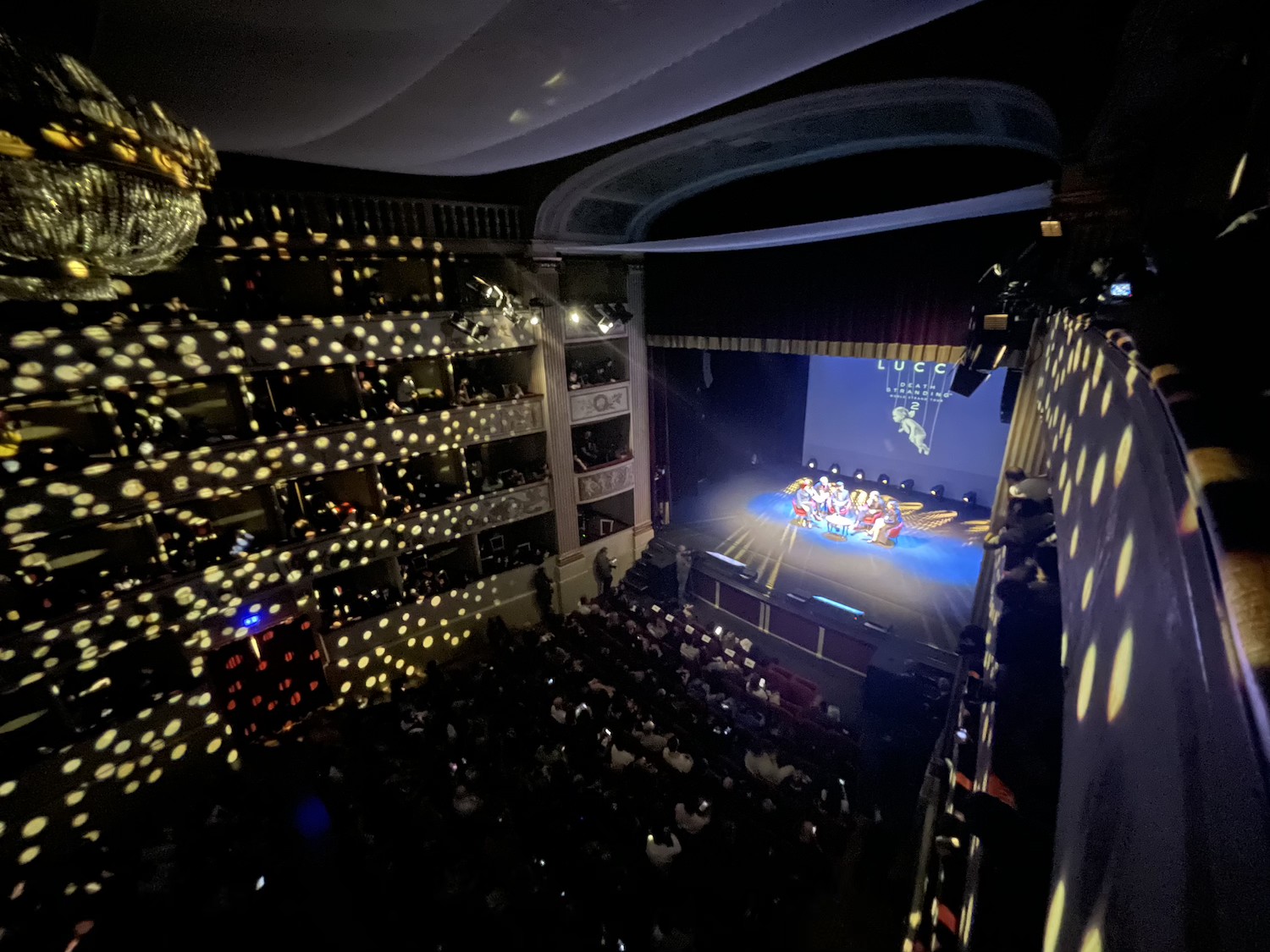 interviewer Eva Carducci (left) and Hideo Kojima (with his translator), Luca Marinelli and Alissa Jung (from left to right).
Hara appeared in several panels and events, in front of joyful fans In one panel, while drawing for an hour in public, he dialogued with the curator of his exhibition, Alessandro Apreda, and Italian illustrator Paolo Barbieri. In another, at the gorgeous Teatro del Giglio, he had a conversation with John Romita Jr. and Italian comic artist Igort (in a format curated by Igort called Creators of Worlds).
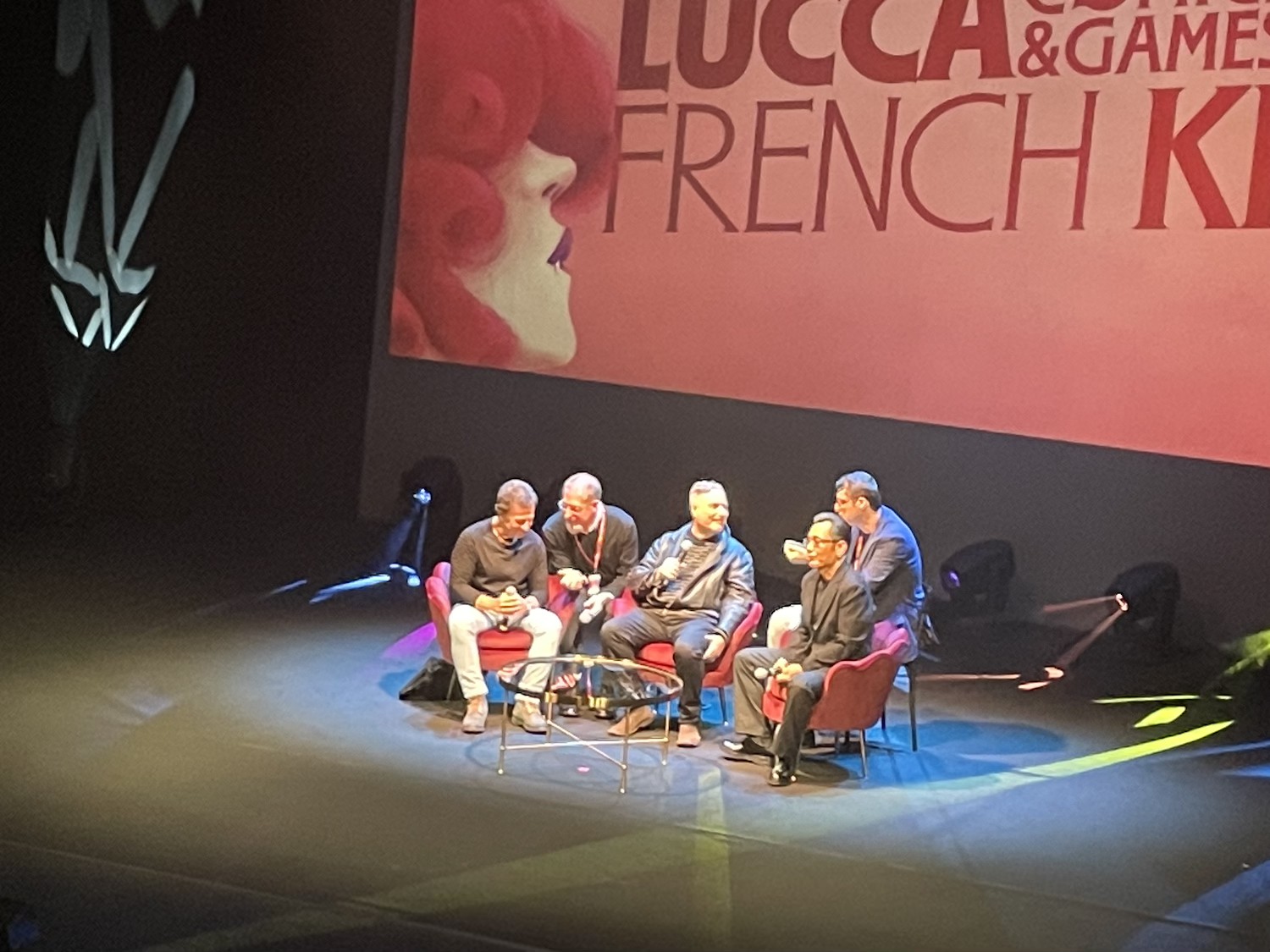 John Romita Jr., Igort, Tetsuo Hara and their translators
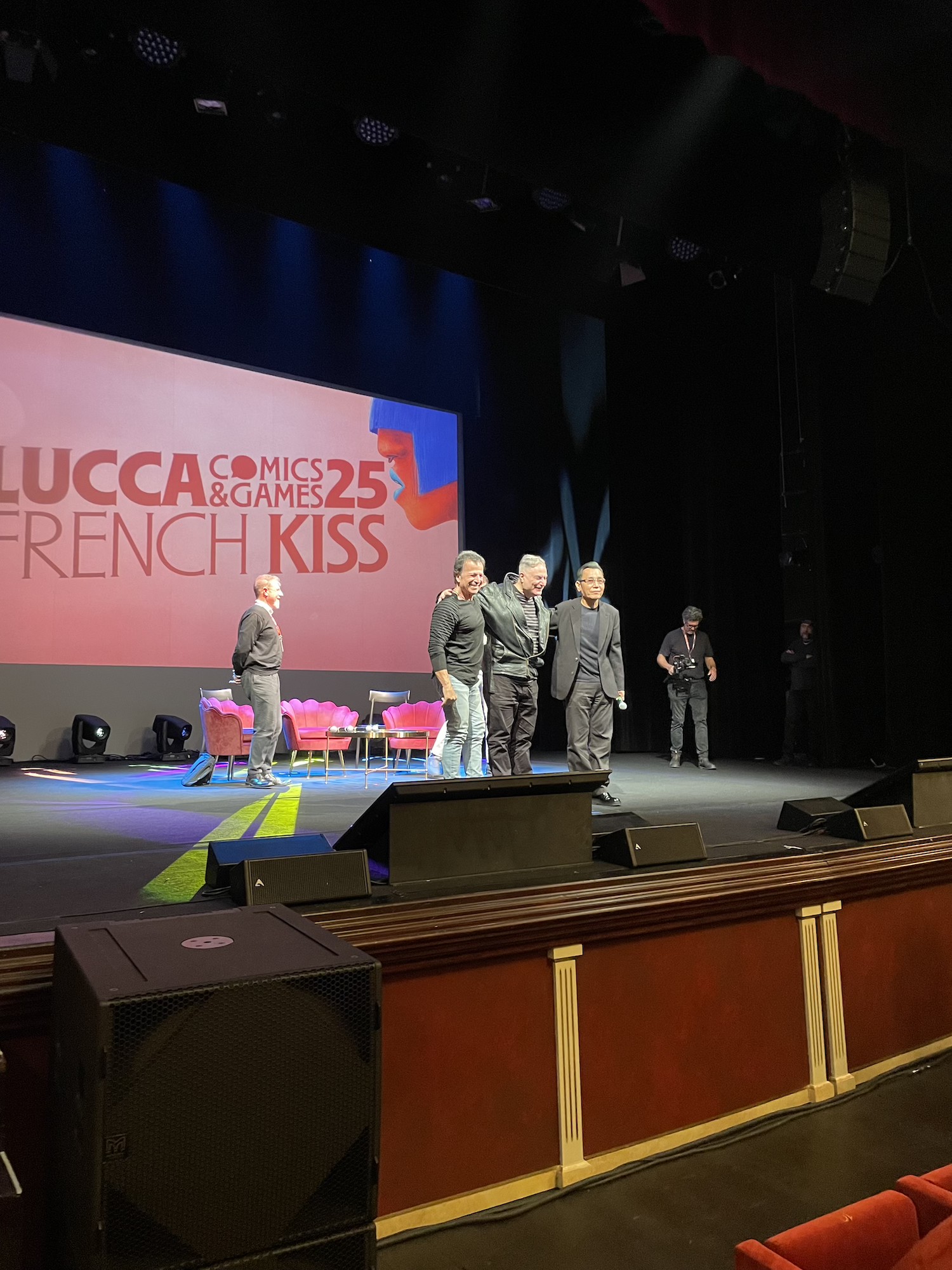 John Romita Jr., Igort, Tetsuo Hara and their translators
Hara showed himself to be sincerely surprised by the way fans welcomed him in Lucca, and it was amazing to see his humble attitude, especially when he also thanked his Italian collaborator Enrico Croce, who works for Hara’s publishing company Coamix, and who “made this happen,” as Hara said, looking genuinely moved. Day after day, Hara seemed closer and closer to the audience, despite the initial indications suggesting that he did not want to have particular contact, many photos soon emerged showing him with fans and Kenshiro cosplayers.
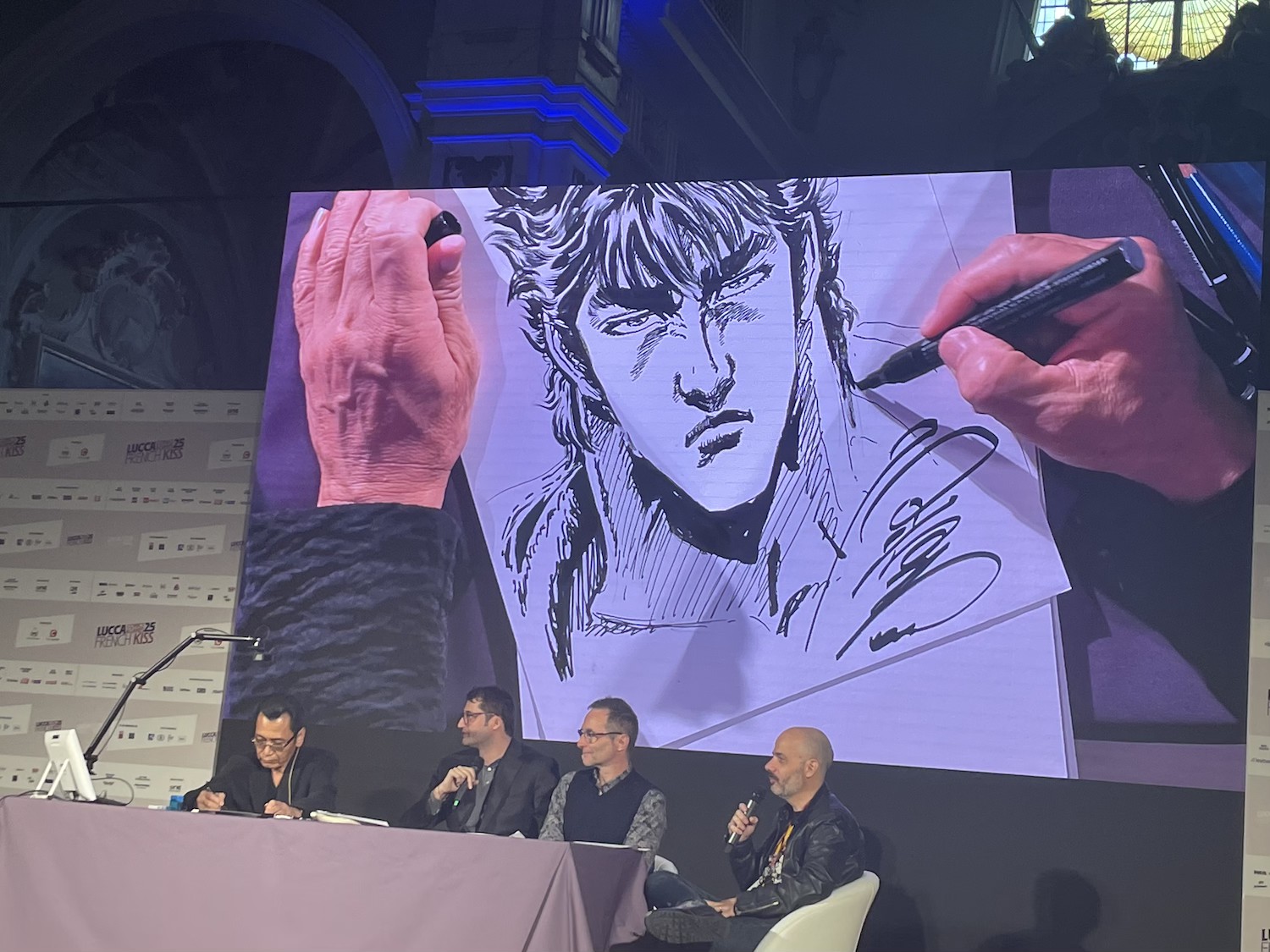
I also got the chance to ask a question at the press conference with Hara, and although he didn’t exactly answer my question, what he said was much more interesting than that. He explained how, even though he had never been a victim of bullying himself, he had witnessed many episodes when he was young, and that inspired him to create a hero who would stand up for those who are alone and defenseless. A cheesy image, considering the brutal violence of Hokuto no Ken? I don’t think so. The man looked sincere, and his words surely spoke to the inner eight-year-old me who used to get stones thrown at him with a slingshot by older kids while minding his own business and just trying to get back home on his bike after Sunday school. At the time, watching Hokuto no Ken was not allowed in my home, even though it was already becoming huge in Italy, and I would only be able to watch the anime a few years later.
But what did people have to complain about this time? Tetsuo Hara. Mostly Hara’s prices for the exclusive prints Coamix was selling at the festival. Those who purchased one of the Prestige Signed Lithographs — the author’s signed prints presented in the Anime Import catalog created for the event — at the Coamix shops had the chance to personally greet Hara and receive a direct thank you from the author. To get access, it was necessary to get the following deals: the Gold tier (€1,750) included a meet-and-greet and a photo, with no autograph; it came in the form of five giclée prints priced at €350 each and allowed entry for up to three people. The Platinum tier (€4,900) added an autograph on an item bought at Coamix shops; up to four people could pick either one metal art piece or a mix of giclée prints that reached the same total. The Diamond tier (€6,000), limited to two people, included a personalized autograph on something brought from home or purchased there, choosing either a single premium giclée for €6,000 or a combination of prints worth the same amount. The Elite tier (€12,600) was limited to three and had a dedicated shikishi drawing, with a choice between two artworks or a bundle of giclée pieces adding up to the same price.
I must be missing something, but with all these options and figures, the only thing I had to complain about was that I didn’t understand anything about all those packages. That said, it wasn’t really an issue for me, since one thing was clear: I didn’t have the money anyway. And I have nothing against the fans who made all of this basically sell out.
When these options were announced, the internet was on fire, criticizing Hara, his company, and Lucca Comics as well, in a kind of populistic, pauperistic rage. How dare Hara ask for all that money?! As if he weren’t the creator of one of the greatest and most epic sagas of recent decades, so deeply rooted in our collective imagination (I’m doing my best to avoid quoting the Italian Ministry of Culture, who actually said something fitting to define Hokuto no Ken. I’m not going to fully quote him, but he said something very much like this).
Videos, reels, memes, and strips about the issue — even from a famous cartoonist like Leo Ortolani, whose satire ended up sounding more jealous than funny to some — flourished in this climate. But I honestly don’t see the reason. I can see the opportunity for humor (like there isn’t always a reason and a need for that), but I don’t see the point in this outrage, or in the idea that one of the most popular mangaka ever shouldn’t ask for the same amounts as he does at other conventions, especially while granting Italian fans the chance to meet him, shake his hand, and say thank you (which apparently does not happen every time).
The whole rhetoric around the price of his works — pushed by individuals and, sadly, also by some of the press, trade and general — as well as the “cost of meeting him” (as some said), left me quite underwhelmed. Especially considering that during the festival there were not only exclusive high-priced goods for sale, but also posters and high-quality reproductions of Hokuto no Ken pages available for just 30 euros.
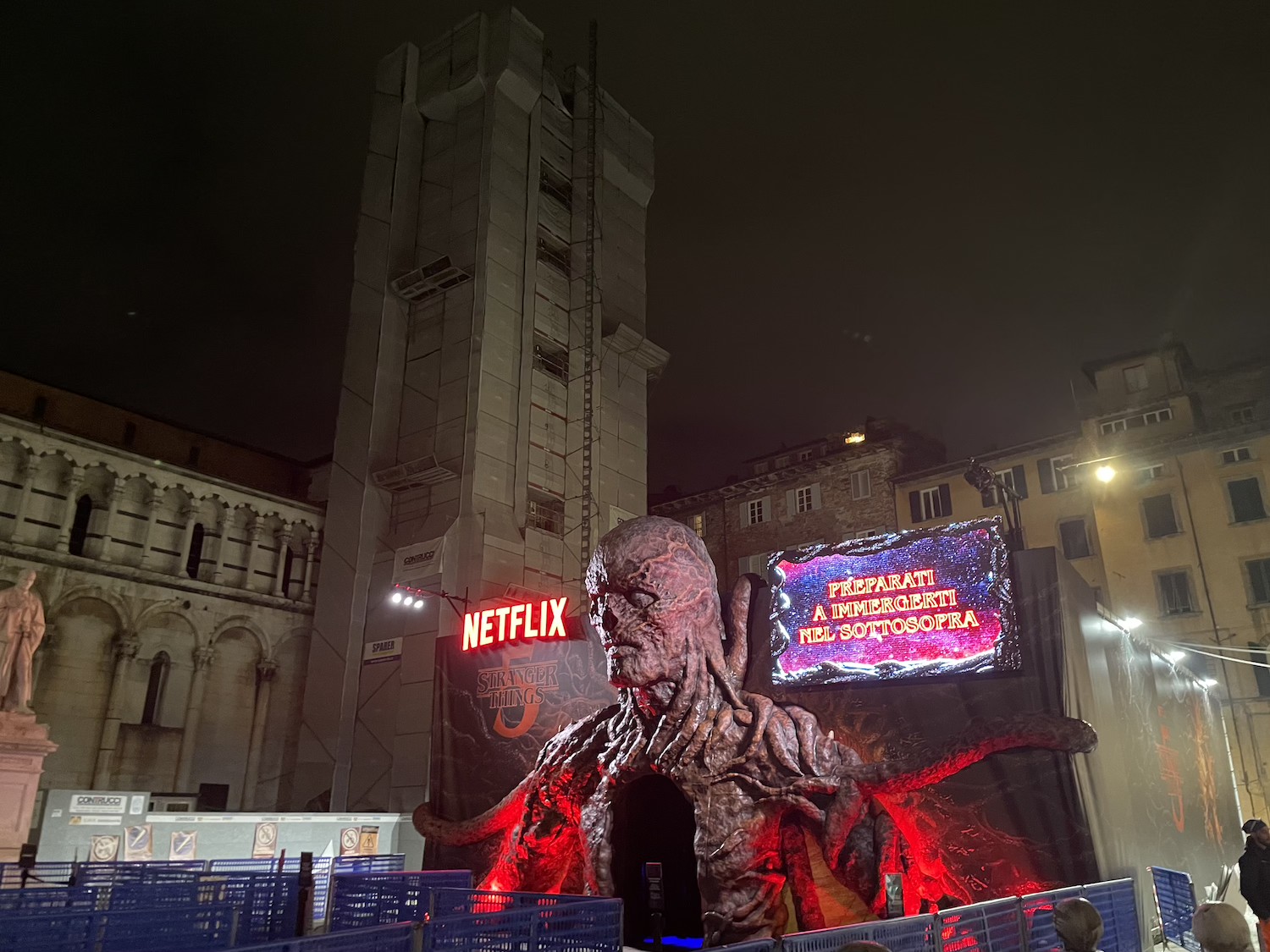
Lucca Comics can certainly be discussed and criticized for many aspects of its organization, such as ticket prices growing year after year and long lines everywhere, just as publishers can be criticized for how they manage their presence at the festival (some of them apparently do not care enough about, or carefully manage, how lines for foreign guests develop during the night, judging by online controversies that followed the event). But it is hard to say that opportunities to meet or listen to your favorite comics creators are lacking.
The passage that follows was added after the piece was finished, when I realized that something else happened even after the end of the festival, sparking another controversy: the case of the photo of Zerocalcare with Hideo Kojima. When the most popular Italian comic artist was seen on Instagram with possibly the greatest video game creator of our time, holding one of Zerocalcare’s books, fans went crazy — only to find out hours later that the photo had been deleted. Apparently, not everyone appreciated seeing Kojima holding a book about the Kurdish resistance, Kobane Calling, and many fans of Kojima (apparently largely Turkish) flooded his page with enraged comments. Kojima, who hadn’t read the book and didn’t know it, had to delete the post and release a statement apologizing for sharing the photo without proper knowledge of the book. I just hope in the end he eventually got a copy and will read it.
Among the other international guests were part of the main cast of Stranger Things; Kei Urana, author of the manga series Gachiakuta; mangaka Takashi Murakami (Stargazing Dog); politician and mangaka Ken Akamatsu (I still can’t quite wrap my head around the fact that I saw him, at least, in a curious panel with Tex artist Fabio Civitelli … what did they have in common?!); Teenage Mutant Ninja Turtles co-creator Kevin Eastman, who also had an exhibition dedicated to him; and Akemi Takada, one of the greatest Japanese artists of the 1980s, a character designer who co-created the anime Creamy Mami and worked on many beloved series such as Patlabor and Kimagure Orange Road. Japanese underground artist Jun Hayami, known for his work in the guro hentai genre, attracted considerable interest at the In Your Face Comix booth, with long lines of fans every day as the tireless author spent hours drawing.
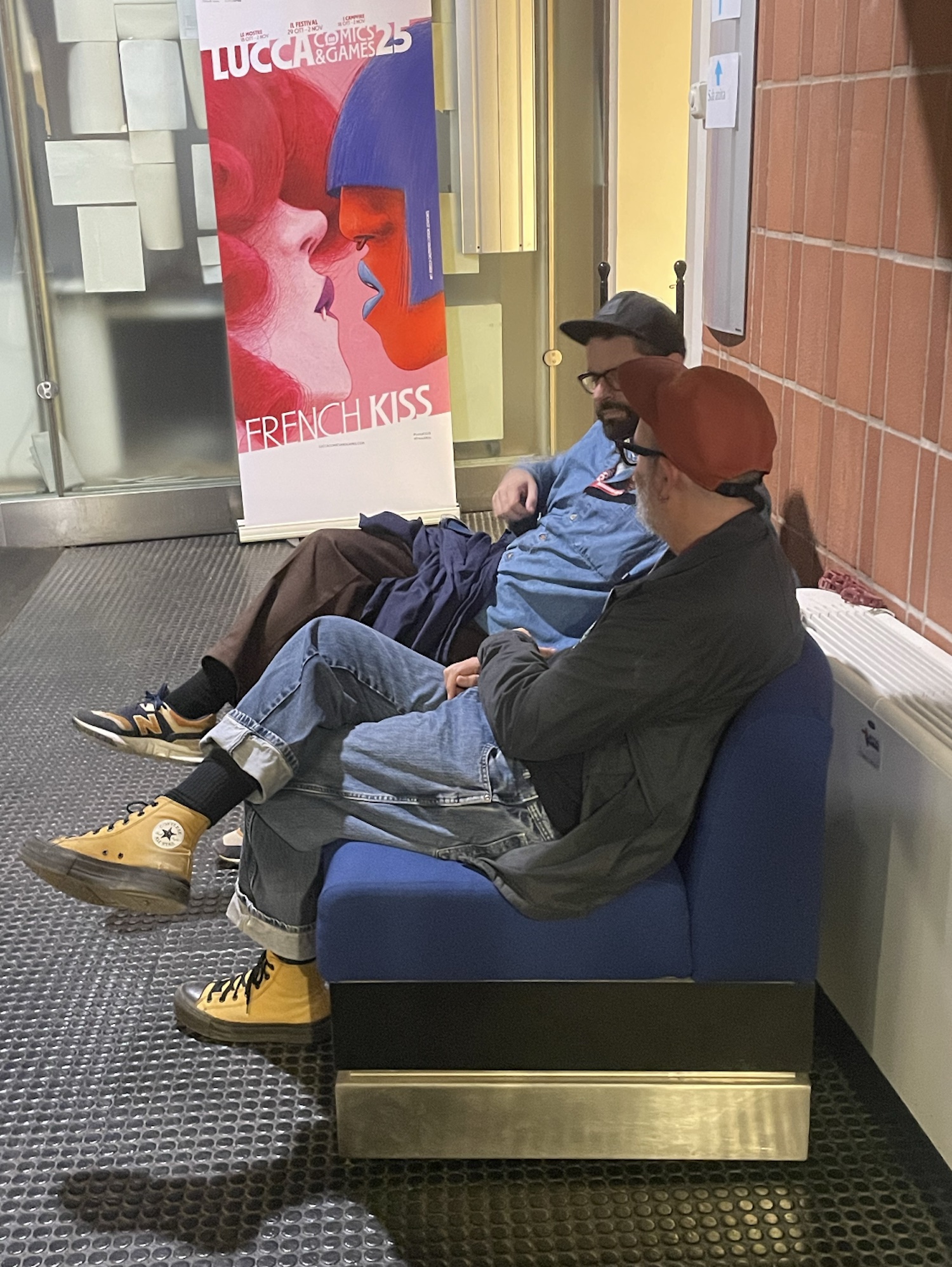
And there were countless more. On a personal note, I had the pleasure of meeting talented artist Tyler Crook, after working as a translator on his series Harrow County, Manor Black, and The Lonesome Hunters for years (see picture below by my friend and colleague Andrea Fiamma). We ended up talking first about punk rock and Love and Rockets (he’s originally from Southern California), then dad rock and the concerts I had seen in the past in the same square where publishers now have their pavilion during Lucca Comics — like Neil Young, Tom Petty, and The National (yes, let’s already call the latter dad rock).
South Korean manhwa is now a stable presence at the festival as well, something confirmed by a collective exhibition last year and the growing number of guests. As well as Taiwanese artists, this year best represented by Yu Peiyun and Zhou Jianxin, authors of the series Son of Formosa.
A notable Korean artist this year was Na Yoonhee, creator of the webtoon Whale Star (originally published by Naver and released in Italy by Renoir Comics), a generous artist with fans and a sweet, curious person. One of the sweetest moments came when she offered me roasted chestnuts, and I went around town looking for porcini mushrooms for her — no, not under the trees, I mean actual shops where you can buy them.
You can always meet some of the old glories of the Italian comic-dom, and even catch Milo Manara and Tanino Liberatore at night in everyone’s favorite evening gathering, Piazza Anfiteatro, playing Bayblade (there are several videos online documenting the historic match).
The awards
The jury was composed of Kalina Muhova (comic artist), Mauro Uzzeo (comics writer), Carmine Di Giandomenico (comic artist), Cecilia Bressanelli (journalist), and Corinna Braghieri (Lucca Comics & Games cultural staff). These were the awards:
Yellow Kid — Master of Comics: Tetsuo Hara, whose self-portrait will now be included in the comic artists portrait collection at the Uffizi.
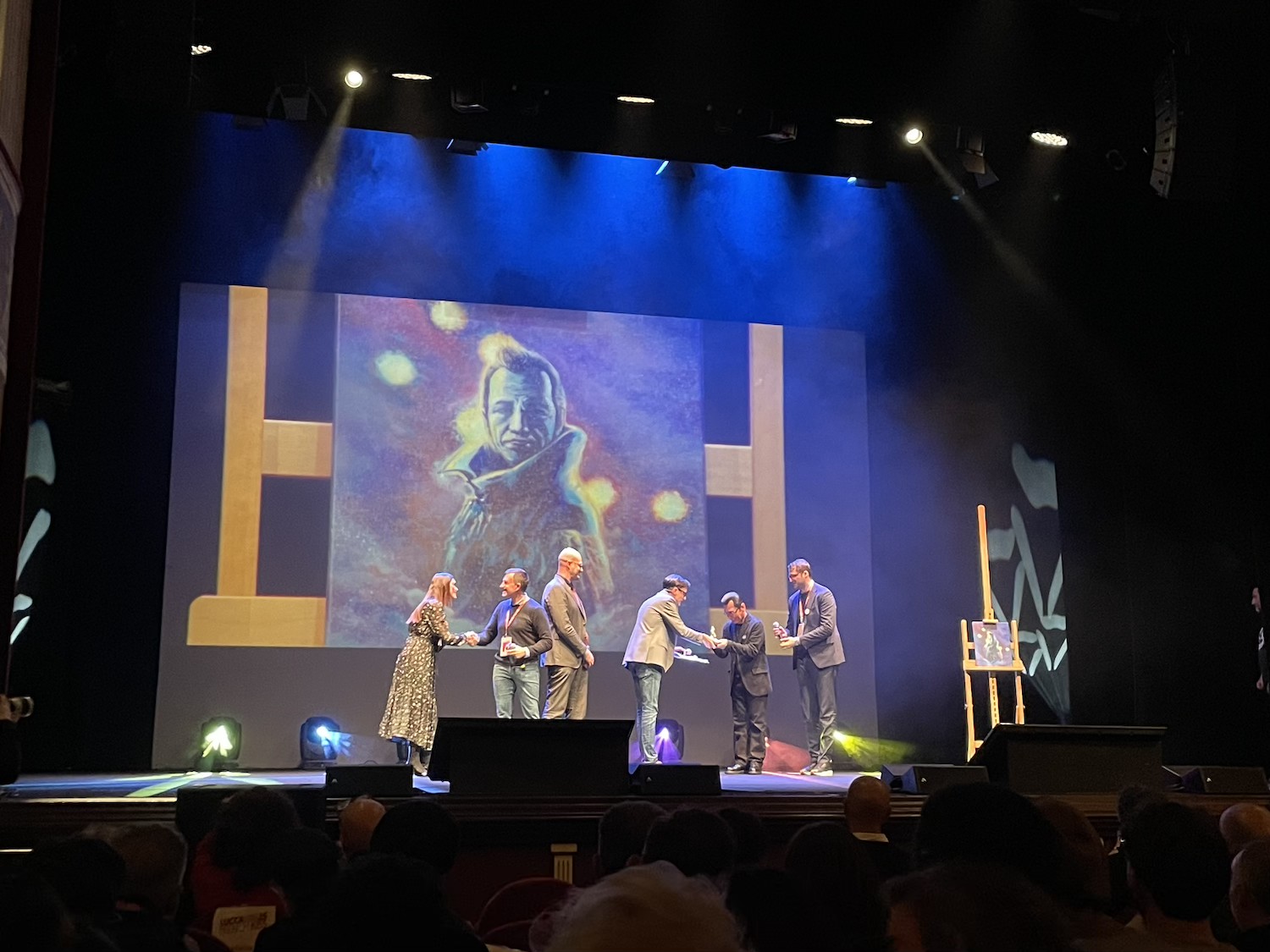
Yellow Kid – Comic of the Year: The Horizon by South Korean artist JH, originally published on Webtoon and released in Italy by Renoir Comics, with translation (from English) by Valerio Stivè (that’s me). The series follows a boy and a girl walking forward through a world in ruins. Their journey goes on, but they never seem to find anything that could offer hope for a better future or even safety. The three-volume series is also available in English from Yen Press.
Yellow Kid – Author of the Year: Alessandro Tota for La magnifica illusione (Coconino Press) and Lo specchio (Canicola Edizioni). Alessandro is one of the most prolific and peculiar voices in the Italian comics scene, able to balance grotesque, realistic, tragicomic, and humorous approaches. While Lo specchio is a wordless story about a tense emotional relationship between a man and a woman, La magnifica illusione. New York 1938 is an ambitious tale in two volumes that explores the Golden Age of American comics through a fictional, humorous, and well-documented approach. The latter is also available in French from Gallimard under the title L’illusion magnifique.
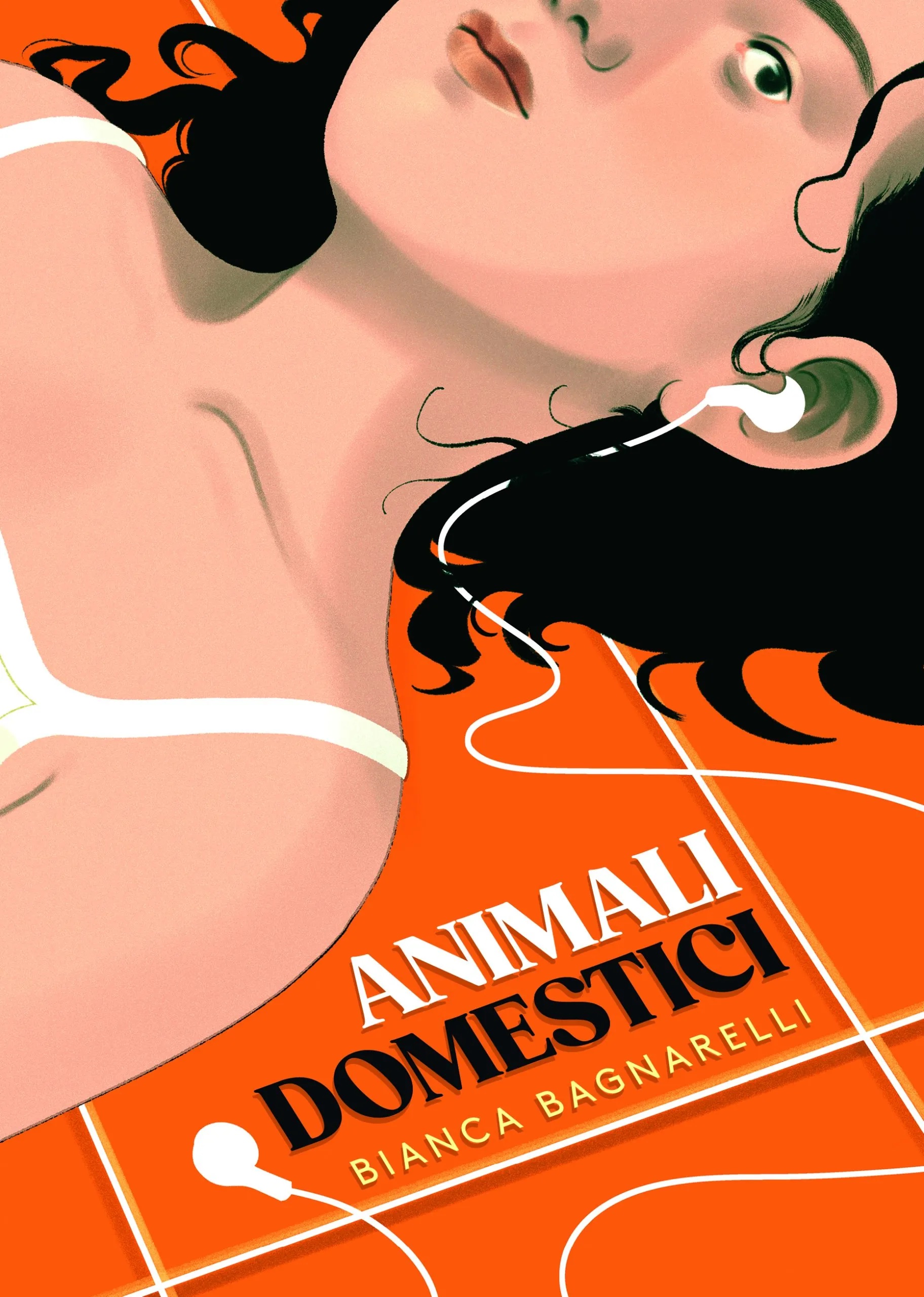
Animali domestici (“House Pets”, Coconino Press) by Bianca Bagnarelli won the award for Best Short Story or Anthology. This was the only book I was absolutely sure would win an award, because it is simply one of the best things to come out of the Italian comics scene in years. The book is a collection of mostly previously self-published short stories. Bianca has an exceptional ability to tell heartfelt stories, portraying dramas, and everyday small tragedies and joys. She also works as an illustrator for The New Yorker, The New York Times, The Atlantic, and many others, with a unique and delicate style. She confirmed to me that the book will soon be published in the UK and North America, in France (by Gallimard), and in other languages as well. So keep an eye out for it.
 The Best Series award went to Veil, a very peculiar manga by Kotteri (published in Italy by Edizioni BD / J-POP Manga and in English by UDON Entertainment). It is a poetic romantic story told with bright colors and a sinuous line, and is surely one of the most interesting manga currently available in the West.
The Gran Guinigi Award for Best Script went to La seconda vita di Sander – Libro Primo, by Russian artist Stepan Razorenov, published by Hollow Press, an Italian publisher that is steadily growing and releases its books in double editions, including English. If you are looking for a journey into darkness, their catalog is worth exploring.
The Stefano Beani Prize for Editorial Initiative went to Tutto un altro Lupo Alberto (Gigaciao), edited by the creator of the historic strip Lupo Alberto, Silver, together with Lorenzo La Neve. The idea was to hand the blue wolf over to contemporary young cartoonists, producing fresh new stories.
The Best Debut award went to Bestie in fuga by Daniele Kong (Coconino Press). This thick and dense volume tells a neo-realistic story set on a Mediterranean island, where everyday life is disrupted by a film crew arriving to shoot a movie. The book is sweeping awards at festivals, but I honestly struggle to explain the enthusiasm around it, as I wasn’t able to enjoy the story and the art feels too naive and undercooked to me.
A Special Mention was given to Compagna Cuculo by Anke Feuchtenberger (Coconino Press). The book is special for both its extraordinary art — Feuchtenberger is undoubtedly one of the greatest European figurative artists of our time — and its powerful multi-generational family story.
Other awards included: the Self Area Prize, awarded to the collective Ragdoll Fumetti Scomposti for Cadaveri squisiti by Veronica Ciancarini; the Generations Award (children aged 6–12), given ex aequo to Al di là del fiume. Il cavaliere doppio by Giuseppe Ferrario (Terre di mezzo) and I misteri di Strambopoli by Tor Freeman (Diabolo Edizioni); the Manga Project Contest winner was Il rapimento di Ila by Debora and Erica Longo; and the Comics Project Contest winner was Montagna by Luca Peverelli and Chiara Milano.
Among the many awards, there were also those dedicated to professionals, and as a professional myself, I couldn’t avoid listing them. Best Translation from English went to The Legend of Luther Arkwright by Bryan Talbot (Tunué). Best Translation from French went to The Grocery by Aurélien Ducoudray and Guillaume Singelin (Bao Publishing). Best Translation from Japanese went to Claudine by Riyoko Ikeda (J-POP Manga). Best Editorial Packaging went to Le storie dell’orrore di Mimi – Edizione Deluxe by Junji Ito (J-POP Manga). Best Lettering went to Andrea Accardi for (I Wanna Live Like) Common People by Marco Rizzo and Lelio Bonaccorso (Panini Comics). Best Cover went to Zodiac. A Graphic Memoir, by Ai Weiwei, Elettra Stamboulis, and Gianluca Costantini (Oblomov Edizioni), and Best Color went to Laura Zuccheri for Kamasutra di carne e di sangue, written by Sudeep Menon (Segni d’Autore).
The exhibitions
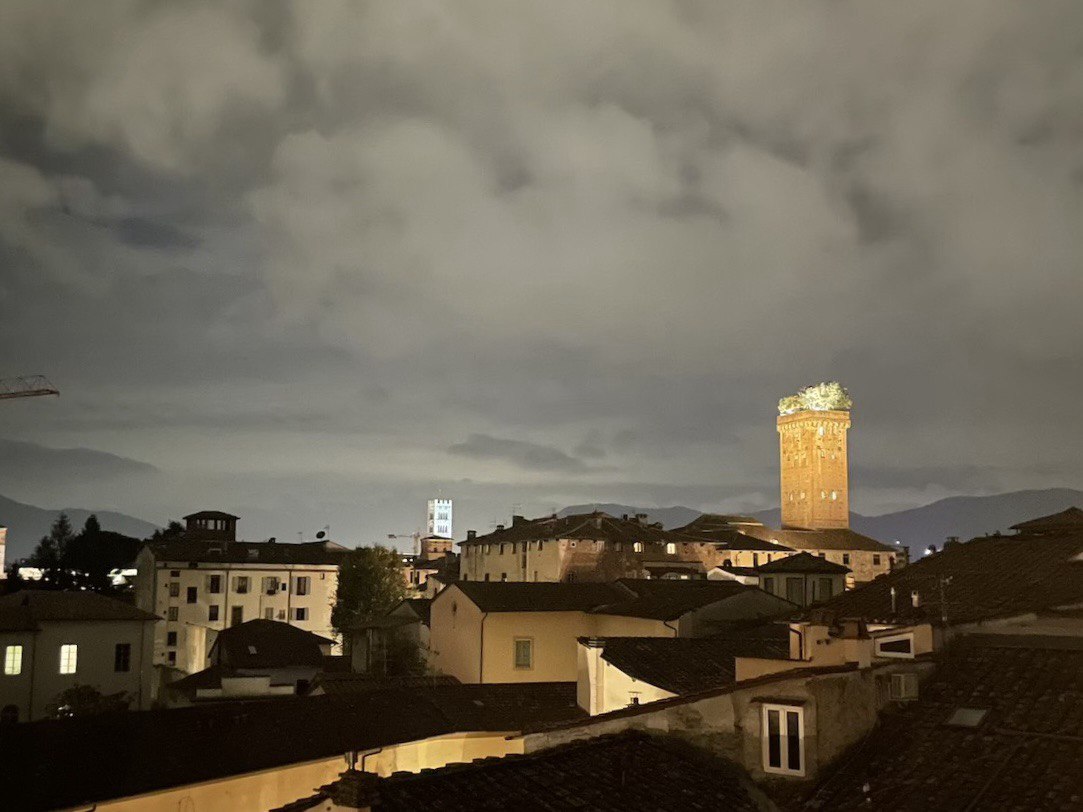
The Palazzo Ducale, which traditionally hosts the main exhibitions, will be under restoration for the next three years, so this edition’s shows were spread across different buildings. Palazzo Guinigi — the same complex as the famous Guinigi Tower — hosted most of the exhibitions from October 19 to November 2.
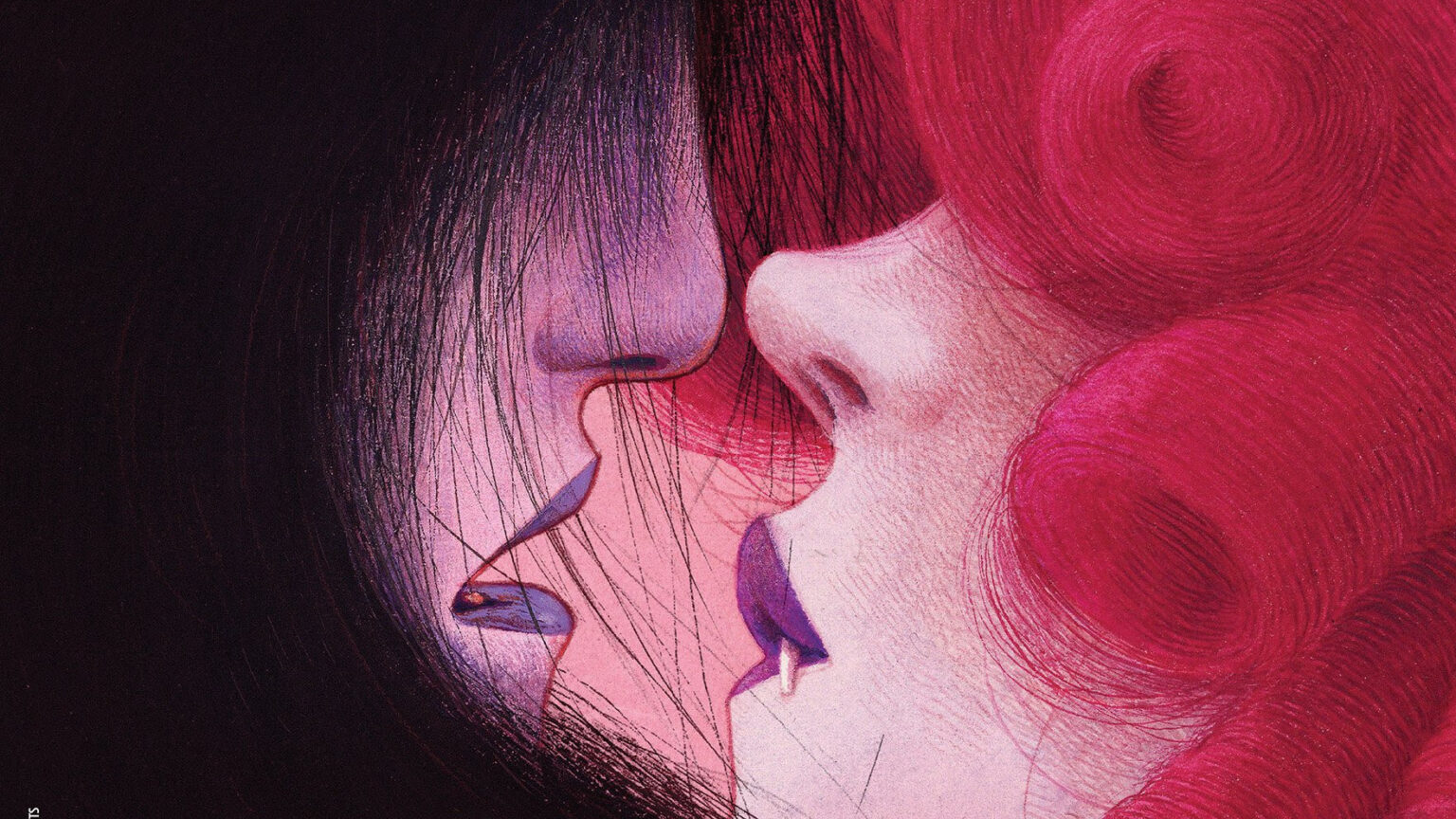
The most peculiar and interesting exhibition was dedicated to French artist Rebecca Dautremer (curated by Cosimo Lorenzo Pancini), who also created this year’s edition poster. Not only was her artwork on display, but her studio itself was moved and reconstructed in its entirety inside one of the palace rooms. During the days of the festival, she was there working on her first-ever graphic novel (after years of illustrated books). A truly one-of-a-kind experience for the audience, and surely for the artist as well, who generously put herself and her art literally in the middle of the room. She works in large formats and is able to envision rich and colorful scenarios, like in a theater, a word she uses often to describe her work. The room was full of finished art, work in progress, memorabilia, and intriguing machineries.
¡Hola, Tex! was curated by Riccardo Moni and Mauro Uzzeo and dedicated to Hispanic artists who have worked on the Texone, the annual giant-format special of Tex, the iconic and long-living Western hero published by Sergio Bonelli Editore. Artists featured included Alfonso Font, Enrique Breccia, Carlos Gómez, and Horacio Altuna. Unfortunately, many of the pieces on the walls were prints, but there were also original pages by Altuna and Breccia. Especially with Breccia, even a single page feels like a revelation. I am particularly fascinated by his originals, with their extremely precise lines and strong personality, so different from his father Alberto’s style and yet deeply rooted in the South American artistic tradition. I had seen two exhibitions dedicated to Breccia’s sons in two months (the other one was at Treviso Comic Book Festival), and this time I even found myself almost guiding a small group of visitors.
The Eternauta exhibition was huge, possibly the largest exhibition ever dedicated to the graphic novel by Héctor Oesterheld and Francisco Solano López, featuring more than a hundred original pages. Perhaps even too big, I’d say. And as the curator explained to Fumettologica, he had “divided the story into several sections, like stations, focusing on key moments: the snowfall, the protagonists acting like survivors, the resistance, and finally the revelation of who the invaders are. For each of these sections, we selected meaningful pages, sometimes with commentary, sometimes simply for the strength of the images.”
Another large exhibition focused on Teenage Mutant Ninja Turtles (curated by Giovanni Russo), showcasing both classic and contemporary artwork.
Italian artist Grazia La Padula — who won the Best Artist award last year — was at the center of one of the shows as well, for the curatorship of Mara Famularo.
The Church of the Servi hosted a major exhibition dedicated to Tetsuo Hara’s career, curated by Alessandro Apreda. It featured a vast selection of works, especially from the early days of Hokuto no Ken. The exhibition was a true revelation. The varied and intense lines, the airbrushed colors, the exaggerated forms combined with anatomical precision, and even the visible mistakes and corrections all contributed to a truly powerful experience (which almost brought tears to my eyes). The show also included three drawings by Florentine Renaissance sculptor and painter Baccio Bandinelli, loaned by the Uffizi Gallery, creating an intriguing dialogue with Hara’s art.
But following the unwritten rule that no one can ever see everything in Lucca — fortunately, I’d say — during the final hours of the last day, while revisiting the exhibitions with my partner, a friend asked me: “Did you see the French exhibition?”
“What?” I replied. “You mean Rebecca Dautremer?”
“No, the collective one. The 70s artists,” he said.
“Wait. What?! Where?!”
So, with just enough time left before the festival closed his doors, I ran across town to see works by Moebius, Druillet, Florence Cestac, Chantal Montellier, Jacques Tardi, and many others. The show was definitely astonishing, with incredible pieces from the Métal Hurlant era. As if that weren’t enough, on the ground floor of the same building there was also a beautiful exhibition dedicated to contemporary French cartoonist Alfred (aka Lionel Papagalli). It made me rediscover the author’s brilliant storytelling and expressive artwork, after reading his first book of the series years ago, and maybe not even fully appreciating it at the time. I believe the only one of his books translated into English is Why I Killed Peter, published by NBM, while the show focused on his “Italian trilogy” — Come Prima, Maltempo, and Senso (the titles are also in Italian in their original versions), whose main themes include travel, family, friendship, and self-confrontation, across stories that are not directly connected to each other.
Anyone remember the conditions I was in during the 2024 edition of the festival? I mean, did you read last year’s report with all my pathetic misadventures? See? 2025 was a merry, light-hearted edition. No sore-loser report this year.
I always find myself wondering what will surprise me next year, what will make me shed a tear with a smile on my face, which new faces I’ll meet, and which new friends I’ll make. And also how much food will end up in my stomach, and how much biroldo (a traditional Lucchese blood sausage) and torta coi becchi (a local vegetable pie) I’ll bring back home, while not so many fumetti, as I need to be merciful with my back, and rather have them delivered at home.
So, as I say every year: until next time in Lucca.
Ciao!








 English (US) ·