
Kristian Williams | March 5, 2026
How do we defeat fascism?
Partisans, a new collection edited by Raymond Tyler and Paul Buhle, catalogs an array of tactics — strikes, sabotage, demonstrations, sheltering refugees, printing leaflets — but its focus is solidly on the underground armed resistance that occurred throughout fascist-controlled Europe in the 1940s.
Even within that smaller subset of activities, the stories reflect quite a range of experiences. Guerilla groups launched raids from mountains and forests, derailed trains, and rescued prisoners. Clandestine networks helped Jews and other persecuted people to escape to the relative safety of neutral countries, sometimes with forged documents. Young women seductively lured nazis into ambushes. Children covered for their parents, who were smuggling supplies to armed units. Josephine Baker placed a radio antenna in the tower of her chateau in order to contact the Free French, served as a courier during her tours, hosted clandestine meetings in her residence in Marrakesh, and ... we don't know what else because many of the details are still official secrets!
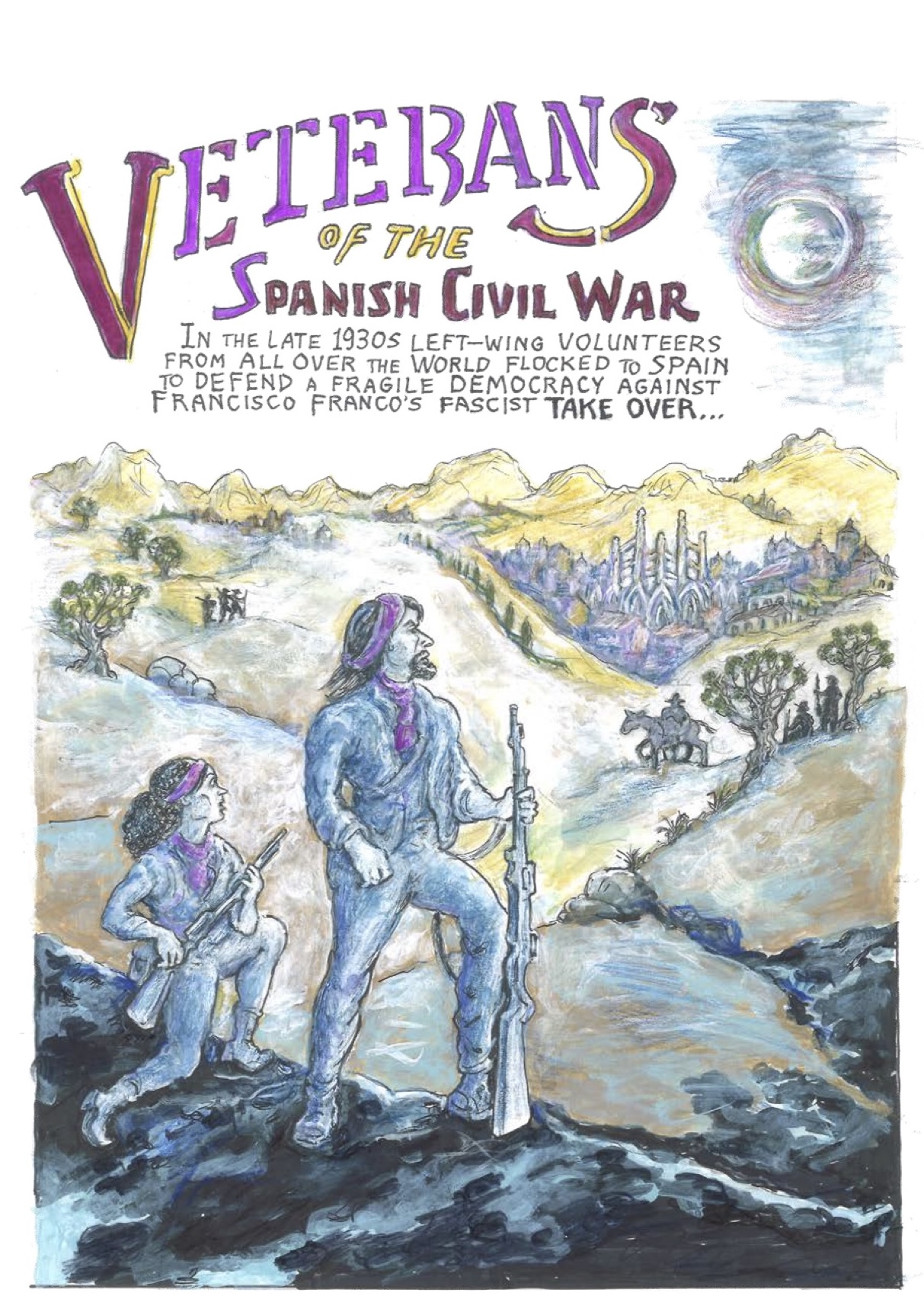
The art reflects the diversity of the narrative. Sharon Rudahl uses lush, almost gentle colored pencils. Seth Tobocman's harder, more angular style seems purpose-built to be reproduced by stencil, block print, or Xerox. David Lester employs bold, dense pen and ink, splashed across with broad and alarming red strokes. David Lasky's watercolors produce a range of effects, from quiet, impressionistic realism, to uncertainty and foreboding, to the ghostly reproduction of photographs. David Selig's deceptively simple compositions convey a sense of urgency through his spare and somewhat shaky linework. Isabella Bannerman's artwork combines realistic landscapes and detailed images of bomb sites with simple and friendly human figures, making it well suited to Franca Bannerman's story about childhood under a wartime dictatorship. Some pieces, however, unfortunately resemble classic adventure comics, stiff and simplified in both their images and their narratives, the result feeling unsuitably corny.
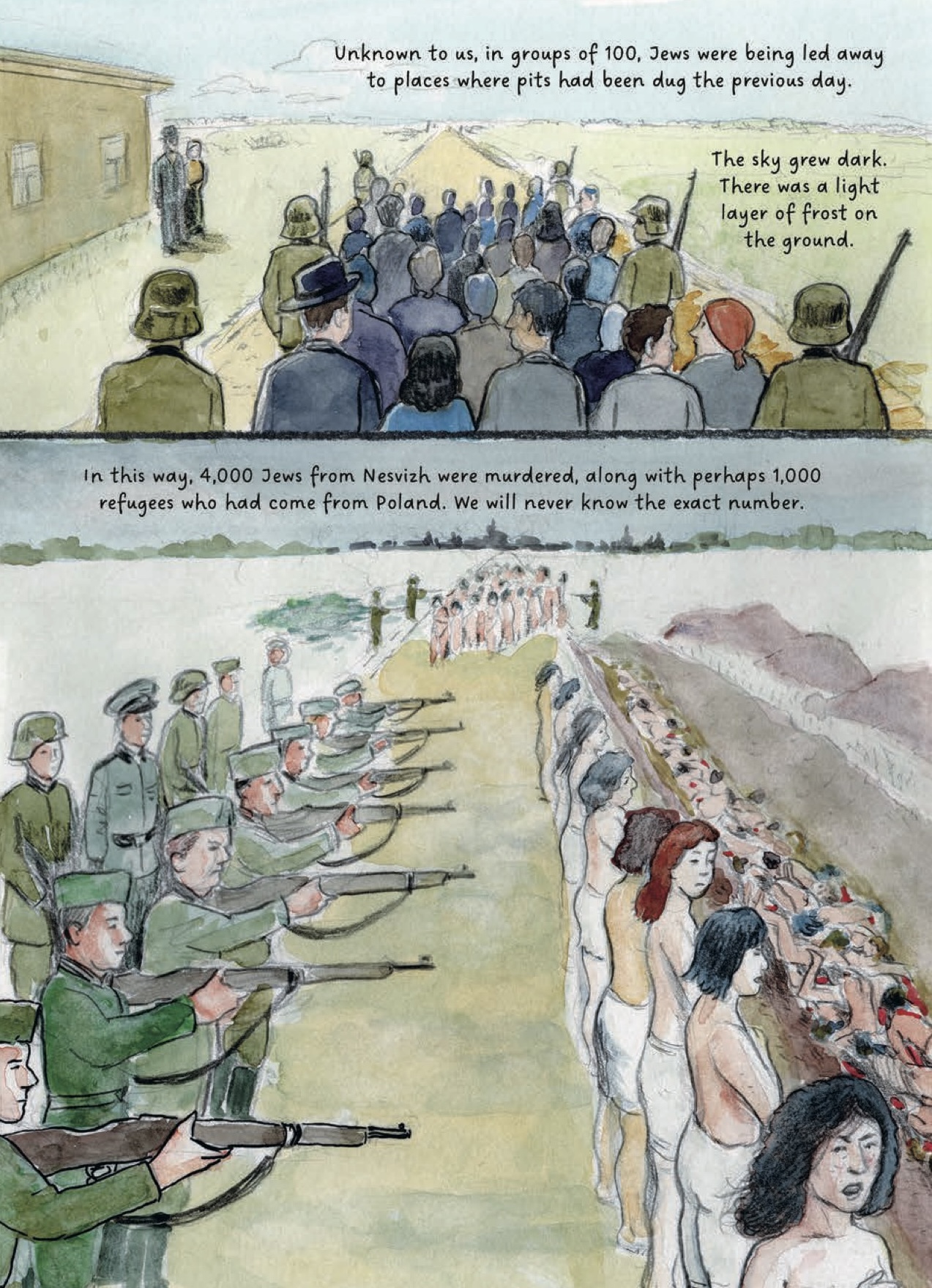 All of these stories are heroic, some rousing, some tragic. And the authors do not paper over the risks, the sacrifices, the brutality, or the moral and political complexities. Images of mass graves and bodies hanging from gallows appear repeatedly, alongside text informing us of the thousands murdered by fascists as collective punishment for partisan attacks. Another image shows guerrillas shooting a German soldier as he attempts to surrender. The political differences among the antifascist forces are discussed frankly, as is the systematic betrayal that often followed victory. Thousands of communist fighters languished in the prisons of "liberated" France, nominally for their crimes against the German occupiers or their Vichy collaborators, but more realistically to neutralize any political challenge to the authority of Charles de Gaul. The newspaper L'Humanité lamented at the time that "fighters are being hunted down for the same actions that made them heroes."
Unlike much military history, the stories here are deeply human. Many are told in the first person, as recollections of the participants, or from stories passed down and recounted by their children. One is a sort-of travelogue: Kevin Pyle visits the former Yugoslavia and views monuments to the antifascist struggle, now in ruins.
Politically, the book poses many more questions than it answers: Which risks are necessary, and which are reckless? What responsibility do the Partisans have, if any, for the reprisals enacted by the nazis? Was Tito's dictatorship necessary to hold violence at bay, or did its repression only exacerbate ethnic resentments and lead to a second period of nationalism and genocide? Is it better to oppose fascism as a defense of normal democracy, or as one part of a revolutionary struggle for a more just world? And given those irreconcilable aims, how can the different factions cooperate in an effective resistance movement?
These questions, or others very like them, which once seemed so remote, will likely become increasingly pressing in the years, or months, or weeks — perhaps days — to come. And while the stories in Partisans might not answer them for us, they do at least help to clarify what is at stake. Though at times inspiring, the book's deeper service may lie in its dispelling of certain illusions that offer dangerous comfort to many on the left: that progress is inevitable, that the arc of the universe bends toward justice, that it will always be enough to defend freedom through peaceable means.












 English (US) ·