

As great a show as it was, I could never totally get into “The X-Files.” My primary beef was that too many plot lines, tangents, and hints never got resolved or even explained. As my interest waned, I’d occasionally ask my father, who remained glued to the TV every time “X-Files” came on, for updates.
“Did they answer [insert plot line]?” I’d ask. “Nope,” replied dad. And so it was.
Somehow I missed Fox’s the new “X-Files”-ish series “Fringe” in its original run beginning in 2008; I’ll blame its original Friday night time slot and my then-imminent divorce for that 😉. But I first caught it in the early 2010s on, I believe, the Science Channel, bingeing a bit more than the first season. I was hooked. My then-girlfriend got me seasons 2 and 3 on DVD, and, of course, once streaming became common I caught seasons 4 and 5, and rewatched 1-3. (Currently, the series is available for free on Pluto.)
What makes “Fringe” better than “The X-Files”? Simply put, it’s what I noted above — it explains things. That, and it’s definitely a harder sci-fi feel than Mulder and Scully’s adventures. Arguably, the main focus of the series is “Over There,” a parallel universe very similar to our own whose existence and origin doesn’t really pick up steam until season 2. This is also an appeal — the show maintains a … simplicity between its various tangents, and logically (and masterfully) connects them unlike, say, the MCU and its multiverse which permits anything to happen, however ridiculous.
One of the tangents concerns the Observers — bald gentlemen dressed in suits and top hats whose facial features are slightly off and are bereft of emotion. These are humans from the future, sent back to, well, observe, and to make sure certain things happen that are supposed to. The Fringe team befriends one named “September” who ends up becoming a pivotal character in the show’s fifth and final season.
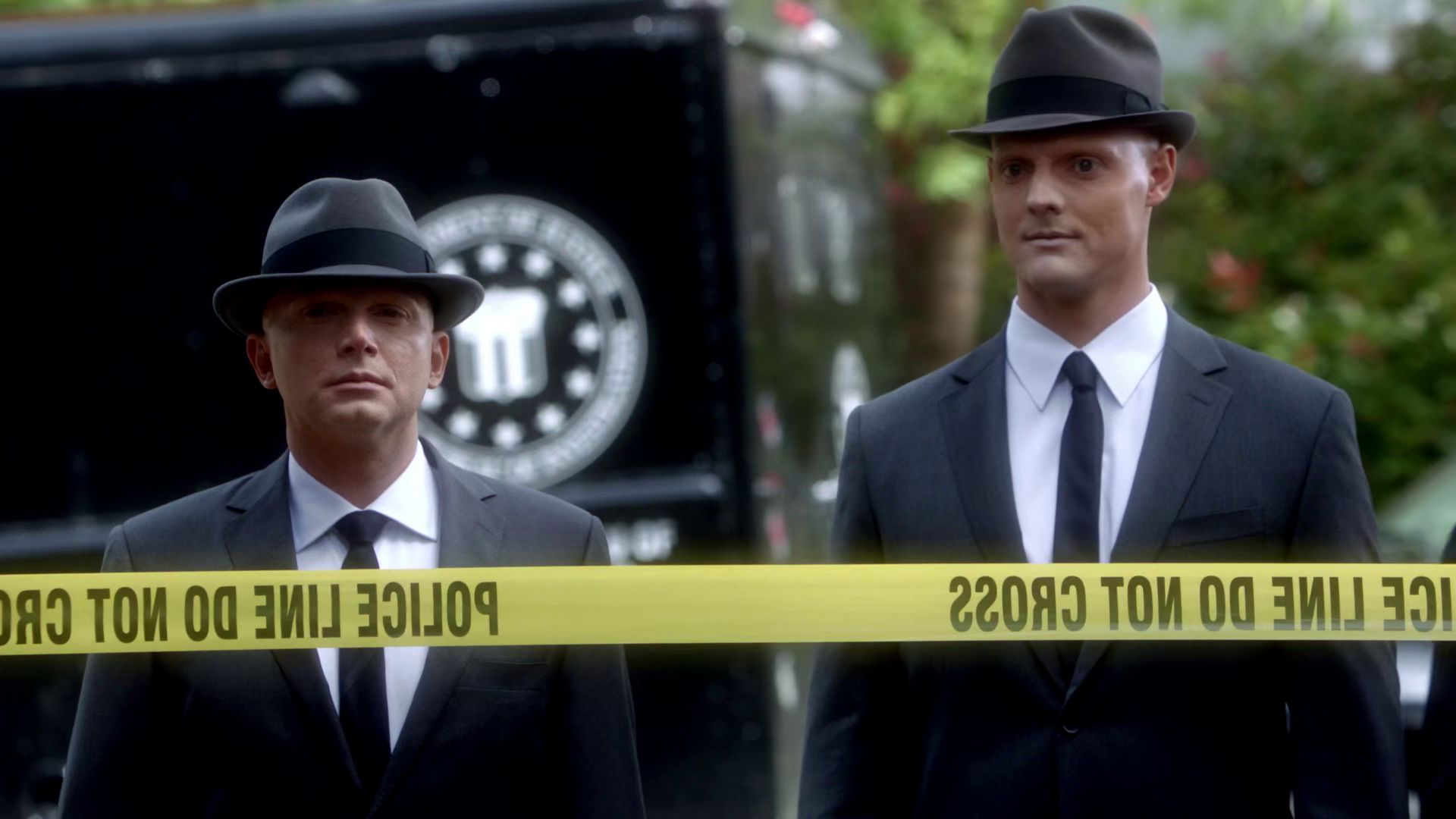
It’s that fifth season that causes intense debate among “Fringe” fans … and I get it — it’s quite a departure from the premises of the previous four. It opens with feature characters Olivia Dunham (Anna Torv) and Peter Bishop (Joshua Jackson) now married, and their young daughter in a park. Suddenly, a building disintegrates, and Observers begin materializing all over the place. The men from the future (approximately 600 years in the future, that is) apparently have screwed up the environment so badly that they have decided to take over the past with the hopes that the new timeline will result in a better outcome.

Unfortunately, the Observers massacre most of humanity, and those who remain either live is misery, or work for the Observers for a (slightly) better existence. The scene quickly shoots to some 20 years in the future (2036 by the then-viewing year), where the Fringe team protected themselves in the early days of the Observer assault in the cocoon-like “amber,” which was a “bug” of the alternate universe (that eventually was resolved). Once freed, the rest of the season follows the Fringe team as they attempt to “reset” the timeline by defeating the Observers.
Many fans consider this season as a “jumping of the shark”; however, for me it neatly connects so many aspects of the previous seasons — and makes sense — that I absolutely love how creators J.J. Abrams, Alex Kurtzman, and Roberto Orci took a chance by going (way) out in left field … and made it work. Unlike Ronald D. Moore, who tried something similar with the final season of 2004’s “Battlestar Galactica” … and missed.
***






 English (US) ·