
Steven Ringgenberg | January 29, 2026
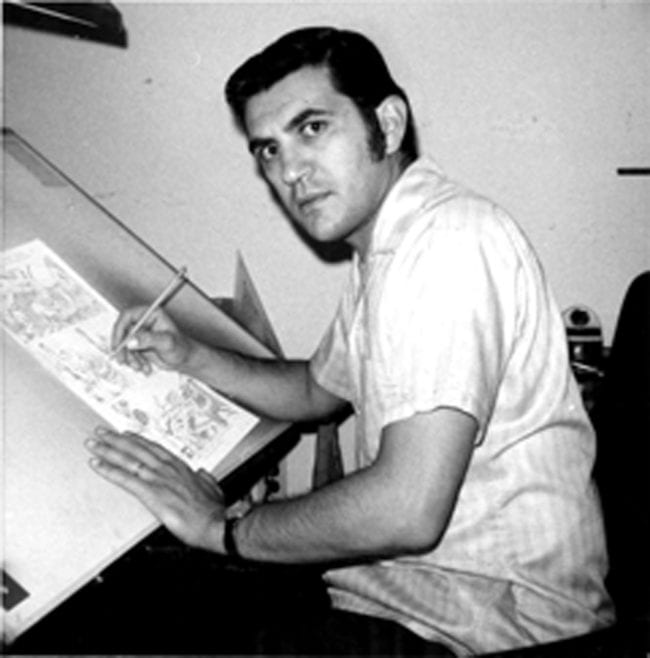 Sal Buscema 1971 photo by Gary Groth
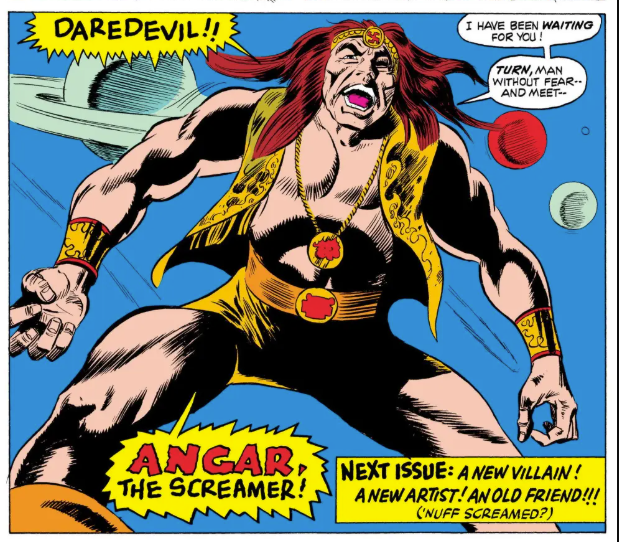
Longtime Marvel artist Sal Buscema, who died this past Friday, January 24th, two days shy of his 90th birthday. Buscema was not as flashily virtuosic as some fan-favorite pencilers, but he had a keen instinct for narrative pacing, bodies in motion, uncluttered panels and clear transitions. His talents never failed to keep a story moving and were a perfect fit with the Marvel Method, which laid much of the burden of storytelling on the artist. Like his older brother, John, Sal Buscema enjoyed a long and successful career as a penciler and inker. The bulk of his work was done for Marvel Comics, where he had a 10-year run as the artist on The Incredible Hulk (for many, the definitive version of the character). He was one of the most prolific artists at the company for more than 30 years, drawing or inking virtually every character in the Marvel lineup, including the Avengers, Daredevil, the Fantastic Four, Iron Man, the X-Men, Thor, Ghost Rider, Ms. Marvel, Captain America — and many others.
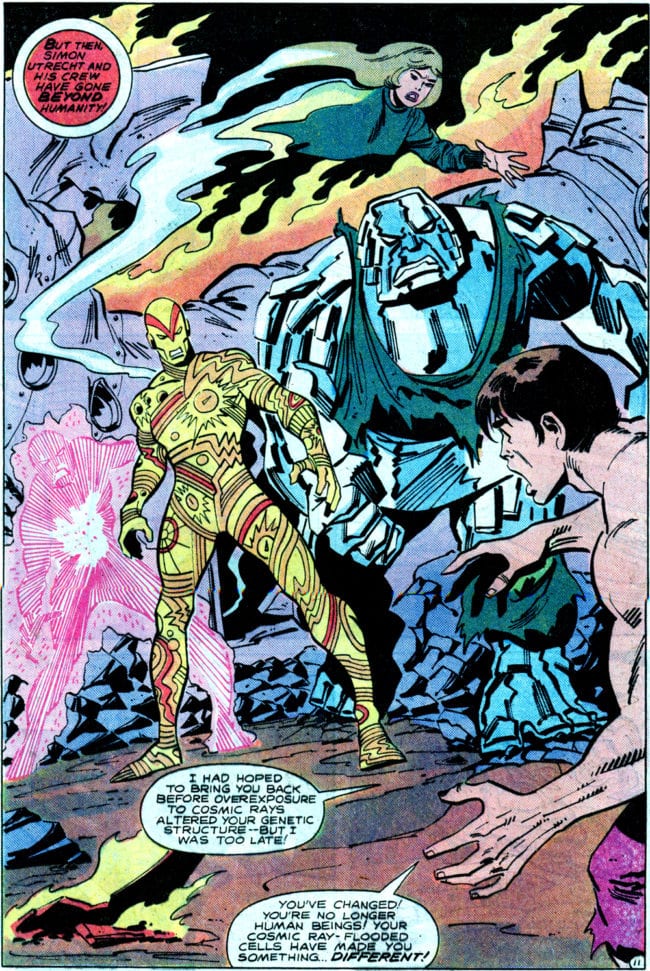 The Incredible Hulk #254 (December 1980) was written by Bill Mantlo and lettered by Diana Albers colored by Bob Sharen, with art by Sal Buscema.
Silvio “Sal” Buscema was born in Brooklyn, New York, on Jan. 26, 1936, the youngest of four children. His Italian-born father worked as a barber and passed away in 1973. Like so many young boys born in this era, Buscema was a big fan of Hal Foster’s Prince Valiant, but also admired comic book artist George Tuska, and illustrators like Robert Fawcett and Norman Rockwell. He was further inspired to draw by his older brother and followed him into the art world. Like his brother, he attended the High School of Music & Art in Manhattan, graduating in 1955. Following graduation, he assisted John on some comic book pages while working at different art studios, doing production work and the like. However, his nascent professional art career was put on hold when he was drafted in 1956.
The Army classified Buscema as an “illustrator,” and he spent 21 months stationed at Fort Belvoir, Virginia, where he was able to use his art skills producing films, film strips, charts and other training materials. When he was discharged, he was employed by ad agencies in New York and the Creative Arts Studio in Washington, D.C., where he produced art for the Department of Agriculture and the Department of Defense. While working in Washington, Buscema met Joan, a secretary at his employer’s office in 1959, and they married in May 1960. Their marriage produced sons Joe, Tony and Mike.
Prompted by a phone call from John in 1961, Sal moved back to New York City to work alongside his brother at the Alexander Chaite, Inc., advertising agency. They were there for around 18 months, before John quit advertising to go back to the comic book business. Sal teamed up with an old colleague from the Creative Arts Studio named Mel Emde, who was starting his own agency. Sal stayed on there until 1968, when he began to pursue work in the comics industry more seriously and never looked back.
By this time, the elder Buscema was well established with Marvel, so he was able to provide an introduction for his brother. Initially, there was no work available for him, but Sal kept bugging production manager Sol Brodsky until finally netting an assignment drawing a 10-page Western series titled Gunhawk. Sal drew a handful of Westerns, including at least one written by Superman creator Jerry Siegel, and then inked four issues of John’s Silver Surfer comic book when John was dissatisfied with Joe Sinnott’s inking. One of his first regular assignments during this period was inking Larry Lieber’s pencils for The Rawhide Kid. He tackled all assignments with aplomb and a determination to continually improve, goaded on by his older brother’s sometimes withering critiques.
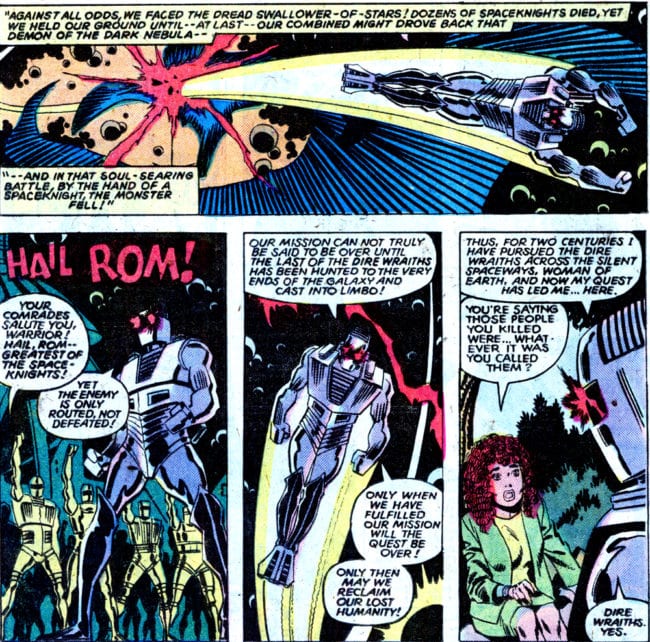 Rom: Spaceknight #1 (December 1979) was written by Bill Mantlo, lettered by Tom Orzechowski and colored by Bob Sharen, with art by Sal Buscema.
By 1970, Sal had landed the plum job of penciling Marvel’s Avengers title. He quickly proved to be a skilled, versatile artist and began tackling a wide range of assignments, including penciling the first 50+ issues of Rom, Space Knight, doing a run on The New Mutants, and drawing Thor from Walt Simonson’s scripts. Buscema’s tenure on Captain America working from Steve Englehart’s scripts lasted three years from 1972 to 1975, and catapulted the title to one of the best-selling Marvel books. He reunited with his brother for a five-issue run on Fantastic Four, inked Ron Frenz’s pencils on Spider-Girl for a while, and even took on some special projects at Marvel’s competitor, DC Comics.
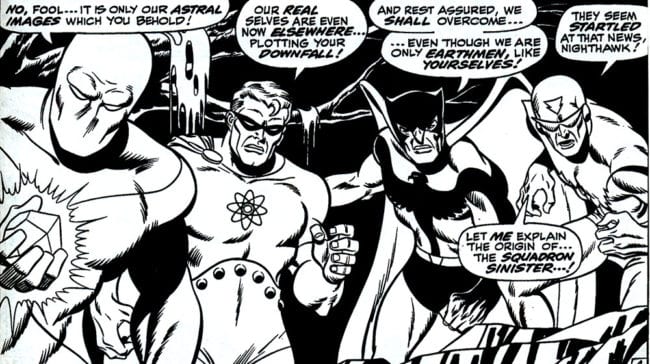 Avengers # 70 (November 1969) was written by Roy Thomas, penciled by Sal Buscema and lettered by Sam Rosen.
Because he worked on so many different Marvel titles, Buscema eventually had a hand in creating a number of well-known Marvel characters. Buscema and Steve Englehart created the Defenders super-team in 1972, adding Valkyrie to the group with the fourth issue. With writer Roy Thomas, he co-created the Squadron Sinister and the supervillain Llyra for the Sub-Mariner title. With Steve Gerber, who succeeded Englehart on The Defenders, Buscema co-created Starhawk. In 1976, Buscema co-created Graviton in The Avengers #158 with writer/editor Jim Shooter. During his long tenure on The Incredible Hulk, Buscema, collaborating with writer Bill Mantlo, co-created the U-Foes and the Soviet Super-Soldiers. Buscema later described his run on the Hulk from 1970 to 1985 as, “probably one of the most enjoyable experiences of my career. The fact that the Hulk is my all-time favorite character might be a contributing factor. I never tired of the character. Every story was a new challenge.”
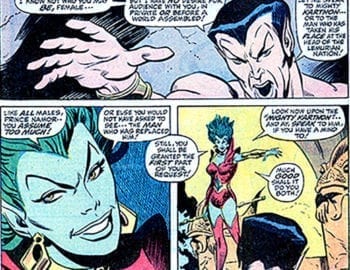 Sub-Mariner #32 (December 1970) was written by Roy Thomas, inked by Jim Mooney and lettered by Sam Rosen, with art by Sal Buscema.
During Marv Wolfman’s brief reign as Marvel’s Editor in Chief in the mid-’70s, when Marvel had a “revolving door policy” with its editors, Marvel was printing so many titles that creative teams were strained to the maximum, and many books were being shipped late. In order to provide a cushion for late work, Wolfman created a fake comic book titled Marvel Fill-In Comics. It is a testament to Sal Buscema’s value to the company and of his reputation as a fast, reliable pro, that he and frequent collaborator Bill Mantlo were tasked with creating single-issue fill-in stories for all of the major Marvel characters whenever it looked like the regular creative teams was going to be late.
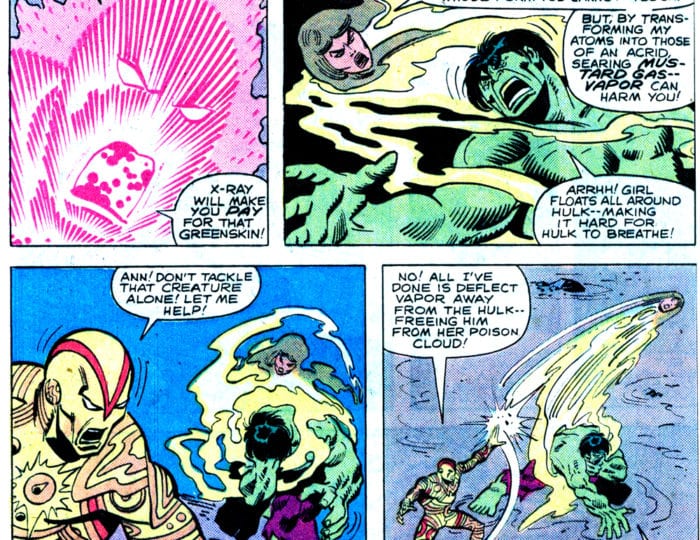 The Incredible Hulk #254 (December 1980) was written by Bill Mantlo and lettered by Diana Albers colored by Bob Sharen, with art by Sal Buscema.
After concluding his epic run on The Incredible Hulk, Buscema did his equally memorable 104-issue run on The Spectacular Spider-Man. During this period, Buscema inked the issue that featured the death of long-time supporting character Harry Osborn. Among his lesser assignments were several of the long-running ads for Hostess products that featured Marvel superheroes such as Captain Marvel, Thor, Captain America and, of course, Spider-Man.
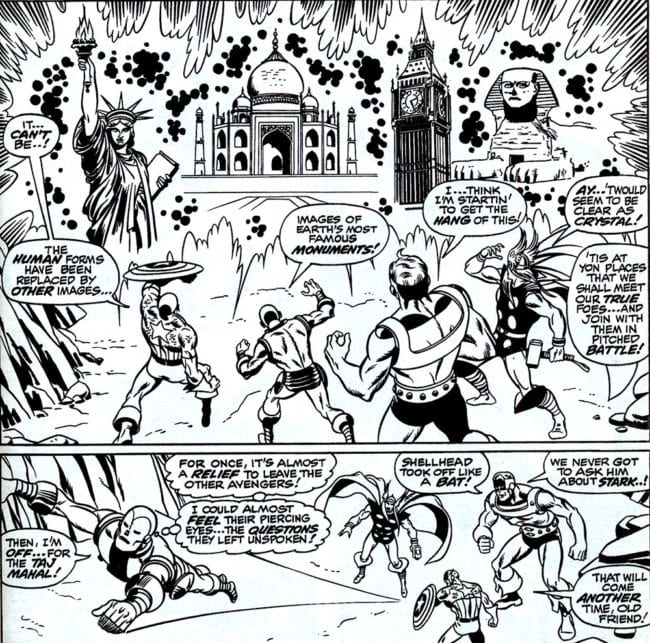 Avengers # 70 (November 1969) was written by Roy Thomas, penciled by Sal Buscema and lettered by Sam Rosen.
From 1997 until 1999, Sal Buscema worked as a penciler and inker (mostly as an inker) on a variety of DC Comics titles, including Action Comics, The Adventures of Superman, The Batman Chronicles, Batman/Scarecrow 3-D #1, Catwoman, Creeper, DC Comics Presents, Superboy, Superman: The Man of Steel, Wonder Woman Secret Files and Young Heroes in Love. However, his time at DC was not without its own challenges. In addition to getting used to an entirely different stable of characters, the veteran inker often found himself paired with inexperienced pencilers. As Buscema recalled, “The short time I worked for DC, they were giving me all these young guys who could barely hold a pencil in their hands, and asking me to ‘tweak it.’ In cases like that I would definitely put a lot of myself into it and change whatever I felt needed to be changed.”
Soon after his return to Marvel in 1997, Buscema found himself inking Pat Olliffe’s pencils on Spider-Girl. He continued working for both Marvel and DC for a brief period before returning to Marvel exclusively. He was reunited with an old friend when he became the regular inker for The Incredible Hulk for most of 2000. For the next several years, he inked an assortment of Marvel titles with no extended runs on any of them. By 2003, Buscema wryly described himself as, “retired for three years … and I’m still inking jobs for Marvel.” Following this period of not being associated with any particular character, he returned to inking Spider-Girl over Pat Olliffe’s pencils, and then had a long run inking or doing finishes over Ron Frenz’s layouts from 2003 through 2006. When the title was re-christened The Amazing Spider-Girl, Buscema inked the first 30 issues. He stayed with the character, and penciler Frenz, doing stories for the Web of Spider-Man omnibus title. He tackled the character again on the four-issue miniseries The Spectacular Spider-Girl, as well as one-shot Spider-Girl: The End! In 2010. Once again working with Ron Frenz, Buscema inked a five-issue miniseries titled Thunderstrike in 2011.
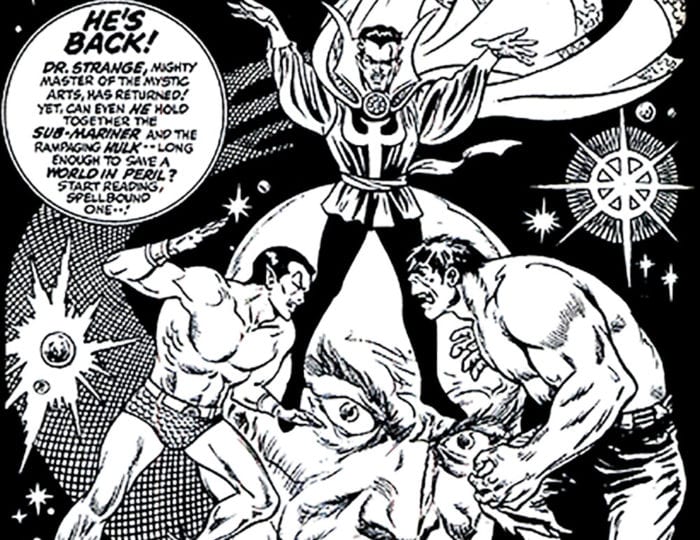 Marvel Feature #1 (December 1971) written by Roy Thomas, lettered by Sam Rosen, penciled by Sal Buscema, with art by Ross Andru.
The year 2011 marked a return to DC Comics, where he worked on DC Retroactive: The Flash — The’70s and Superman Beyond. Following this, he did some inking for IDW on a G.I. Joe Annual and a continuing series based on the Dungeons and Dragons role-playing game.
As busy as Buscema was for 30 plus years, he liked to act in community-theater productions and won praise for his portrayal of Tevya in a 1998 production of Fiddler on the Roof.
Among the honors he received during his lengthy career in comics, he was awarded an Inkpot at the San Diego Comic-Con in 2003. A decade later, he was given the Hero Initiative Lifetime Achievement Award at the Baltimore Comic-Con. Also in 2013, at the Inkwell Awards at HeroesCon in Charlotte, North Carolina, Buscema’s inking on IDW’s G.I. Joe Annual and the Dungeons and Dragons: Forgotten Realms series received a S.P.A.M.I. (Small Press and Mainstream-Independent) award.
Wherever he worked, Sal Buscema earned high praise from his collaborators, with Steve Englehart calling him, “a perfect comic-book storyteller,” while Jim DeMatteis said of their collaboration, “I really loved the two years on Spectacular Spider-Man that I wrote with Sal Buscema drawing. Talk about underrated! Sal is one of the best storytellers and a wonderful collaborator.”






 English (US) ·