
Brigid Alverson | March 5, 2026
The Diamond bankruptcy case has moved to Chapter 7, full liquidation, but that doesn’t seem to be simplifying things much. The question of who owns the inventory in the Diamond warehouse remains unresolved, getting in the way of the big selloff, and now, in a new wrinkle, one of the vendors is accusing the trustee of making side deals, causing the judge to call time out until the matter can be cleared up.
While the comics equivalent of Jarndyce vs. Jarndyce plods onward, however, the comics industry has rebounded from the shock of the bankruptcy, with three big distributors and a handful of smaller ones serving a booming direct market that racked up $1 billion in sales in 2025. There are still gaps; Free Comic Book Day will continue, but the Previews catalog is no more, and the metadata problem is real. But the retailers at the ComicsPRO meeting in Glendale, Calif., in mid-February were in a good mood after a year of unusually strong sales. Comics, it appears, marches on.
The latest allegation
The latest twist in the Diamond case came in the last week of February, just a few weeks after the conversion from Chapter 11 to Chapter 7, when Goodman Games made a startling assertion in an objection filed with the court : “Goodman Games understands that there may be an arrangement between the Trustee and one or more secured creditors concerning the payment of the Trustee’s fees and expenses, whether in the form of a carve-out from collateral, a sharing of recoveries, or another similar agreement.” If this arrangement exists, Goodman wants it fully disclosed. The judge has now delayed any action on the application for bankruptcy counsel “unless and until the Trustee files a supplemental memorandum addressing the matter of undisclosed arrangements with creditors for the payment of the Trustees [sic] fees and expenses referred to in the Response filed by Goodman Games,” setting a deadline of March 15 for the response.
As Matt Drudge would say, developing …
From 7 to 11
 The move from Chapter 11, reorganization, to Chapter 7, liquidation, was not unexpected. Back in August, the judge in the case commented “I’m concerned that… the Debtor and these Estates are in potentially administrative insolvency jeopardy,” which would mean that there wasn’t enough money to cover the bare-bones costs such as lawyers, fees, and whatever else is needed to keep the business going while in bankruptcy.
Diamond declared Chapter 11 bankruptcy in January 2025, and at that time, the company secured debtor-in-possession (DIP) financing from JPMorgan Chase Bank to keep the company running. The following May, after a convoluted series of events, two bidders acquired pieces of Diamond in the bankruptcy auction. Universal Distribution bought Alliance Game Distributors, and a company called Ad Populum, soon rebranded to Sparkle Pop, got the rest.
However, because of the back-and-forth that preceded the final sale, both Universal and Sparkle Pop were able to negotiate a lower selling price, so Diamond emerged from the sale with less money than expected, and “significantly less” than the $84.5 million it would have gotten if the initial sale to Alliance Entertainment had gone through. And in the end, “substantially all of the net sale proceeds” from these sales went toward paying off the loan to JPMorgan. In short, as Diamond put it in the court papers, “there is no longer funding or sufficient liquidity to support the continuation of these cases in Chapter 11.” In November, JPMorgan turned off the tap, telling Diamond that they were not willing to provide any more loans going forward, other than some financing for the conversion to Chapter 7.
As of Dec. 31, according to court filings, Diamond had just over $300,000 in the bank, almost $14 million in receivables, and almost $3 million in unpaid Chapter 11 debts, in addition to the inventory in its warehouse, which is the subject of a dispute between Diamond and the publishers (vendors) who put it there.
The Tale of the Hostage Inventory
This dispute between Diamond and the publishers is one of the complicating factors in this whole case. Shortly after the sale, Diamond announced that it now owned all the consignment inventory in its warehouse and would be selling it to pay off its debts. This took publishers by surprise, as the way consignment works is that the distributor receives, stores, and ships out the inventory but doesn’t actually own it. The publishers own it until it is sold. When a company goes into bankruptcy, however, the situation becomes much less clean-cut.
I’m not a lawyer, but here’s how lawyers have explained it to me: If a business is not widely known to be operating on a consignment basis, it can claim title to consignment goods if the consignor (in this case, the publisher) has not filed a particular form, the UCC-1, to, in legalese, “perfect its interest” in the property. The logic behind this is that if it’s not obvious to potential financers that the business does not actually own the goods it is holding, they might incorrectly consider those goods as collateral. Diamond asserts that before the bankruptcy, less than 20% of its inventory was consignment, but the publishers’ lawyers argue that it depends on whether you are looking at Diamond Comic Distributors alone or at the whole company, which also included Alliance Games Distribution, Diamond Select Toys, and other divisions.
The publishers who are affected by the inventory seizure are all relatively small, and most of them had not filed the UCC-1 form. (Marvel and the other larger publishers had already taken their business elsewhere, and while Diamond continued to distribute their products on a wholesale basis, the contracts for that are different.) The affected publishers banded together in two groups, the Consignment Group and the Ad Hoc Consignment Group, and went to court to stop Diamond from taking their inventory. The court told Diamond that if it wanted to pursue this line, it needed to file a separate complaint against every publisher whose inventory they wanted to keep. Diamond did so, filing 31 adversary lawsuits.
The inventory, incidentally, is sitting in the Olive Branch warehouse once owned by Diamond. Sparkle Pop bought the warehouse and Diamond is leasing it back to the tune of $145,000 per month, although they haven’t paid the rent since November.
Meanwhile, in September Diamond learned that Sparkle Pop had also been selling the consignment inventory. Diamond went to court to stop that, stating that the goods had specifically been excluded from the bankruptcy sale, and the court told Sparkle Pop to stop the sales and to put any proceeds from items sold so far into escrow until the question of ownership could be sorted out. In December, as part of the conversion to Chapter 7, the court ordered that the $300,000 held in escrow be paid out to the two groups of publishers.
The damage all this is doing to the publishers is not theoretical. In its final Chapter 11 statement, Diamond estimated that it held inventory with a book value of about $47 million and retail value of $114 million. To give one example of the headaches this has caused, Dynamite had to reprint its omnibus edition of The Boys in order to get books into stores in time for the premiere of the new season on Amazon Prime. Diamond also still owes the publishers money for sales before it filed Chapter 11, in amounts ranging from $1,000 to over $400,000 according to a filing by the Consignment Group.
 The inventory situation may be heading toward some sort of resolution. After the case went from Chapter 11 to Chapter 7, the new trustee came up with a proposed deal with Sparkle Pop in which the bankruptcy estate would sell its rights to the inventory to Sparkle Pop for a $1 million plus 75% of the first $1.5 million in sales (less 30%). Sparkle Pop would also take over as plaintiff in the 31 lawsuits, which it may choose to pursue in court or settle by paying “cure costs” to break the contracts.
However, the Goodman Games objection has thrown a monkey wrench into the works. Because it had not received a direct answer from the trustee to its questions about a side deal, Goodman went the procedural route, objecting to the appointment of bankruptcy counsel, and the judge has put that appointment on hold until the trustee clarifies the situation.
Meanwhile, back in the comics world…
Things are a lot happier outside the courtroom. 2025 was a banner year for comic shops, with an estimated $1 billion in sales, and sales in the direct market grew faster than in the book channel for the first time in years.
While no single entity has come forward to replace the central position that Diamond held for decades, the industry is adjusting to the new reality. The three biggest distributors serving the North American market right now are Lunar Distribution, Penguin Random House, and Universal. They are all different. Lunar grew out of the (mostly) online retailer DCBS, PRH is part of a book publisher that also distributes graphic novels to bookstores, and Universal is a Canadian distributor of both comics and games that is just starting to make inroads into the U.S. comics market.
In addition, several small distributors, including CRWN Studios, Philbo, and Power Pulp have sprung up to handle small publishers, and the book distributor IPG has launched direct market distribution. It’s hard to see where all this is going at the moment, but here’s something to watch for: What killed Diamond was the loss of all the larger publishers, and if they all migrate to one of the three big distributors, the same situation could occur again. On the other hand, the industry has changed a lot since Diamond consolidated its hold on the direct market in 1996; the wide availability of graphic novels in bookstores and the advent of digital distribution, crowdfunding, and social media have all shaped the market in different ways. Direct market distribution is no longer the only way to sell comics, although it continues to be the only way to sell comics in comic shops.
For all its flaws, Diamond was the unifying factor in this industry, providing economies of scale in a way that individual retailers, or even the other distributors, could not. A lot of this flew under the radar. One important unresolved problem is comics metadata, all the information a retailer or customer needs to know to order a comic. Let’s take a hypothetical comic series, The Unfundables. What is the title of that comic? Is it The Unfundables or simply Unfundables? What if they do a special issue, Out of Cash. Will that be The Unfundables: Out of Cash, Unfundables Out of Cash, or Out of Cash: An Unfundables Story? All of these versions alphabetize differently. Then there’s the creative team, series renumbering, crossovers, variant covers, all of which have to be kept track of. Diamond used to do that. It wasn’t great, and their output often looked like something from 1985 (all caps, no punctuation), although it got better as the years went along. But the thing is, they did it, and as retailers quickly discovered when they had to move from one distributor to three, no one else was doing it. ComicsPRO saw this coming three years ago and has produced the COMET Standard, which publishers and distributors have been adopting, but there’s much left to be done.
There are other problems. Because there is no single catalog for all upcoming products, graphic novel and manga publishers who previously used Diamond as their main distributor to the direct market have vanished from retailers’ ordering forms. Two of the biggest manga publishers, VIZ Media and Yen Press, currently have no direct market distributor. Retailers can order set up accounts directly with their book distributors, Simon & Schuster and Hachette, respectively, but because comic shops run on a different cadence than bookstores, retailers may not know when to place their orders. When Lunar mentioned at ComicsPRO that it was making space for both publishers in its warehouse, the audience responded with applause.
 As for Free Comic Book Day, it has not only returned, it has multiplied! Universal acquired the rights to FCBD, but Penguin Random House has declined to participate and instead has declared Comics Giveaway Day, which happens to be on the same day as FCBD, May 2.
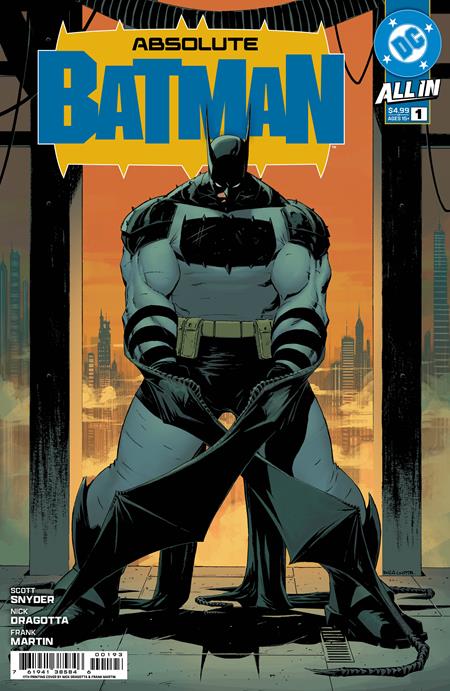
While the publishers have suffered financial losses, both from unpaid bills and captive inventory, the burdens that fell on the retailers were mostly logistical, and they are working through them. Had 2025 been a bad year for comics sales, that could have been a disaster. But it wasn’t. DC’s Absolute line, Image’s Energon and Invincible universes, and Marvel’s Ultimates all kept the customers coming, and at ComicsPRO, retailers were commenting on a surprise hit,
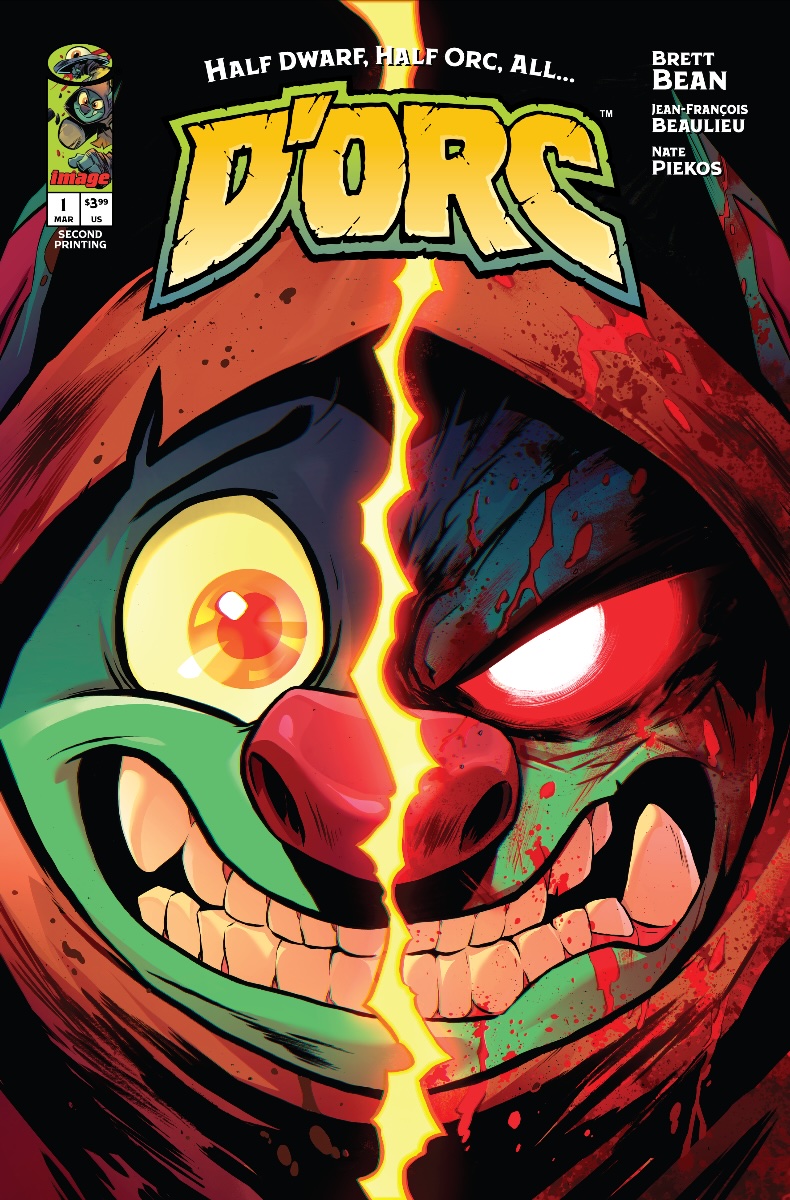
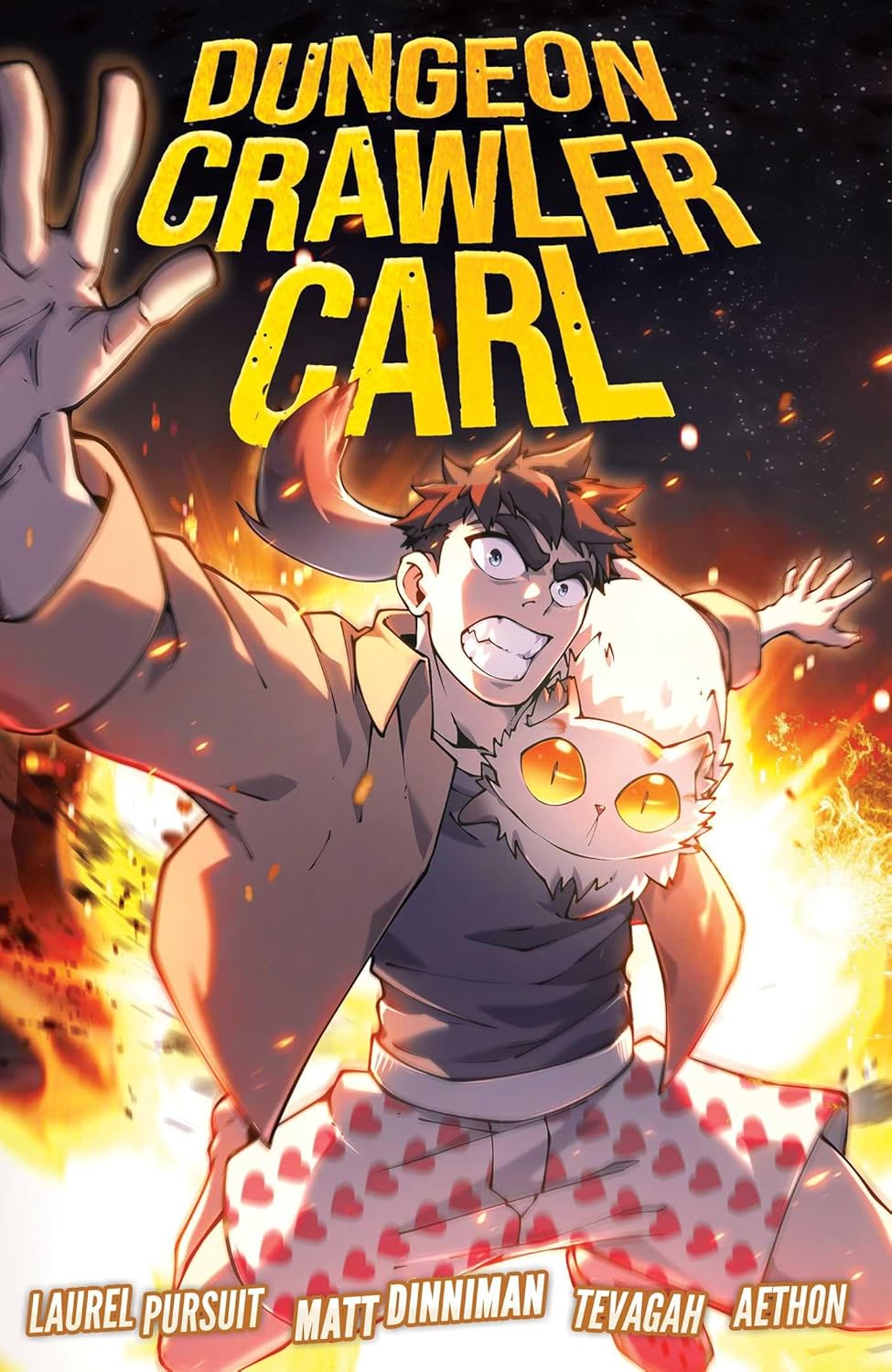
D’Orcs, which went back to print on release day, has 70,000 orders for issue #2. The secret sauce here seems to be that the creator, Brett Bean, is also the artist for the upcoming Dungeon Crawler Carl graphic novel.
Let’s dwell for a moment on Dungeon Crawler Carl, which exemplifies the diversity of the current comics scene. It’s an RPG-influenced adventure tale that started as a self-published webnovel and went on to become a best-seller when Ace picked it up for print. The audiobook version is also very popular. Vault Comics raised over $2.6 million on BackerKit for a graphic novel side story, which will be available in comic shops as well as to backers, and a straight adaptation of the first volume, published on the WEBTOON platform, will get a print release in May. This represents a convergence of many trends: The growing popularity of RPGs and RPG Lit, self-publishing, crowdfunding, and vertical-scroll digital comics, all coming together to tell the story of a guy and a cat competing in an intergalactic reality show.
In his keynote address at ComicsPRO, Robert Kirkman, the creator of Invincible and founder of Skybound, talked about the best-selling franchises in comic shops right now, the Ultimate, Absolute, Invincible, and Energon universes. “What do those four things have in common?” he said. “They are established brands with a built-in fan base wrapped in a thick coating of new. They are familiar, but they are new.” In keeping with that theme, he announced that M.A.S.K., another toy line from the 1980s that turned into comics and movies, would be joining the Energon Universe, and that he would be launching a new original superhero series, Terminal. Both are simultaneously up-to-date and comfortingly familiar.
While Kirkman has a point, I was surprised to hear retailers telling me that DC’s Absolute comics, the best-selling universe in 2025, accounted for maybe half their sales. The world of comics, including monthly comics, has gotten much bigger than just one superhero, publisher, or distributor. And if there’s one thing that was clear, it’s that the industry not only survived the death of Diamond but, despite the damages inflicted on the publishers and the hassles for retailers, it has emerged stronger than ever.
Read Brigid Alverson's previous Diamond coverage:









 English (US) ·