
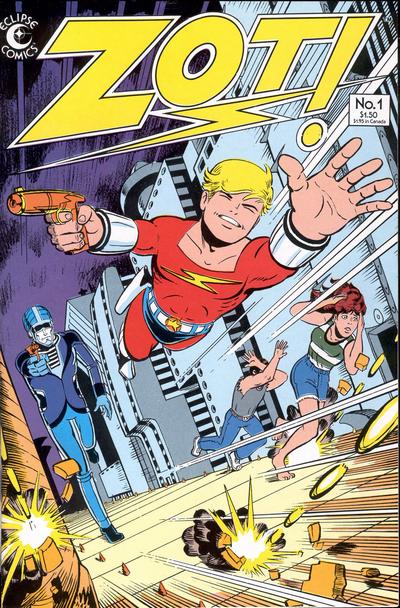
Zot! #1 officially rocketed into the American comic book market on this day, March 13, 1984, offering a pensive and vibrant departure from the darkening trends of the industry. Making his first appearance in the pages of his self-titled series, Zachary T. Paleozogt—better known as Zot—stood as a beacon of optimism during an era that would soon be defined by “grim and gritty” deconstructions like Watchmen and The Dark Knight Returns. Created by the visionary theorist and cartoonist Scott McCloud, the character provided a definitive portal into a world where heroes were driven by wonder rather than trauma.
The creative authority behind this groundbreaking debut includes:
- Writer & Artist: Scott McCloud (Understanding Comics, The Sculptor)
- Publisher: Eclipse Comics
- Format: Color (Issues 1-10), Black & White (Issues 11-36)
The history of Zot! #1 is rooted in the independent comics boom of the 1980s. Scott McCloud designed Zot as a blond-haired, blue-eyed teenage hero from an alternate Earth—a technological utopia that contrasted sharply with the “real” Earth of the series’ protagonist, Jenny Weaver. Utilizing gravity boots for flight and a ten-shooter laser gun for combat, Zot brought a high-energy sense of adventure to a medium that was becoming increasingly bogged down by cynical heroes and anti-heroic violence.
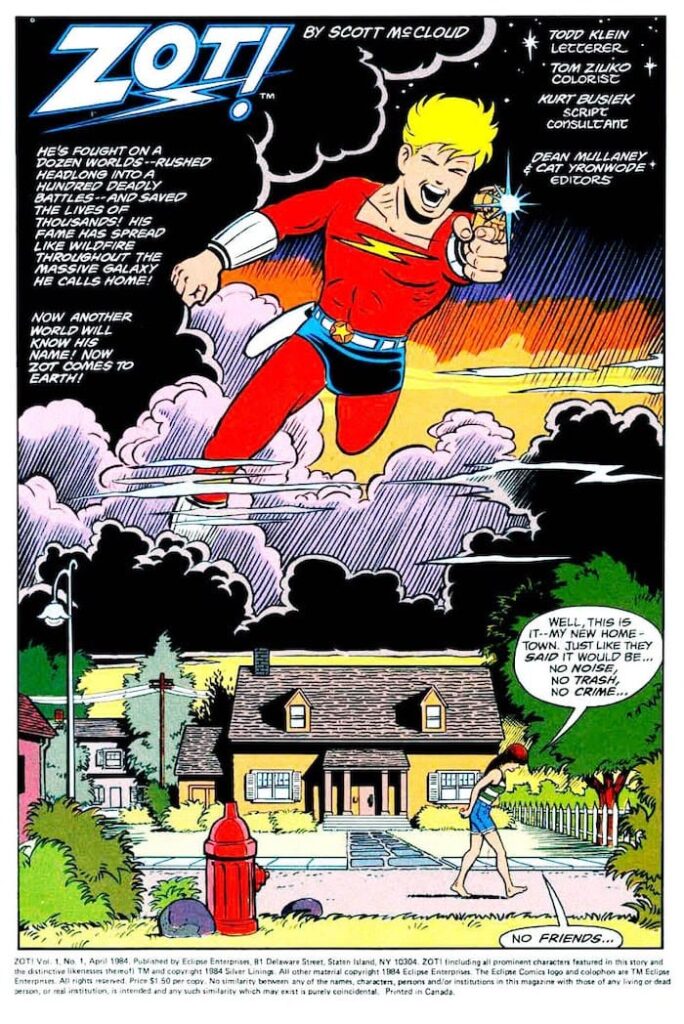
The Dawn of an Optimistic Hero in Zot! #1
What readers should understand about the March 13th anniversary is that Zot! #1 was a deliberate aesthetic rebellion. While the mainstream market was moving toward shadows and angst, McCloud looked toward the “clear line” style of European comics and the dynamic energy of Japanese manga. Zot’s world was a spectacular landscape of primary colors and boundless potential. Consequently, his journey from a cosmic guardian to a pensive observer of the human condition highlights the original and flexible nature of 80s independent publishing.
The pacing of the series allowed McCloud to explore the psychological impact of being a hero. While the early issues focused on the thrilling battles against the villainous 9-Jack-9, the series eventually transitioned into a deeply human character study. For fans who track new comics for their narrative sophistication, the later black-and-white issues of Zot! are often cited as some of the most influential works in the history of the medium, setting the stage for McCloud’s eventual understanding of comic theory.
The Osamu Tezuka and Astro Boy Influence
Visually, Zot! #1 is recognized as one of the first major manga-inspired American comic books. Scott McCloud has frequently credited the “God of Manga,” Osamu Tezuka, as a primary influence on the book’s design and tone. The wide-eyed expressiveness and kinetic panel layouts were a direct homage to Tezuka’s Astro Boy. Rendering a hero who could fly through a futuristic skyline with such fluid grace required a level of artistic authority that McCloud delivered with original flair, bridging the gap between Eastern and Western storytelling styles.
Furthermore, the comic book covers for the Eclipse run are highly sought after by collectors for their clean design and iconic silhouette. The series ran until 1990, but its legacy continues to resonate in the work of contemporary creators who prioritize character heart over excessive grit. It is a mathematical certainty that without the success of Zot, the landscape of the “All-Ages” and “YA” graphic novel market would look significantly different today. Transitioning from a 1984 first appearance to a modern classic, Zachary T. Paleozogt remains a symbol of the enduring power of hope.
In conclusion, Zot! #1 is an essential pillar of independent comic history. From his debut as a gravity-booted defender to his role in defining the “comics as literature” movement, he reflects the limitless potential of the medium. Whether you are following the tactical movements of his laser gun battles or simply soaking in the spectacular 80s artwork, this character is a mandatory piece of sequential art history. Don’t miss this portal into the “Bright Age” of comics when you revisit the classics this month!
📢 Join the Conversation
Is Zot the ultimate antidote to the “grim and gritty” era of comics? Who was your favorite villain from the series—9-Jack-9 or Dekko? Join the conversation on X and tag us @comicbookaddt to share your favorite Zot memories!
Follow our community for more updates:









 English (US) ·