
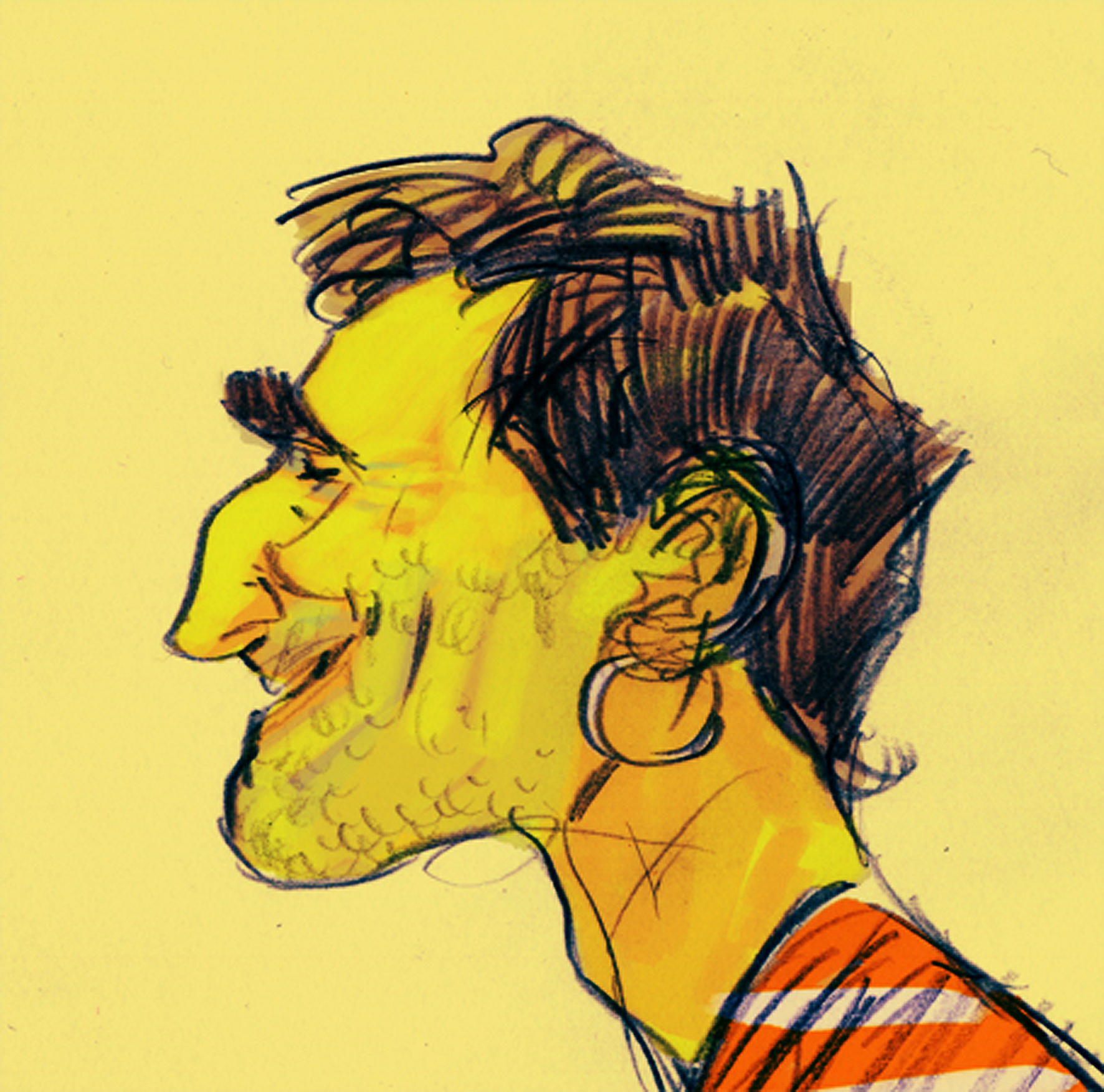
 Self-portrait by Lafebre.
There’s an amusing anecdote as to how Jordi Lafebre got his start in comics (see below), but he rose to recognition collaborating with French writer Zidrou on such titles as Lydie, La Mondaine, and thea six volumes of Les Beaux Étés (Glorious Summers) between 2009 and 2021. His first solo venture was 2020’s gorgeous Always Never. It's wonderful love story told in reverse, with the last chapter running completely backwards. In addition to his stylish illustrations and use of color, the story itself contains many a poetic touch, such as the construction of a bridge between the two halves of a small Italian city echoing the lovers’ plight.
Dark Horse has just published I Am Their Silence, the English translation of his Je suis leur silence. While very different from its predecessor, it continues the tradition of being a beautiful book with a lot going on, offering much to delight in, both visually and within the narrative. Therapist Eva Rojas, herself bipolar, plays detective when a patient’s uncle is murdered at a family gathering. And not just any family, a powerful wine-making empire. The story is told through the lens of a psych evaluation to see if Eva is fit to keep her license. Her unconventional methods, often erratic behavior, and the fact that she has the ghosts of three deceased relatives living in her head, constantly offering advice, has called her professionalism into question, not to mention made her a suspect in the case. As explained in our conversation below and in his note at the end of the book, Lafebre handles the question of mental health with the respect that it deserves while also removing any stigma around the issue. After all, most people are affected by it in some way.
Speaking with Lafebre about his love of comics and storytelling, all that goes into his work, as well as he and his colleague’s hatred of AI was truly inspiring. The passion he feels towards these subjects is evident in the finished product, making these books a joy to behold.
JORDI LAFEBRE: I imagine my books as films, actually, and I try to have a soundtrack for them. I change the music from book to book instinctually, and I need that music when I'm working on that book. Then I completely change the soundtrack for the next one. I love music and I can switch from style to style no problem. For Always Never, I did a playlist. It was a lot of acoustic guitars and classical violins. All instrumental, very melodic, matching how the book is a bright, happy comedy but in a melancholic way. And then for I Am Your Silence, I went for techno and music from the early 2000s. I thought that caught Eva's personality.
AUG STONE: That's interesting that you think of your comics as films. Just the other day I was thinking of something and was like, "What film is that from?" And then I remembered it was a scene from Always Never.
Thank you. I take that as a compliment. My books are also a kind of a love letter to comics themselves. I love the comic language and the fact that comics happen in the reader’s head. You have the panels, but the story, all the movement, everything that's happening is happening in the reader's mind. I love that. I grew up reading comics, and at one point, I felt that they were going to disappear because of cinema and other media. But I feel comics are like poetry. They’re so beautiful. The medium is so beautiful, it's never going to disappear. I'm romantic about that. I know they don’t have sound, they don't move, they don't go super fast like kids today need. But when a reader discovers comics, it feels amazing. There’s this story in their mind and it sticks forever. They’re no longer big, big mass media, but we still love comics. And we always will. But at the same time it's true that I see the stories I put in my comics as films. I see the characters move and listen to their voices in my head. And when I write the script, I close my eyes and really picture what’s happening — the backgrounds, the environment, everything. Then I try to make that story as accessible as possible to the readers.
I read somewhere that the Glorious Summers books are a personal tribute to the classic comics you read as a kid. What were some of those?
I grew up in Barcelona in the '80s, and in Barcelona at that time, you could find any comic. So I didn't realize that there were French comics, American comics, Spanish comics ... I just read what I loved. I remember having some Garfield, Asterix of course, Superman and Spider-Man. And the first mangas as they appeared, Dragon Ball ... I read them all at the same time, just amazed by the stories and the characters and the movement implied ... everything. It was only in my late teens, when I had already decided I wanted to be a comic book artist, that I realized they came from such different places and markets, such different traditions. So I started to read all of them in a different way. You realize that Asterix and the French comic books have a kind of family. And Dragon Ball and Goku come from manga, a very different language to Spider-Man and Superman. And as a professional, you can study the differences as well as the things they share. But when I was a kid, I was in it just for the characters and the stories and for the worlds they built in your mind. They all shared space in my head and I just loved them. I still try to catch that feeling when I do a book, that feeling of being amazed by a story. I try to make the reader forget that they are they are reading a comic book. I want them to live the story, to be inside it and forget about their lives for a moment. That's the feeling I had when I was reading comic books. And that's still the thing that I try to do today. To have people get absorbed by the story, because it’s amazing when that happens.
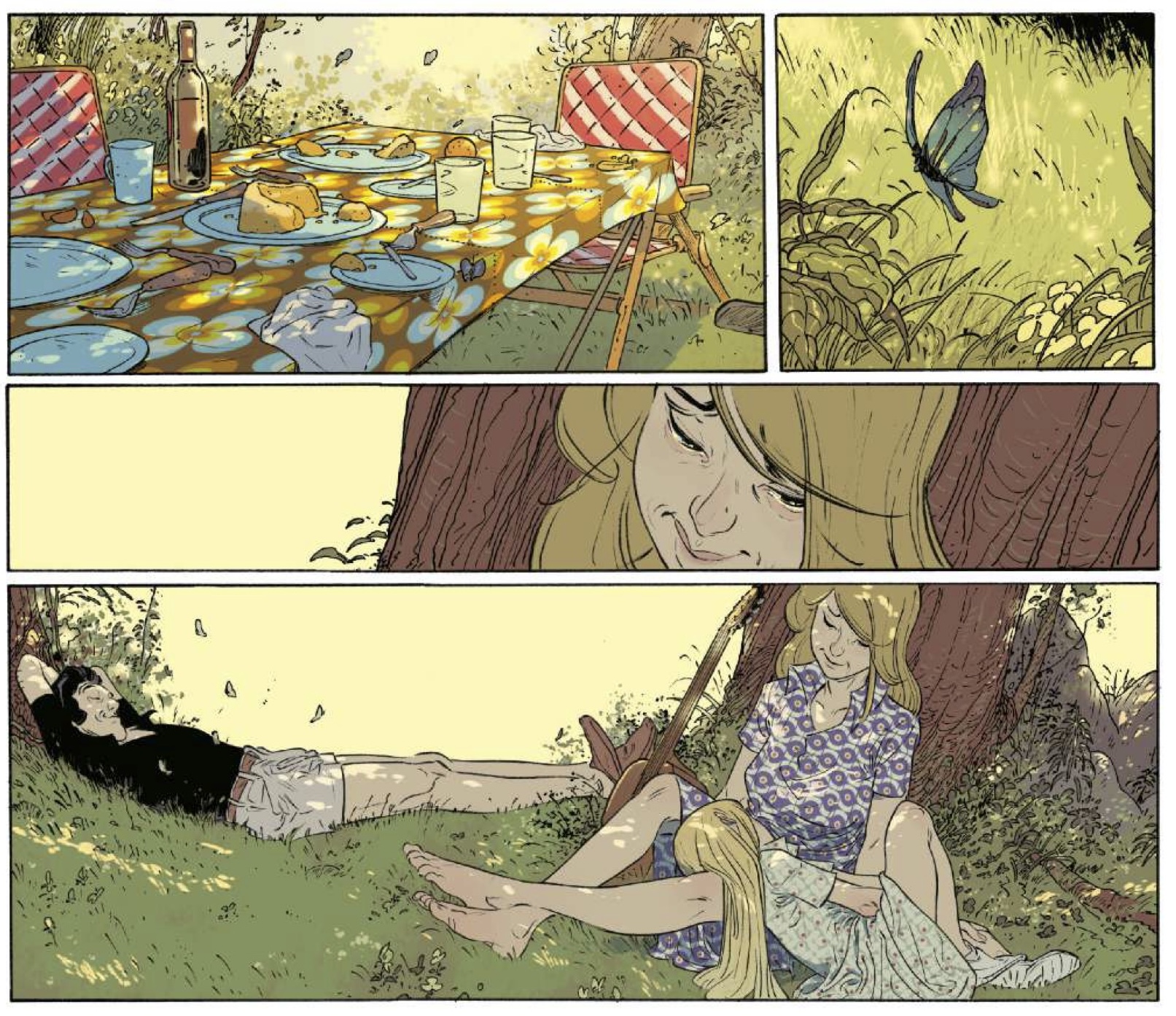 Sequence from Glorious Summers by Zidrou and Lafebre.
When did you start drawing?
Oof. I can’t remember not drawing. I was pretty physical when I was a kid, nervous and jumping around all the time. But the moment I took a pencil and lay on the ground to draw, I was calm and focused. From early on I was drawing with passion. All kids draw, actually. And most of them stop at some point. I never did. By the time I was 14 or 15, it was obvious that I was going to pursue an artist’s career because that's what I did all the time. Not particularly better than my classmates, but it was just my nature. I did it by instinct and with passion. I was drawing all the time, expressing my feelings or what was in my mind. It was my thing. I never stopped. And when I was 18, I said to my parents "I think I'm going to pursue my artistic career." And they said, "Oh, really, Jordi? We never noticed. (laughs) ‘Of course you will."
Drawing has always been my thing, and especially storytelling. The further I go along in my career, the more I realize that storytelling has been my main focus. When I was studying art at university, I never got bored, but it was less interesting than comics, movies, books, and novels. The moment something has a story inside, I’m immediately interested in understanding how it works. When I first started writing, I felt like an imposter because I came from art, and writing is a completely different thing. But I just put my fingers on the keyboard and started writing by instinct. And it wasn't that bad, actually, because I love stories and I've been studying stories my whole life.
What are some of your favorite films?
There's moments in my life that have marked milestones. One of my first memories is when I was really young we lived in this little apartment and the TV was on the wall on the opposite side of my parents’ bedroom wall. On weekends my father would sleep late. But again I was this really energetic kid so I would wake up very early in the morning, the first in the house. And I would go up and turn on the TV to watch cartoons, and on weekends they were the best. But I didn't want to wake up my parents, so I’d turn off the sound. And I’d imagine what was happening in the story without being able to hear voices or noises. And that’s a very young memory, me being fascinated by those characters and stories. I grew up in front of the TV. My mother used to say "Jordi, this is not good for you." And I’d say "Yes, yes, it is good. Don’t worry." (laughs)
Then when I was 17, 18, I started to get interested in American movies, Hollywood and all that stuff, at the same time as I was getting interested in the old classic painters. For me, it was as interesting studying Michelangelo and Velázquez paintings as Scorsese or Tarantino. I was really fascinated by storytelling and the storytelling masters. And Miyazaki, of course. I can’t tell you how many times I've seen Porco Rosso. I know by heart every frame of that movie. The compositions, the colors, what's happening ... Miyazaki was a milestone for me. Scorsese as well, and Tarantino. Novels too. I've been really studying — not compulsively, but almost (laughs) — all the storytellers that interest me. My approach is never from theory, but if I like something I try to understand why I like it so much. What exactly tricks my mind and how exactly it tricks my emotions, and how to put that into my own work. So I should really think about a list of my favorite movies and my favorite books because I've seen millions of them.
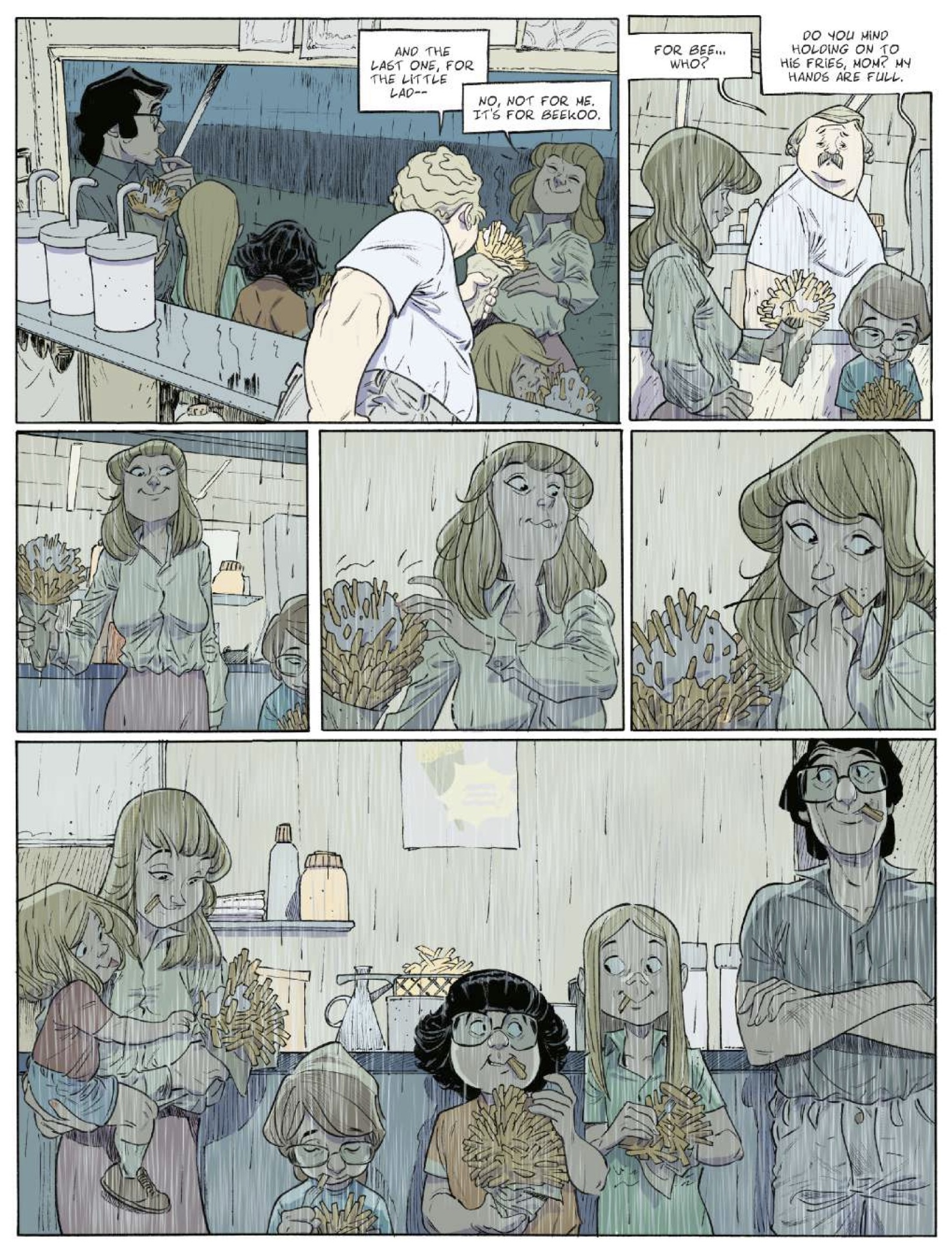 From Glorious Summers.
So when did you first combine drawing and storytelling into your own thing? I know you worked with Zidrou before.
The particular situation when I started is kind of a funny story. I was 19 years old and I was studying two things at the same time. I was at the university doing fine arts — painting and classical drawing and all that stuff. But in the mornings I was studying illustration and comic books at a small school. This great school in Barcelona, that still exists actually. It was mostly practical, not that fancy, but with a real focus on illustration and comic books. Great people, great teachers. And I was going from mornings at the school to afternoons at the university. I did that for four years and did really well. Then I finished when I was 21. And I immediately felt like with comic books, I needed to practice. It’s like being a pilot. You can know everything, but you really need to practice on your plane to become a pilot. You need to practice your shots, your characters and their movement. There's millions of details in comic books that come with practice and understanding how it works. So I immediately felt that, and tried to start my publishing my own work. But at that point, the Spanish comic book market was collapsing and it was really difficult to start on anything. And I finally found a spot on an erotic magazine (laughs). I was 21 years old and my first published works were erotic and pornographic comics. I was living with my parents at the time. Kind of funny, right? (laughs) But it was my own writing and my own drawing, and it was the thing I had to do at that moment to begin to become a professional. From there I started to jump from magazine to magazine, always writing and drawing everything myself, practicing everything I had in mind — color, paneling, characters, anatomy, dialogue — the essentials of comic books.
And again, the Spanish market was collapsing, so I had to pursue something bigger than that. I had three choices. European comics with French stories, American comics with mostly superheroes and adventure, or manga, which was really far away and kind of tricky for me. My natural choice was the French market. Both for proximity and personal taste. But then you can imagine I was 25 and didn’t speak French at all. And knocking on doors in the French market was like, "Oh man, this is going to be tough." (laughs) My portfolio was nice but it was really difficult. That market was very competitive at that time, even for professionals from France. You have to speak French, you have to have some connections, you have to understand what was happening in the market to really get a spot. And being young too was difficult. So I was really trying to push some projects and it never worked. At some point, Zizou found my work and contacted me, and we started to work together. And obviously I immediately dropped the idea of writing my own stories, because once you have a spot and you are the artist and you have a big writer attached to you who teaches you so many things, and a great publisher in Dargaud giving us the opportunity to publish our books, of course I said yes. So I started to push my art more than everything else. The coloring, the drawing, and trying to absorb all that old tradition of the French market. Not mimic, but really absorb all the good things that come with that huge tradition. And then after maybe ten, twelve years, my career was kind of solid. We did Lydie, La Mondaine, we had several Les Beaux Étés (Glorious Summers). I was comfortable, let's say. I’ve been lucky that the French public has always welcomed me, my art, my kind of style.
Then in my late 30s I started to feel kind of a sadness or dissatisfaction or something like that. I noticed that I had several proposals from several writers — great writers — but for some reason I kept refusing to work with them. I always had an excuse: I have no time, this kind of project doesn't stick with me ... I could always find an excuse to refuse. And not even solid excuses (laughs). At some point I had to ask myself the question, why are you refusing? There’s got to be a reason you’re blocking all these nice projects. And I realized I wanted to try to write myself, to go a step beyond and write my own books. Not because I don't like being an artist, but I like to write as well, right? So I talked to my editors, and they have been my editors since the beginning so they know me well, and they said, "Sure, you have to try. You're an amazing storyteller." They had the confidence in me to say let's try a book. And my first book was actually Always Never. Which was my first ever long-form script. Though I was doing my homework, if you will, my writing school on my own at home for years. Analyzing novels, analyzing movie scripts. And when I put my fingers onto the computer to write my own script, I felt like it was home. I'd been doing this for years in my mind and I know how it works. Every book is challenging, every book is difficult to write, but the nature of it, I was so happy doing it. I have so many things to tell that I'm not stopping (laughs).
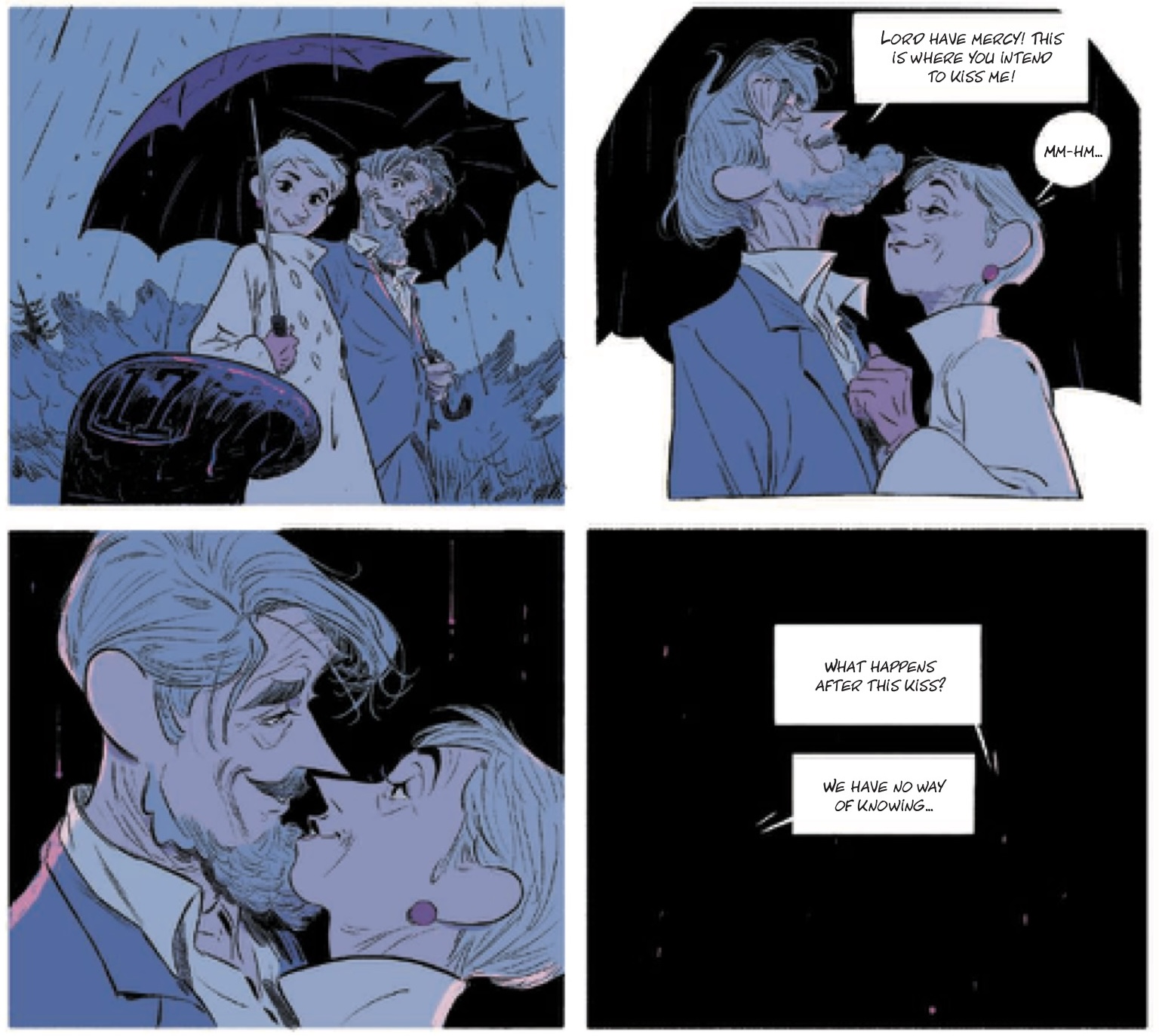 Sequence from Always Never.
So tell me about Always Never coming to you. Do you remember getting the idea?
I feel like it's not true that an idea just comes to your mind. That’s a cliché. In my case, a good story always comes from different ideas and different kinds of needs. I’ll have an idea that won’t go away, so I keep thinking on it. But I could be thinking on an idea for months and months, without taking any notes. Just thinking about it. And at some point some of those ideas join up and create a good idea. And you’re like, "Now I have something." When you have something that comes from different places and different ideas merging, that's when the work starts. It's like going down a mine and you just scrape and scrape and scrape to find one diamond, right? It's really about building something every day — working on your characters, working on the rhythm, working on their character arcs, working on the reasons you are working on that book, working on everything that comes with writing. I write several drafts getting the story into its final form. Always Never didn’t come to me immediately, it was many different drafts. At the beginning I had this idea of doing a romantic story because most comics are about war and crime. In cinema, you have all these love stories, but they’re difficult to find in comic books. So I wanted to do a love story, but I had nothing. Just the desire to create one.
Then I read Natalia Ginzburg’s La Città e la casa, an Italian novel where the story is told through the letters that the characters write. And I had this idea of a love story using the letters a couple send each other, where one of them has kept all the letters. So the very first letter would be on the bottom of the pile. And the first letter you find on top is the final letter, where they say goodbye. So imagine you are the grandson or whatever, and you find these letters. Out of curiosity you open the first one and you see that it's the final letter of a love story. Of course you want to read the next one, and then the next one ... And you keep going back in time to see what's happening. Up until the first letter they sent each other, which is the last one of the pile. And this was the vision I had. The idea came to my mind like (makes explosion sound), like it fell out of the sky. So I had that and was like, "Okay, that's something." Now I have to build the two characters that send each other the letters and build a story that goes with it. This took me months and months of different approaches and different routes to get to that final draft.
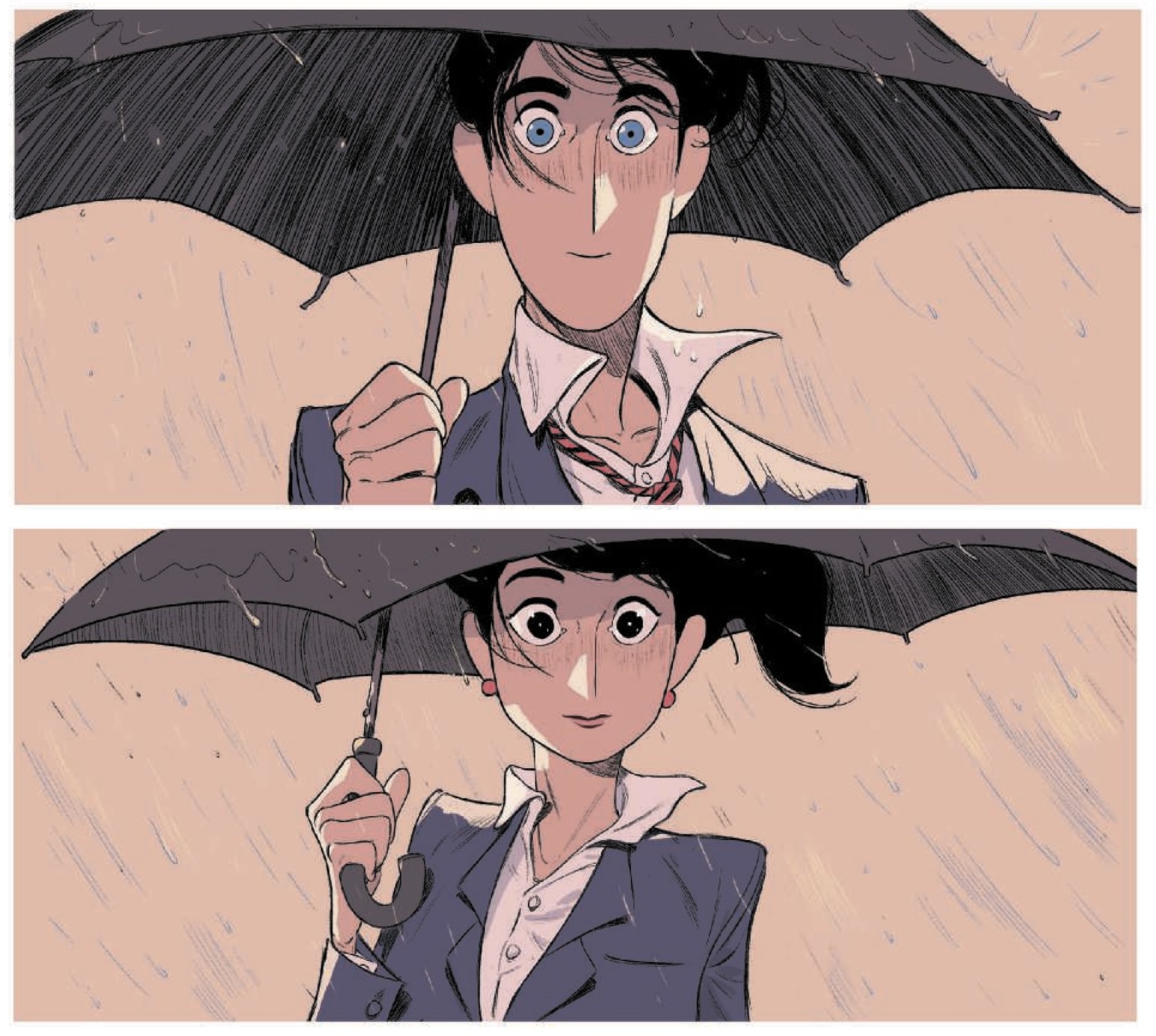 From Always Never.
Was Audrey Hepburn a big inspiration for Anna [Always Never’s female lead]?
Of course. As I said before, with my love of classic Hollywood movies and wanting to do a love story ... one of the good things about comics is that you don't have to pay an actor (laughs). As long as you can draw them, you can have that particular actor. And Audrey Hepburn was an incredible inspiration for me. I was looking for that kind of charming energy. A character that goes through everything, and everyone tries to stop her but it's impossible because she's so charming and energetic. I love these characters that push past disappointment and never stop. Their enjoyment and enthusiasm keeps them going on, going on, going on. And I tried to give Anna that charming Audrey Hepburn energy.
The two books that have been translated into English, Always Never and I Am Their Silence, are very different.
Very, very different. I don't know if as the years go on I will be seen to have a palette, a kind of style. Right now, I try to focus on each story. The moment I have an idea I try to pursue that idea and put all the pieces together that that particular story needs. I'm not pursuing any kind of bigger picture style, I'm trying to put all my energy into each book every time. Actually, I'm not trying anything. I have an idea, I do a book. Then I have a different idea and I do a completely different book. I just go with my feelings in that moment. I realised with I Am Their Silence that for a large part of my career as an artist I’ve been drawing stories that happened in the past. Lydie and La Mondaine both take place in the 1930s. Always Never happens in this kind of blurry moment in the 20th century. And the whole series of Glorious Summers happens in the '60s and '70s. So I thought: I love my present, I love my city, I love to be in this time, and I’ve never drawn that. Maybe it would be a nice challenge to put all my energy into the details of everything I’m seeing around me every day. To build a story that happens in Barcelona, which is my city, in our present time. And it's so different to draw that. I'm finding myself drawing sneakers and jeans and cars and phones and all these things that we take for granted because they’re all around us. But before as an artist, I would never have drawn them. So it was really challenging for me. And the idea of drawing something very modern, in a way, pushed me to try a modern style for writing as well. And for color, and for building a modern character like Eva is.
So yeah, it's very different because my needs as an artist were very different. The first book was born from wanting to do a love story, and the second book was born from the idea of doing a book that happens in the present and talks about our struggles right now as people. Very different ideas, very different approaches.
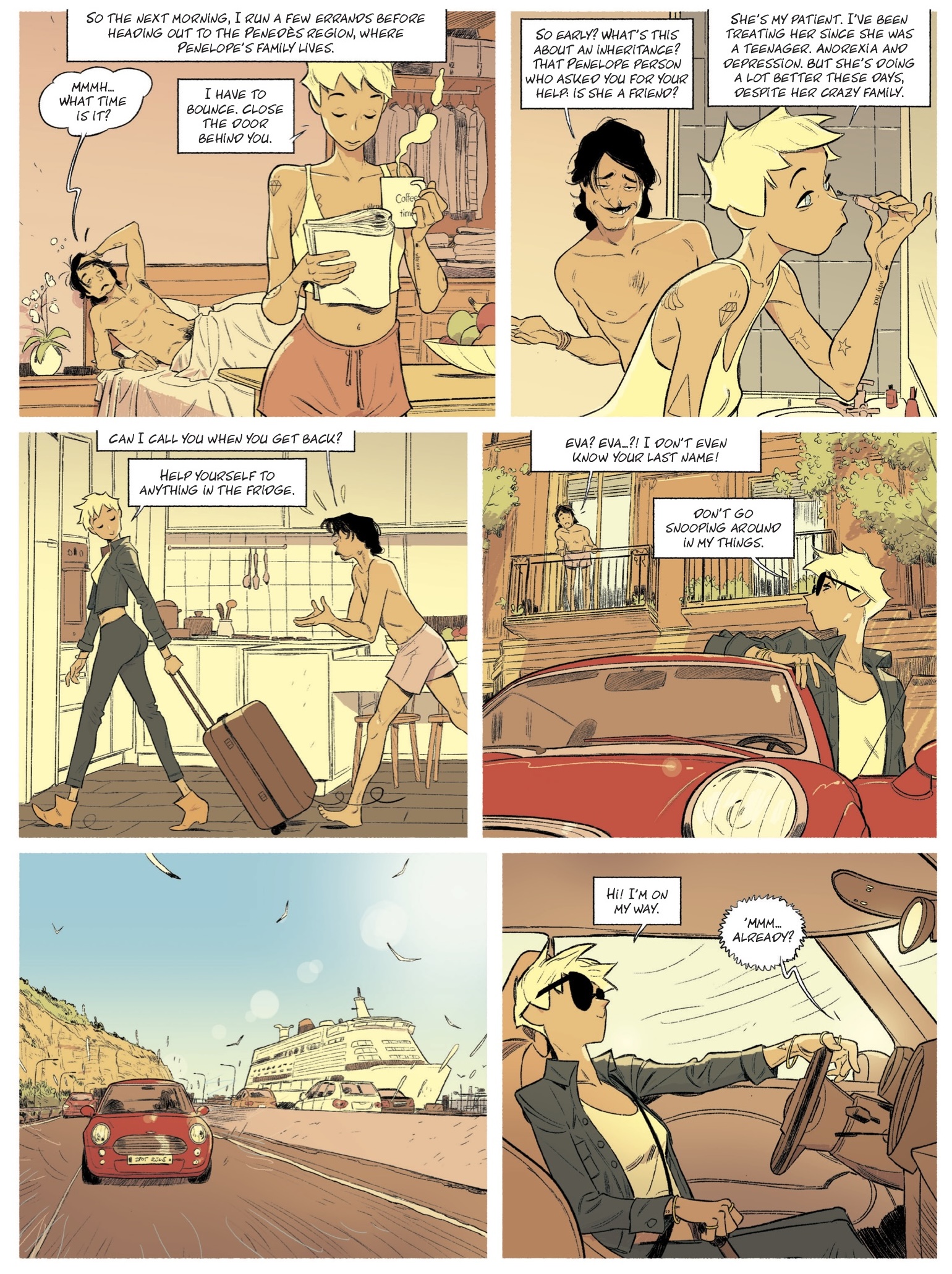 Page from I Am Their Silence.
I Am Their Silence is much more sexual than Always Never.
Of course! Sex is super present in our society. It's so present that we don't even notice. And ironically for the love story I thought that the moment I put too much sex in it, the love part would fall apart. So I tried to avoid any sexual content to protect the love story itself. Conversely, a character like Eva today in Barcelona, in her 30s, if I have no sex in the book, come on, that's not believable. She's beautiful, she's single, of course she has a sex life. And it's going to be a good sex life. It’s not sexual content. I think it's funny, it's comedy content. She drinks alcohol, she smokes, she has some easy relationships. She's a modern woman, right? She's strong, she knows what she wants, she enjoys her life.
Death is also central to the story. Besides there being a murder, there's the three women of Eva's past who are with her in her head.
I thought mostly about heritage. And the moment you talk about heritage, you have to talk about death. If you read Hamlet, Hamlet’s father has to be dead, right? (laughs) Otherwise, it's just a father talking to his son. It's the father being dead that really pushes the story. And death is something that we all have to face at some point. And with the voices [of the three women], it’s about what we carry. The book is more about heritage than death, actually, because Eva doesn't fear her own death. She fears the voices either taking up too much space or, on the other hand, those voices being forgotten. She fears justice won’t be done, but she doesn't fear her own death. So I feel like in the big picture the book talks about heritage and the kind of society and planet we would like our kids to have. What are we building and what are we leaving to them? And in order to have a good idea of that, you have to ask yourself, "What do I have right now?" and "What do I have from my parents and from my heritage?" I think Eva faces injustice and crime because she's getting strength from her heritage, from the voices in her head of the females in her family that have passed on.
And in the end, it’s mental health, right? That’s a big, big, big issue in the book. I feel like the 21st century is going to be the century of mental health. It’s the big issue we all have around us, and for different reasons. Psychiatrists struggle to understand the real source of this huge pandemic and how to stop it. Mental health issues amongst teenagers are rampant and health services are completely overwhelmed with the problems teenagers have nowadays. I think we as storytellers have to face that and talk about it. And when I think about mental health, I feel like each one of us should find our own balance and what works for us. And it's heritage, right? What we’ve inherited from our government, our family, the problems on the planet, all these things that we didn't choose to have but have them anyway.
In the first book [I Am Their Silence] it’s not as obvious that Eva is bipolar. In the second book [I Am A Lost Angel] it’s more obvious that she struggles with bipolarity. But I took the comedy approach because I want to normalize it. I actually think that it's normal. Eva is bipolar but she continues on with her life. I remember asking a psychiatrist, "Is it possible to be a psychiatrist and bipolar?" And he replied "Is it possible to be bipolar and be a policeman, a lawyer, or anything? You are bipolar, so what?" It was the perfect answer. The best advice to do my book. And to any reader that asks me "Is that believable?,' well, the best answer I can give is "Of course it is." And I think Eva manages her life with bipolarity in the same way. She has that, but she refuses to let that stop her in any way.
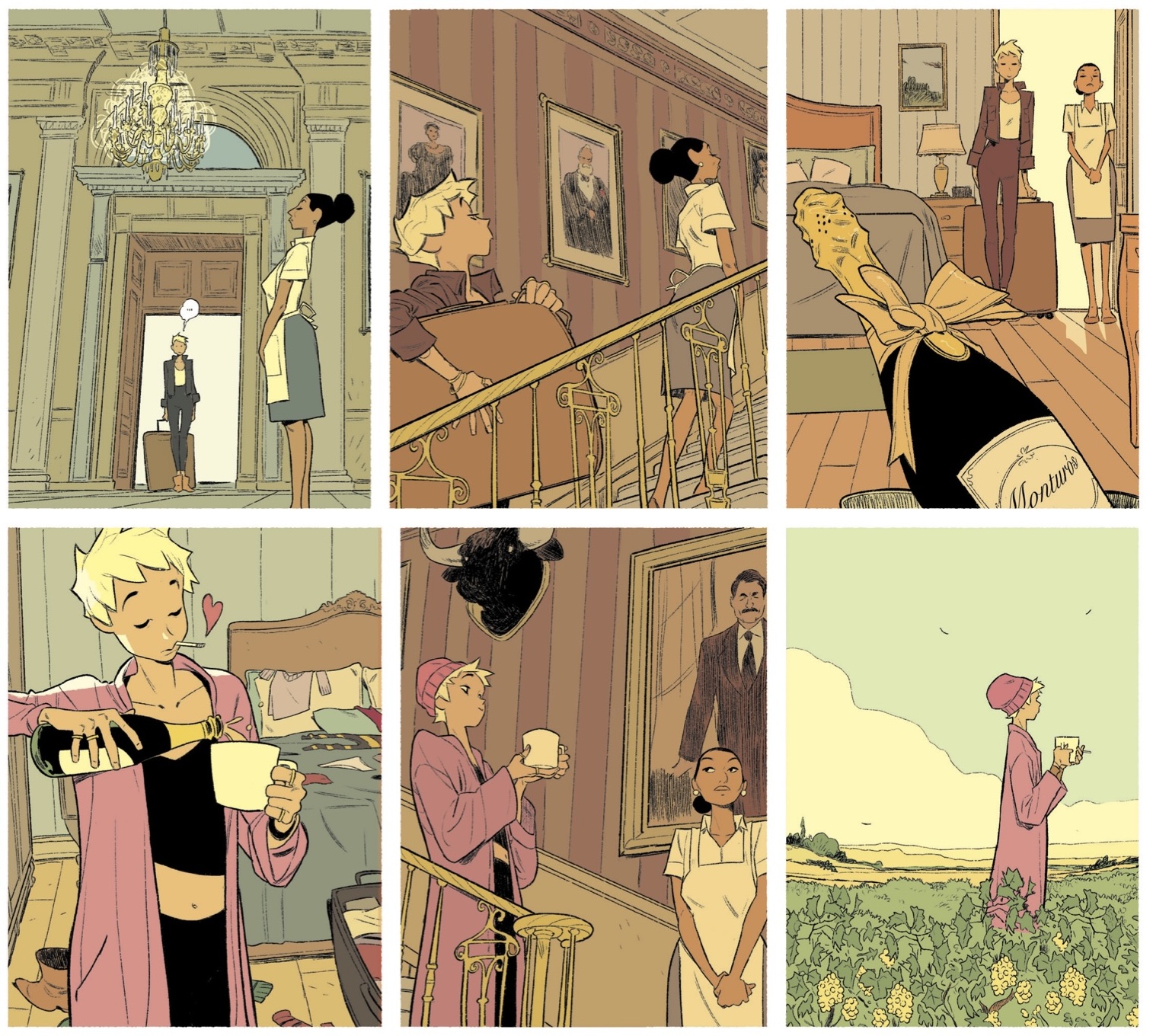 From I Am Their Silence.
As you note on the last page of the book, you did a lot of research on this.
Yeah, yeah, yeah. I love to do research, I think I have a little journalist in me. Every book is an excuse to go deep into the research on things that interest me. But of course the moment you touch so serious an issue as mental health and psychiatry you realize that you are not joking. If you’re writing about, I don't know, lizards or whatever, if you go wrong, it's okay, it's just a book. But the moment you talk about such serious issues, you can't lie. You can't say nonsense. It's just not possible. You really have to respect all the struggles people have. And with that respect comes solid research and a context that gives me as a creator a base for doing some things that are at least believable. It goes with the job.
What can you tell me about the second volume, I Am A Lost Angel [Je suis un ange perdu]?
I hope it's going to be translated into English at some point. Dark Horse has published my two previous books. and I hope they’ll trust this one again. When I wrote I Am Their Silence, I felt like I had created a new universe, one where Eva Rojas could go on other adventures, have other stories. And I love the idea of having an open universe that allows me to go back and create more in that universe. So this second book, it's another adventure. It's Eva Rojas again, the same voices in her head again, her psychiatrist, Dr. Llull, again. And another crime, another secret to be revealed, another mystery to be solved.
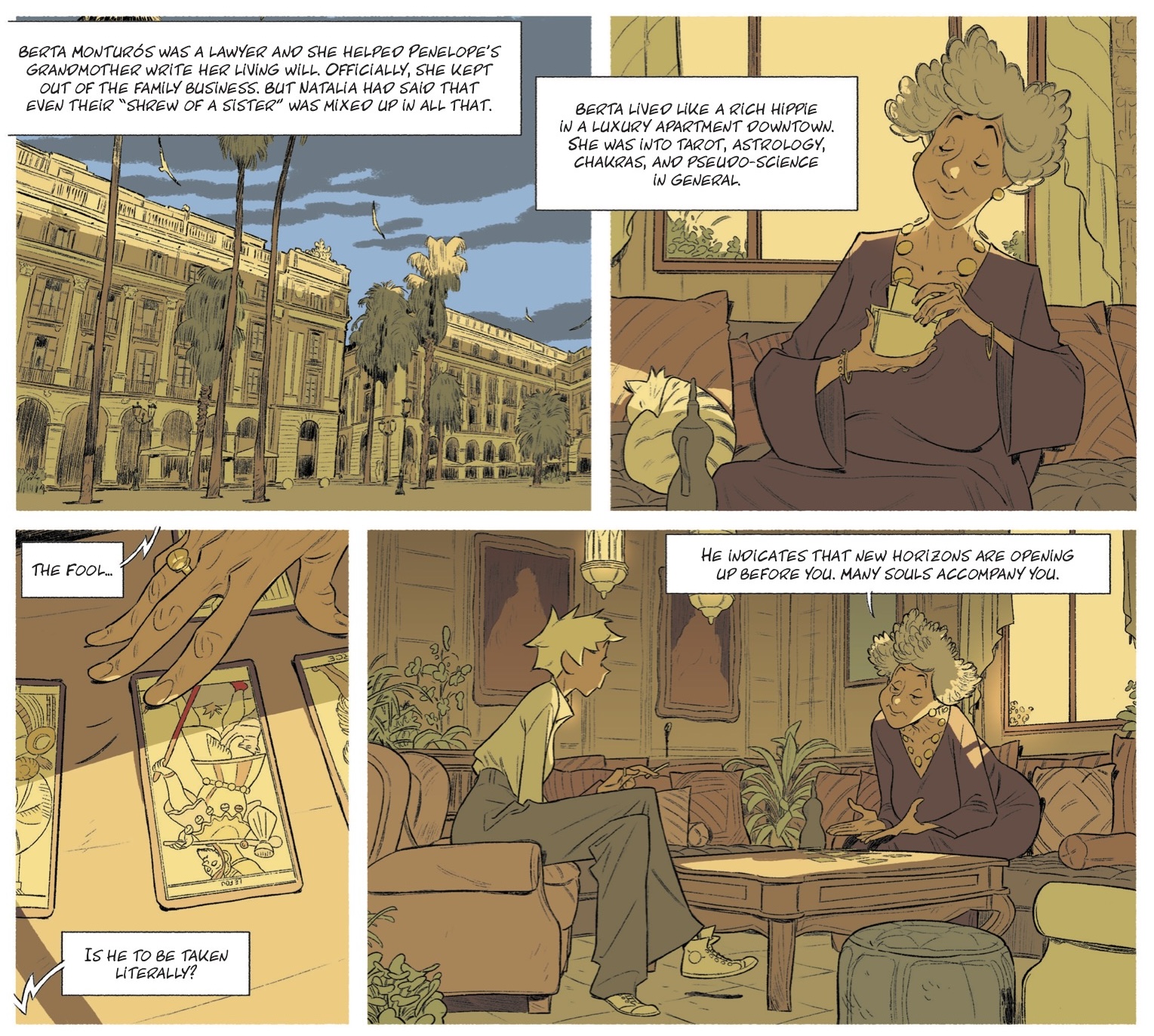 From I Am Their Silence.
One more thing about I Am Their Silence. I noticed that when Eva goes to visit Aunt Berta, Aunt Berta is using the Marseille tarot deck that Alejandro Jodorowsky works with.
I created that scene because Aunt Berta says "Some other voices will come to you." So I opened that door to have other books and other voices come to her eventually. I love the tarot. I have a friend that works with it. I think it's so mysterious and metaphoric at the same time. It was perfect for that character. My books are full of my little interests, putting things I love in them. They’re my books so I put everything I can in them. That’s how it works. I feel like it's my passion that will bring readers their passion. I could never write a book about something that doesn't interest me. I'm not that professional or cold. I need curiosity, I need passion.
That's what makes it alive.
Exactly.
So tell me a little bit about your other work outside of comics.
I'm a character designer for animation. I'm currently working on a Netflix project. I can’t say more than that (laughs). I love to work on animation because it's a team effort. And it allows me to write my scripts slowly, because every time I finish a book I'm exhausted. I empty myself into my books, and I need some time to get back into shape again. It's like running a long marathon. At the same time, writing a book can be very solitary, at home alone working on it day after day. Animation is the opposite. It's always a team effort. And there’s always good energy between us. It's less responsibility too. I'm not the director, I'm not the writer, I'm just helping them. And I feel really pleased to be part of something bigger than myself. Sometimes I try to create a book that's bigger than me, but I feel like a book will always be like me, in a way, because it's from me. It’s difficult to go really far from yourself with a book. But with a movie, it’s just the opposite. You put your energy into something that this team is building, so it's always going to be bigger and it's always going to be surprising because every meeting you meet other artists, other creators, and you all talk about what's happening in the movie. It takes a long time, but it's a journey.
I've been really lucky the last eight or nine years, because I always have time to work on both things, and they are both my passions. The most public work is obviously my books because it’s my name on the cover. But I'm as happy doing animation or working on movies as I am doing my books. It's the same Jordi, the same kid being passionate about storytelling.
And you tweeted recently “as a top studio collaborator and internationally published author, I can say that not only do we not use AI at all, we actually hate it.”
We do. We do, we do, we do, we do. We actually hate AI. And I can say I'm currently working on a big studio project and none of us use AI at all for creation. It's just a lie that goes around on the internet. I haven't seen any AI professional work in my life. In any of my projects. And I would be ashamed to try to use AI to get my job done. It's just shameful (laughs). It's just so cheap and not creative and human, right? And it's not only myself, it's my whole team I am currently working with. We all hate it. We all hate it so much that we don't even talk about it. It's just nonexistent. We talk about the project, the characters, the story, what's happening, what we need, the kind of background we're working on ... the director asks us some things, we talk, we have a schedule to pursue and we go home and we get the work done with our own hands. As we have always done. AI is just not there. You know, my job is actually being creative, and using AI, you are not being creative. You are not thinking, you are not feeling, you just ask something to give you a result. But that result is useless. Because it wasn't you getting that conclusion.
Any color, any form, any line that you create, it comes from somewhere in your mind where you feel that line, that color. You have millions of greens, you have millions of reds, you have millions of lines. A line can go like this, or like this, or like this ... When I'm working on a film project my job is actually to think and feel. My art is just a result of that. It's a combination of that magic that creates something meaningful. And with AI all of that gets lost, and you only have the result. That result means nothing. Even if it looks fancy, so what?
What's next? Is there another book?
Yes, of course, always. I'm working hard on this movie but I'm also working on a small book that is going to be published in French next year. It’s a tiny book, for once (laughs). A beautiful, tiny book. After that, I'm starting to put together some ideas for a third book with Eva Rojas. And there’s some other projects that have been on my table for years. Some projects take a long time and you work on them from time to time. So I will keep working on them from time to time. But yeah, basically I'm working on this animation project and this small book will be published next year, and with the longer book, if everything goes as planned, it will be out in two and a half years. And that's a lot of work, right? (laughs)
The post An interview with Jordi Lafebre: ‘I try to make the reader forget that they are they are reading a comic book’ appeared first on The Comics Journal.







 English (US) ·