
Leonard Pierce | March 24, 2026
It's a tricky time to create in the cyberpunk genre, what with living in a technological dystopia and all. Cyberpunk has always been a tricky medium in which to work, since it so often combines the glossy sheen of science fiction, the run-down fatalism of noir, and the hard-boiled stylistic flashes of detective stories; for three great tastes that don't always taste great together, they've produced a few genuinely brilliant works, and as a whole that doesn't always cohere, it's proven surprisingly resilient as its fantasy increasingly becomes reality. Enter transcontinental writer and artist EPHK and his latest production, Harpy.
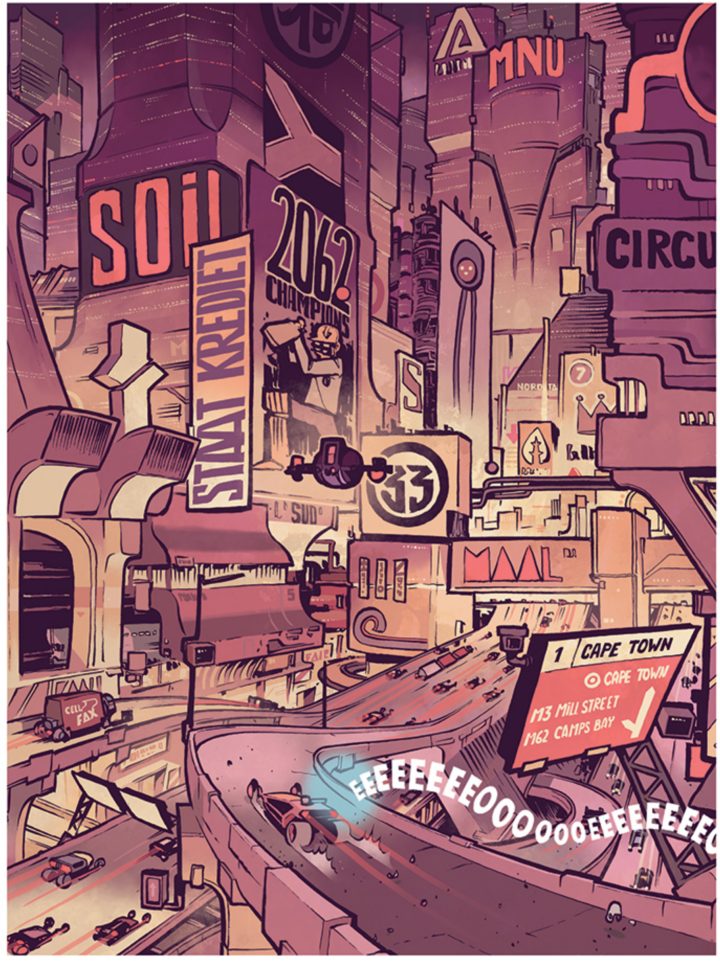
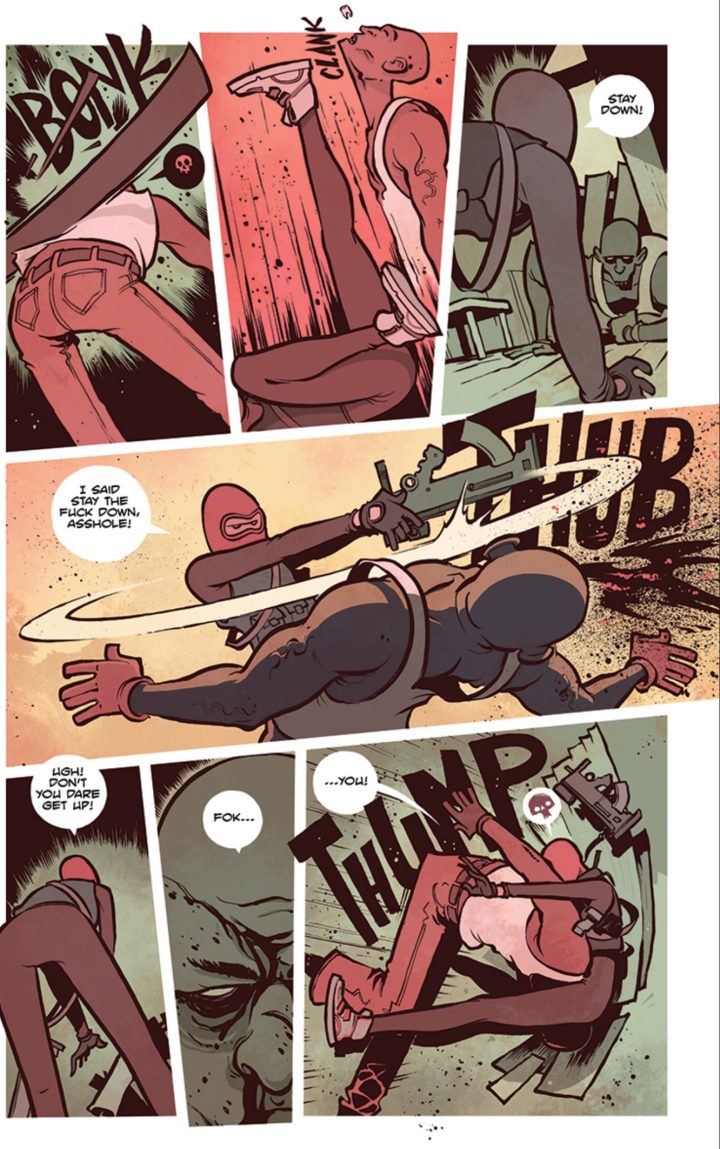
Born in Paris and with roots stretching from Canada to Germany to China, EPHK is well-suited to bring us a story like Harpy. Initially set in a sprawling, intimidating urban jungle growing out of Cape Town, South Africa, a simultaneously recognizable and alien twenty years from now, it focuses on burnt-out, restless police detective Gung Yan Fung (“Gunnie”) and her plunge into a series of murders that take her, like her creator, from one continent to another, and deep into both a violent conspiracy and her own repressed emotions and buried memories. EPHK's background, with fingers tracing their way through pin-ups, poster art, comics, graffiti, and tattoo art, makes him uniquely qualified to work in the book's impressively slick urban style, and the visuals are what make it a book worth paying attention to.
Here's the bad news: While perfectly serviceable to the material presented – it's not like you're going to walk away from this book thinking it was incoherent or terrible in terms of plot or anything – Harpy isn't especially compelling when it comes to the writing. EPHK clearly loves Gunnie, and that enthusiasm is contagious, but none of the other characters are particularly profound or interesting. They rarely rise above the level of stock (angry ex, ball-busting superior officer, sensible partner), and the villains, always so crucial in the kind of back-room noir that's being constructed here, consist of some enjoyably colorful goons but very few antagonists that are memorable or hook the reader into the narrative.
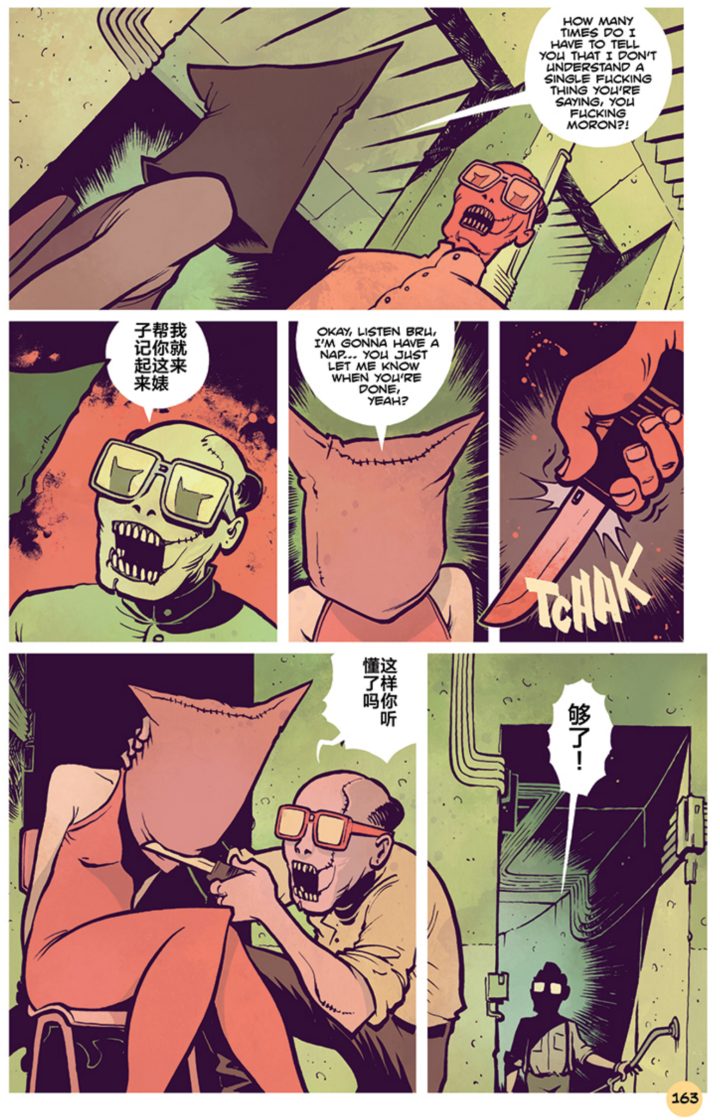
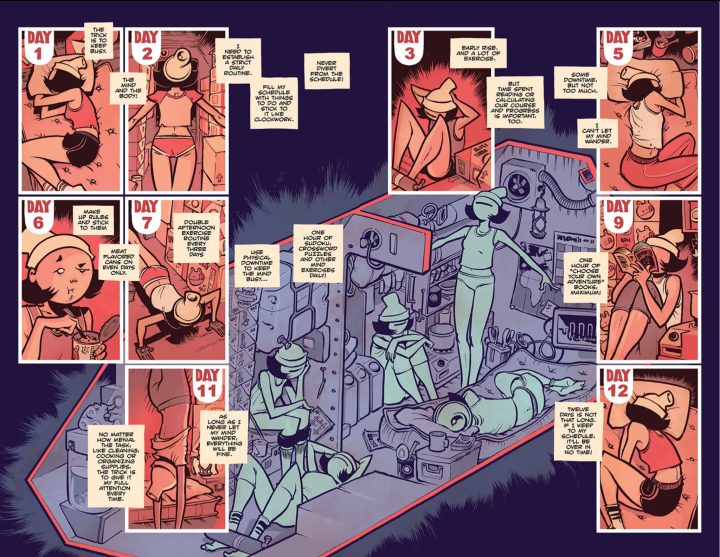
The pacing of the book is a bit slow, given that it's a readable page-turning for the most part; it could probably lose about fifty pages of padding without damage to the story. The writing clears the bar of competence but doesn't aim much higher, and the dialogue tries to be edgy and ends up trying a little too hard. There's a lot of build-up that isn't rewarded enough in the narrative until the end, and its mystery takes a literal deus ex machina to resolve, something that would come off a lot more clunky than it does if it wasn't placed in the kind of genre framework that invites that sort of thing. As a futuristic noir, as a cyberpunk-tinged detective story, and as a character study, it's only okay.
The good news is, the art is more than good enough to sustain the slow patches in the story. Harpy is a gorgeous book, and EPHK's visuals explode every time, even when his writing fizzles a bit. The colors pop and shift constantly, always reflecting the mood; the effects and sounds are often pitch-perfect, drawing from both western and eastern comics traditions in a wildly successful fusion. As much as he loves Gunnie as a character, he absolutely loves her as a subject of artistic study and it shows on every panel. Lean, flexible, palpably beaten up by life but full of energy and vigor, Gunnie is illustrated in ways that sing every time she's in panel, and she's in panel a lot. Like a film where the most riveting actor is in every single scene, the dynamic, kinetic way she's drawn keeps you focused on each page, and when there's an action sequence (both frequent and well-executed), it conjures some of the best superhero comics of the '70s and '80s in its portrayal of a body in motion while also letting in some of the wild looseness of manga and Wuxia cinema.
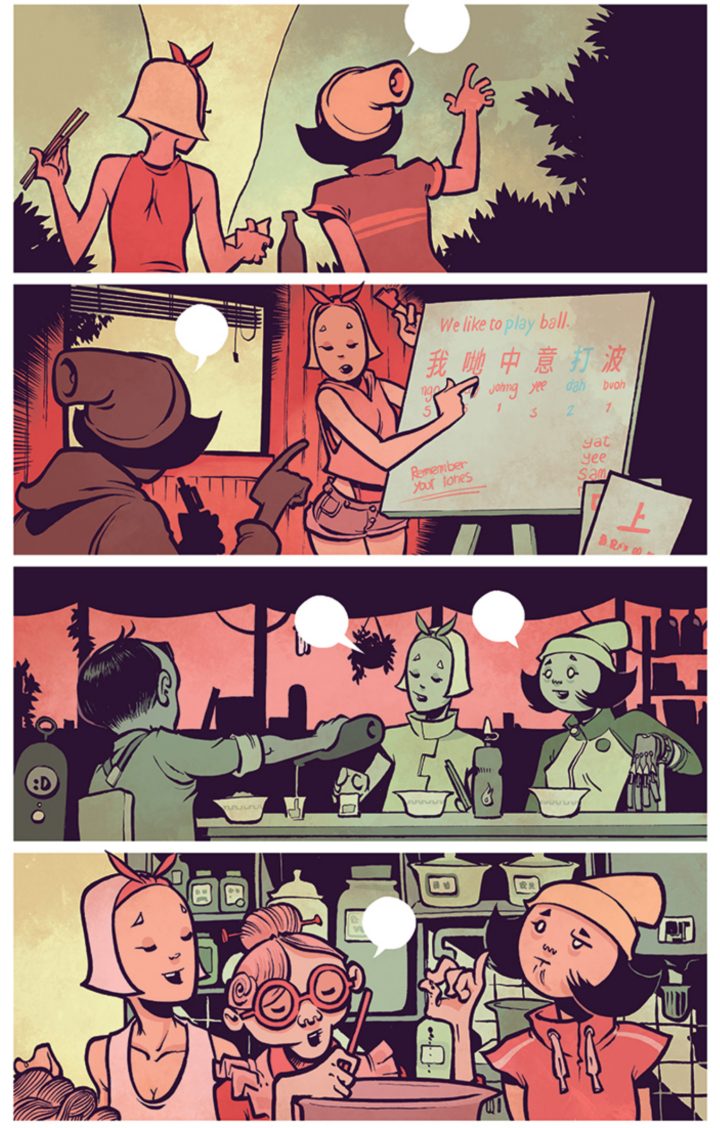 This carries over into the rest of the graphic work as well. Another important aspect of a successful cyberpunk story is the ability to portray a world in which we barely catch a lot of the specific details of its world-building, seeing them mostly in the margins and in half-seen glimpses as the protagonist navigates one danger and obstacle after another, and Harpy excels in this regard. Mountainous buildings, buildings dotting the edges of mountains, massive corporate enclaves looming over struggling low-rent neighborhoods, gorgeously drawn vehicles and weaponry: Everything is full of detail but void of context, letting our minds fill in the details the story wisely leave vague. It's a story that's constantly in motion, moving geographically from South Africa to China and physically from one confrontation and chase scene to another, with hypnotic expertise.
In a lot of ways, the world of Harpy is drawn in the same way that EPHK draws Gunnie's face. Sometimes, she's just a pair of eyes and maybe a slash for a mouth, cartoonish in the best sense and expressive in her simplicity; other times, she's intensely detailed, giving us subtler shadings more than just broad moods. So, too, is the space in which she moves, alternately furious, curious, and lost: Huge, towering blocks of buildings give the suggestion of power and money moving in ways we never see or need explained, giving us few clues other than looming shadows of what's behind or between them, but when we zoom in we see names, faces, specifics that are just as enigmatic but with a granular level of care that tells us that the artist has given this world an awful lot of thought but isn't going to yield its secrets too easily. It's constantly impressive.
Ultimately, Harpy's story can't keep up with its art, and who can blame it? Like the mysterious plunges into “drowning dreams” that unpredictably haunt Gunnie and which she barely medicates away, there are breaks in the story that leave us a little disoriented and confused, with resolutions that aren't quite as satisfying as they could be. Dreams tend to be like that. But it builds mood in a way that a lot of cyberpunk fiction has gotten too lazy to try anymore, and like the most impactful dreams, the vividness of its imagery sticks with you even as the details start to fade away. Harpy comes out of the gate with explosive visual chops, and even if it ends up taking you to some familiar destinations, it's a hell of a ride to be on.









 English (US) ·