
Andrew Farago | March 19, 2026
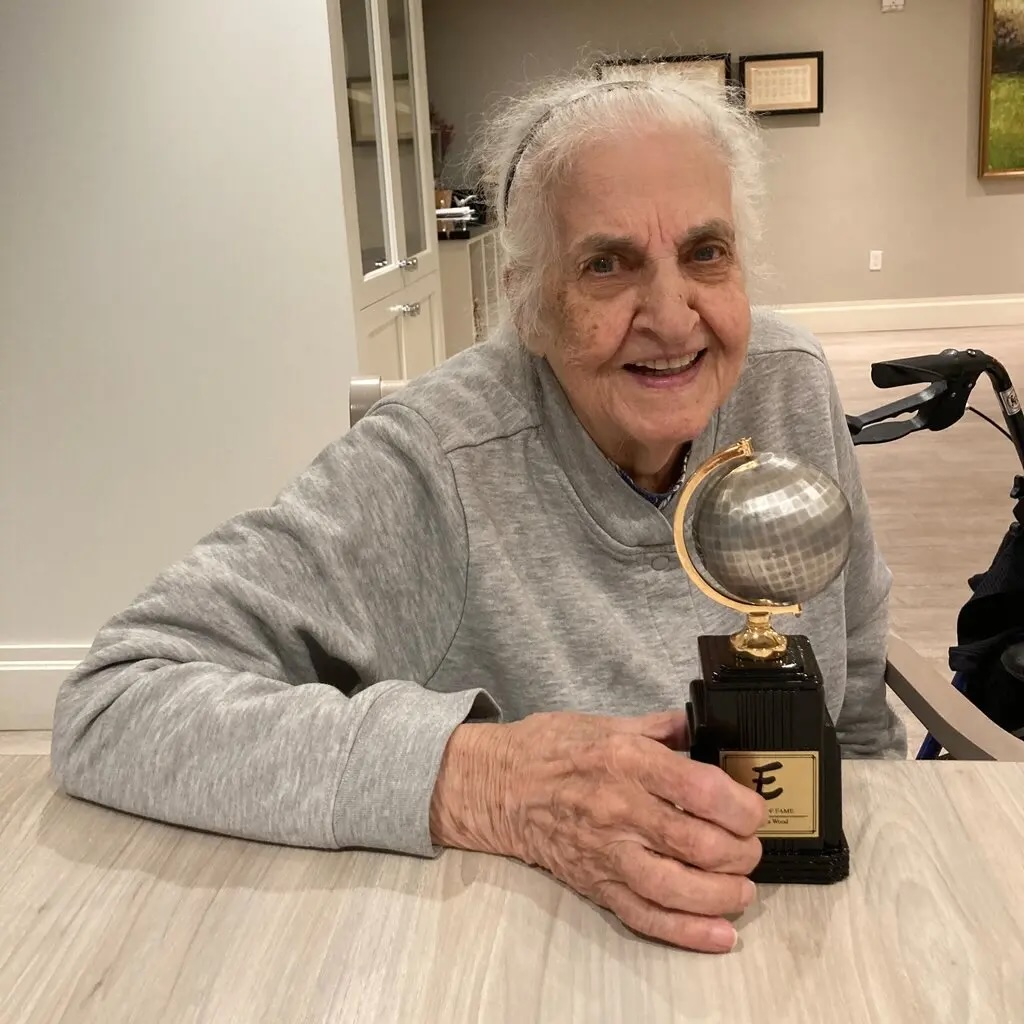 Tatjana Wood with her Eisner Hall of Fame Award, circa 2023. Photo courtesy of Lee Dillon.
Tatjana Wood, whose artistry and color palette defined DC Comics for generations of fans, passed away in an assisted living facility in Brooklyn, New York, on Feb. 27, just a few days shy of her hundredth birthday. Wood’s death came “after a long struggle with fading memory,” according to longtime friend and colleague Paul Levitz, who broke the news of her passing on social media, prompting an outpouring of stories and celebrations from friends, fans, and many of the women who had followed in her footsteps in the six decades since she had established herself as one of the premier colorists in the modern comic book industry.
Tatjana Amalie Weintraub was born in Darmstadt, Germany, in 1926 to artistic parents Elizabeth Hammel, who ran a clothing store, and Mische Weintraub, a photographer. Religious persecution and rising political tension in Germany led her parents to send her and her brother, Karl Joachim, away to a Quaker boarding school in the Netherlands in 1935 along with other Jewish refugees. She and Karl remained in the Netherlands until 1947, when the Quaker organization facilitated their immigration to New York City.
Not long after her arrival in the United States, she enrolled in Manhattan’s Traphagen School of Fashion, where she studied dressmaking, weaving and design alongside New York’s top up-and-coming fashion students. Upon graduation, she found work as a seamstress, designing and maintaining outfits for Radio City Music Hall’s famed Rockettes in the late 1940s.
In 1949, Weintraub met young cartoonist Wallace Wood. They married the following year. Wood established himself as one of the most popular and influential comic book artists of the twentieth century, in large part due to the stories he illustrated for EC Comics in the 1950s. Tatjana Wood, a gifted artist herself, joined her husband as an uncredited studio assistant who helped the overcommitted cartoonist meet his deadlines for EC and other clients.
The versatile artist assisted her husband with any aspect of his work that needed her attention, including inking, cleanup, coloring, production support, and on at least one occasion, in the 1955 story “Carl Akeley" in the final issue of EC’s Two-Fisted Tales, illustration. Her work was front and center in this six-page biography of Akeley, the father of modern taxidermy. "That's the story in which the animals were drawn by Tatjana Wood,” said editor and EC historian Bhob Stewart in a 2011 Facebook post. “According to Tatjana, [EC editor Harvey] Kurtzman was not pleased when he learned that Wally Wood had not drawn the entire story."
The sci-fi, horror and fantasy comic books that had defined EC — and Wally Wood’s career — were canceled over the course of the following year, but Tatjana Wood continued to assist her husband with his artwork, his career, and managing the couple’s social calendar, visiting with other New York-based cartoonists, illustrators and visual artists. “Leo and I met Wally and Tatjana in 1957,” recalled longtime friend Diane Dillon, who won two consecutive Caldecott Medals in 1976 and 1977 with her husband and creative partner Leo Dillon. “We were just married and starting our freelance career as illustrators. Wally was already well established. Seeing our struggles to survive between checks, he asked us to help him. We spent many all-night sessions in their studio inking along with much laughter. Tatjana was helping him then. Sometimes [comic book artist] Joe Orlando and his first wife were there, too.
“After Wally and Tatjana separated we remained friends. She was not only a great colorist she was also an amazing weaver. She wove a number of tapestries and one in embroidery.”
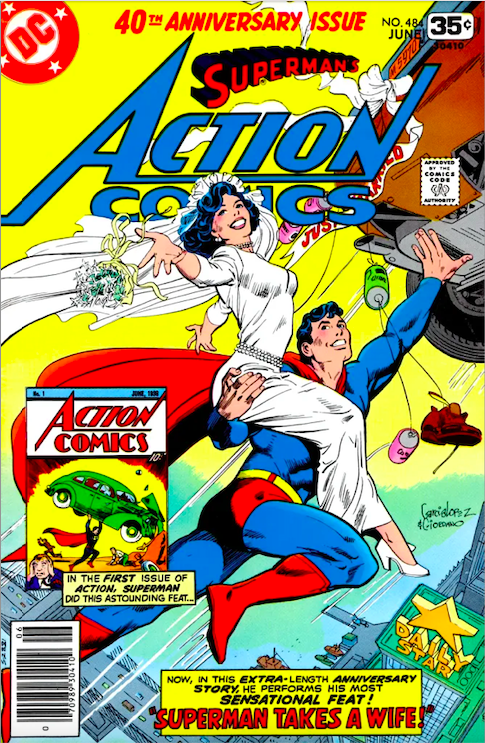 Cover to Action Comics #484 with art by Jose Luis Garcia-Lopez and colors by Tatjana Wood.
Wood and her husband — whom she always called “Wallace, never Wally or Woody,” according to friends — divorced in 1966, but the well-liked Tatjana was soon invited to work for DC Comics as a colorist, where she found herself receiving her own credit in published comic books for the first time in her professional career.
“Nepotism was not uncommon in any corner of the comic book business but it was probably most visible in the coloring division,” noted Mark Evanier in his blog on Dec. 29, 2020, in response to a reader question about Wood. “A lot of spouses and siblings and offspring colored comics and some of them were pretty good. Some older artists became colorists when their eyes or motor skills prevented them from penciling or inking.”
However she’d gotten her foot in the door, Wood quickly developed a reputation as one of DC’s most talented colorists, elevating what had been seen, even by those in the comic book industry, as cheap, disposable entertainment for children. “For those who don't understand the process, comic book pages in those years were produced by a team, assembly line fashion,” wrote graphic novelist Derf Backderf in a Facebook tribute to Wood. “A writer passed his story on to a penciler. A letterer then put in the dialogue, word balloons and sound effects. An inker rendered those pencils. Finally, a colorist added the wonderful finishes that make comics into comics.
“In Tatjana's time, floppy comics were printed on shitty newsprint. The printing was garbage. The color resolution was low. Think about those Ban Day dots that so enthralled parasite Roy Lichtenstein,” Derf continued. “If you look closely at any comics page you can see those dots with the naked eye. It was the most primitive–and inexpensive–reproduction available, and yet a master like Tatjana could achieve incredible effects. She was an important talent.”
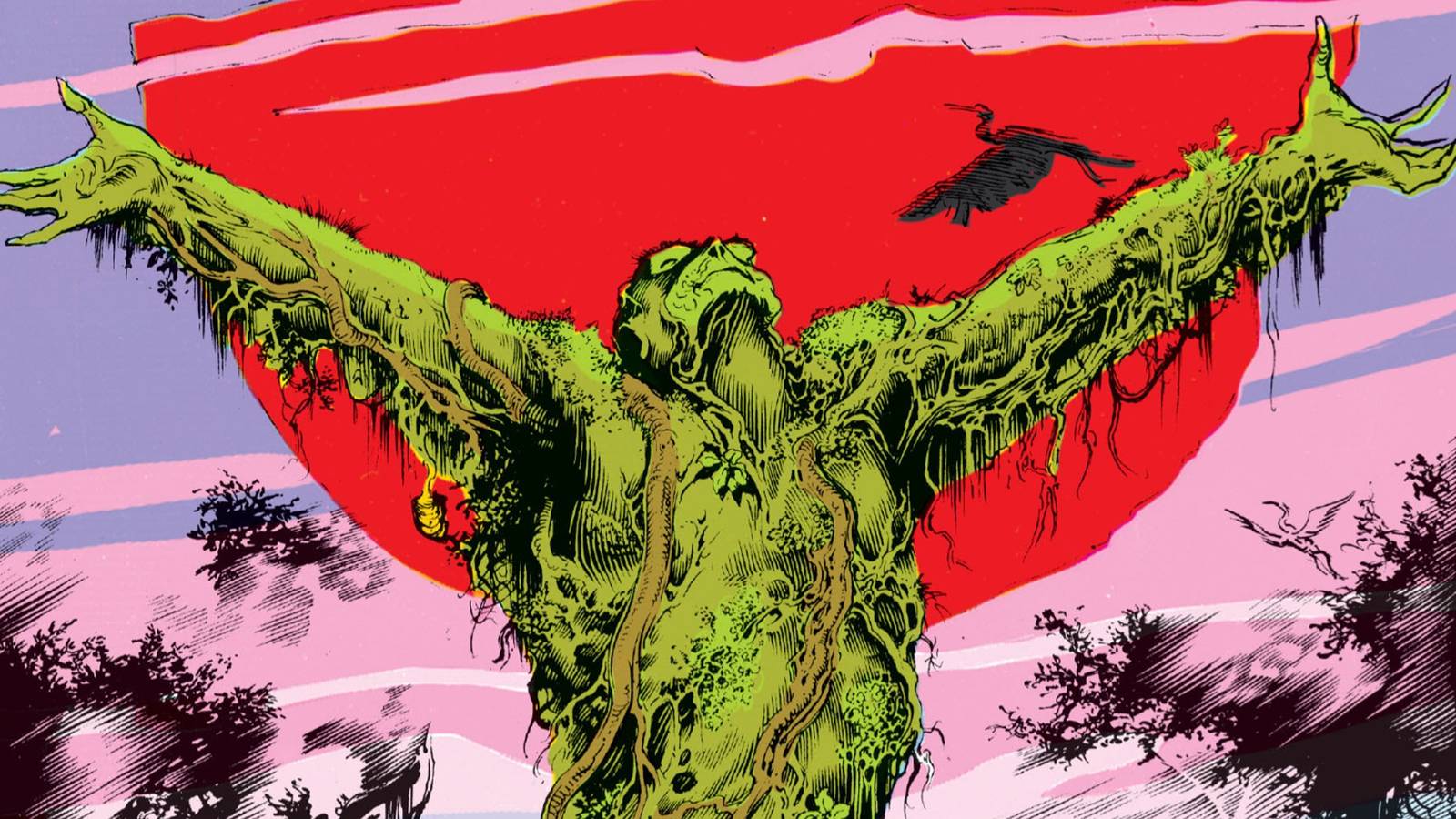
Wood’s coloring on DC’s anthology titles, including the horror comic House of Secrets, military action series Our Army at War, and superhero team-up The Brave and Bold, showcased her versatility in the early 1970s. In 1972 she landed what would become her most enduring DC Comics freelance assignment when friend and editor Joe Orlando, knowing her ability to enhance mood and atmosphere in the four-color world, tapped her to color the first issue of Len Wein and Bernie Wrightson’s Swamp Thing. She continued after the original creative team’s departure and anchored the title through several subsequent creative and editorial changes, ultimately coloring Swamp Thing for over 20 years. “Her crown jewel was Swamp Thing, ‘Shvampy’ as she called him in her gravelly German accent,” said friend and editor Karen Berger.
Wood’s facility with the full spectrum of DC Comics publications did not go unnoticed by the editorial department. “Tatjana began providing color guides for DC comics in the late 1960s, after the company shifted from an in-house color department to freelancers,” said Paul Levitz in a Facebook post eulogizing Wood. “Gravel voiced from her long cigarette habit, she'd spend time discussing each assignment with its editor, and finding a distinctive approach that met their goals. Given the less-than-modest amount paid for each page's color guides in the field at the time, that was an unusual level of artistic dedication, and the results showed that she carried that through in the work. She graduated in 1973 to become the regular cover artist for the whole line, probably only the third person (and the last) to be given that responsibility, and stayed in that role for well over a decade.”
Wood’s assistant and protege, Anthony Tollin, worked alongside her during these years, her most prolific era at DC. “In 1973, she succeeded Jack Adler as cover colorist,” said Tollin on Facebook. “Tatjana colored almost all of DC's covers from '73 until the end of 1983 when the covers were split between the two of us, with Tatjana coloring the westerns, war and mystery/horror covers while I did most of the superhero titles.”
Nearly every reader of DC Comics during this era, which included a resurgence in popularity in the late 1970s thanks to the release of the Superman motion picture, saw Wood’s cover artistry at work, as she set the standard and the visual identity of all of the publisher’s most iconic titles. Her industry peers also recognized her talent, too, as the Academy Of Comic Book Arts professional organization presented her with the Shazam Award for best colorist in 1971 and 1974, winning the honor twice during the four years in which it was presented by the Academy.
Mike Grell, creator of the fantasy-adventure series Warlord, first met the Woods during Tatjana’s time as DC’s primary cover colorist. “I first met Tatjana in the hallway outside Joe Orlando’s office at DC Comics,” recalled Grell on his official blog. “We were introduced by Wally Wood, whom I had met just a few minutes earlier. I told her how excited I was to learn she’d be working on my book. When Woody left, she kissed him warmly and watched him go. ‘My ex-husband,’ she said. ‘Unusual, don’t you think, for us to be so close?’ But I noticed there was a tear in her eye. ‘I love that man so much,’ she said, ‘but I just can’t live with him.’”
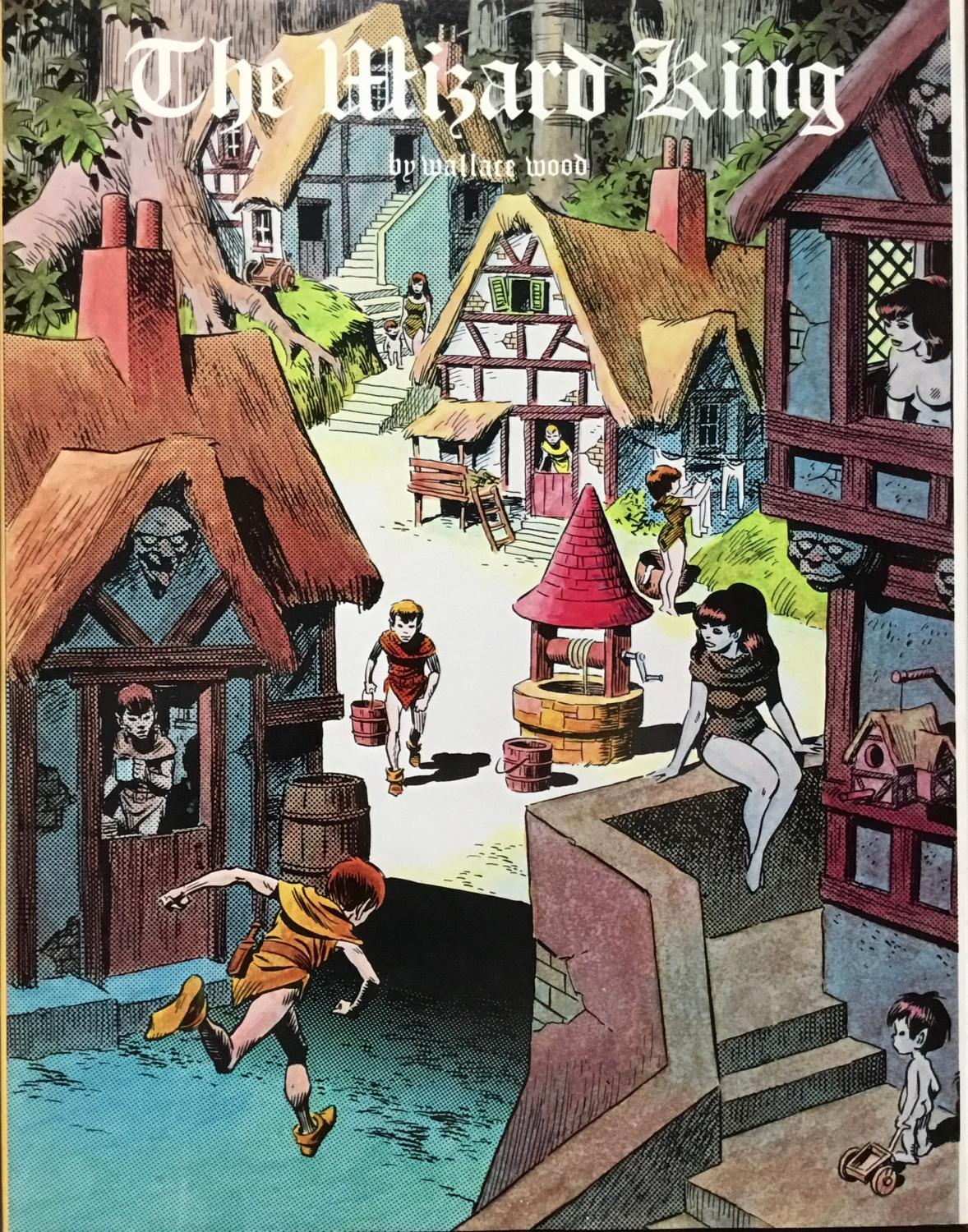 Cover to The Wizard King by Wally Wood, which Tatjana Wood colored.
Wood continued to collaborate with her husband throughout his life. She colored his original graphic novel The Wizard King, one of his final major works prior to his 1981 death by suicide. “One of the first true artists to work as a colorist in American comics, she was able to make the extremely limited palette available for newsprint comics sing and create moods,” said Paul Levitz of her artistic evolution. “And when better tools were available to her, she could make it positively operatic. Before computer color. and back when the technique of 'blue line color' was primarily used for a few high-end newspaper strips, advertising and other specialties, she mastered it to apply it to The Wizard King, an early [1978] graphic novel by her former husband, Wally Wood. The result was a treatment of his already legendary artwork as it had never been seen before.”
During the early 1980s, Wood guided comics to places they had never been before, either, as British writer Alan Moore reinvented Swamp Thing as “sophisticated suspense” and ushered in a wave of mainstream comic books intended for mature audiences. Through her work on Swamp Thing with artists including Stephen Bissette, John Totleben and Rick Veitch, Camelot 3000 written by Mike W. Barr and illustrated by Brian Bolland, and Animal Man written by Grant Morrison and primarily illustrated by artists Chas Truog and Doug Hazlewood, she established the palette and artistic sensibilities that would define DC’s groundbreaking Vertigo Comics adult imprint in the 1990s and 2000s.
“I started working with Tatjana from my very first edited comic, House of Mystery #292 [in 1981], through her glorious run on Swamp Thing, Animal Man and many other Vertigo titles,” said Berger. “In her final decade of coloring at DC, she pretty much exclusively worked on Vertigo and [sci-fi line] Helix titles by choice. Her creative sensibility was more in line to what we were publishing, and she really enjoyed the company of our crew, especially fellow editors, Stuart Moore and Tom Peyer. With a fine artist’s flair to her coloring, her evocative palette made every story better.
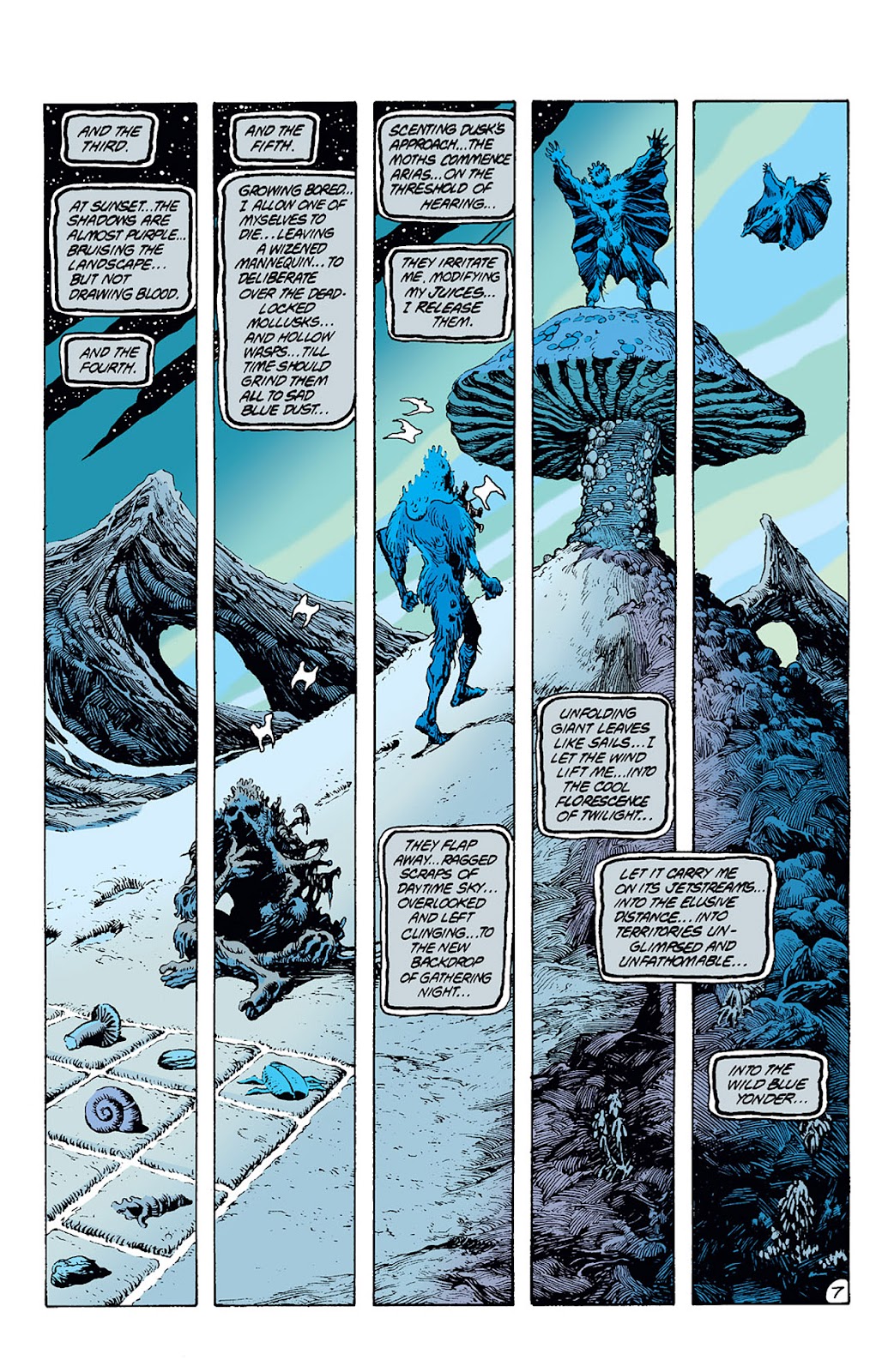 Page from Swamp Thing #56, "My Blue Heaven." Written by Alan Moore, art by Rick Veitch and Alfredo Alcala, and colors by Tatjana Wood.
“Her masterpiece was ‘My Blue Heaven’ where Swamp Thing lands on a blue planet and molds a haunting floral body of Abby from the alien vegetation,” Berger continued. “Tatjana colored it only tonal shades of blue, and it was magnificent, especially considering the limitations of the old-school pre-digital coloring process.”
Wood’s tenure on "Shvampy" continued through 1993, and she, approaching 70, retired from the monthly title after a two-decade run with the departure of writer Nancy Collins, the first woman to write the ongoing Swamp Thing series. “Although Tatjana was the colorist on my two-year run on Swamp Thing, I only met her once,” said Collins. “Back in 1992, shortly after I moved to NYC from New Orleans, my editor, Stuart Moore, took me deep into the bowels of DC's in-house production offices to meet both her and my letterer, John Constanza.
“It was humbling to meet the woman whose name I remember seeing in the original Wrightson and Wein issues when I was 13 years old. And it's equally humbling now to realize when we met she was the age that I am now. I never had to worry about whether the colors on Swamp Thing would look good. They always did. She spoiled me in that regard.”
In her final decade as a freelance colorist, Wood was able to be selective with her freelance assignments, picking and choosing projects that interested her. “Tatjana was the first elder stateswoman I ever had a working relationship with in comics,” said writer Joseph Illidge, who worked with her in his capacity as an assistant editor on the Batman family of titles in the late 1990s and early 2000s. “She was the colorist on Batman/Huntress: Cry For Blood, a crime story miniseries I co-edited. Tatjana always came into the office to drop off pages, and we would sit down as she discussed them with me.
“I couldn't help but be impressed by her choices, especially the monochromatic flashback scenes. It was in those where she really displayed how less is more, and that clarity of the moment was of paramount importance. Striking blues and reds framed by negative white space.
Sometimes she would talk about her life outside of comics, and on the occasions where she mentioned her ex-husband, she called him ‘Wallace,’ which struck me as dignified. Classy. Tatjana was comics royalty, and a special soul from a time gone by.”
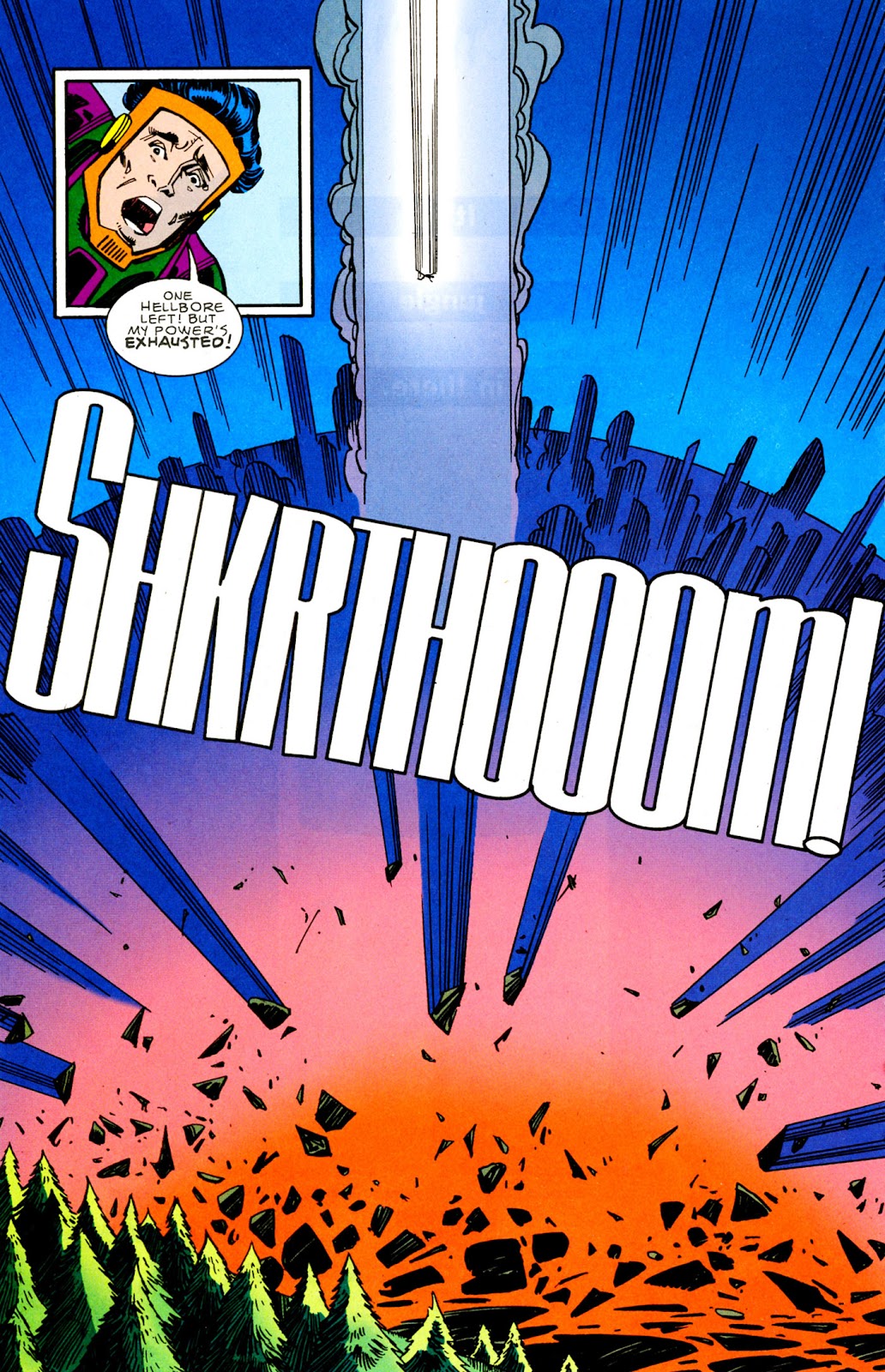 Page from Orion #9, written and drawn by Walt Simonson, inked by Bob Wiacek and colored by Tatjana Wood.
One of her final coloring assignments was on Walter Simonson’s fondly-remembered early 2000s series Orion, a series depicting the further adventures of Jack Kirby’s New Gods and other characters from his Fourth World saga. Simonson had his choice of colorists, but personally lobbied for Wood, a longtime friend who lived nearby on New York’s Upper West Side, allowing him to ferry her color guides back and forth to the DC offices. Her traditional, “old school” techniques and ability to convey mood and carry stories through her coloring choices made her an ideal collaborator.
As comic book publishers went all in on the transition to digital coloring, Wood felt the time was right for a proper retirement, but was very grateful for local friends like Simsonon and Berger, who facilitated her use of traditional methods during the final years of her career. “I was lucky enough to not only work with Tatjana for so many years, but to become her friend, too,” Berger said. “She was funny, kind and full of positive energy. We lived near each other on the Upper West Side and I’d often ferry her coloring guides to and from the office when she was on a tight deadline. She had no problem handling the five flights walk up to her roomy rent-controlled apartment, and that’s with being a heavy smoker! I still moan when I think of it.
“Tatjana would only mention Wallace occasionally — she didn’t call him Woody — he died just after I started at DC and they had been divorced for many years by then. Nor did she talk much about her traumatic childhood, sent by her parents to a Quaker school in the Netherlands to escape the horrors of Hitler. She had a very positive outlook on life. And what a life she led! A trailblazing woman in comics, an artist who elevated the coloring art form, and whose impact and influence are everlasting.”
That influence was subtle and underappreciated for much of Wood’s career and in the years that followed, to the point that none of the introductions to the many trade paperback collections of Swamp Thing published by DC from the mid-1980s to early 2000s, covering the original Len Wein/Bernie Wrightson series and the celebrated Alan Moore/Steve Bissette/John Totleben/Rick Veitch era, made a single mention of Wood and her artistic contributions to the title. A reprint title called Essential Swamp Thing serialized the early years of Moore’s Swamp Thing from 1996-98 in black and white, removing Wood’s colors entirely, and a 2020 deluxe hardcover collection of that material, Absolute Swamp Thing, was recolored by another artist using modern digital techniques.
Wood, for her part, knew that her legacy spoke for itself, and politely declined nearly every interview request or convention invitation that came her way in her later years. She spent her retirement among friends and indulging her other artistic talents, such as dressmaking, crafting theatrical costumes, and weaving intricate pictorial loom tapestries.
“As a friend Tatjana was fun to be with and she had a great sense of humor,” Diane Dillon recalled. “She was generous to a fault, she had an inner strength, and never complained when life challenged her, even in her last days.
“Tatjana was part of our family spending holidays and birthdays with us for many years. Our son Lee knew her all his life and called her “Auntie T.’ She will always be with us in our hearts and thoughts.”
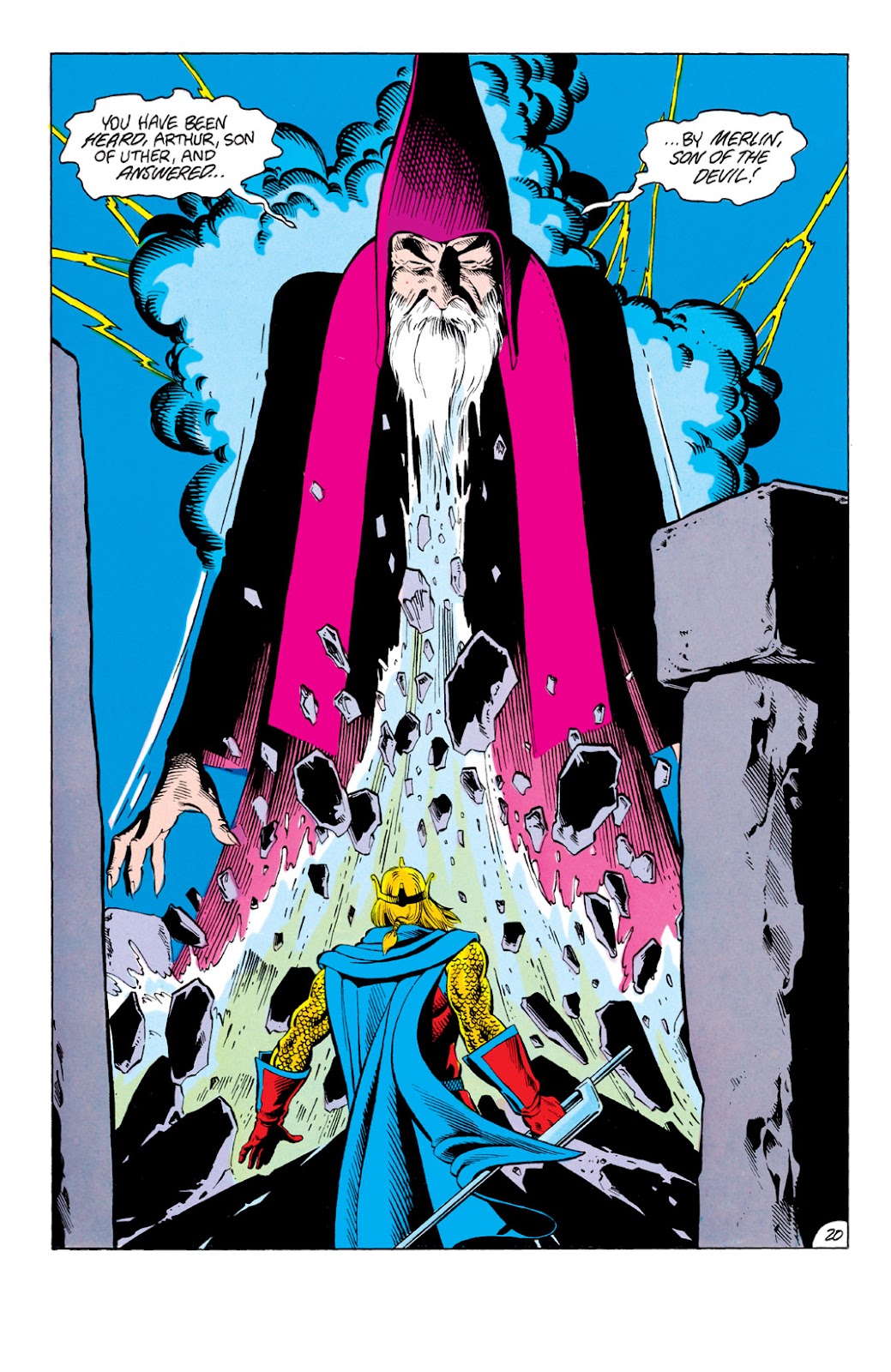 Page from Camelot 3000, written by Mike Barr, art by Brian Bolland and Bruce D. Patterson, and colors by Tatjana Wood.
In 2023, her peers and colleagues in the comics industry acknowledged her profound and lasting impact on DC and on the comics medium overall with a well deserved and long overdue induction into the Will Eisner Hall of Fame, the first artist to earn a place in the Hall solely on her work as a colorist.
Wood’s legacy lives on not only through her own incredible and voluminous body of work, but through those who followed in her footsteps, whether they learned from her directly or were part of the generations of fans and artists who admired her craft. One member of the latter category is Trish Mulvihill, whose latest assignment for DC Comics was coloring a lost Swamp Thing tale from 1989, during Wood’s tenure on the series.
“The day after we put the final touches on issues #88-91 of Swamp Thing, the news broke about Tatjana Wood’s passing,” Mulvihill said. “Tatjana was the original colorist on the series, and I was tasked with emulating her unique style so these long-shelved issues would visually match the earlier ones. Not so easy, I quickly learned! Words can’t describe how impressive her work was. She managed to make magic from an extremely limited palette and almost none of the special effects that modern colorists take for granted. As we wrapped our final pages, I expressed to editor Alex Galer that I wasn’t sure I matched her artistry faithfully; that woman was fearless with pastels and light sources!
“I encountered Tatjana in person once, a long time ago, at DC’s NYC office at 1700 Broadway. She paused in the doorway of an editor I was talking with. A tiny woman, formidable with that trademark gravely voice. She was gone a moment later so we didn’t technically meet, but it was unforgettable.
“March 2nd would have been Tatjana’s 100th birthday. I’ll be raising a glass to one of comics’ originals. I bet she’s coloring her own personal cloud pink and purple.”













 English (US) ·