
The Editors | December 23, 2025
 A fold-out spread from Tongues.
We both know the history of superlatives creates a flattened, reductive interpretation of our world. But they're also the quickest way to label a praise for those recommendations we give in order to connect with one another, and isn't that why we're here? To find something in common, to stave off the loneliness for another hour?
Should you have any additions, questions, or qualms: treat yourself by commenting below. We'll be seeing you in 2026.
— The Editors
Contributors
(Click on a name to jump to their selections)
***
Jean Marc Ah-Sen
My favorite comic releases and reissues of the year, in no particular order:
- Pulping Vol. 2, ed. Jenn Woodall, Jon Iñaki, Jonathan Rotsztain, Mitch Lohmeier, and Paterson Hodgson
- All Negro Comics: America’s First Black Comic Book, ed. Chris Robertson
- Fabulous Furry Freak Brothers: Times of No Money The Early Years, Gilbert Shelton
- Jim Starlin’s Dreadstar Omnibus Vol. 1, Jim Starlin
- Untold Legend of the Batman 1, Len Wein, John Byrne, Jim Aparo
- Tsunami, Ned Wenlock
- Terminal Exposure: Comics, Sculpture, and Risky Behaviour, Michael McMillan
- Galactic, Curt Pires and Amilcar Pinna
- Holy Lacrimony, Michael DeForge
- Artificial, Maria Llovet
- Cornelius: The Merry Life of a Wretched Dog, Marc Torice
- Skinbreaker, Robert Kirkman and David Finch
- Absolute Martian Manhunter, Deniz Camp and Javier Rodriguez
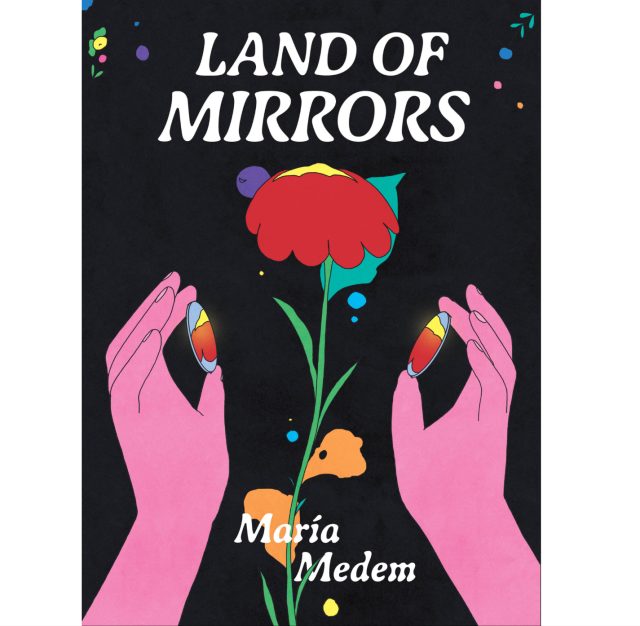 Land of Mirrors, Maria Medem
- Dogtangle, Max Huffman
- Tales of Paranoia, R. Crumb
- The Legend of Kamui, Shirato Sanpei
- Laab Magazine No. 3, ed. Ron Wimberley
- Toxic Crusaders, Matt Bors and Tristan Wright
- Fever Dreams, Dakota McFadzean
- Stardust The Super Wizard Anthology, ed. Van Jensen various
- Total THB vol 1, Paul Pope
- Our Soot Stained Heart, Joni Hägg and Stipan Morian
- War, Garth Ennis and Becky Cloonan
- Mansect, Shinichi Koga
- Ordained, Robert Venditti and Trevor Hairsine
- Superman The Kryptonite Spectrum, W. Maxwell Prince and Martin Morazzo
- Moan, Junji Ito
- Fela Music is the Weapon, Jibola Fagbamiye and Conor McCreery
- Cannon, Lee Lai
- Planet Death, Derek Kolstad, Robert Venditti and Tomás Giorello

***
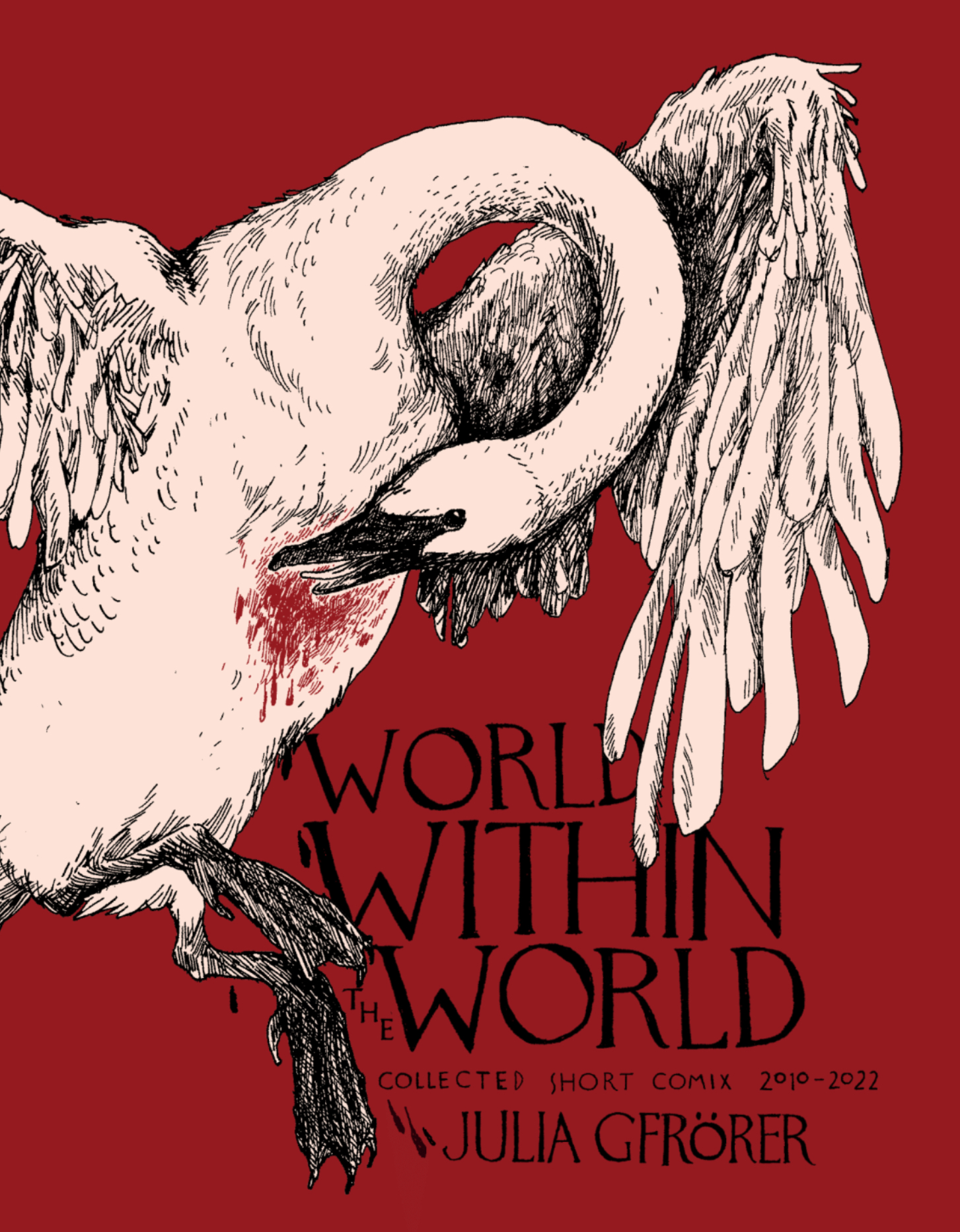 World Within the World: Collected Minicomix and Short Works 2010-2022 by Julia Gfrörer (Fantagraphics, 2025)
Robert Aman
Although I firmly believe that the best comics are being produced right now — works that will only be surpassed by those yet to come— I can’t help feeling, when asked to sum up the year, that noticeably fewer comics have seen the light of day compared with last year. This impression is entirely subjective; I have no empirical data to support it. Still, it may not be wholly unreasonable given the dark clouds gathering over the comics landscape: rising tariffs, increasing production costs, Diamond’s bankruptcy, to name just a few possible factors. And if that weren’t enough, several publishers have reported serious financial losses, among them France’s L’Association, which has publicly appealed to its readers for support in order to survive.
That said, the year has also delivered a number of truly outstanding works, which I have done my best to rank in the list below.
An undisputed number one is Swiss cartoonist Nando von Arb’s Bouquet de peurs. This brick of an autobiographical work, dealing with von Arb’s mental illness, manages to fuse influences from Frida Kahlo, Brecht Evens, and illustrations reminiscent of Czech children’s books from the 1970s in a wholly unique way. Although mental illness is far from a new subject in comics, Bouquet de peurs is the most compelling work on the topic since David B.’s portrayal of his brother’s epilepsy from the 1990s.
Anders Nilsen’s Tongues may contain one plot element too many, but few cartoonists can juggle Greek mythology, a talking chicken, soldiers, an American hitchhiker, and more with the same finesse as Nilsen. The result is a stunning reading experience, driven by powerful and often haunting imagery.
Moa Romanova’s second book in English, Buff Soul, can be read as a graphic travel diary, drawing on a long tradition of documenting life on tour. Romanova follows her friend ShitKid to a music festival in Texas, and while the book includes genre-typical elements — such as the rebellious and often self-destructive tendencies of the rock music scene — its greatest strength lies in its sensitive portrayal of genuine friendship.
When Jean-Christophe Menu, together with Étienne Robial, decided to revive the legendary 30/40 series, Menu was the first to contribute a volume of his own. Expectations were high, and he had no trouble living up to them. The comics dealing with his parents’ deaths rank among the finest work he has ever produced — and, by extension, among the strongest examples of autobiographical comics as a genre.
World Within the World, Julie Gfrörer’s collection of short stories revisits her familiar uncanny version of our world, one filled with desire, despair, and the universal need for connection. For all their macabre qualities, the dark corners Gfrörer explores are also very funny.
In sixth place, I’ve put Ville Ranta, who seems incapable of making a bad book. For over twenty years, Ranta has chronicled his life in comics. His latest work revisits the period when he was active at a Finnish cultural magazine, where he, among other things, published a comic that satirically commented on the Finnish political leadership’s response to the Muhammad cartoons controversy in Denmark—a topic he discussed in an interview with The Comics Journal. In Les buveurs de vin, the reader follows both the events themselves and their aftermath, interspersed with prodigious amounts of drinking. That Ranta remains untranslated into English becomes more baffling with every new book.
New York Review Comics deserves special praise for finally translating into English another book by Yvan Alagbé, co-founder of Amok and one of the most influential publishers of the French alternative comics scene of the 1990s. The book continues Alagbé’s sustained exploration of race and colonialism in contemporary France.
A younger — but equally prodigious — storyteller is Cameron Arthur, whose fanzine Swag has been a joy to follow. Stories from its early issues have now been collected into a single volume. With cartoonists like Arthur, the future of comics looks bright.
- Bouquet de peurs by Nando von Arb (Misma éditions)
- Tongues by Anders Nilsen (Pantheon)
- Buff Soul by Moa Romanova (Fantagraphics)
- Menu 30/40 by Jean-Christophe Menu (L’Apocalypse)
- World Within the World by Julia Gfrörer (Fantagraphics)
- Les buveurs de vin by Ville Ranta (Éditions ça et là)
- Misery of Love by Yvan Alagbé (New York Review Comics)
- Hidden Islands by Cameron Arthur (Bubbles)
- Baby Blue by Bim Eriksson (Fantagraphics)
- Cannon by Lee Lai (Drawn & Quarterly)
***
Tiffany Babb
While The Deviant (James Tynion IV, Joshua Hixson, and Hassan Otsmane-Elhaou) is very much a "Christmas serial killer story," it is also about how we can't always control aspects of our own identities, whether that stems from how society labels outsiders as "deviants" or how those labels affect how we see ourselves. This twelve-ssue series is able to balance a tense slasher story with thoughtfulness with a deeply personal touch.
***
Jason Bergman
The vast majority of my comics reading in 2025 was research for interviews on this site. Of those, I have to mention Anders Nilsen's Tongues, and the truly surprising return of Jeff Nicholson's Colonia as particularly noteworthy new books. Otherwise most of the new comics I read this year were ... fine, I guess? Not a whole lot came to mind when I sat down to look back on the year. We did get a new Love & Rockets collection from Jaime Hernandez (Life Drawing), which was excellent as always, and I also very much enjoyed Santos Sisters vol. 1 by Greg & Fake. But a lot of other books were just forgettable, if not downright disappointing.
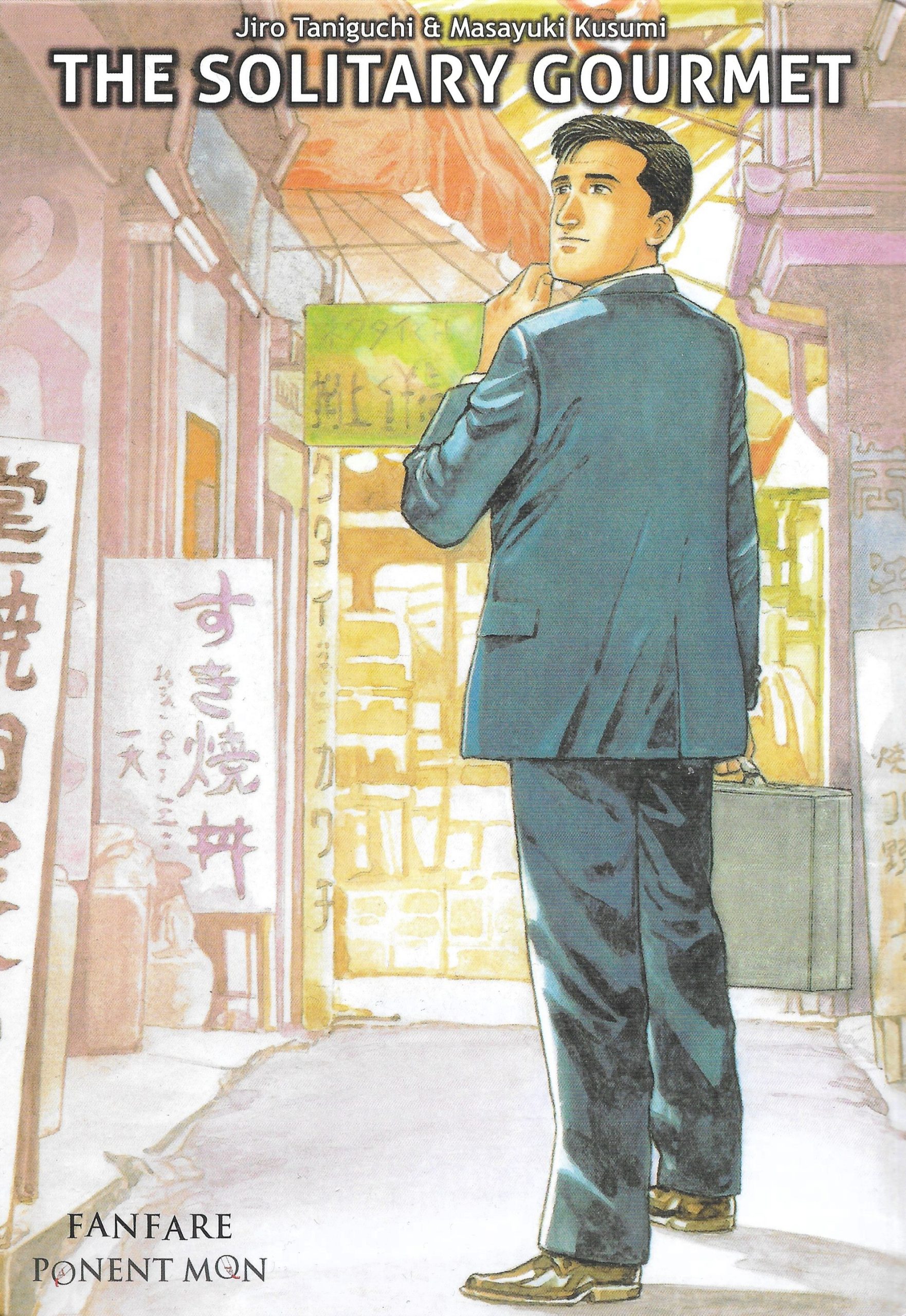
With one surprising exception, The Solitary Gourmet. There's a local Japanese restaurant my family eats at regularly, and they always play the television series based on this manga on their screens. Without subtitles, of course, forcing us to try to guess what's going on. I had dubbed the series "Inspector Food" because it looked like a show about a detective, only one where all he does is eat. I wasn't too far off, I suppose — he's not a cop, just a salesman. But anyway, the manga by Jirō Taniguchi and Masayuki Kusumi is wonderful. As noted by Joe McCulloch in his review, the book is best enjoyed in small bites, something I appreciate. It's small, it's quiet, there's no major drama to be found, it's beautifully illustrated, and it's all about food. Maybe I'm having flashbacks to all the time I spent wandering Tokyo by myself, or maybe it says something about my state of mind, but this weird book about a man eating food by himself is my favorite graphic novel of 2025.
***
Colin Blanchette
1) Hidden Islands by Cameron Arthur (Bubbles Zine Publications)
I passed up the opportunity to buy this book a few times before I pulled the trigger, and even then, I only bought it because of the high quality of Bubble’s other publications (Stories from Zoo by Anand was a revelation), not because the book looked that interesting at first glance. I was wrong. It’s a fantastic book of short stories, and it’s the book that I’ve thought about the most since I first read it. I hope that we see a lot more work from Cameron Arthur.
2) Tales of Paranoia by R. Crumb (Fantagraphics)
I was shocked when I heard that Crumb had a new comic book coming, hot on the heels of Dan Nadel’s wonderful biography. It was a pleasant shock, even though I was prepared for it to be forgettable work by a once great artist. Luckily for me (and everyone else, except his haters), he’s still a great artist, and he can still draw like a motherfucker. Even though he’s wrong about almost everything, Crumb communicates his beliefs clearly and effectively. This comic is by far the best value of the year as well. It’s a dense, satisfying read, and it’s re-readable as well. It delivers more than most graphic novels with ten times the page count.
3) Tongues Volume 1 by Anders Nilsen (Pantheon)
If you’ve been reading Tongues in its serialized form, then you’re probably aware that it’s a very good comic, but reading the existing story in one go is a different matter entirely. There’s still another big book coming to finish this story off, but I think it’s safe to say at this point that it’s Nilsen’s best book so far. Considering the fact that his previous work has ranged from good to excellent, that’s no mean feat. This book is the summation of his work as a cartoonist, and it’s thrilling to witness a great cartoonist at the peak of his powers dive headlong into his own preoccupations in such a considered and mature way.
4) Cornelius: The Merry Life of a Wretched Dog by Marc Torices (Drawn & Quarterly)
I knew nothing about this book or its creator before I read it. I flipped through it and looked good. When you take the time to actually look at it, though, you realize just how good it looks. The sheer craft on display is mesmerizing. Torices utilizes every kind of form and mode that he can think of to tell the story of a hapless loser meandering through his pathetic life who fails to aid one of the few people that’s ever been kind to him. The story is simple and it’s not as funny as it thinks it is, but I’ll admit I was impressed by the audacity of the storytelling, and the book overall.
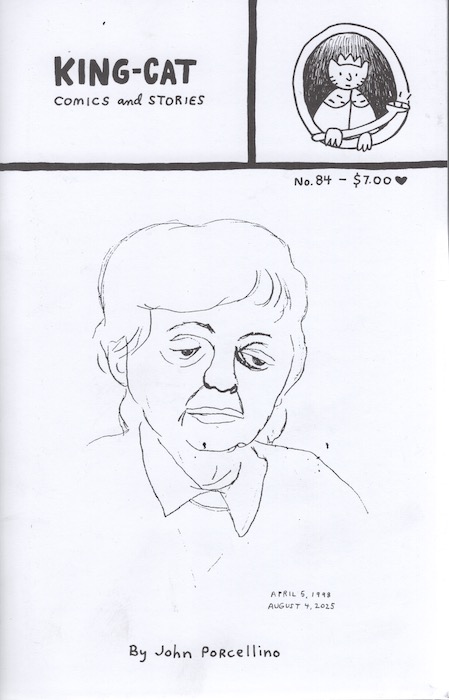 5) King-Cat Comics and Stories #84 by John Porcellino (self-published)
At this point, King-Cat is like the tides. It’s a natural force that seems inevitable, and you know the form will be familiar. The content is never the same, even if the preoccupations are. Love, death, music, groundhog sightings … they’re all here, as usual. At this point, Porcellino is an institution, of a kind; and like a lot of institutions, he’s taken for granted. He shouldn’t be. I’m grateful for each new issue of King-Cat and I hope he makes them for years to come.
6) The Once and Future Riot by Joe Sacco (Metropolitan Books)
Measured against Joe Sacco’s other books, this is a fairly minor work. Of course, a minor work by Sacco is better than most cartoonists could ever hope for. India is vast, both in terms of its geography and its history, and this relatively thin book only scraped the surface of the corruption, sectarianism, and bloodletting that has plagued the country’s modern history. The book is beautifully drawn and Sacco packs a lot into these pages, but for the first time when reading one of his books I felt like maybe he had bitten off more than he could chew. As always, I’m glad he took the bite, especially since no one else seems likely to follow in his footsteps and make harrowing books like he has, over and over again.
7) Love Languages by James Albon (Top Shelf Productions)
Each of Albon’s books is different from the last. I’ve liked all of them. This book walked a tightrope, though instead of falling into the abyss, the danger was that it would fall into cloying sentimentality. That’s not a fate worse than death, mind you, but when the story is a romance that risk is high to begin with. The romance in this story is well-earned, even if it isn’t revelatory. Albon’s storytelling is, however. I’ve never seen a comic handle multiple spoken languages as skillfully as he does here, blending English, French, and Mandarin together, artfully. It’s a beautiful comic by an underrated cartoonist.
8) The Ephemerata: Shaping the Exquisite Nature of Grief by Carol Tyler (Fantagraphics)
I don’t know what I expected this book to be, but it was different than whatever I expected. I knew that the drawing would be great, and it is. There are times when you come across a page that’s so unbelievably gorgeous it just stops you in your tracks. Tyler’s exploration of her grief, and grief in general, gets exhausting after a while, but I think that’s the point. Over the course of 200+ dense, lushly illustrated pages she digs into one of the hardest experiences life has to offer, and from that pain she creates beauty. It’s a book that will sit with you.
9) Night Drive by Richard Sala (Fantagraphics)
Richard Sala has been one of my favorite cartoonists for a very, very long time. This book, originally printed in a magazine format forty years ago, has eluded me, so imagine my surprise, and pleasure, when I heard that it was being printed in a luxurious hardcover edition. This early work is a lot of fun. All of Sala’s work was fun, though the way it was fun varied greatly over the years. For anyone who fondly remembers his Invisible Hands segments from MTV’s Liquid Television, I would imagine they would enjoy this work. For me, it was the missing piece of a puzzle I’ve been putting together for a few decades and, happily, a wonderful comic from beloved cartoonist.
10) Ginseng Roots: A Memoir by Craig Thompson (Pantheon)
What this book is, is impressive. Making a book this long is impressive (440+ pages) but it’s not uncommon nowadays. What is uncommon is how much cartooning went into every single page. Thompson lavishes those pages with a lot of ink, and a lot of stories, too. It’s subtitled “A Memoir” and it is one, but it also delves into the history of his family, his community, ginseng farming (in China and North America), and where they all are at today. The ambition of this book impressed me, and it delivered on that ambition.
***
Kevin Brown
Absolute Batman Vol. 1: The Zoo by Scott Snyder, Nick Dragotta, and Frank Martin
DC’s Absolute series reimagines well-known heroes without their well-known back stories. This Bruce Wayne grows up lower- to middle-class, so he lacks the financial resources of the traditional story, leaving him to rely even more on his mental abilities. Gotham is the same place, though, overrun by crime bosses and a group called the Party Animals who seek to sow chaos. The strongest part of this work is that the focus remains solely on Batman’s desire to do good in the world, to seek justice for everybody, which has always been at his core.
You Must Take Part in Revolution by Badiucao and Melissa Chan
Badiucao and Chan don’t provide a neat ending to their work, as there aren’t easy answers for how and when one should act against a tyrannical government. However, they’re clear that inaction isn’t a viable option.
Spent by Alison Bechdel
It seems obvious to mention Alison Bechdel when talking about great work from the year, but she’s taken a bit of a risk here by returning to fiction after her past three memoirs. While she certainly focuses on friends and community, as she did in Dykes to Watch Out For, her exploration of how we spend our time or money or energy seems particularly relevant today. She even ends with a brief glimmer of hope in community, something we could certainly use right now.
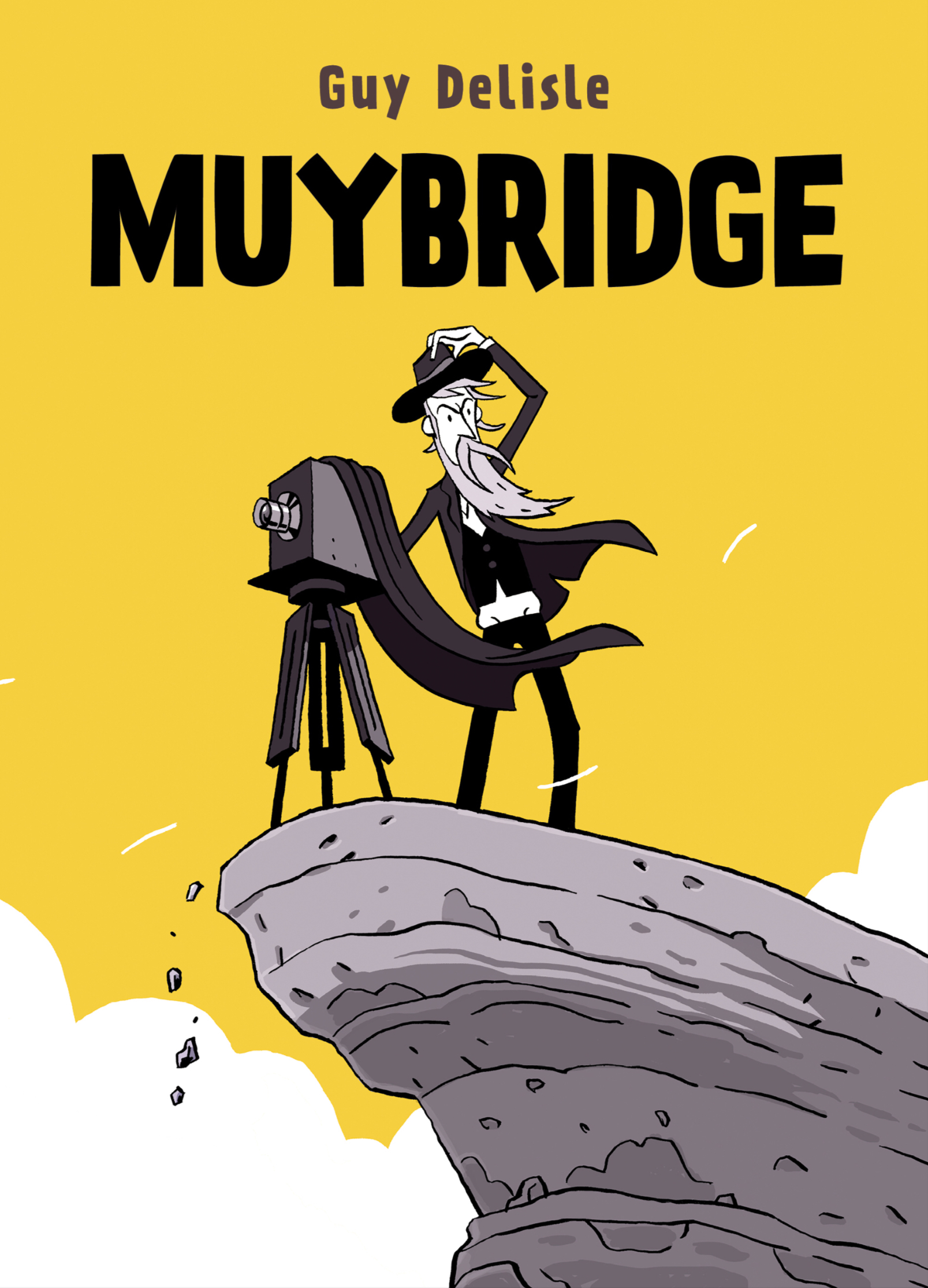
Muybridge by Guy Delisle
Delisle goes well beyond Muybridge’s famous photograph of a horse to create the world of invention that he was a part of. Most interestingly, Delisle shows Muybridge’s influence on animation, motion pictures, and graphic works like Delisle’s, an influence that continues well beyond what Muybridge could imagine.
Absolute Wonder Woman, vol. 1: The Last Amazon by Kelly Thompson, Hayden Sherman, Mattia de Iulis, and Dustin Nguyen
Here, Diana doesn’t grow up on Themyscira. Instead, she’s raised in the underworld. Rather than preventing her from caring about and fighting for humanity, that banishment simply gave her more weapons to fight for justice.
Nightwing: On with the Show by Dan Watters, Dexter Soy, Veronica Gandini, and Wes Abbott
Dan Watters and team take on the challenge of picking up Nightwing’s story after the amazing run led by Tom Taylor. They draw on Nightwing’s past experiences with the circus and his early days with Batman, while throwing him in the middle of a gang war that has begun after Blockbuster’s death in the earlier series.
***
Clark Burscough
Well, I don’t know about you, but 2025 sure had a lot of “Lemon, it’s Wednesday” vibes to it for me, so, much like last year, a list compiled in a bedraggled state, running to the lecture hall with a slice of toast in my mouth, but a list nonetheless, from your friendly neighbourhood linkblogger.
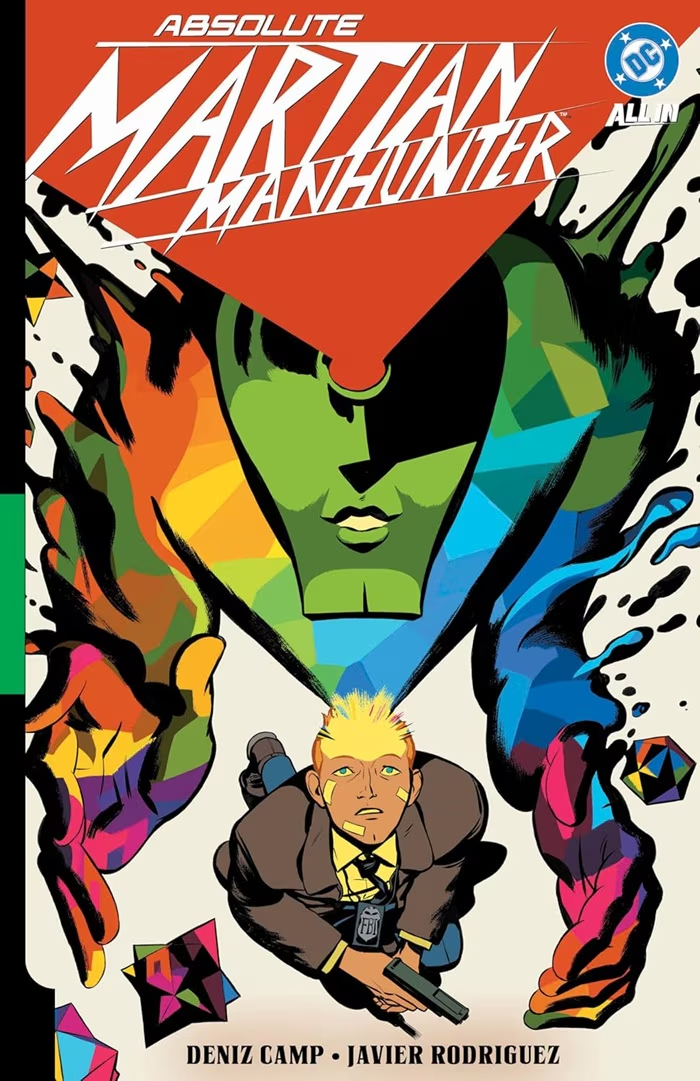 While the lion’s share of the pop culture outlet coverage seemed to go to the title with the steroidally embiggened versions of Gotham’s denizens, for this regular-sized reader the most interesting of DC Comics’ Absolute line have absolutely been Absolute Wonder Woman by Kelly Thompson, Hayden Sherman, et al. and Absolute Martian Manhunter by Deniz Camp, Javier Rodriguez, et al., the first volumes for both of which mess with their respective mythoi in interestingly spiky ways, and don’t mind assuming that the reader will be able to keep pace and catch up when dropped in media res, and both of which also have some of the most pleasingly arresting visuals I’ve seen in a superhero comic for a while. Now, as long as they don’t tank the ongoing supracontinuity fun with plodding crossover events that kill an entire line’s momentum, we’ll be laughing.
Taking the coveted top spot for comic that made me say “oh, mate, brutal” out loud the most times while reading it this year, we have The Sickness, Volume 1 by Lonnie Nadler, Jenna Cha, et al., the timeline hopping nastiness of which put me in mind of the creeping descent into madness and unmooring from reality as depicted in Providence by Alan Moore and Jacen Burrows. The slow burn reveals and peeling back of the consistently unnerving story playing out in the first collected volume for the series has left me strongly anticipating that volume two will also be a future best-of contender.
Cleansing the palate after the nastiness [complimentary] of the last pick, comes the warmhearted delights of Miss Ruki by Fumiko Takano, translated by Alexa Frank, which was yet another annual pick cribbed from Sally Madden and Katie Skelly’s aces Thick Lines podcast, and which was a much needed dose of a slice-of-life strip that’s just consistently Really Nice and Properly Funny. The closing narrative coda, returning to best friend protagonists Miss Ruki and Ecchan ten years down the line, is genuinely lovely.
As a classic dyed-in-the-wool trade-waiter, I was very glad to see The Santos Sisters by Greg & Fake receive a winningly handsome collected edition (peep that see-thru acetate dust jacket and thick paper stock) this year, which serves well the nod and a wink punchlines to dirty jokes with clean lines to be found within. This book sings as this year’s shining example that, sometimes, like Dandadan in last year's list, all you really need, to pep you up during a grim period in history, is a comic that’s horny and weird and fun and good to look at in equal measure.
***
Thomas Campbell
Alive Outside, ed. by Cullen Beckhorn and Marc Bell (Neoglyphic Media). Featuring: Aapo Rapi, Aaron Rossner, Andy Cahill, Angela Fanche, Becchi Ayumi, Bridget Trout, Christian Schumann, Clayton Schiff, Dongery, Doug Allen, Dylan Jones, Eden Veaudry, J Bradley Johnson, Jonathan Peterson, Jordan Rae, Joe Grillo, Joey Haley, Julie Doucet, Julien Ceccaldi, Kari Cholnoky, Keith Jones, Leomi Sadler, Lilli Carre, Lukas Weidinger, Marc Bell, Mark Connery, Matt Lock, Poncili Creation, Roman Muradov, Ron Rege Jr., Shoboshobo, Steven M. Johnson, Susan Te Kahurangi King, Theo Ellsworth, Trenton Doyle Hancock
Beautiful Monster by Maruo Suehiro (Bubbles)
Bernadette #2 ed. by Angela Fanche and Katie Lane (Self-published). Featuring Pia Drummond, Eero Talo, Mackenzie Morse, Lydia Mamalis, Allee Errico, Clair Gunther, Ellen Addison, Bella Carlos, Dakota Knicks, Tana Oshima, Katie Lane, Minnie Slocum, Leslie Weibeler, Molly Herro, Gina Wynbrandt, Fidelia Schlegl, Owwi Lee, Em Frank, Ash Fritzsche, Nora Fulton, Phoebe Mol, Pris Genet, Susan Kaplan, Angela Fanche, Waja Shchipko, Pamela Anderson, Jenny Zervakis, Alina Jacobs, Maggie Umber, June Gutman, Alex McGrath, Mariagiulia Pedrotti, Shuai Yang, E.A. Bethea, Bri Al-Bahish, Mara Ramirez (Self-published)
Butterface by Matt Seneca (Self-published)
Dogtangle by Max Huffman (Fantagraphics)
The Emphermata by Carol Tyler (Fantagraphics)
Record 1-4 by Jason Overby (Self-published)
Revenge #2 by Samandal Comics Collective (Lebanon) (Published in the US Beehive Books). Featuring: Rami Tannous, Lena Merhej, Karen Keyrouz, Carla Aouad, Joseph Kai, Nour Hifaoui, Raphaelle Macaron and Shakeeb Abu Hamdan
Valley Valley/ Idella Dell by Audra Stang (Frog Farm)
World Within A World by Julia Gfrörer (Fantagraphics)
***
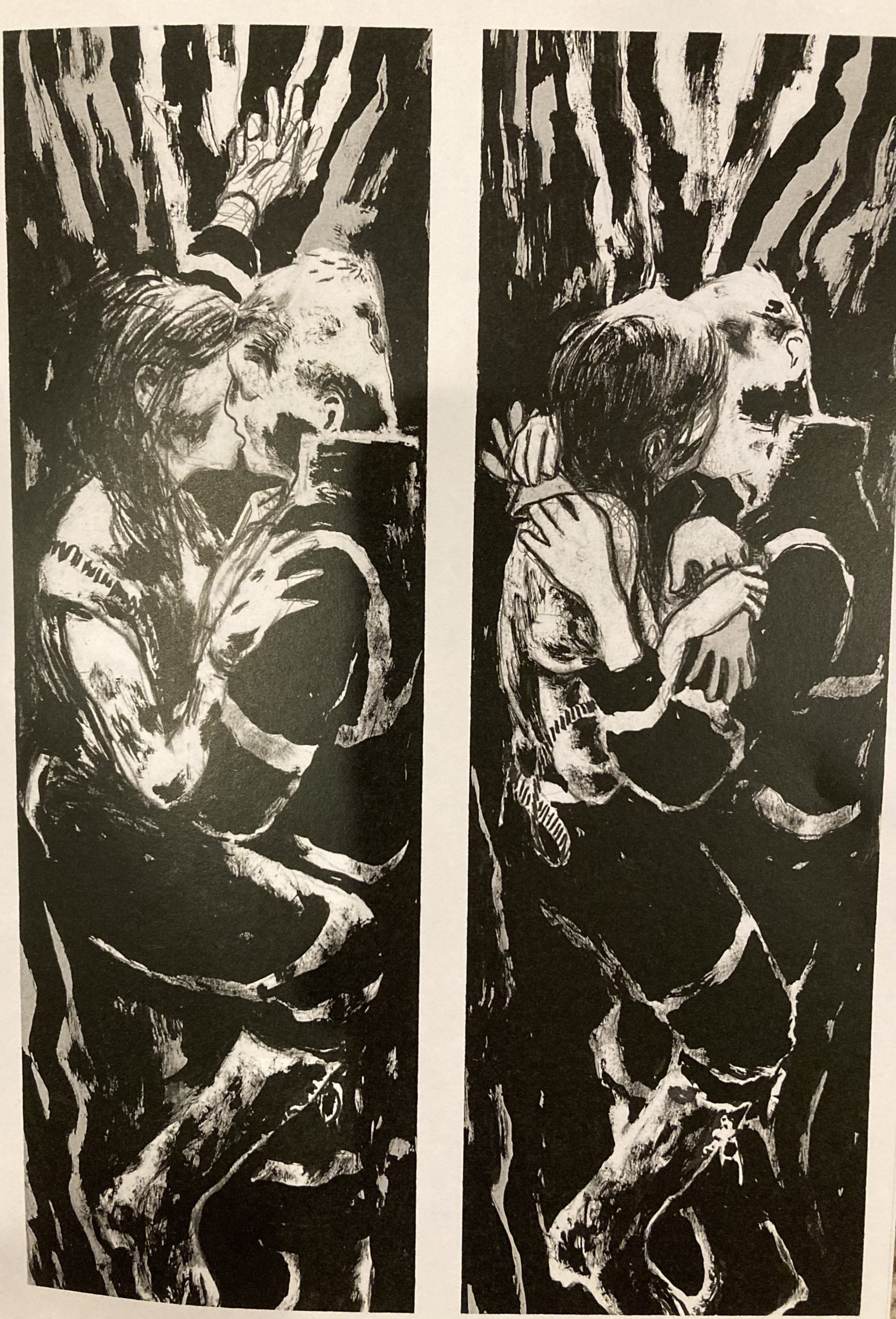 From River Rangers #8.
RJ Casey
As I get older, I become more and more appreciative of cartoonists who give themselves up completely to the page — and the reader — and continue to push the medium in fascinating directions. Thank you to all the artists listed below. (If I have written about any of these books in my “Arrivals and Departures” column this year, I will include a link.)
Honorable Mentions (in no order):
Milk White Steed by Michael D. Kennedy
Tedward by Josh Pettinger
Prop Comic by Veronica Graham
Animal Denial by Emilie Gleason
K is in Trouble Again by Gary Clement
Them Shaped Clouds by Max Huffman
The Shifting Ground Vol. 1 by Joe Walsh
Laser Eye Surgery by Walker Tate
The Past is a Grotesque Animal by Tommi Parrish
Slick Susan and the Mysterious Soup by Rebecca Kirby
The Weight by Melissa Mendes
“Kristof” by Alex Schubert
Igor the Assistant by Haus of Decline
Top 10 of 2025 (in order!):
10.) Allee Errico’s pages in Bernadette #2
9.) Pleasure Beach #1 by Josh Pettinger
8.) Terminal Exposure by Michael McMillan
7.) Flea by Mara Ramirez
6.) Christine by Cyril Vilks
5.) Valley Valley/Idella Dell by Audra Stang
4.) Precious Rubbish by Kayla E.
3.) Big Gamble Rainbow Highway by Connie Myers
2.) Dogtangle by Max Huffman
1.) River Rangers #8 by Henry McCausland
***
Henry Chamberlain
We began 2025 with a big event title, the first volume of Tongues, by Anders Nilsen, and we end the year with another career milestone, Ephemerata by Carol Tyler. Both books are equally captivating in their own ways and speak to the care and dedication of their respective creators. Both books are multi-layered, push the limits of the medium and maintain the traditional structures in beautiful ways. Other titles in 2025 doing the same at an exemplary level are Insectopolis by Peter Kuper, the collected Gingseng Roots by Craig Thompson, The Once and Future Riot by Joe Sacco, Milk White Steed by Michael D. Kennedy, Photographic Memory by Bill Griffith and The New York Trilogy, featuring Paul Karasik as editor and contributor.
There’s always more to add to a list and it depends upon the focus, among other things. Perhaps it can be dependent upon a cool factor—but we can’t all be cool kids, right? A list of what gets excluded is as intriguing as what gets included. Anyway, I suppose you can honestly get tripped up in terms of what best represents any given year. One thing to keep in mind is that any art form, particularly comics, is years in the making and various versions of it might come out at various years until you get the definitive version. You also have the heavy hitters, the giants in the industry, right alongside newcomers. If you think it’s easy for me and my friend and colleague Paul Buhle to sift through the onslaught on titles each year and review them at Comics Grinder, then you’ve got a screw loose. At the end of the day, it’s those big-name comics artists, out there leading the way, who are hopefully keeping us all honest. They’re there to set an example and are supposed to tell us we’re all in this together. With that in mind, I add to this list, in no particular order, notable cartoonists making notable work:
Introverts Illustrated by Scott Finch, available thru Partners & Sons.
This Slavery by Scarlett & Sophie Rickard, published by SelfMadeHero
The Poet Volumes 1 & 2 by Todd Webb (self-published).
Molly and the Bear by Bob and Vicki Scott, published by Simon & Schuster.
Wally Mammoth: The Sled Race by Corey R. Tabor & Dalton Webb, published by HarperCollins.
Tedward by Josh Pettinger, published by Fantagraphics.
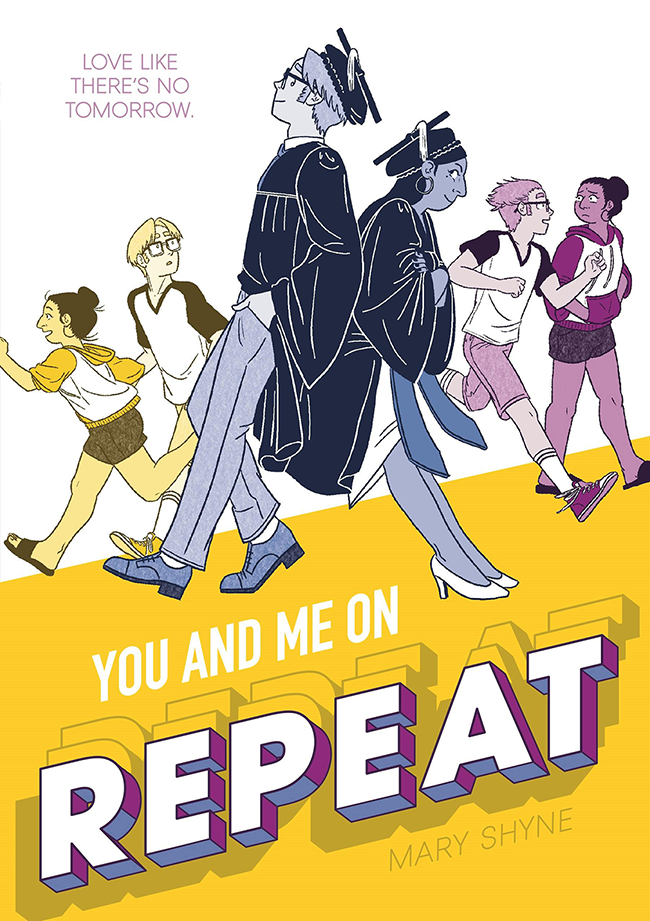
You and Me on Repeat by Mary Shyne, published by Henry Holt.
The Horrors of Being a Human by Desmond Reed, published by Microcosm Publishing.
Tuck Everlasting: The Graphic Novel by K. Woodman-Maynard, published by Farrar, Straus and Giroux.
This Beautiful Ridiculous City by Kay Sohini, published by Ten Speed Press.
Raised by Ghosts by Briana Loewinsohn, published by Fantagraphics.
Tales of Paranoia by R. Crumb, published by Fantagraphics.
Raymond Chandler’s Trouble is My Business by Arvind Ethan David & Ilias Kyriazis, published by Pantheon.
The King’s Warrior by Huahua Zhu, published by Bulgilhan Press.
***
Helen Chazan
I hate writing best-of lists. Even with the caveat of “favorite” over “best,” I feel these lists are often a testament to what I have not read and what I have overlooked far more than what I love. Nonetheless, I persist with these damn things, because telling people what comics I love is something I was put on this earth to do. Perhaps this is weakness, but nothing has made me gladder as a critic than the kind words from readers and artists alike that I've gotten over the years. I'll go on. (lol)
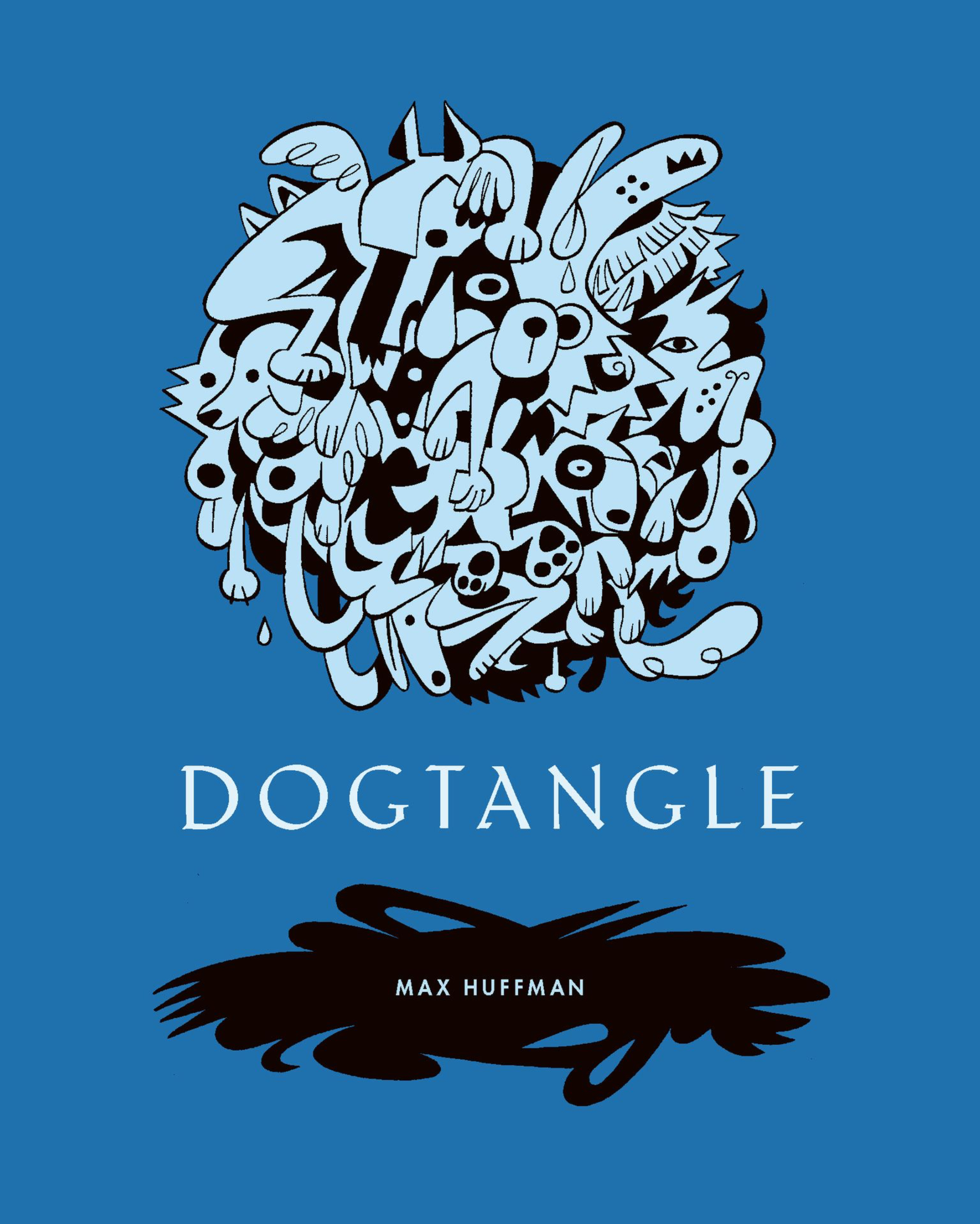
2025 was a bad year for human rights but arguably a good year for comics. A great argument in favor of it being a good year for comics is that I published a few. An even better argument is that we got the collected Dogtangle this year. My favorite comics are formally ambitious, ranging from literary work to literal pornography, all tied together by a persistent excitement for the medium they live in. I've listed out a few:
Dogtangle by Max Huffman, Fantagraphics
2025 is the year of Dogtangle. Social satire that collapses in on itself. Cartoon humor that verges on formlessness. A love story, perhaps. A very big dog. I should have more words about Dogtangle, but how can I sum up this mass of mutts? It speaks for itself, or, perhaps, barks.
A Garden of Spheres Vol. 1 by Linnea Sterte, Peow2
A vast, beautiful, curious book that demands revisitation. Wide open vistas for the eyes to drink.
What Happened After My Place Got So Humid It Grew Magic Mushrooms and I Ate Them and Got Super Horny by Karasu Chan, J18
I am dead serious, one of my favorite comics this year was this ero-manga with that title. Visually inventive and deeply funny pornography about a woman's delusional quest to make a real friend, bolstered by energetic mark-making and impeccable comedic timing. Likely the comic I have recommended to people in conversation the most this year, tied with the majesterial Dogtangle (usually brought up in different company, mind you ... Usually.).
Unsinkable Ship of Fools by Jonas Goonface, Iron Circus
Remaining on the subject of pornography (and we must!), nobody draws people fucking right now quite like Jonas Goonface. Ship of Fools is a brilliant work of folklore-by-way-of-sex-farce full of color and weight that should embarrass all other action cartoonists of any variety. Deep erotica that you will return to.
Aneido's Anthology 1: The Soul-Selling Corporate Drone & Other Fanciful Tales by Aneido, Red String Translations
Recency bias may be speaking here (I just read this one), but after trudging through a fair bit of yuri this year, green or otherwise, Aneido is the artist whose work has captivated me the most overall and this collection is my favorite yet. Their line is soft and pleasant, their stories hang dreamlike in a space between wish fulfillment and something more otherworldly. A reminder that queer comics and alternative comics share the same urge at their root, to do something better than the mainstream.
Idella Dell and Valley Valley by Audra Stang, Self published
There are a lot of comics I read on social media this year and some of them were even very good. Audra Stang is doing something else, the freshest comics-on-comics thing to come along in a long time. Stang loves her characters, and beats them over and over with deeply familiar grief and rage. Both of these women suck and I am rooting for them.
Szarlotka by Jas Hice, Frog Farm
A small, fucked up story, one of the most beautiful two-tone riso print jobs I've seen in a long time, a novella of a zine that cements Hice as an artist to watch. I can't get enough of the Hichcockian vice of voyeur and victim in this one. Troubling!
SF “Shorts Folio” Serialized Fragments of Supplementary Files #1 by Ryan Cecil Smith, self-published
Speaking of amazing riso printing, this comic is probably my favorite book as an aesthetic object this year. These colors, wow! It's been a while since Smith's cast of adventurers last graced spinner racks, and they are truly a sight for sore eyes. You simply have to love a comic about a mailman in space.
Round World Thinking by Ana Woulfe, Reptile House
Another beautiful riso artifact, that stands beside Dogtangle as a gag comic that is a universe unto itself, a liberatory trans-femme project in the Gendertrash tradition that gets into the weeds with plants and isn't afriad to let out a cackle. More comics like this forever!
In brief, I will also mention a few of my favorite reprints and localizations of “classics” from this year:
- Legend of Kamui by Sanpei Shirato, Drawn and Quarterly
- Beautiful Monster by Suehiro Maruo, Bubbles
- My Name is Shingo by Kazuo Umezz, Viz Media
- Ashita No Joe: Fighting for Tomorrow by Tetsuya Chiba and Asao Takamori, Kodansha
- Hothead Paisan: Homicidal Lesbian Terrorist by Dianne DiMassa, NYRC
More ink will be spilled on these by yours truly in due time.
To take a brief dip in the conflict of interest reservoir, most of my favorite zines this year were by the Hamilton-based cartoonist Zoot, who I have published in my anthology comic Afternoon Affair and who tabled next to my press at Expozine in Montreal. Bias disclosed, nobody is doing it like them. Highlights this year included the informative How To Get Bit By A Werewolf, the furry dyke drama Butch Bait (published by the gods at Diskette Press), and the truly miraculous BL boner pill crack ship The Hardest Day Of My Life. Read those if you get a chance, and you'll understand why I couldn't not mention them.
And on that questionable note, I bid you adieu. Hopefully 2026 is a better year for everyone, and a lot of comics are good as well.
***
Michael Dooley
It's my second annual “Not-E*sn*r Awards by a Former Will Eisner Awards Judge (2020)," where I'll again bypass the nomination process and declare category winners based on my own "Best of the Year" opinions. Any relation between other, official Awards and mine is purely comical.
Ice Cream Man #43: One-Page Horror Stories by W. Maxwell Prince, Martin Morazzo, Zoe Thorogood, Grant Morrison, Matt Fraction, Kelly Sue DeConnick, Geoff Johns, Matt Fraction, Patton Oswalt, Jeff Lemire, etc. (Image) ~ Best Single Issue/One-Shot
You needn’t be familiar with Ice Cream Man and co-creators Prince and Morazzo’s bold, ongoing structural experiments with the medium to enjoy the rich variety of flavors offered, here served in tasty, single-page scoops. Prince adroitly authors multiple stories and writers like Johns, Morrison, DeConnick, and Fraction bring their own unique, terrifying sensibilities, each rendered in styles to enhance the stories, wonderfully told through a variety of narratives and formats. Among the most imaginative are a Candy Land-ish board game, a Gustav Doré-styled descent into Hell, and, most frighteningly: a New York Times front page. Creepy. And yummy.
Monkey Meat: The Summer Batch by Juni Ba (Image) ~ Best Limited Series
With stylized art reminiscent of Michael T. Gilbert, Monkey Meat immerses you in its hilarious, energetic asphalt-and-jungle world. Inside the Monkey Meat Company, feces are flung at capitalism, gods, tourism, the military, colonization, and even piloted robots. To emphasize his themes, Ba makes full use of his medium with such devices as selective coloring and frequent, intense, in-your-hairy-face splash pages. These absurd, endearing, despicable anthropomorphs have you hoping for further installments.
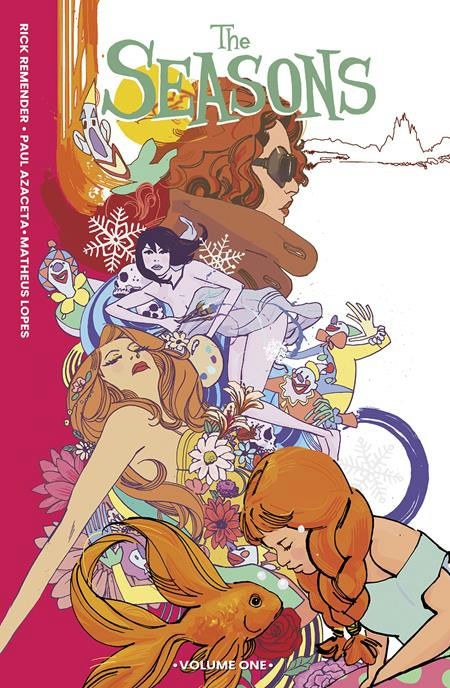 The Seasons, Volume 1 by Rick Remender and Paul Azaceta — Best New Series and Paul Azaceta, The Seasons #1-4 (Image) ~ Best Cover Artist
Seasons is a delightfully sinister adventure/horror/mystery, rendered in joyous, vibrant hues. Remender introduces us to the enchanting Season sisters, each bursting with their distinct personalities: Autumn, serious archaeologist; Summer, globe-trotting, temperamental superstar; Winter, passionate artist and mentor to the effervescent Spring, who kicks off a carnival adventure in a thrilling chase of… an envelope?
Artist/co-creator Azaceta treats us to bold visuals on every page, and each of his four covers has its distinctive appeal, such as a threatening skull-clown faux-collage and a bold graphic recalling Esteban Maroto and Bob Peak’s Camelot. When you’re in the mood for fun, scary adventure, Azaceta’s creative virtuosity bids you to welcome any time of the year.
Little Batman, Month One by Morgan Evans and Jon Mikel (Penguin/Random House) — Best Publication for Kids
In Little Batman, writer Evans offers smart and well-delineated answers to nagging questions such as “Why does Batman need to pose as Bruce Wayne?” from the point of view of Bruce’s son, Damian. The young Wayne wants Little Batman’s exciting life all the time — “Homework is a crime!” — but he also learns the importance of being himself. Mikel’s art, a delightful mix of Sergio Aragones and Kyle Baker, keeps things lively, with pastiches of Batman: Year One and Golden Age Batman. And his splendidly fun silent sections — drawn by “Damian” and dabbed with outside-the-lines “crayon”, courtesy of colorist Ian Herring — should inspire even the youngest future Bat-artist. This little Batman story is most enjoyable for big people as well.
Daisy Goes to the Moon by Mathew Klickstein and Rick Geary (Fantagraphics) ~ Best Publication for Teens
The history behind Daisy is a trip in itself. Briefly, the real Daisy Ashford (1881-1972) began amusing her family with stories beginning at age four. Eventually, J.M. Barrie (of Peter Pan renown) printed them complete with the misspellings and rambling logic of genuine childhood innocence. Here, Geary departs from his established panel format while still displaying his unmistakably endearing storytelling mastery to perfectly tell Daisy’s rocketing adventures. Young readers will delight in her lovable self-admiration, bravery, cleverness, and playful wordplay, as well as her lighthearted, endearing companions. Adults will appreciate the antiquarian science, as well as giggle at Daisy’s spirit and cheekiness. Read it together with the kids. You’ll love it to the moon and back.
Emma & Capucine, Volume 1 by Jérôme Hamon and Lena Sayaphoum (TokyoPop) ~ Best International Publication for Teens
In this elegant bande dessinée, the teenage Emma and her younger sister are aspiring prima ballerinas with their sights set on the prestigious Paris Opéra. Like a splendidly choreographed dance performance, Lena Sayaphoum’s art is rendered with grace, eloquence, and spirit. His soft, fluid illustration style and muted color palette hit all the right notes to intone this tender tale of discovery, growth, and familial relationships.
The Art of Milt Gross Vol. 1: The Judge Magazine Comics 1923–1924 by Paul C. Tumey (independently published) ~ Best Humor Publication
Humor knows no decade. Or century, for that matter. The screwball cartoons of cartoon virtuoso Gross show that the best humor is still fresh and hilarious after 100 years. This, the first in a series, presents hundreds of rare, revolutionary cartoons from Judge during the early 1920s, which formed the foundation for Nize Baby, Count Screwloose, He Done Her Wrong, and numerous other successes (for the definitive compendium, see Tumey’s Gross Exaggerations: The Meshuga Comic Strips of Milt Gross, 1926-1934, from Sunday Press). Everyone will identify with the schadenfreudenly-funny frustrations of Gross’s everyman characters who deal with life’s simplest incidents that hilariously snowball from bad to worse to worser to worsest. Plus, the enlightening commentary by historian Tumey adds insight and depth, noting how Gross often reworked his gags, basically stealing from and improving upon himself. With the master of cartoon pantomime, words can’t fully express our enjoyment. And that’s no Banana Oil.
Cornelius: The Merry Life of a Wretched Dog by Marc Torices (Drawn & Quarterly) — Best European Humor Publication
Never mind the Marvel and DC Universes. The best way to enjoy – and challenge – yourself this year is to tumble into the anarchic, delightfully absurd Cornelius Universe. At nearly 400 pages, Spanish artist Torices gleefully explores the entirety of the comics medium through deliriously shifting eras and spaces, which he renders in a madcap array of styles and textures. Cornelius gleefully homages and vastly expands upon everything from Frank King’s Gasoline Alley to European bandes dessinée. And humor knows no boundaries: as proven here, it can be both merry and wretched, hilarious and unsettling. It’s also a celebration of the art of comics, skillfully pushing the very boundaries of the medium. Rich with multiple interpretations, Cornelius generously rewards repeated re-readings.
Drawn to MoMA: Comics Inspired by Modern Art by Jon Allen, Gabrielle Bell, Barbara Brandon-Croft, Roz Chast, Liana Finck, Ben Passmore, Walter Scott, Chris Ware, others. (MoMA) — Best Anthology
Beginning in 2019, the Museum of Modern Art commissioned an array of comics creators with diverse styles and sensibilities to create new strips, using visits to MoMA as their inspiration. And this book rewards us with fresh, thoughtful short stories offering a variety of approaches – literal and internal – and perspectives – sometimes playful, often poignant – from talents such as Roz Chast, Gabrielle Bell, Ben Passmore, and Liana Finck. Each, in their way, offer insights on the many diverse modes of art appreciation: aesthetic, social, personal, etc. Truly praiseworthy is the book’s ability to inspire and incentivize readers to experience and engage with gallery works as well, and bring back their own stories. Oh, and did I mention that the book also comes with a tall, spectacular Chris Ware fold-out poster, suitable for homes and galleries alike?
The Novel Life of Jane Austen: A Graphic Biography by Janine Barchas & Isabel Greenberg (Black Dog & Leventhal/Greenfinch) ~ Best Reality-Based Work
Whether or not you’re an Austenite, you’ll find this book as an elegant, captivating study. Barchas’s astute and affectionate devotion to Austen plays out on every page. And Greenberg’s delicate art and soft color palette affords the reader a captivating tour of 18th century London society and a fascinating glimpse into the Pride & Prejudice author’s life from young lady with nascent writing skills to struggling scribe to acclaimed novelist. Projections of Austen’s inspirations for her fictional scenes and character are well defined via her family’s heartbreaking economic and literary struggles. As she comes to realize that she’s “never alone”, we can all be rewarded by so positive a view of life. (Incidentally, Austen’s 250th birthday was just celebrated on Dec. 16)
Precious Rubbish by Kayla E. (Fantagraphics) ~ Best Graphic Album–New
Visually striking and contextually disturbing, this book is ultimately cathartic. Daringly designed with vignettes, ads, and games – Kayla E.’s remarkable tribute to the versatility of the medium – it bluntly explores the author/artist’s life as she endures abuse, emotional and physical, and mostly from her sadistic mother. Her simple, almost cutout-like art is unquestionably moving, capturing her heartbreak and growth. And its bright, vivid colors – especially the shocking red – are intensely penetrating in every unsettling scenario. There’s a creepy familiarity to the surroundings, which a check of the end notes reveals to be true: many pages are inspired by the more wholesome, sanitized 1950s comics like Archie and Little Dot. If you can handle the emotional excursion, you may find some precious hope amidst the rubbish.
Paul Auster's The New York Trilogy by Paul Karasik, David Mazzucchelli, Lorenzo Mattotti (Pantheon Graphic Library) — Best Adaptation from Another Medium
City of Glass was revolutionary when it was first published back in 1995 – as an exceptionally well-done collaboration between Karasik and extraordinary artist Mazzucchelli – and the term “graphic novel” was relatively unknown. And on its own it’s justifiably considered a masterpiece, due in no small part to Karasik’s influence from Harvey Kurtzman, who he had as an SVA teacher, and Art Spiegelman, who he apprenticed for on Raw. And now we have all three of Auster’s brilliantly interwoven postmodern existential pulp detective stories in graphic novel form, with Mattotti’s art acting as center-story transition in illustrated novel and Karasik himself skillfully providing full-circle closure. These stories are essentially about writing – words – which Karasik and his two sterling collaborators have transformed into stories about words and images, so skillfully structured as to become most valuable as tutorials on communicating complex, intricate narratives – of loss, obsession, even meaninglessness – through creative, evocative visual storytelling.
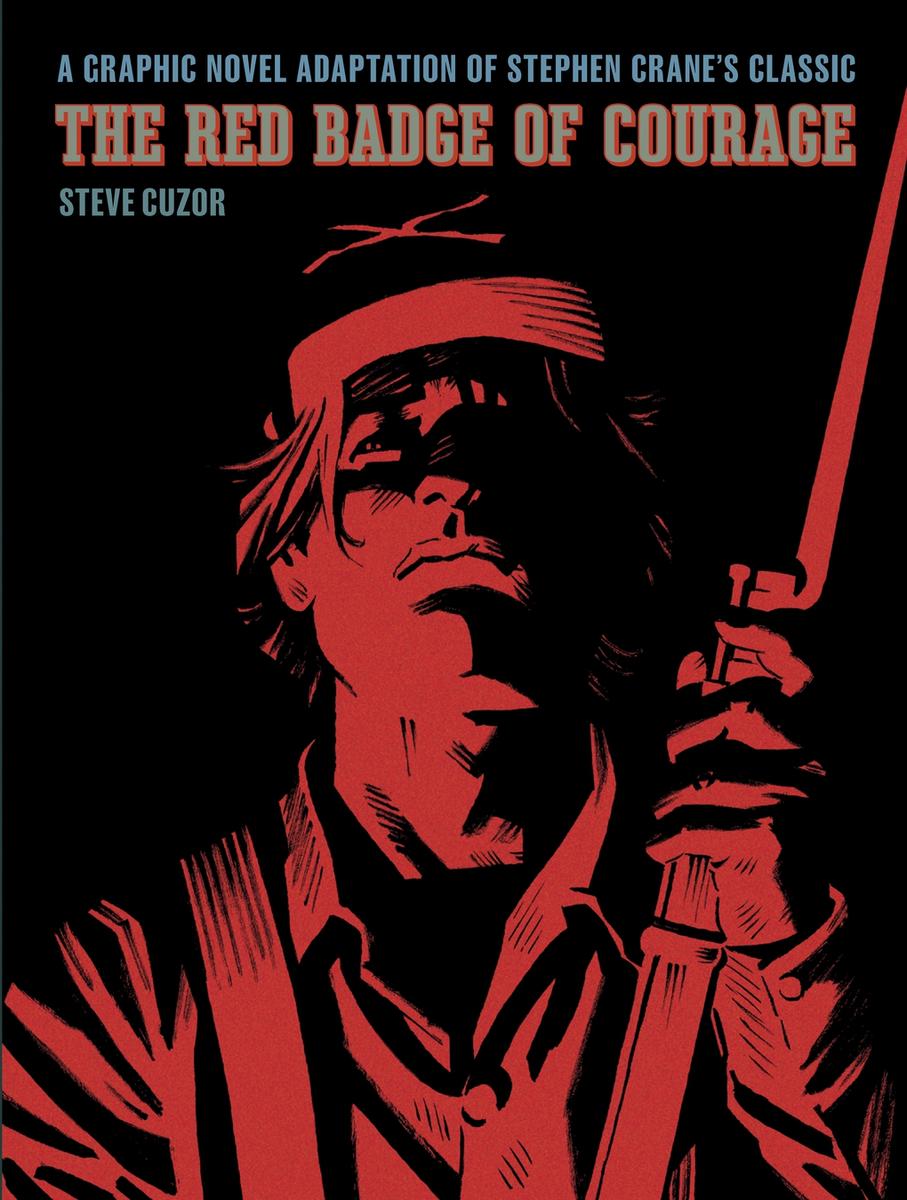 The Red Badge of Courage by Steven Crane, adapted by Steve Cuzor (Abrams) ~ Best International Adaptation from Another Medium
Sorry, kids: Cuzor won’t help you write your book report. Instead, he’s given us one of the most powerfully illustrated adaptations of a book you may ever read or see, capturing Crane’s emotional shock of combat as if Civil War photographer Matthew Brady was reporting on that very battlefield. This is an excellent, primal condemnation of soldiers’ terror of dying, of cowardice, and of the damned depersonalization of men reduced to nothing more than fodder. Stark yet subtle chiaroscuro drives home the story’s violent misery, enhanced by Meephe Versaevel’s nuanced coloring, rendering days with muted browns and moonlit nights with soft blues. Crane makes this story real, terrifying, and profoundly human.
Muybridge by Guy Delisle and Helge Dascher (Drawn & Quarterly) — Best U.S. Edition of International Material
For 25 years, Canadian cartoonist Delisle has been producing first-person graphic travelogues through Asia and the Middle East. Muybridge is something completely different, a classic American story of a ambitious immigrant coming to America, embracing innovation, then fame, rising and eventually falling. It’s a huge-scale biography of one of the greatest influences on early filmmaking, art, and comics, while reading like a Dickens novel. Delisle follows a Canadian tradition of conveying more information, more detail, with far fewer lines, and he uses this to great effect in illustrating Eadweard Muybridge's film and motion experiments while revealing them as prototypical comics. In fact, it’s not just a brilliant biographical novel: it's also a visual treatise on sequential movement that belongs in the hands of any student of comics as well as cinema.
Kylooe by Little Thunder (Dark Horse) ‚ Best U.S. Edition of International Material—Asia
This trilogy of intimate, intensely emotion-driven stories, unified through a cute, white monster named Kylooe is a heartfelt gem. First is a psychedelic fantasy of an outcast high schooler, a Princess Camille seeking her Little Nemo. Next is a melancholy romance for anyone who’s ever broken up with someone they wish they hadn’t. And finally there’s a father/son tale about government-mandated emotions that hints of Harlan Ellison. This deeply moving, eminently shareable book is smartly rendered by Little Thunder, a pseudonymous Hong Kong author/illustrator, with deeply moving stories that’ll make you wish for a Kylooe in your own life.
The Smythes by Rea Irvin, edited by R. Kikuo Johnson and Dash Shaw (New York Review Books) — Best Archival Collection/Project — Comic Strips
Irvin’s artistic legacy goes far beyond Eustace Tilley, his iconic monocled dandy and butterfly enthusiast who graced The New Yorker’s very first cover, with his Smythes among his more obscure works, most unfortunately, as it’s been an unheralded masterpiece. But this has been rectified by Johnson and Shaw with this gorgeous, deluxe, oversize highlighting from the strip, which originally ran Sundays in the Herald Tribune in – of course – New York in the 1930s, post-Market Crash. Every page is a chuckle and a half of clever and endearing banter between milquetoast John and Margie of the outrageous fashion sense. This collection reprints the best of five years of Irvin’s sweeping art and highlighting his eye for playful, innovative design as well as his graceful line. Of the millions of jokes about henpecked husbands and pretentious, social-climbing wives – hello, Maggie and Jiggs! – this is an undeniable classic. And among the back-page miscellany is Irvin’s witty 1943 Sunday funnies parody, Superwoman, which ran once before receiving a cease and desist notice from National, now DC Comics.
Lore Remastered by Ashley Wood and T.P. Louise (Simon & Schuster/Image) — Best Archival Collection/Project—Comic Books
Louise and Wood’s acclaimed, groundbreaking Lore is now reassembled for your reading pleasure. Part mesmerizing comic narrative, part text with intensifying illustrations, all serve as an engrossing and terrifying story of a woman searching for her father’s killer who discovers that mythic creatures, once banished from the world, are demanding to return. Newcomers to Wood’s art should find themselves enraptured by every image. This collection has added art pieces that astonish on their own. This is one for all lovers of fantasy.
Jordan Crane, Goes Like This (Fantagraphics) — Best Writer/Artist
You’ll find this in the twisted-mind section of your local bookstore. Within its trip-inducing cover is a daring compendium of narratives that span genres from warped Western to distorted Hitchcock to familiar, bitter relationships to oddly adroit wordplay and more. Crane’s wide variety of experimental, offbeat tales, splash pages, and interstitials evoke Frank King, Geoff Darrow, Seth, Warhol, William Morris, Shag, and, well, his own memorably sensation-inducing genius.
Elsa Charretier, The City Beneath Her Feet (Dstlry) — Best Penciller/Inker and Jordie Bellaire, The City Beneath Her Feet — Best Coloring
In this bloody action/thriller/romance, Charretier’s layouts explode and just keep exploding, right from the “La Femme Nikita”-style opening. Even in seemingly simple straight-on camera monologues, her slightest of strokes give us telling expressions with bits of business that reveal the character’s pain – tiny tears welling – or bitter joys in suffering smiles. The foregrounds and backgrounds meld into moods you can feel. This is nonstop breathtaking exhilarating, storytelling.
And Jordie Bellaire’s in top form. Her colors are brilliant, as in both vivid and radiant. She breathes intensity into the drama and the action by choosing colors you don’t often see, in line holds and panels in specific tones that yell at you to pay attention! Throughout the whole book there’s never a dull page. Never.
Jakub Rebelka, The Last Day of H.P. Lovecraft #1-2 (Boom Studios) — Best Painter/Multimedia Artist
Red can be a raw, intensely disturbing color, and French artist Rebelka uses it to express the slow demise of horror master Lovecraft. Disconnected, bloodshot eyes are awash in crimson goo. A red-striped lighthouse morphs into a torrential scarlet sea. Blood courses down a hospital wall. A ruddy Cthulhu haunts the background. Lovecraft himself is perpetually presented – in the hospital, with his wife, with Houdini – in unsettling vermillion. Then there are the grays: the gloom that consistently surrounds Lovecraft’s psychological distress. In paint and ink, Rebelka unnerves us to our very heart on each and every page. After having read The Last Day … you may never view red the same way.
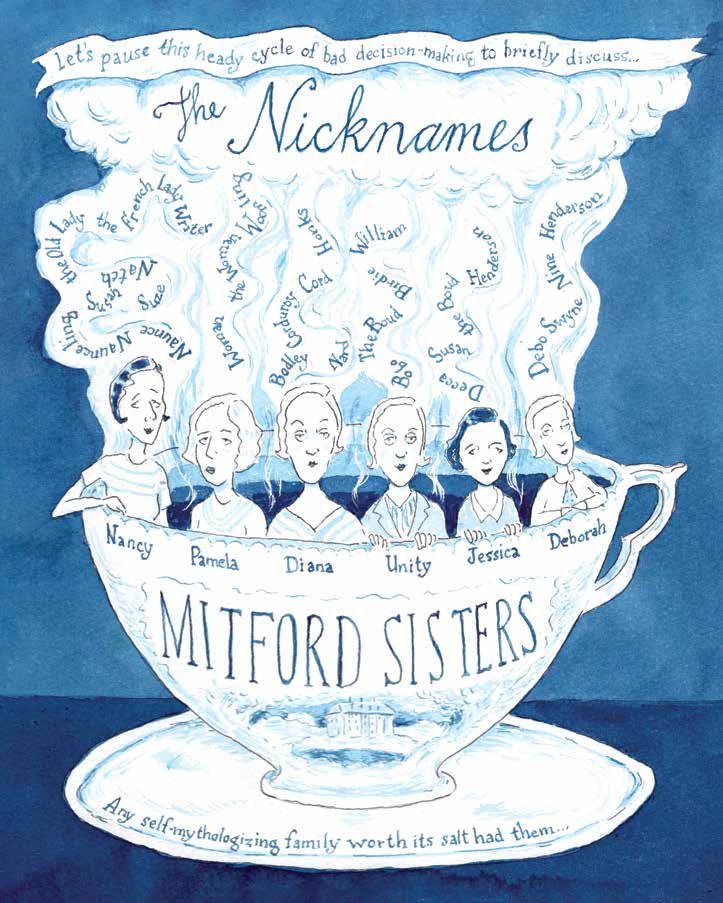
Do Admit: The Mitford Sisters and Me by Mimi Pond (Drawn and Quarterly) — Best Graphic Memoir and Mimi Pond, Do Admit — Best Lettering
Best Memoir Awards aren't typically given to a true tale of six sisters in England, starting at the turn of the 20th century, but there you go. A study in contrasts, Pond has smoothly and skillfully woven her 1960s working-class San Diego childhood into the lives born to British aristocracy.
Also, Best Lettering Awards aren't typically given to works that aren't Todd Klein variations, but every single letter of every word in Do Admit is exquisitely hand-lettered on every page, from cover to end. And I defy any other graphic novel this year to claim anywhere near the skill, imagination, and wit Pond's put into the variety of expressive texts and talking, serif, sans, script, blackletter. And she further enlivens her narrative with illustrations of newspaper and magazine covers, movie posters, maps, and hand-written... memoirs, all bursting from panels and pages, designed, sized, and styled with the greatest dexterity as well as spirit and verve. Best Graphic Novel of the Year? Yes, and not just admittedly but absolutely!
ImageTexT, v. 15 #3, edited by Anastasia Ulanowicz — Best Comics-Related Periodical/Journalism
ImageTexT’s most recent online journal has four exceptionally solid, smart, illustrated features with a diverse array of relevant political themes: an exploration of Chris Ware’s New Yorker covers about school shootings; a critical study of anthropomorphism in Soviet political cartoons during WWII; a tough examination of Australian cartoonists’ brutal attacks on Chinese men in the late 19th Century; and an in-depth analysis of the blurred lines between mainstream and underground in the 1970s, citing Denis Kitchen’s Arcade, Bill Griffith/Art Spiegelman’s Comix Book, and Steve Gerber’s Howard the Duck. And hey, it’s absolutely free for you to read right now.
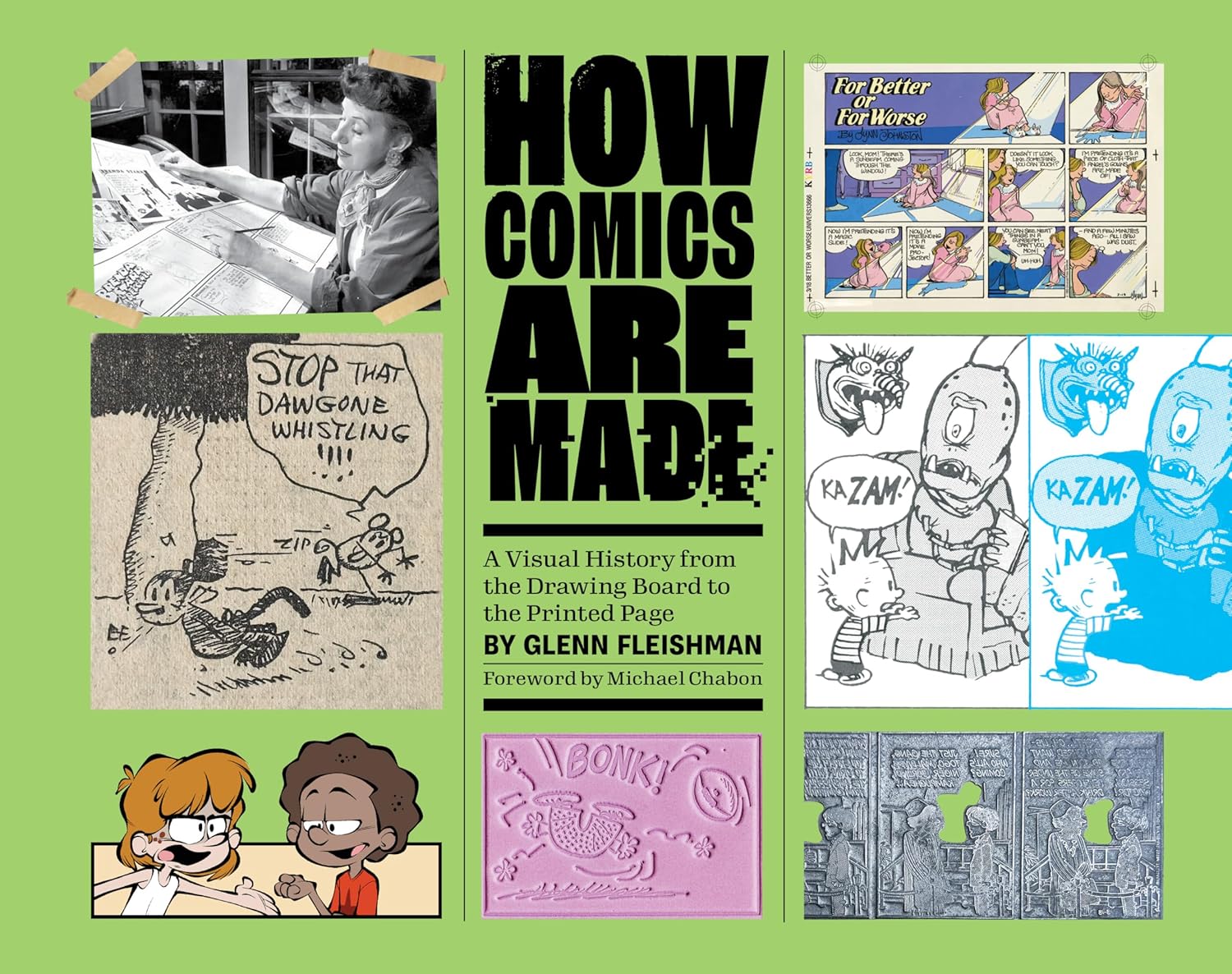
How Comics Are Made: A Visual History from the Drawing Board to the Printed Page by Grant Fleishman (Andrews McMeel) — Best Comics-Related Book
When reading a newspaper comic strip, how often have you wondered about the physical process of how they’re created? This question is hardly recognized, much less explored in-depth, in most comics histories. Well, throughout this informative, entertaining book Fleishman provides everything you need to know about the technical mechanics of the medium, which does a great deal enlighten us and enrich our enjoyment. His intelligent, humorous commentaries, with anecdotal asides, are simply a delight. All the information is presented in straightforward style, and expertly enhanced by hundreds of photos of massive machines and other tangible materials of mass reproduction of strips from classic – lookin’ at you, Yellow Kid – to contemporary to web. And as our Sunday funnies fade into the digital aether, why not spend a few post-paper weekends curled up with a comfortable copy of How Comics Are Made?
Back to Black: Jules Feiffer’s Noir Trilogy by Fabrice Leroy (Rutgers University Press) — Best Academic Work
The more the opportunity to introduce Feiffer to the world, the better the world becomes. And Leroy deserves the highest praise, not only for astutely situating this three-volume loving homage to noir within the broader context of his extraordinarily prolific and diverse art careers but also for his detective work on these detective stories, with insightful analysis of the ways in which Feiffer's loving homage to noir astutely uses American history from the Great Depression through the McCarthy era to incisively satirize and subvert our present culture. Also noteworthy is Leroy's appreciation of Feiffer's visuals: hiscreative reconfigurations of hard-boiled cinema devices into his subtle, sophisticated layouts and unique graceful, limber linework.
Comic Book Apocalypse!: The Death of Pre-Code Comics and Why It Happened, 1940–1955 by David J. Hogan (Schiffer) — Best Scholarly Work
This informative, engaging history takes an unblinking, insightful analysis of midcentury America's evolving culture, from the start of WWII to the institution of the CCA, which explores beyond the usual sex, crime, and horror comics suspects. Visually rich, with its clean page layouts and hundreds and hundreds of large, sharp color reproductions, this is the most attractive study of that censorious era to date. More scholarly books should be gifted with such luxurious design.
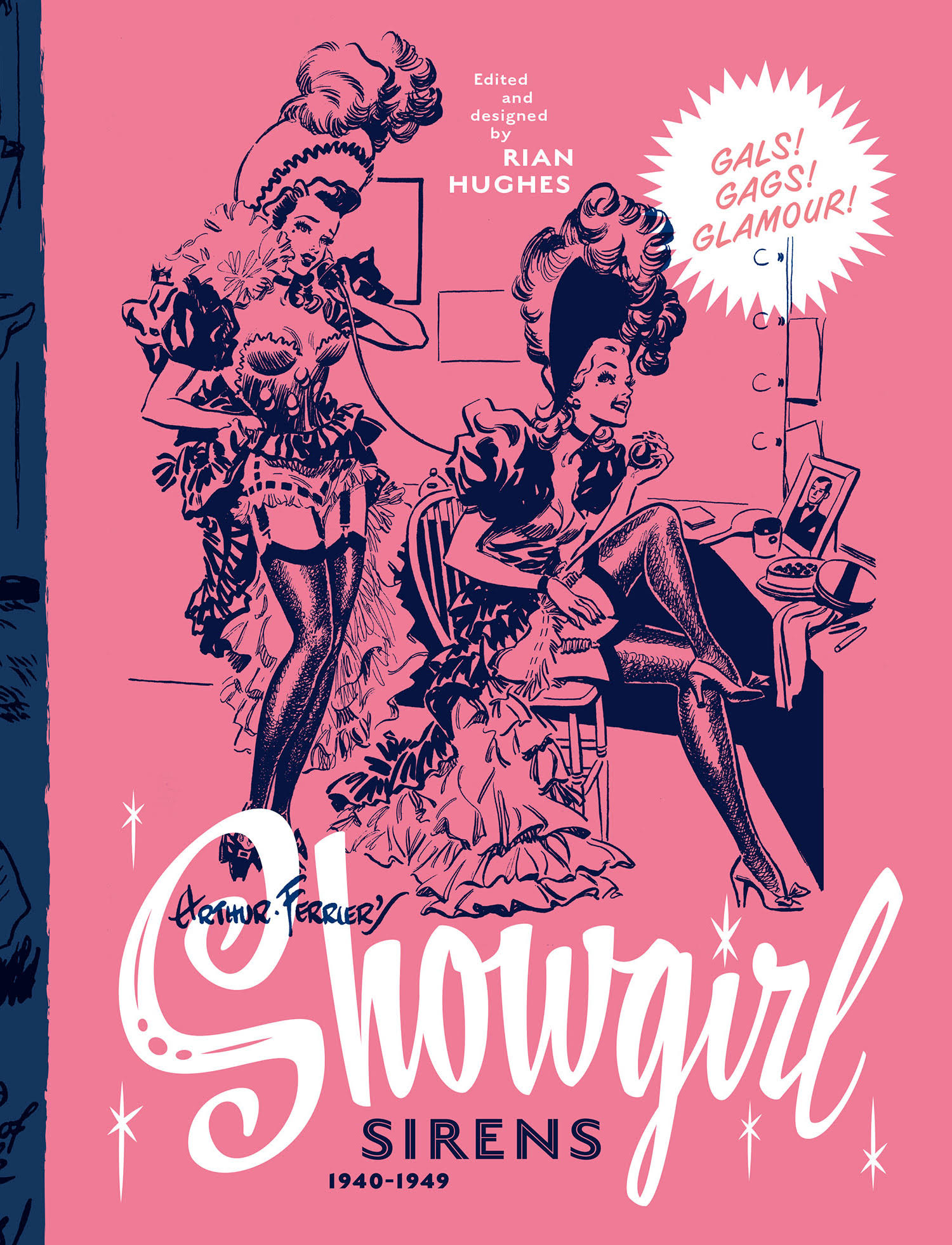
Arthur Ferrier’s Pin-Up Parade! by Rian Hughes (Korero Press) — Best Publication Design
America can count Russell Patterson, Dan DeCarlo, Bill Ward, and George Petty as its top echelon among classic cheesecake pin-up artists, and in the UK, Scotsman Arthur Ferrier is most highly – and rightfully – held in the highest esteem for his elegant, sophisticated renderings of the female figure during pin-up’s golden age. His prolific output ran from the 1930s to the ’60s, often in humor magazines such as Punch and Blighty over several decades. And now, Korero Press has released a magnificent, oversize, comprehensive, three-volume compendium with nearly 1,000 pages, including hundreds and hundreds of his brilliant illustrations, primarily single-panel gags but also comic strips and a variety of publication covers, adverts, and other ephemera. Ferrier's fluid linework – capturing his women's joyous spirit, expressive gestures, and even their evolving fashion styles - is simply a delight to behold. Plus, a couple dozen pages of each book are devoted to his own essays and correspondence course lessons on his craft. Most impressive for me is the superlative skill with which this dazzling, deluxe collection has been luxuriously packaged to a fare-thee-well with the highest production values by Britain’s master graphic designer/comics artist Rian Hughes. In 2020 Hughes merited two Eisner nominations, “Best Publication Design” and “Best Comics-Related Book” for his superb Logo-a-Gogo, also published by Korero. And here, he’s outdone himself. He’s combined Ferrier’s art with marvelous midcentury colors and typography onto the solid, sturdy cloth-textured slipcase box as well as each of the hardback covers. And then there’s the ribboned bookmarks, patterned endpapers, and luxurious cotton matte paper stock and crisp inks to enhance the vintage aesthetic. Pin-Up Parade! is easily the most spectacular publication of the year, bar none. It’s available in its entirety in England but at this time the first, Showgirl Sirens (1940-1949) – which includes an insightful intro into Ferrier’s career by Hughes – can be purchased in the U.S., with the other two, Burlesque Bombshells (1949-1954), and Cabaret Cuties (1954-1968), in the offing.
Best Digital Comic — C’mon: it’s the 21st century and this category is totally irrelevant. Onward!
***
Alex Dueben
The Ephemerata: Shaping the Exquisite Nature of Grief, Book One by Carol Tyler
Breadcrumbs by Kasia Babis
Spent by Alison Bechdel
Where There's Smoke, There's Dinner by Jennifer Hayden
Simplicity by Mattie Lubchansky
Paul Auster's New York Trilogy by Paul Karasik, Lorenzo Mattotti, David Mazzucchelli
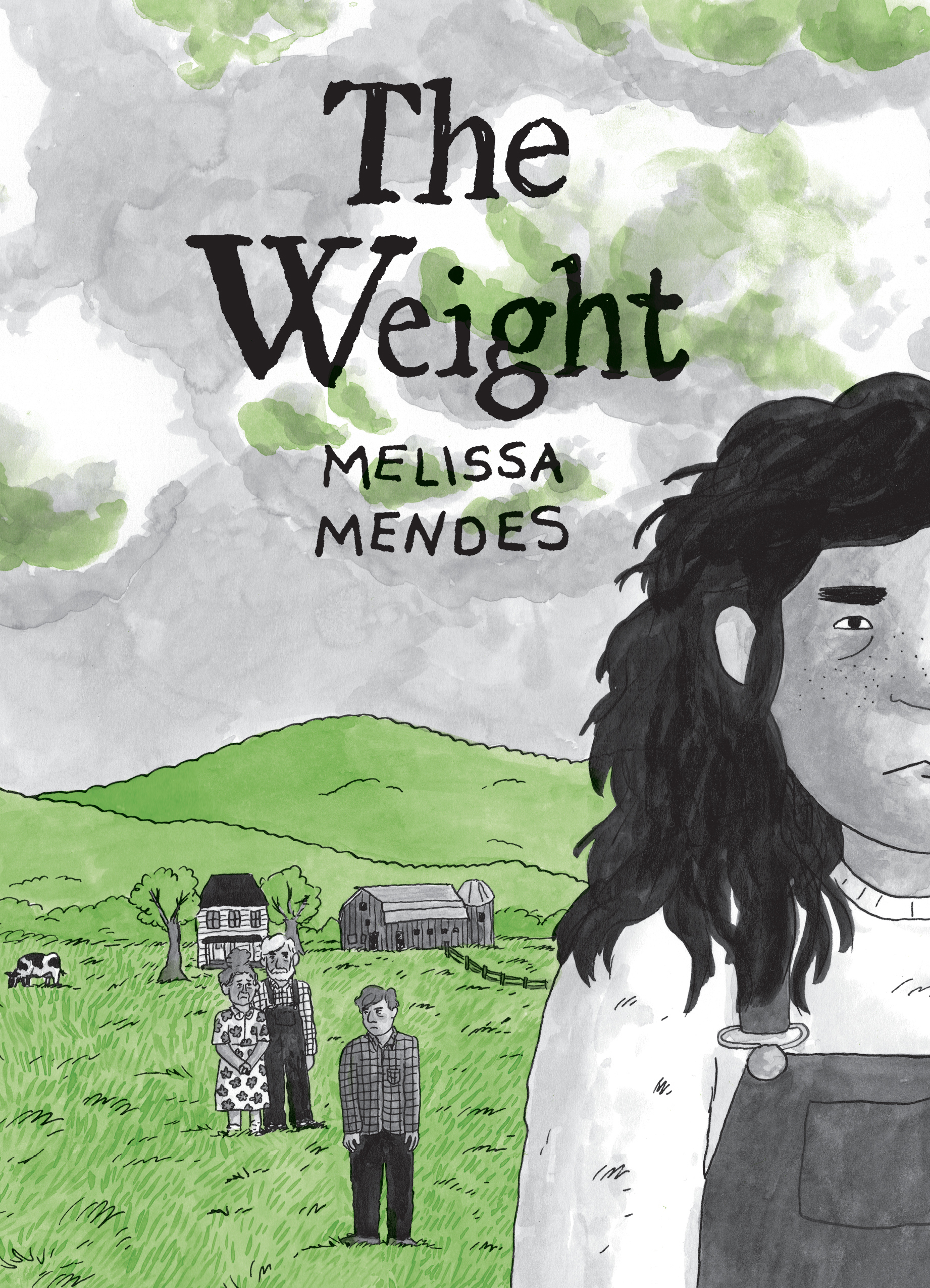
The Weight by Melissa Mendes
Tongues by Andres Nilsen
Ethel Carnie Holdsworth's This Slavery by Scarlett and Sophie Rickard
The Once and Future Riot by Joe Sacco
The Complete C Comics by Joe Brainard, et al.
Hothead Paisan by Diane DiMassa
Terminal Exposure by Michael McMillan
Mafalda: Book 1 by Quino, translated by Frank Wynne
***
Malcy Duff
As another year comes to an end, inside my home there are no seasons, and my bookshelves look like they contain the beautiful, ripened fruit of a perpetual stagnated tree. Returning though, I fear that the fruit will finally fall before being picked. Captain Carrot and the Amazing Zoo Crew still swing from the branches of these bushes, as if their powers of flight were just shenanigans on a bungee cord, awaiting the lost weekend in their company I crave. And too many other tomes are still, so very still, and silent, just their bright spines remaining joyful and noisy unfaded from elsewhere sunlight. As I look again in my bookshelf’s direction however, I am safe in the knowledge that some pages have been turned. I realise this year’s reading has been mostly focused on reading about cartoonists. They have inspired me in different ways:
- What Cartooning Really Is: The Major Interviews with Charles M. Schulz has reduced my swearing dramatically.
- Lynda Barry's interview in The Comics Journal #132 has encouraged me to find a friend I can phone when I’m inking.
- The Daniel Clowes Reader has made me want to take up badminton again.
- And Three Rocks by Bill Griffith has prompted me to start saving for three more drawing boards to get to the magic number of 4.
Recently I have been following the line of David Berman on lucky lyric sheets and his Portable February collection. And I have been returning to The Angriest Dog in the World, celebrating that special man.
Sometimes we don’t get around to eating all the apples on my Dad’s apple tree, and they land on the ground and start to rot. And that’s ok.
Still ... I’m glad comics never go rotten.
***
 Panel from Misery of Love.
Austin English
Below, I've picked 3 books that were all important to me for the same reason: when you have been involved with comics for a long time, as an artist or reader , there will be inevitable moments where you question if the medium is capable of all that you want from it, you begin to doubt your deep involvement in the artform---then, if you're lucky, at just the right moment, works like the ones listed below emerge and affirm all your most utopian hopes for the artform. If your faith is wavering in comics (and if you really love them, you must have this crisis from time to time), read any of these books:
Misery of Love by Yvan Alagbé
I will be writing about this book at length in the upcoming print edition of The Comics Journal, here is small excerpt of what I wrote there:
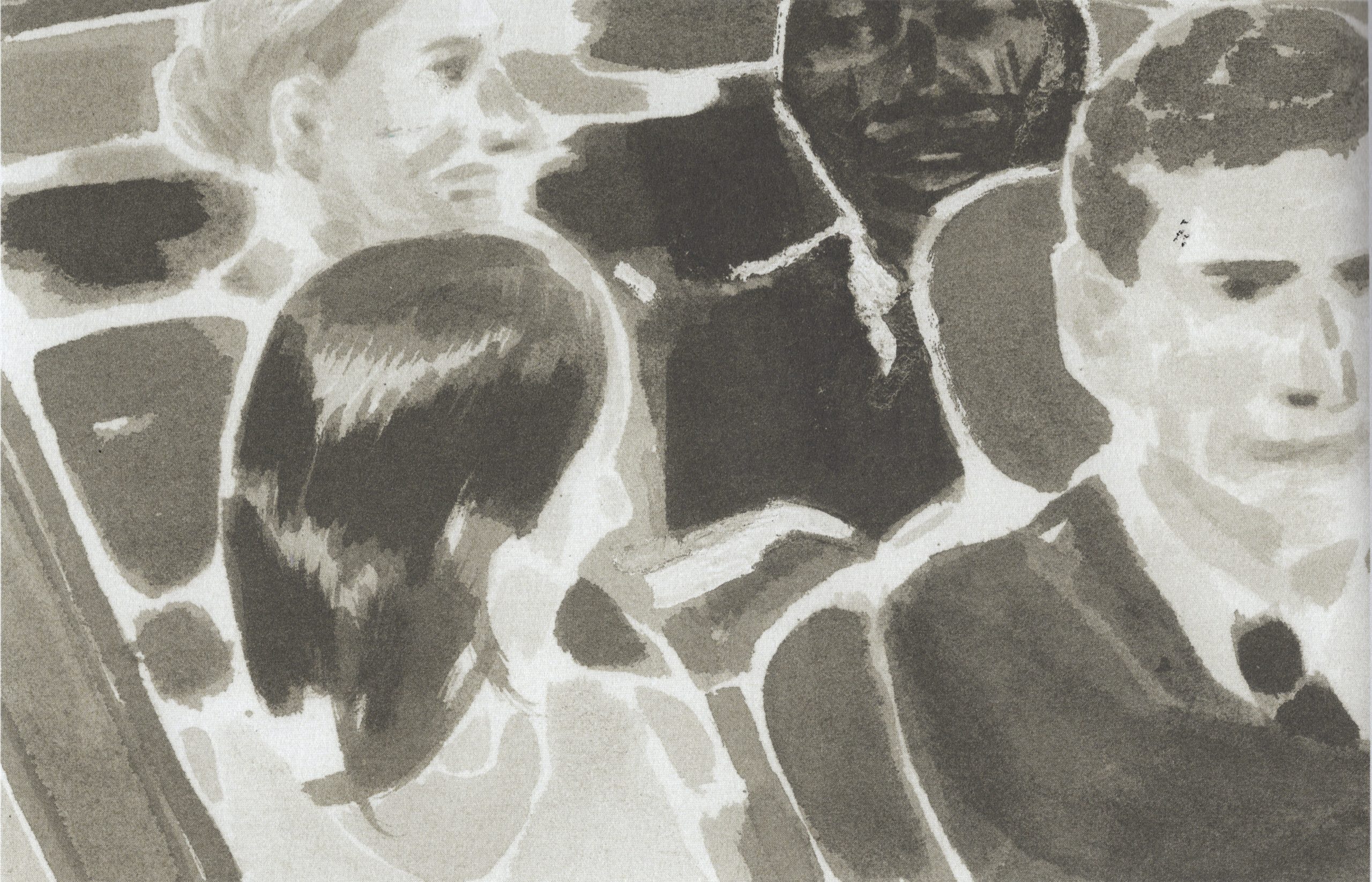
In a New York Times review of this book by Sam Thielman, a character named Michel's worse transgressions are listed, including that he "was in love with a woman who wasn’t his wife." Thielman read Misery of Love sensitively, but I found far more potent moments of Michel’s violence (both sexual and otherwise) in my readings of the book. Here we see how this work can be made anew upon each reading. Thielman stresses that he read the work multiple times (and recommends other readers do the same), but finds different fault lines than I did. Alagbé, in my reading, suggests that Michel has engaged in far worse transgressions, which Thielman ignores or does not see. In one sequence, his daughter Clare’s childhood self is confronted by cries from her mother "it was you who wanted him to be in love with you," "it was you who led him on," "little fool! how did you come up with all this?" One might expect an insinuation like this to occupy the climax of a narrative, but for Alagbé it is one note in the whole blink-and-you-will-miss-it focus and you’ll feel the tragedy, only for it to vanish by the next image — with the mist of it lingering back and forth across the book. One (to me, horrible) image shows Michel cradling Clare, during her childhood, in his arms. Alagbé uses the soft ink wash he employs throughout the book to a shocking effect here: the weight Michel applies to Clare is forceful, his face a distorted mess of wash, his hands cruel. This image communicates brutality, even in isolation. If we looked at it apart from the rest of the narrative, it would still provoke and we would draw conclusions from it, though more visceral than certain. Placed alongside 463 other images, all of them with their own unique weight, it pulsates. As we approach our fourth or fifth reading, the image lodges in our mind, infecting how we look at previous and subsequent sequences. The miracle of Misery of Love is that all 464 images carry the same force of reverberation.
Alagbé presents us a "graphic novel" that defies the way in which we have grown comfortable reading graphic novels, which is as prose. This work is actually graphic, in that the images contain meaning independent of textual assistance. In a non-poetic work of art, there are times when information is presented artlessly: "he got in the car," "he ate dinner," etc. An elegant prosaic entertainer can make dead moments like these part of his rhythm, with meaning beyond what is necessary left aside. The plot, after all, must move forward at times. Misery of Love denies itself such license. One image gives us Alain (Clare's boyfriend, who is of African descent) in a car, next to Clare. Alagbé, without telling us, without prodding us, without begging for our understanding, depicts Alain’s at a remove from Clare. His stance, the tension of those seated in front of him, the contrast between Clare’s face and his, an ever so subtlety exaggerated ratio of proportions between Alain and his fellows — it’s as if Alagbé collages Alain into the picture, the expression he wears believable but at the tip of total remove from the scene he occupies. This is how the picture confronted me on my fifth reading. In my earlier attempts, I ignored it entirely. The anger within this drawing is all the more remarkable for how it can be shoved aside until the reader breathes life into it.
The book concludes with a smile, one that, once more, throttles us back through the earlier graphics, casting new perspectives on all that we have just witnessed. The greatest works, in thought and in art, are not systematic but living organisms inviting participation of the heart and mind. With Misery of Love, what this final smile means can never be solved, but can be felt with increasing depth the more that is given to the book.
The Devil's Grin Vol. 1 by Alex Graham
I truly think this is one of the best comics of the past decade, maybe one of my favorite comics ever. With graphic novels as the dominant delivery system for comics going strong for over a decade, most GN's remain single-issue comic ideas stretched out to an undercooked 200 pages (or more). Devil's Grin is worth the pages it's printed on, there's no padding. And while it is long, ambitious and dense, this is a comic much more than it is a novel, its writing is in the drawing (a cliche we hear all the time in comics, but this book can explain the truth at the heart of the cliche) and I love how it's drawn. While certain panels don't match the hyper-perfection of alt comics at their most ascendant, there's no way anyone else besides Alex Graham could draw this: she gets the expressions exactly right in a way that a more "perfect" drawer could never do, all of Noel Sickles printed work (which I adore) combined can't equal the writing (and by that I mean comic drawings) that Graham's cartooning is built on. It's as if Graham figured out how to make the "great American alt comic" by synthesizing the approaches of alt comics literary ambitions with the "draw in your own way" mini-comic movement, which are more opposed than people think. If I was to show a panel from this work to a comics person who swears by the craft of, say, an Archer Prewitt, it may leave them cold. But Graham has, I believe, outdone so many cartoonists who wrestled with a dual loyalty to airtight craft and ambitions of "writerly" comics. Devil's Grin is wrestling with neither of those things, it lays down a gauntlet of its own excellence. Unlike your normal book-of-the-moment faux sensitivity, this work contains a level of emotional intelligence that so many cartoonists struggle to even approach let alone ever come to achieve. While there are intense/"transgressive" moments happening in Devil's Grin, this should not obscure that the book has, as its main focus, an investment in how people treat each other and a sense of moral clarity that most muddled graphic novels never even bother to broach.
 From the Complete C Comics.
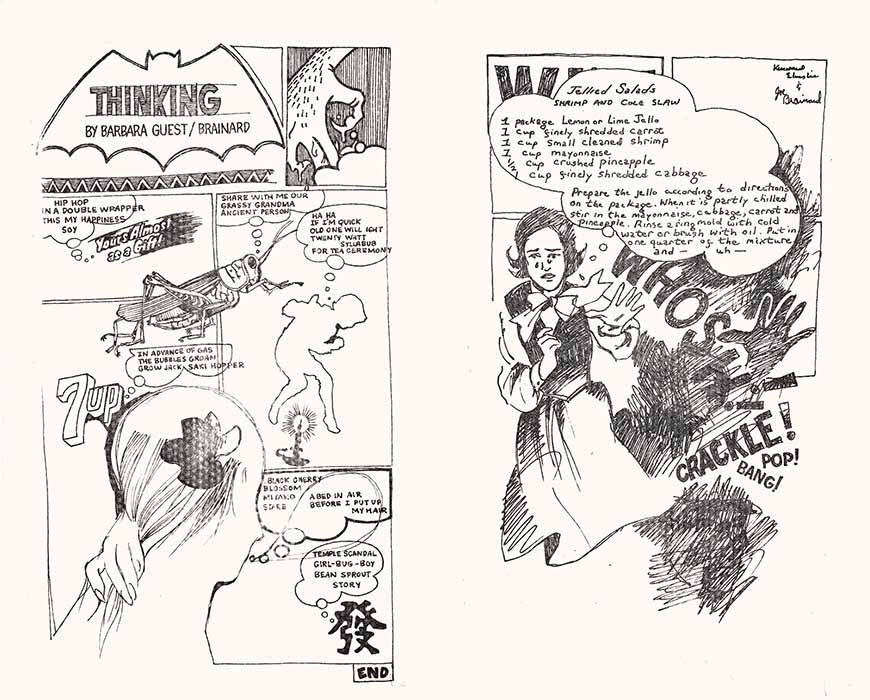
The Complete C Comics by Joe Brainard (and many more). Essay by Bill Kartalopoulos, Foreword by Ron Padgett.
Looking at this new C Comics collection brought up some thoughts. Since the early '00s, poetry comics DID happen, but they did NOT happen in publications like Ink Brick. There is the famous Jean Cocteau quote about a child prodigy poet, Minou Drouet. When asked what he thought of her, Cocteau said "all children are poets, except Minou Drouet." That's how I feel about Ink Brick. All comics [have the potential to be] poetic, except those published in Ink Brick, comics that just graft cartooning onto outdated and conservative poetic forms. What's happening now, at the heart of comics fringes, is something different than simply breaking up a sentence over many panels and calling it "comics poetry." Instead, many young artists focus on publishing work that is a short exploration of a thought or a feeling, and this exploration unifies text and imagery in the pursuit of eliciting feeling from the reader. Instead of naturalistic fiction (which dominated alternative comic spaces in the '80s and '90s) we begin to see less and less focus on characters. Even autobio seems to be disintegrating. Self-publishing art cartoonists now often begin with an unnamed person speaking directly to the reader, with great focus on how such a person poses on the page, how they carry their weight. We see, in these kinds of comics, an avoidance of epiphany and an avoidance of resolution, though (crucially) without an avoidance of feeling.
If we attempt to trace the origins of this, I'd say Doucet looms large, though I'd narrow her influence to before her concessions to alt comic conventions got the better of her (New York Diary and everything that came after, until her return to form with Time Zone J). In an early Doucet strip, called "Month of December," Doucet stands on a bridge and says "Christmas is coming." She sniffs her nose, "it's cold." In the final panel, she hurls herself off the bridge: "... and I'm gonna die?" That is the entire strip. Is it about suicide? Depression? Maybe, but no simple prosaic judgement can contain the strips power. So many emerging cartoonists work in this way today. This makes sense, as pure comics get at the core of poetry better than poetry itself could. Poetry strives to make expression new while working with an inherited set of symbols, the letters of the alphabet you write your poetry in. A comic like Doucet's goes farther, she does not write "I stood on the bridge and began to speak to you." She draws the bridge, her description of this specific bridge is already charged with a poetry that the letters themselves could never contain, no matter how you place them or rearrange them (all the tortured word placement of modernist poetry could have been solved, it seems, with drawing). Traditional cartoonists worked hard to make the bridge disappear. If Milton Caniff's story required him to draw a bridge, he'd do it perfectly, but so perfectly that you would not notice it or linger on it, the bridge merely a prosaic detail to connect point A to point B, no matter how proudly he drew it. Doucet allows the charge of her expression to be seen in every line, you ignore nothing, it's all part of the whole, just as nothing can be discarded or ignored in poetry.
Doucet, and the generation that embraces her approach, is not like the group of avant-garde poets who made C Comics. Joe Brainard and his ilk lived and breathed what poetry was and is, they devoted their life to it. When they sought to make comics, the tools of poetic expression were already on call within them, and the tools were finely honed. The work in C Comics feels mature and exact, work made by people conscious of what they were doing. Poetry comics circa 2025 are most often made by those with no (or little) interest in orthodox poetry, but instead in how comics can be used for self expression. This search for how to use comics in a mature way has been subverted and derailed for a century. When someone taps into the poetic potential of comics, you see it happen on the page, you feel the charge, "finally, this is how it can be done!" Lately, I see this moment of conception everywhere, all the parts coming into place organically and the thrill of artistic gestalt happening in a way that it has really never happened before, the absolute triumph of raw artistic discovery. You'd think C Comics would connect to this, but it feels oddly distant, not so much a relative to today's explosion as it is an acquaintance who, if you come to think of it, you never actually met.
And yet, despite this disconnect: as contemporary underground and fringe comics lean deeper into their poetic destiny, it is very important that this book is out now. C Comics is a tome that can now be corresponded with, there is enough strength in contemporary and organic poetic comics that the community making them won't be bulldozed by what is within this book ("it's already been done"). Instead it can act as a prophecy that you missed, and reading it now is exhilarating in its affirmation but not so influential as to change the flow of where we are already headed.
Post Script: I haven't finished Melissa Mendes' The Weight yet, but I read the early chapters years ago and found them incredible. This list wouldn't be complete without mentioning this book that I look forward to reading in full in the new year.
***
Jim Falcone
I’ve been on a monthly comic embargo since I left high school, but 2025 was the year to reel me back in. Kieron Gillen and Caspar Wijngaard started knocking down the dominos they’ve been setting up for the past 10 issues of Power Fantasy. Christopher Priest's essays at the end of Marvel Knights: The World to Come have been just as engaging as Joe Quesada’s art. But without a doubt Absolute Martian Manhunter was the mainstream comic of the year.
Deniz Camp and Javier Rodriguez are working in the Vertigo-tradition: reimagine a dusty DC IP, let the writer cram in as many purple prose captions as they need to describe the human condition, and pair them with an artist who can work outside the current house style. Probably their greatest achievement is making a comic with art that communicates instead of just illustrates. The fourth issue of the series starts with the cosmic-bringer of bad vibes known as “The White Martian” drawn like the silhouette on a men’s bathroom sign, with a black body and white circle head. In the next panel he lifts his head from his neck, then in the third he places it into the sky on the fourth panel, creating a heat wave that drives an entire city into a homicidal frenzy. Later in that same issue, the metaphorical enlightenment-golem known only as “The Martian” grabs a ray of white sunlight reflected in the protagonist’s eye, stretches it in his blocky hands, and separates it into three circular colors: red, green, and blue, the three colors that make up visible light. He overlaps the red and green–coincidentally the same colors used to signify the presence of The Martian throughout the comic–to create the color yellow, which he then places onto the city’s horizon as a setting sun, calming the madness and making everything right. It doesn’t make much sense explaining it, but you’ll love it when you see it.
In the indie scene, I read some great stuff this year. Harper B’s Bring Me the Head of Susan Lomond was an extremely enjoyable one-shot that proves that funny comics usually have funny art. Corinne Halbert’s still finding fresh and funky ways to express her psychological journey to happiness in her newest installments of Scorpio Venus Rising. Audra Stang’s Another Year comics on Instagram are expanding the lore of Valley Valley and Idella Delle in tiny snippets that leave me wanting something longer. I also had the pleasure of picking up the first issue of Monograph Magazine at this year’s MICE Expo: a fanzine edited by Ivy Lynn Allie, E.B. Sciales, and Warren Bernard focusing on single panel cartoonists. This inaugural issue goes over the life of single panel cartoonist and first woman member of the National Cartoonists Society Hilda Terry. These were all small press triumphs, but if I had to choose a favorite indie of this year, I’m going with the obvious choice.
I might be one of the four people currently reading Love and Rockets who’s closer in age to Tonta than Maggie. Life Drawing is the second trade starring Jaime’s new protagonist and her circle of friends/family. It’s nice to see Tonta get some breathing room after her last story, which felt like she was competing for attention with her pulpy family drama. Here we get an intergenerational crossover with Maggie and Ray while also getting to meet some of Tonta’s peers — I’m personally attached to the bug-eyed comic-lover Gomez, whose life feels closer to where I was at as a teenager than the more free-range Tonta. It’s a little disappointing that we only have 130 pages after ten years. Even two back-to-back weddings felt understated, but this collection gives the feeling that Jaime’s working up to something big. Until then, I’ll be reading and rereading what I have, just like with all of Jaime’s other comics.
***
 From Do Admit!
Andrew Farago
2025 was a terrible year in many, many ways, but it was a great year for comics. Here's a dozen or so of my favorites from the past year:
Do Admit: The Mitford Sisters and Me: Mimi Pond's books are always great, and she just keeps getting better.
Spent: Enter the Bechdelverse? Alternate reality Alison Bechdel hangs out in Vermont with the Dykes to Watch Out For cast and it's an amazing read.
Raised by Ghosts: Briana Loewinsohn's been one of my favorite minicomics creators for years, and her graphic novels are even better.
Life Drawing: Jaime Hernandez has been so consistently great for so long that people don't even comment on it when he drops another classic. The Love and Rockets curse.
Absolute Batman: Extreme in all the best ways. Just a blast.
Transformers: Another nostalgia trip, but a fun one. The '80s Transformers comic book we see in our heads when we think of what we were reading 40 years ago. The G.I. Joe and Void Rivals tie-ins from Skybound have been a lot of fun, too, and I'm glad that Larry Hama's still writing a monthly G.I. Joe comic and hope he gets to keep on doing that as long as he wants.
You and Me on Repeat: Mary Shyne's debut graphic novel. Groundhog Day with teen angst and quantum mechanics in the mix. Looking forward to seeing what she does next.
And to Think We Started as a Book Club ...: A best-of collection of New Yorker cartoons from Tom Toro, one of my favorite cartoonists from that magazine's 100-year run. Actual laugh-out-loud cartoons.
Instagram cartoons from Joey Alison Sayers, Jeffrey Brown, Mike Dawson, Jen Sorensen, and Luke McGarry: I'm not on Instagram all that often, but the political, diary, and just-plain-weird comics from these artists help get me through the day.
Ooops...I Just Catharted! 50 Years of Cathartic Comics: Terrific hardcover collection of unsung visionary Rupert Kinnard's Cathartic Comics from Stacked Deck Press. I hope this book leads to a reappraisal and renewed appreciation for his groundbreaking comics.
The Essential Peanuts: Did we really need another Peanuts book? Of course we did! Mark Evanier on Charles Schulz with some all-star cartoonists sharing stories about the world's greatest comic strip. What's not to love?
Almost Sunset: Wahab Algarmi's debut graphic novel has a lot of heart, and I think kids and parents will be reading this one and sharing it with friends and family for years to come.
Top Two "conflict of interest" books of 2025:
The Nefarious Nights of Willowweep Manor: The follow-up to Shaenon K. Garrity and Christopher Baldwin's hilarious The Dire Days of Willowweep Manor. Madcap hijinks for anyone who loves Agatha Christie and Jane Austen, or who's seen the Clue movie fifty times. I'd love for them to do a third book to make this a trilogy.
Snoopy, The Story of My Life: The Myth, The Legend, The Beagle! Did we really need another Peanuts book? I must think so, or I wouldn't have written this one, Snoopy's autobiography, illustrated with classic Peanuts comic strips. I love the design, too, which looks and feels like a book I'd have checked out from my local library a hundred times as a kid.
***
Shaenon K. Garrity
I can’t remember how I got hung up on the Mitford sisters and their what-do-you-mean-one-of-them-was-a-duchess-and-one-was-a-Communist-and-two-were-literal-Nazis drama, though it probably started with reading Nancy’s gossipy biography of Enlightenment scientist Émilie de Châtelet, Voltaire in Love. And I’ve been a fan of Mimi Pond since … well, if it’s too glib to say “The Simpsons,” her two graphic memoirs about working at a diner in Oakland are fabulous, not to mention essential reading if you want to live in the Bay Area. So for me the event of the year, no contest, was Pond’s Do Admit: The Mitford Sisters and Me. Pond’s cartooning is smart and witty and just weird enough to do the Milfords justice. Read with your jaw dropped from beginning to end.
In other, non-Pond news, this was a great year for new artist debuts. Kayla E. came out of nowhere for me, which probably means I was looking in the wrong places, but Precious Rubbish blew me away. So did Yudori’s historical drama Raging Clouds, in different but equally powerful ways. Ben Wickey’s More Weight: A Salem Story is a towering achievement, but then there’s the quieter beauty of Lee Dean’s The Girl Who Flew Away.
Finally, this is an amazing time for manga. We’re finally getting a lot of great older manga in translation, including The Legend of Kamui, Ashita no Joe, and, from secret essential comics publisher New York Review Books, Fumiko Takano's Miss Ruki. Takano is primarily an alternative manga artist, and if more of her work gets translated it will blow your brains out your ears. Gene Bride by Hitomi Takano is an amazing feminist sci-fi manga that I hope is getting the attention it deserves. Oh, and everything out of Smudge is a must-read for me because I cannot resist gross old manga, but this year’s Smudge standout is Shinichi Koga's Mansect.
MANSECT! MANSECT! MANSECT! MANSECT! MANSECT!
Happy holidays!
***
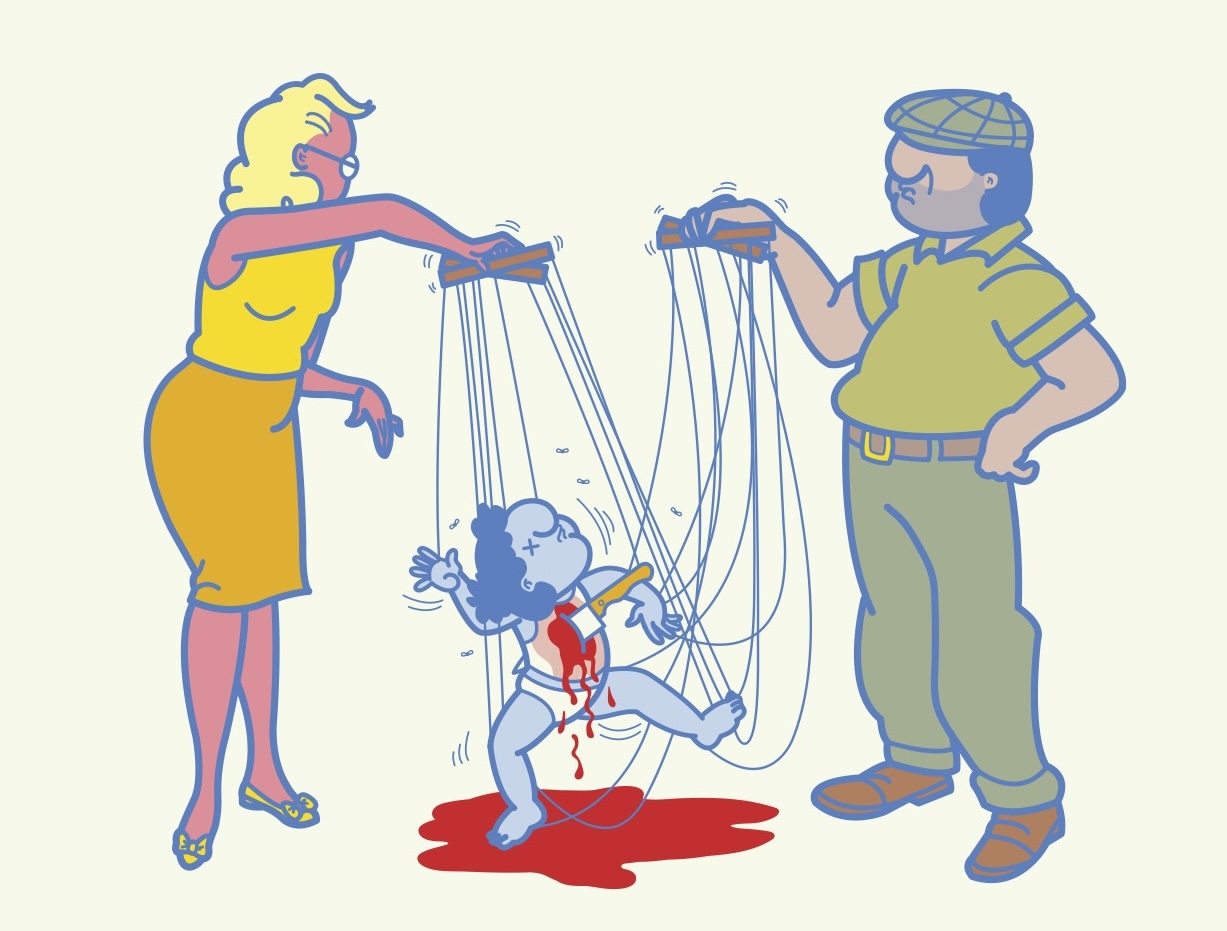 From Precious Rubbish.
Nicole Georges
My list of 3 favorites this year are all smart, tender stories that attend to the topic of growing up, but in very different ways.
Precious Rubbish by Kayla E. (Fantagraphics)
Clever, distinct and devastating, the trauma and resilience of Li’l Kayla are delivered in a clean and spooky mid-twentieth-century comics frame. Through a dense intertextual web, Precious Rubbish expands and illuminates the potential of the form.
Jelly Cake #2 by Stef Choi (self published, stefchoi.com)
Animator-turned-cartoonist Stef Choi’s autobiographical coming-of-age comics are a delight. While other girls are donning thongs, tween Stef wears a homemade diaper-sized menstrual pad to school where she dodges racial epithets and pines only for nacho day and a boy named Michael Camaro.
Cannon by Lee Lai (Drawn & Quarterly)
When I finished reading Lee Lai’s book the first time, the words I chose to describe it were: “a rich story, elegantly told."
The characters in this gorgeously rendered black and gray graphic novel are written with intricate, intersecting plot lines that explore family (both blood relations and queer-chosen), grief, growing up, repression, and rage.
Watch for magpies, meditation, and plantar fasciitis.
***
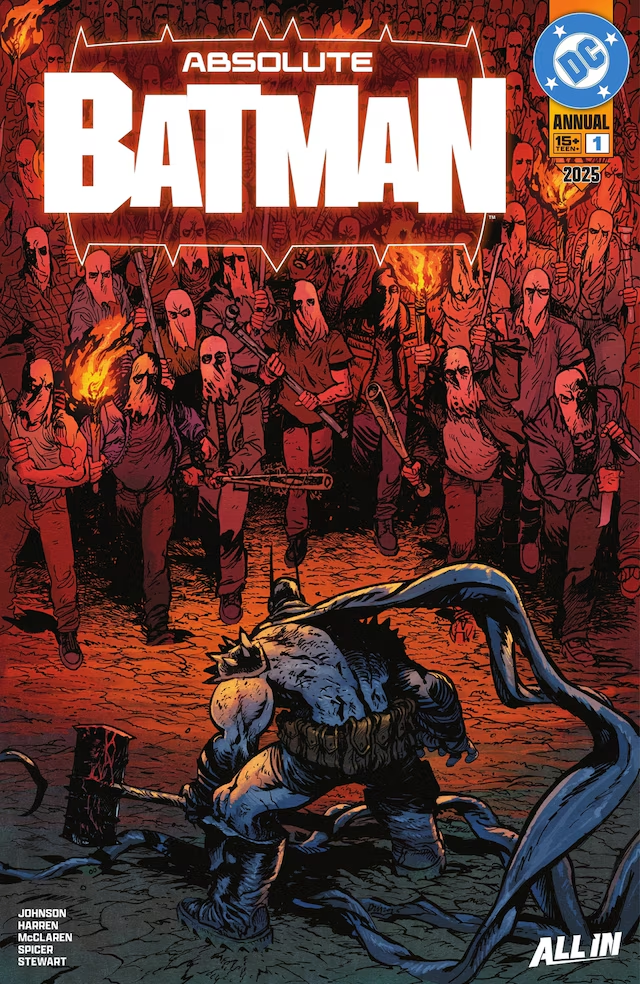
Corinne Halbert
We're all here on this end of year round up because we LOVE comics. I’m a comic book artist who also happens to work at a comic book shop. You can find me slinging books, Blu-rays, toys and more at legendary Sci-fi megastore & emporium, Forbidden Planet in NYC. These were the books that made the biggest impact on me this past year. Whether they made me think, grow a big smile on my face, laugh out loud or cry watery tears, these books had the GOODS. In no particular order, here's a selection of 20 outstanding works from 2025, in a medium I truly adore ... COMICS.
Okay, okay, you got me. It's actually 21 comics. I tried and tried to make this list an even 20, alas some great stuff came out right at the end of the year and I couldn't leave any of these gems out. Without further adieu ...
Tales of Paranoia by R. Crumb (Fantagraphics)
FAN-FUCKING-TASTIC! Still intensely thinking about it and I read this puppy WEEKS ago.
Absolute Martian Manhunter by Deniz Camp and Javier Rodríguez (DC Comics)
I adore this series, Javier Rodríguez is a true visionary artist and his sense of color transcends realms. This team of creators is POWERFUL.
Absolute Batman 2025 Annual #1 by Daniel Warren Johnson (DC Comics)
HELL YES, get 'em! This was SO satisfying, DWJ gives the people what we want, this one-shot is truly OUTSTANDING.
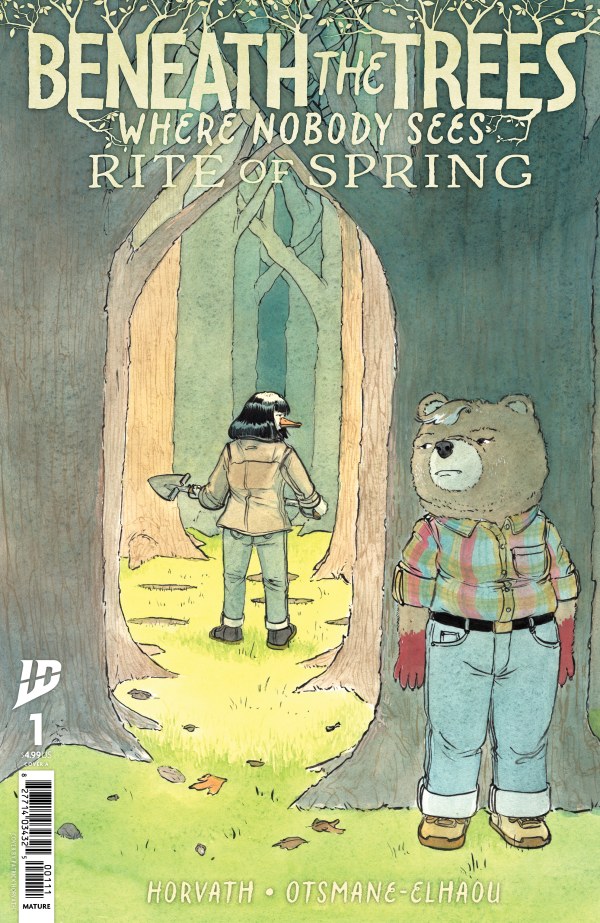 E Is for Edward: A Centennial Celebration of the Mischievous Mind of Edward Gorey by Gregory Hischak (Black Dog & Leventhal)
This book is EXQUISITE. Getting to see smaller panels on huge page spreads brings me immeasurable joy, simply GORGEOUS.
My Gorilla Family and Other Stories by Ichiro Iijima, translated by Ryan Holmberg (Living the Line)
OBSESSED. This freshly translated 1970s horror manga anthology is absolutely bananas. It'll make you laugh, make you puzzled, and fill your heart with wonder and joy.
Exquisite Corpses by James Tynion IV and more ... (Image Comics)
So damn FUN and extremely DARK with incredible characters, genuine suspense and impeccable pacing and storytelling.
The Ephemerata: Shaping the Exquisite Nature of Grief by Carol Tyler (Fantagraphics)
A beautiful and raw expression of extremely difficult experiences and emotions. Tyler provides the reader with a TRANSCENDENT experience.
Black Arms to Hold You Up: A History of Black Resistance by Ben Passmore (Pantheon)
An extremely important, well researched and compiled historical account of the History of Black Resistance that is lovingly told with beautiful artwork, moments of humor, ire, genuine feeling, and a whole lot of DEPTH.
Beneath the Trees Where Nobody Sees: Rite of Spring by Patrick Horvath (IDW)
Disturbing and masterful, this story has got me HOOKED.
There Will Be Tears by Charles Burns (Partners and Son)
Drawings so insanely beautiful they will both BREAK and MEND your heart simultaneously.
The Devil's Grin: Book One by Alex Graham (Fantagraphics)
Exceptional writing and character development, Graham builds a STRANGE world we can identify with deeply.
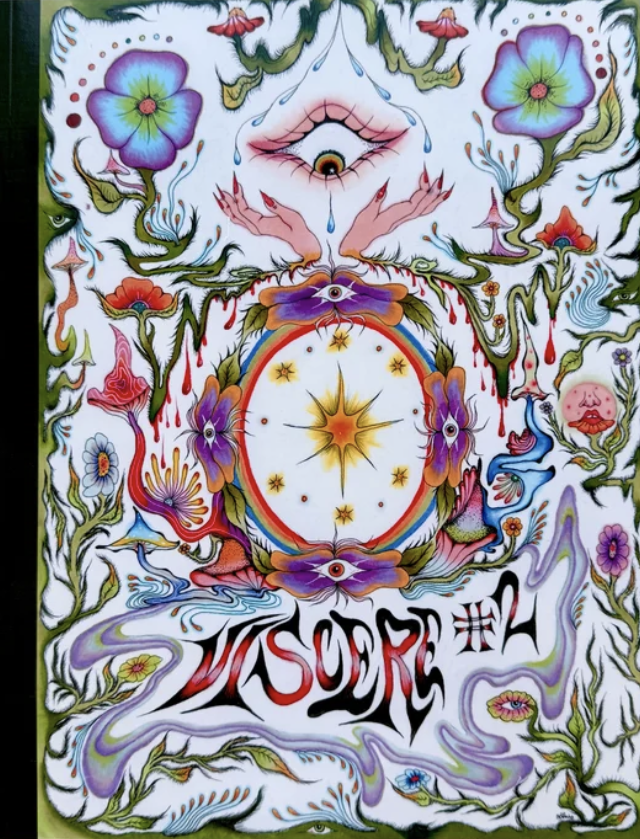 Viscere #2: Folk Horror, edited by Katie Skelly
Viscere #2: Folk Horror edited by Katie Skelly (Stregasporca)
Soothe your inner hedgewitch with this outstanding horror anthology filled with MACABRE tales by fabulous femmes.
Orphan and the Five Beasts: Bath of Blood by James Stokoe (Dark Horse Comics)
James Stokoe's artwork is PHENOMENAL, this outstanding limited series has great writing and a well developed universe. His take on epic battle scenes and creepy, gooey guts and gore is a pure delight.
Saga de Xam by Jean Rollin and Nicholas Devil (Anthology Editions)
STUNNING. This blew me away, I had no idea one of my favorite directors wrote this lushly illustrated, magnificent graphic novel all the way back in 1967. THANK YOU, Anthology Editions for bringing this astonishing tome back into the world.
Toxic Avenger by Matt Bors and Fred Harper (Ahoy Comics)
Matt and Fred EXCEL at continuing the adventures of Lloyd Kaufman’s titular character, THE TOXIC AVENGER.
Adventure Time (2025): The Bubbline College Special #1 by Caroline Cash
This is so damn CUTE. Gorgeous artwork and coloring, a beautiful coming of age sapphic tale filled with classic Adventure Time capers and lots of chuckles.
Skinbreaker by Robert Kirkman and David Finch (Image Comics)
JAW-DROPPING artwork and exceptional world building make this a must read series.
Moan by Junji Ito (Viz Media)
HORRIFYING and delightful, I have yet to ever be disappointed by a Junji Ito book.
The Confessional by Paige Hender (Silver Sprocket)
GORGEOUS artwork compliments this delightfully wicked period piece about vampires, sinners and wannabe saints.
Rats Eyes: a Games and Puzzles activity book (expanded 2025 edition) by Hyena Hell and Josh Bayer (self-published)
Two completely unstoppable FORCES OF COMICS NATURE combine their powers to bring you a love letter to BLACK FLAG in the form of a puzzles and games book that is so damn fun, it'll completely melt ur eyeballs.
The Complete C Comics by Joe Brainard, foreword by Ron Padgett, essay by Bill Kartalopoulos (New York Review Books)
Curious, adventurous, kooky and GROUNDBREAKING collaborative comics made by Joe Brainard and his New York School poet friends in the 1960s.
***
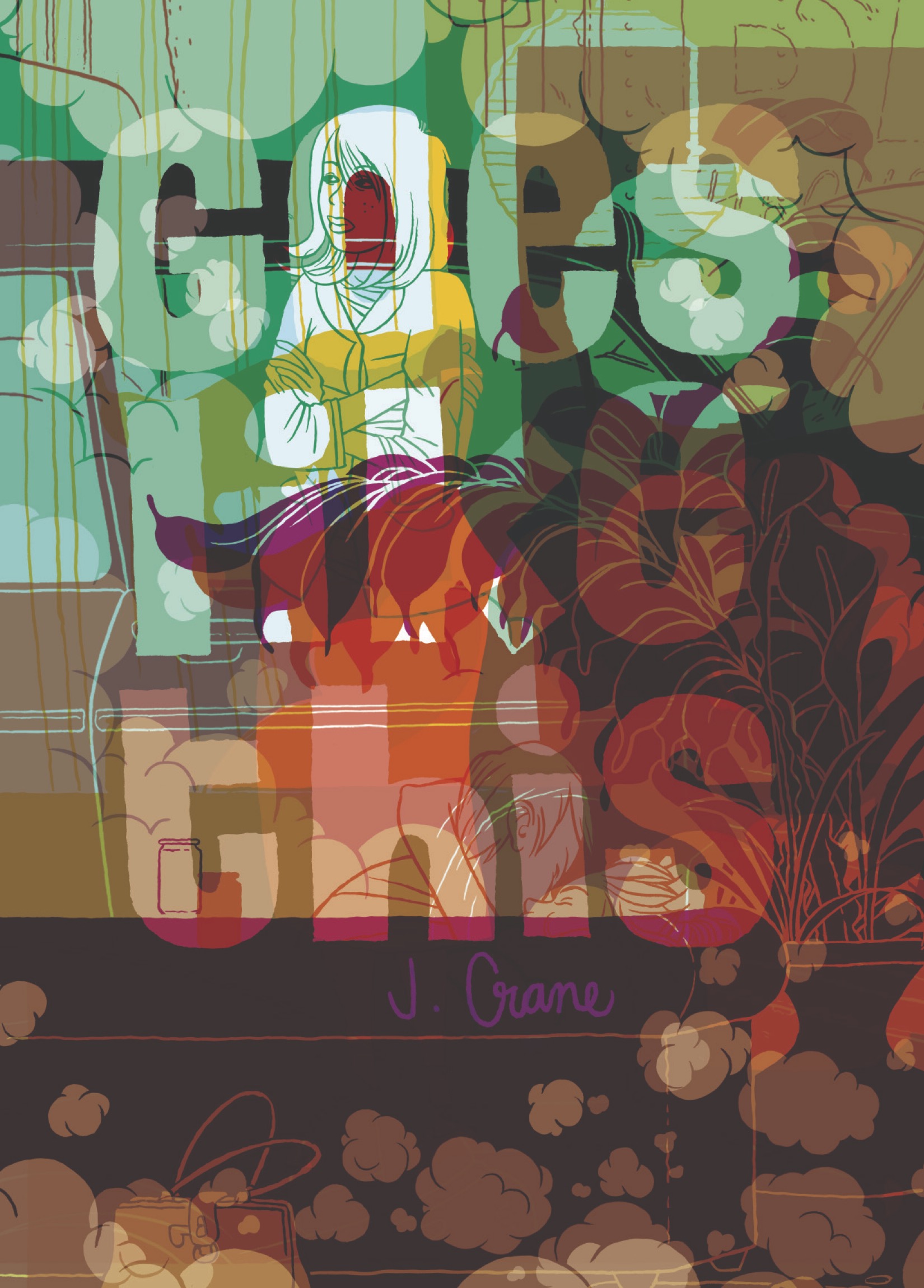
Charles Hatfield
The usual caveat: I can’t keep up! The sheer variety of “comics,” its profusion of genres, formats, presses, and publishing sectors, frustrates any bid for comprehensiveness. Each year, I end up reading more of the year’s recommended comics after I file my list with TCJ than before, and even at Eisner-voting time (months later) I feel behind. My list this year, a score of titles, privileges book-length comics and publishers of same — no surprise, as it was a great year for such. Come springtime, I hope to compile a drastically revised best-of list. (Thanks to Nami for the manga tips!)
Spent, by Alison Bechdel (Mariner Books). Colors by Holly Rae Taylor.
If you can’t get out from under your reputation, why not spoof it? That logic seems to underlie Spent, a winking autofiction in which “Alison,” the character, gets rewritten, Fun Home gets parodied, and the prospect of its TV adaptation sparks a nervous comedy. Spent boasts, besides Alison and her partner Holly, a community of characters from Dykes to Watch Out For. As Alison suffers from creative block, struggling with a memoir-in-progress about consumer capitalism, the larger cast steers the story into funny, humane territory. Self-indulgent? I’d say loving and ingenious: a playful, inevitably political time capsule of this moment.
Kaya #24-31, by Wes Craig (Image Comics). Colors by Jason Wordie.
As I said two years ago, Kaya is a familiar sort of story: a postapocalyptic quest starring two super-powered kids, mismatched siblings, one of whom is a prophesied Chosen One. Together they rove, and together they fight robots and monsters. I know, I know. But Craig has been running flat-out from the starting gun, topping himself again and again with pages of thrilling inventiveness and moments of surprising emotional oomph. The sister/brother conflict is credible, the psychic stakes complicated, and the world-building crazed. Even the robots have problems. Craig’s drawing and Wordie’s coloring go hand in glove. Pure, craftilicious pleasure.
Goes Like This, by Jordan Crane (Fantagraphics).
Crane’s best work tends to be elegant yet anxious: classic cartooning with desperate emotional undercurrents. Muted but astringent, his comics mix graphic classicism with existential terror; at the same time, the work is gorgeously swoon-worthy. This curiously designed volume (with varied paper stocks, an exposed spine, and visible stitching) gathers in more than a quarter century of comics and prints, walking a tightrope between narrative understatement and visual splendor. Compulsive worry and quiet dread are delivered with severe narrative control and deadpan pacing, but also ravishing color. The book is both a printer’s orgy and a masterclass in holistic design.
Mike Dawson's Monthly Minicomic Club, by, yep, Mike Dawson (self-published subscription service via Patreon).
Dawson lives up to his motto, “self-publishing is a power,” every month. Though he has many graphic novels to his name, and another forthcoming, his zine/minicomic service is the heart of his work. Each month he sends out a mini (usually digest- or CD jewel case-size), typically an observational slice of life riffing on pop culture (Hamilton, Stranger Things, Queen), sometimes from a bemused dad’s perspective, often politically charged. Dawson happily mocks himself, and embarrassed recollections of his younger self are constant. The work is somehow both high-spirited and contemplative, in a rounded, fat-lined, insanely readable cartoony style. I’m hooked.
FML #3-6, by Kelly Sue DeConnick, David López, Cris Peter, and Clayton Cowles (Dark Horse).
This apocalyptic, vaguely semiautobio sitcom set in Portland may be the best comic book DeConnick has written (and that’s saying something). A breathless farce about schoolmates and bandmates, and then again the agitated adults around them, most especially a tensely wired yet lovable punk-rock mom, FML nails the nightmarish, post-COVID, Trumpian world we now inhabit. Each issue hijacks different genres and piles on new absurdities, some all too painfully real. Artist López is assured and delightful, managing the chaos with loving inventiveness. This series fairly screams “passion project,” and, like a costume party at an ICE stakeout, gives me hope.
Muybridge, by Guy Delisle (Drawn & Quarterly). Translated by Helge Dascher and Rob Aspinall.
Delisle’s latest, tonally deadpan yet graphically sharp as usual, recounts not only the career of Eadweard Muybridge and the invention of chronophotography but also the dawning of photography in general and even of cinema. Basically, Delisle treats Muybridge as the missing link between photography and moving pictures. At the same time, his Muybridge is no hero; Delisle stays detached and ironical, treating the man’s trials and wrongdoings (even the committing of murder) matter-of-factly. There’s no pathos in Muybridge’s decline and death, but you can tell that Delisle is fascinated. Ingenious and insinuating — a rare feat of explanation and oblique commentary.
Precious Rubbish, by Kayla E. (Fantagraphics).
This is one of the most harrowing memoirs I’ve read. Kayla E. adapts layouts and drawings from roughly mid-century children’s comics, turning them into templates for a terrifying story of familial dysfunction and incestuous abuse. Taking up the aseptic formalism of Chris Ware, she goes even further, into drawing that is frankly stilted and repetitive, full of exactly repeated poses that give her pages a sort of Colorforms aesthetic. Filtering awful details through this insulating formalism, the book elicits feelings of helplessness, rage, and horror. This feels like triumph of self-understanding and release, as well as, perhaps, righteous vindication. Astonishing.
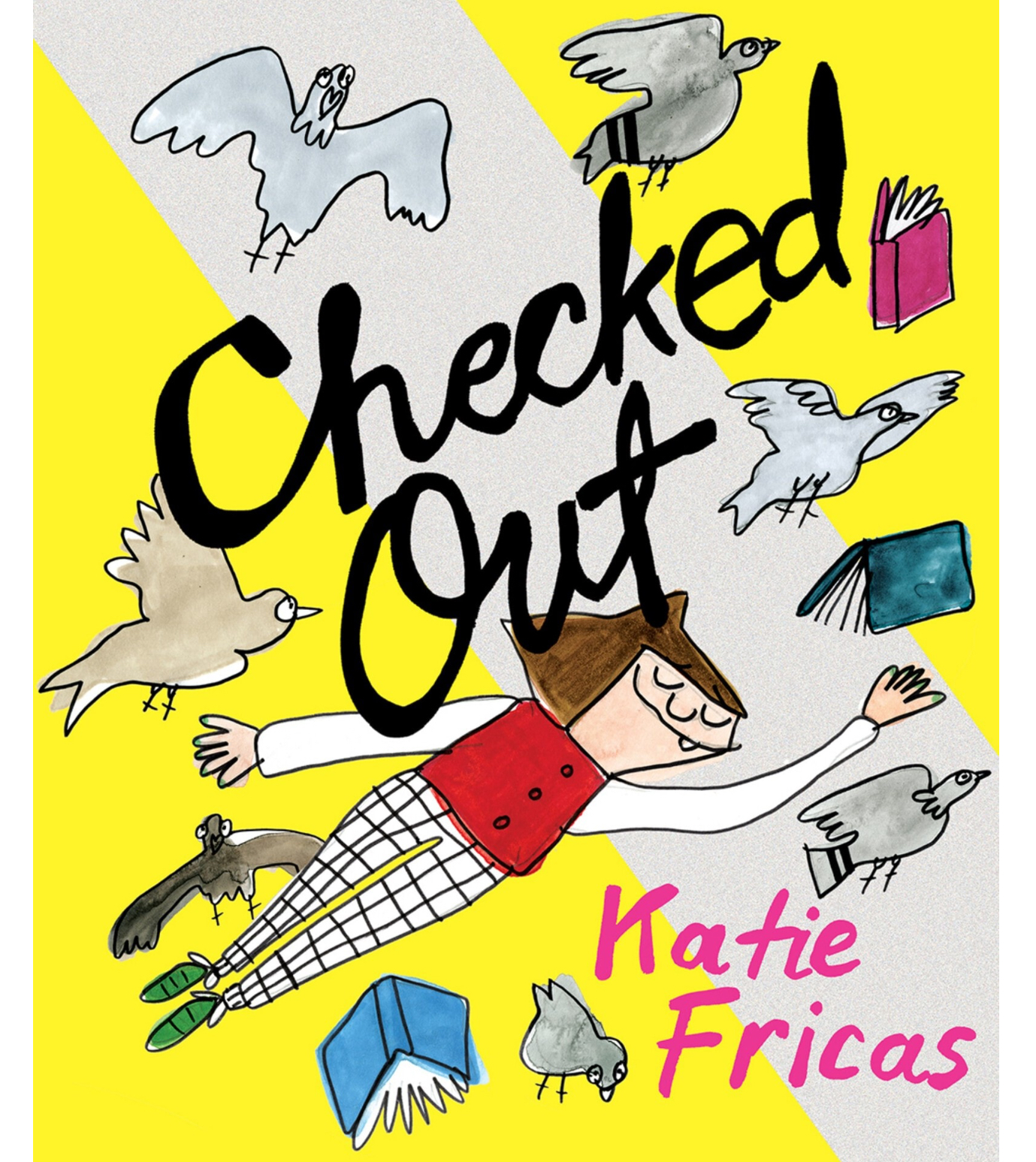 Checked Out, by Katie Fricas (Drawn & Quarterly).
Checked Out follows a young queer cartoonist and librarian in NYC as she researches an impossible project, navigates a funky workplace, and endures breakups and loneliness. Its 350 pages blow by like a bullet train, funny and fearless, in a sloppy-looking, ostensibly deskilled style that’s actually quite skillful and evocative (comparisons: early Groening? Allie Brosh?). The book’s offhand manner belies its pinpoint observations and droll self-awareness. I read most of it standing up, in one long, flow-state session. It’s that kind of trip. Smart as hell, and touching, with an ending that makes failure (by standard measures) look like victory.
Life Drawing, by Jaime Hernandez (Fantagraphics).
This latest collection from Xaime compiles comics that were already great as a serial (in Love & Rockets). I enjoy re-reading them in one go. Here, two of Xaime’s signature characters, middle-aged Maggie and younger Tonta, are on a collision course, in humorous vignettes that bring out their foibles, vulnerabilities, and assumptions (while also eavesdropping on many other believable characters: the usual miraculous repertory cast). Xaime has a talent for reintroducing characters you think you know from unexpected angles, and he does that here, oh so slyly. The results are droll, charming, and moving – and, of course, cartooned to perfection.
Mansect, by Shinichi Koga (Smudge/Living the Line). Translated by Ryan Holmberg.
Social outliers literally turn into bugs in this round-robin story of contagion, metamorphosis, and, naturally, body horror: an antetype of Junji Ito’s work, or, if you like, Charles Burns’ Black Hole. Childish bodies age and shrivel suddenly; people are swallowed; an infant feeds on its mother. One victim leads to another in a chain, and pseudoscientific rationalizations cannot quell the nauseating unease. Holmberg and Smudge do heroic service here, translating Koga’s creepy mid-Seventies manga into one handsome, icky volume. The grotesque imagery will eat you up from the inside. Oddly, I enjoyed this, and thought about it a lot afterward!
Raised by Ghosts, by Briana Loewinsohn (Fantagraphics).
This delicate, flickering book, a semiautobio reverie, evokes a 1990s girlhood via discreet, emotionally subtle comics, punctuated by revealing passages of diaristic prose (journal entries, notes-to-self) that appear as artifacts or scraps interleaved throughout. Bri’s handwritten notes grant her relief from a broken family and frightfully quiet house (her parents are heard but never seen). Loewinsohn, however, avoids overstatement, preferring muted pathos and poetic bemusement. Just over halfway through, Bri falls into a long dream, a visual tour de force, and the book shifts, ending on a surprising note of affirmation. The story is entirely Bri’s, inward, subdued, and immersive.
Surrounded: America’s First School for Black Girls, 1832, by Wilfrid Lupano and Stéphane Fert (NBM). Translated by Montana Kane.
Surrounded (originally Blanc autour, Dargaud, 2020) recounts the founding, growth, and eventual destruction, but also lingering influence, of Prudence Crandall’s academy for young women of color in Canterbury, Connecticut. Lupano’s scenario mixes scrupulous research with speculative elements, including symbolic characters whose voices amplify radical and feminist perspectives. Fert’s Mary Blair-influenced art is delicate but vigorous, cartoony yet historically anchored. The tale continually underscores the ambient threat of racist violence (sadly fulfilled in the end), yet the telling is discreet and the lead characters irrepressible. Ably translated, with an informative afterword by the Prudence Crandall Museum, this deserves a brighter spotlight.
Land of Mirrors, by María Medem (Drawn & Quarterly). Translated by Aleshia Jensen and Daniela Ortiz.
A lone woman tends a lone flower in a lonely, unpeopled landscape. The flower gives her purpose and pleasure, but anxiety too. Unexpectedly, a stranger befriends her and leads her to a land of sociable if vague people who surround themselves with mirrors. Among them, she feels joy, release, but also distrust. This Spanish fable about aloneness and community is narratively elusive and abstract, yet formally exquisite, built out of delicate linework, intensive patterning, braided symbols, and otherworldly, psychedelic color. The formalism recalls John Hankiewicz, the palette Peter Max, but Medem is unique. I restarted this the moment I finished.
Tongues, Vol. 1, by Anders Nilsen (Pantheon).
Tongues modernizes the Prometheus myth on a grand scale, yet in cool, crystalline, and disorienting style. An unnamed prisoner (our Prometheus) has his guts eaten out by raptors, over and over; gradually, the prisoner and his torturers learn to converse. Meanwhile, a young woman on the run may just kill the king of the gods. Anomic human functionaries (mercenaries, drifters) scurry around in the gods’ orbit; the very cancellation of humanity may be imminent, and the wastes of war are everywhere. Hypnotically designed and colored, Tongues boasts pages the likes of which I’ve never seen. It’s also bracing and prophetic.
A Song for You & I, by K. O’Neill (RH Graphic).
This middle-grade GN is quintessential O’Neill: a pastoral, pseudo-medieval coming-of-age fantasy with anticapitalist, communitarian vibes. Here, a headstrong ranger-in-training (with a flying horse!) makes a bad decision, then must atone by aiding a young shepherd/musician. Each helps the other overcome their shyness and regrets. I didn’t recognize the assigned gender of one of the characters until quite late, but that’s fitting; gendered self-recognition is key. The novel’s quiet treatment of trauma and self-doubt echoes O’Neill’s Tea Dragon series, but with more breathing room for spare, decompressed storytelling (and fetching, Miyazaki-esque art). A lovely dispatch from a great body of work.
Black Arms to Hold You Up, by Ben Passmore (Pantheon).
Satirical and didactic, this graphic novel depicts generations of Black resistance to white racism. Passmore writes with his usual offhand wit but also an aggrieved heart and new tenderness. Protagonist “Ben,” cynical and despairing, gets unstuck in time as his father takes him on a tour of Black history, starting with the betrayal of Reconstruction and coming right up to now. Passmore never ducks complexity; his portrayals of militants and communities are often mocking and sharp. But he’s never cheap. Ben ultimately embraces what he has been dodging, in a finale blending rage, love, and even hope. Epochal, beautiful, brilliant.
King-Cat Comics and Stories No. 84, by John Porcellino (self-published).
John P.’s King-Cat is a pillar of my reading life: a periodic gift that blends love, loss, anecdote, and reflection. His cartooning is beautifully spare and perfectly attuned to what he has to say. Every issue moves me. This latest one is particularly sad, saying goodbye to old friends (human and critter) and to his mom. I felt sad for John while reading it. Then again, it also made me smile and, once, even laugh out loud. Childhood memories, everyday busyness, Zen parables, an isometric diagram of his own bed (mournful and funny) – once again, it’s a complex, full-hearted treasure.
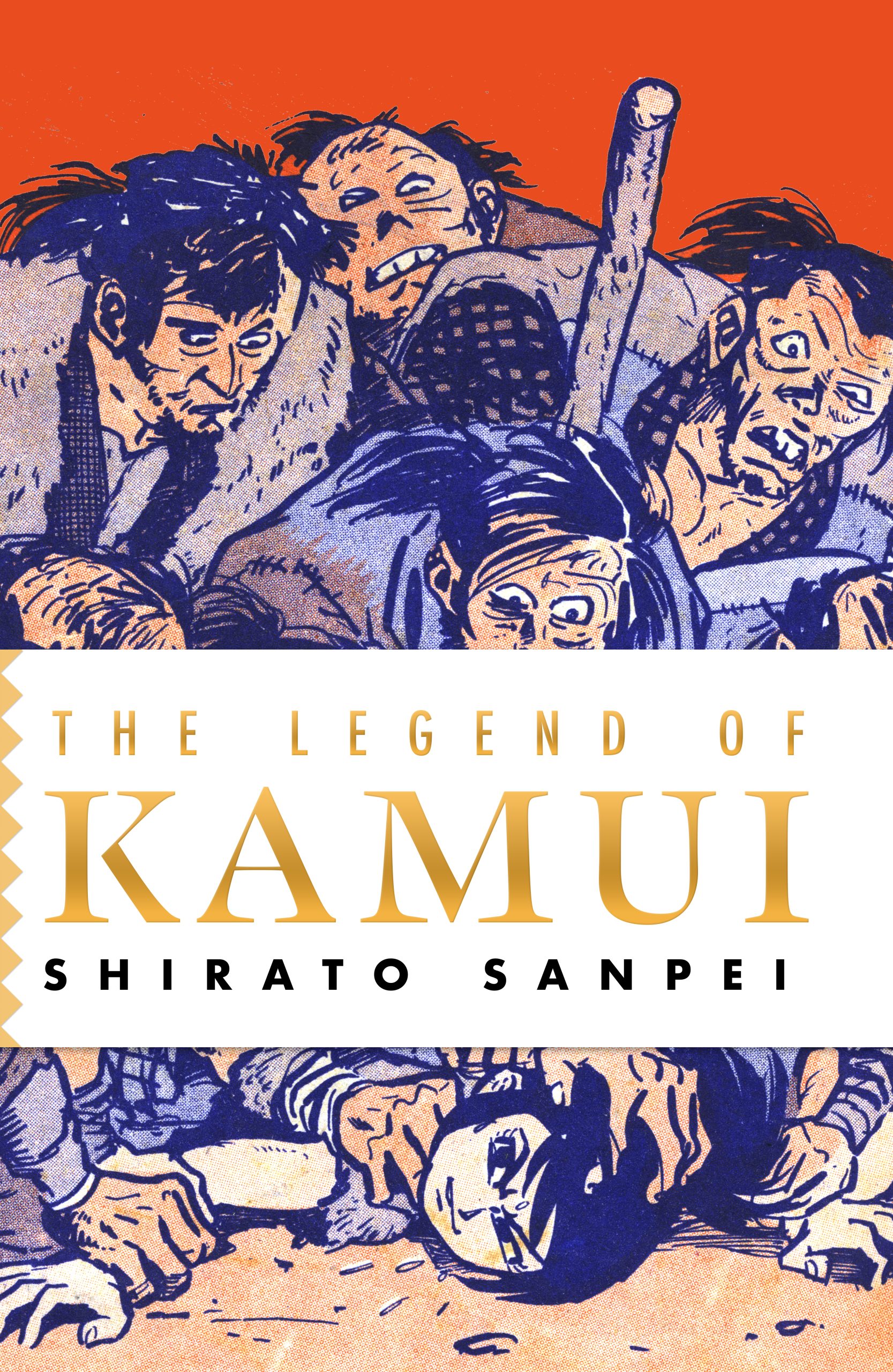 The Legend of Kamui, Vols. 1 and 2, by Sanpei Shirato (Drawn & Quarterly). Translated by Richard Rubinger, Noriko Rubinger, and Alexa Frank.
I first read Shirato in the Viz/Eclipse Kamui floppies of the late 1980s. These impressed me with their historical texture, Marxist critique of class, and stoic brutality. They were bracing. Turns out they were translations of Kamui Gaiden from the 1980s, not the legendary Kamui Den serialized in Garo in the 1960s. This sumptuous new D&Q series adapts (at last!) the Sixties work, with much drawing by Shirato’s assistant, Goseki Kojima. The plot is long and tangled, and the tone, unsurprisingly, downbeat and fierce. Kamui himself is just one player in the sprawling cast. Astringent comics: tough-minded, tragic, but grand.
Ashita No Joe: Fighting for Tomorrow, Vols. 2 and 3, by Asao Takamori and Tetsuya Chiba (Vertical). Translated by Annelise Ogaard.
This classic manga is a troubled story of aspiration and hunger with a melodramatic, utterly committed style. It follows Joe, an indigent young boxer, proud, belligerent, and rash; his mentor Danpei, a washed-up, alcoholic ex-prizefighter reliving past glories through Joe; and Rikiishi, a more clinical boxer on whom Joe fixates as rival and nemesis. Their rivalry starts in a reformatory (this is also a prison story) but ramps up when Riikishi and Joe get out of stir. Joe is often genuinely unlikable, an asshole really, yet I’m compelled to root for his rise. An addictive cocktail of violence and pathos.
Ginseng Roots, by Craig Thompson (Pantheon).
Craig Thompson’s best book-length comic, inspired by his childhood experience working in the ginseng fields of rural Wisconsin. Wildly ambitious and self-contradictory, it’s at once a revisiting (and partial repudiation) of his breakout book Blankets, a study in how agribusiness (in this case ginseng farming) shapes everyday life, and an excuse for globetrotting journalism. Thompson’s unguarded earnestness (practically a badge he wears) belies the rigor and intelligence of this sprawling, uncategorizable book, in which luscious brushwork collides with diagrammatic infographics and Thompson delivers some of the most gorgeous comics pages I’ve seen. I reviewed this for TCJ back in July.
Absolute Wonder Woman #4-14, by Kelly Thompson, Hayden Sherman, Jordie Bellaire, and Becca Carey, et al. (DC).
Tegan O’Neil digs this comic, and so do I. I don’t care about DC’s “Absolute” line, but this series remains their brightest jewel, a badass remix of Wonder Woman that feels more alive and radical than almost any other WW comics since Marston. At first, I thought the pitch (WW as a sorceress raised in Hell) was stupid, but boy I was wrong — as I said last year! The issues with fill-in artists (subbing for Sherman) are less awesome, reminding me of the genre’s strict clockwork and aesthetic patchiness, but they’re still good. My favorite superhero comic of recent years.
The Ephemerata, by Carol Tyler (Fantagraphics).
This study in grief makes for a stunning exhibition of organic, inky drawing — cartooning dug and chiseled from the hard stuff of life. Its beauty underscores its weirdness: starting out as a Bunyanesque allegory about dwelling in “Griefville,” it builds a quirky mythos out of private, hermetic symbols, but then settles into literal autobiography of a sort familiar from Tyler’s past work. As usual, Tyler pours everything she has into the work, every shock, ache, and loss. The results are wayward and bemusing (like three books knotted into one, really) but also staggering in their flinty honesty and wise reflection.
Mushishi Collector’s Edition, Vol. 1, by Yuki Urushibara (Kodansha USA). Translated by Andres Oliver.
There’s a whiff of Kitaro and Black Jack about this weird early-2000s manga that follows the wanderings of a cool, laconic man of mystery. Yet the mood is different: sad, curious, quietly restive. Ginko is an itinerant mushishi: an expert in mushi, strange, protean beings mostly unseen by humans that nonetheless impinge on human hosts, imparting both strange powers and tragic burdens. Are mushi like germs? Are they like ghosts? Ginko, knowledgeable and aloof, serves as a go-between, Kitaro-style, solving (or sometimes failing to solve) problems caused by mushi infestations. Beautiful, eerie, and full of confounding dilemmas and haunted characters.
Clementine Book 3, by Tillie Walden
Walden has invested so much in this Walking Dead trilogy that, for me, its franchise origins fall away. The whole series is good, but the last book stuns. Here Clementine, her partner, and friends settle into a semi-utopian refuge, which Walden then complicates in a most disconcerting, anti-utopian way. Two conflicting leaders, both powerful women, clash over how the community should be protected. Meanwhile, Clementine is blindsided by grief. The role of violence in securing utopia is one of the reigning themes; what might happen to you when you trade human vulnerability for armored strength is another. Soulful and haunting.
Comic Arts Los Angeles, Dec. 13-14, 2025.
Not a comic, a festival. CALA has become the pivot in my comics year (which, I now see, runs from roughly May to May). When CALA was on hiatus (2020-2023), I missed it. This year was as wonderful as last: I got to see friends and favorite artists, host a panel, and learn about art and artists new to me. Many of my comics friends feel as if there’s a gushing firehose of mediocrity these days, and little of interest, but I disagree; seeking out new comics continues to be a joy. CALA amplifies that joy. Thanks, organizers and volunteers!
***
Tim Hayes
LAAB #3 by Ronald Wimberly, et. al. (Beehive Books)
Apparently the final issue of Ronald Wimberly's political-cultural broadsheet-broadside, this time putting comics visuals from Tradd Moore and Celine Loup and others next to long essays in tiny print you read by wrestling the publication upside down. Comics as street literature, in a delivery vehicle you might fold into a paper airplane and throw at your local reactionary.
American Reaper Book One by Pat Mills, Clint Langley, Fay Dalton (Millsverse Comics)
An old Judge Dredd Megazine series collected and self-published by co-creator Pat Mills. There's some art by the unjustly ignored Fay Dalton, but the strip is dominated — indeed detonated — by the work of Clint Langley, whose pages of digitally activated fumetti images feel like putting your head inside a fan oven and enjoying it. On top of revisiting how Langley was augmenting comics with software in 2011, the book now forces you to reckon with what someone possessing one inch of Langley's gifts might type into ChatGPT hoping to reverse up the same road and get to this destination the easy way.
Essential Judge Anderson: Childhood's End by Alan Grant, Kev Walker et al (Rebellion)
Rebellion's eternal reprinting program presents (again) Psi-Judge Cassandra Anderson in 1993's Childhood's End, Alan Grant and Kev Walker's Chariots of the Gods on Mars number. For my money this is a bigger artistic deal than the near-contemporary stories drawn by Arthur Ranson which have become the anointed classics. Writer Grant's solo custody of Cassandra Anderson for 25 years was 2000 AD's greatest achievement that no one talks about, plotting a coherent course for her as a telepathic seeker who could still execute people in terrible ways without hesitation. This Essential volume adds Grant's final Anderson stories from much, much later, which are short and unhappy and repetitive and depressingly shallow, because by then the editor had clearly told him to knock all that off.
Kirby at Marvel 1956-1963 by Michael Hill (self-published)
Doctor Strange: A Decade of Dark Magic by Stuart Moore (Marvel/Bloomsbury)
One of these is a self-published painstaking appraisal of Jack Kirby's grand achievements in the run-up to and aftermath of Fantastic Four #1, collated from primary and secondary sources plus modern community discussion and much peering at the actual art with a microscope, an extension of Michael Hill's According to Kirby blog. The absolute flaying of Stan Lee along the way reads Lee's creative shortcomings as personality flaws, springboards from there to his sexism and racism, and parallels the dogged persistence of Stan Lee exceptionalism with the number of people prepared to vote for Donald Trump.
The other book reviews the first ten years of Doctor Strange comics from a fan-turned-pro's perspective, and indeed from Marvel's perspective since it published this via Bloomsbury. Being Ditko-adjacent compels Stuart Moore to mention the artist's "eccentric sociopolitical views," but that's blistering criticism compared with the glad hand offered to Stan Lee. A concluding anecdote from SDCC circa 2015 reports no shadow of The Man's late-life hassles as he twinkles in full magic grandpa mode, "a thoughtful man taking decades of criticism to heart." As with that bonkers official Stan Lee documentary, whether this is true or not is secondary to its role in brand management.
The Jigsaw Review #1 edited by Mal Earl (Gweni Press)
The start of an intended archival anthology series reprinting material from the UK's 1980s and 1990s small-press and indie circuits, which is almost terra incognita compared to the well-mapped things happening in North America at the same time.
The Complete Crepax Volume #9 by Guido Crepax (Fantagraphics)
If things had run to the original plan, which was ten annual volumes from February 2016, then 2025 would have brought the final one and the conclusion of the whole vast Crepax reprint project. Some bumps in the road have led to this year actually bringing book #9 of 12 instead. It would be fair to say the series has had its longueurs. But Volume #9 storms out of the gate, every strip crackling with sensual static. The four stories about Crepax's Anita character work as erotica and 1970s social commentary and horror fiction and the indulgences of a man drawing naked ladies, all caught in the turbulence of Crepax's artwork, trying to suggest what the sexy feels like not just looks like. How exactly does Crepax wring such demonic erotic mood from a little portable TV before a horny Anita starts copulating with it? How does he conjure Anita's self-destructing climax blasting the machine to bits, a smoking ruin between her thighs? You could stare at the pages for an hour and still not be on top of things.
Mandala by Andy Barron (The Mansion Press)
Love and death and resurrection in silent black-comedy melodrama and blazing Risograph-effect colors. On first read I thought the three main characters were Adam, Eve and Satan; but they might be id, ego and superego. Barron knows comics: the punch ups are all Kirby poses and power, and having ascended to orbit prior to a ballistic descent like Superman, the male-coded Um surveys a bulbous Kirby kosmos, asteroid belts and all.
***
Bart Hulley
I've been a die hard fan of the work of scénariste Alain Ayroles ever since I moved to France. This year, amongst other things, he released the final volume of the 'first cycle' of the intriguing L'Ombre des Lumières series, a transatlantic homage to Choderlos de Laclos' famous novel Les Liaisons dangereuses (and who could forget the film staring John Malkovich, Glenn Close and Michelle Pfeiffer!) The writing, albeit in French, is magnifique and the artwork solidly supplied by Richard Guérineau who gives as much life to bleak colonial North America as he does the manicured lawns of 18th Century France. Ayroles uses extracts from letters written by the protagonists as a narrative device throughout, keeping you guessing as to who wrote what, to whom, and why at each instance. I shall not reveal the denouement — because I haven't actually finished reading it yet!
***
Christopher Irving
One book that really stood out for me this year was Absolute Martian Manhunter by Deniz Camp and Javier Rodriguez, which blends mind-bending trippiness with a totally bonkers and heartfelt alternate version of DC's green Superman cipher. The best of the Absolute line from last year (Batman, Superman, Wonder Woman) subverted expectations of the characters while still maintaining their defining core elements, while Camp's cerebral script and Rodriguez's experimental layouts and visual storytelling take it further to flip the script on the genre itself.
If DC expands this for another six issues I'm there for them.
***
John Kelly
Like every year, I read a lot of things in 2025. Almost all of them were quite old. In no particular order, here are a few things that came out this past year that provided some relief from the chaos of the real world …
Crickets #9, Sammy Harkham. An absolutely stunning cover and, as always, gorgeous art and compelling storytelling. My copy came with the incredibly cool bonus Hayseed zine, which is filled with sketches, notes, etc. Sammy is consistently one of the very best.
Precious Rubbish, Kayla E. (Fantagraphics). All of the praise and attention that has been directed toward this gut-wrenching masterpiece is well deserved. I was lucky enough to read this brutal memoir during the process of its creation and knew it would be something special. Here’s an interview Mark Newgarden and I did with Kayla about the book for The Comics Journal.
Crumb: A Cartoonist’s Life, Dan Nadel (Scribner). An utterly fascinating read that sets the bar high for biographies about living cartoonists, and controversial figures, generally. If you know very little about Crumb, it’s a great book. If you think you know everything — or at least all you need to know — about him, it’s an ever better book because you will learn much more. Crumb is certainly not for everyone, but for those seeking to learn just how he came to be the person he is, it’s all here. Here is an interview I did with the author about the process of making the book.
Mineshaft #46. Another great issue of my favorite magazine. This one has amazing front and back covers by Drew Friedman, an interview (about death) with Robert Crumb, and many pages of great work by Noah Van Sciver, Simone Baumann, Christoph Mueller, Sammy Harkham, Aaron Horkey, David Collier, Robert Armstrong, Glenn Head, James Collier, Tony O'Neill, Jose Arroyo, William Crook Jr., Max Clotfelter, Billy Childish, and Joost Halbertsma.
The Art of Lale Westvind. I have many of these Banzai Collection monthly anthologies and love them all. This one presents many pages of Lale’s wonderful art and has a very cool poster included as well. Banzai is really doing a great job curating important work by amazing artists that serve as great introductions to historical bodies of work.
Smoke Signal 44 - Gary Panter Solo Issue. A 32-page tabloid full of Gary Panter’s art. If you were lucky enough to get your hands on one of these, hold onto it. It’s a thing of beauty.
Do Admit: The Mitford Sisters and Me, Mimi Pond (Drawn & Quarterly). A complex story involving historic sisters (who I had never heard of before the book arrived), this is a wonder–Every page is something to stare at for quite a while. As Tammi Morton-Kelly wrote in The Comics Journal, Mimi “delivers a luminous portrait of the Mitford sisters, a family whose charm and contradictions have garnered a rabid cult following.” Read the full interview here.
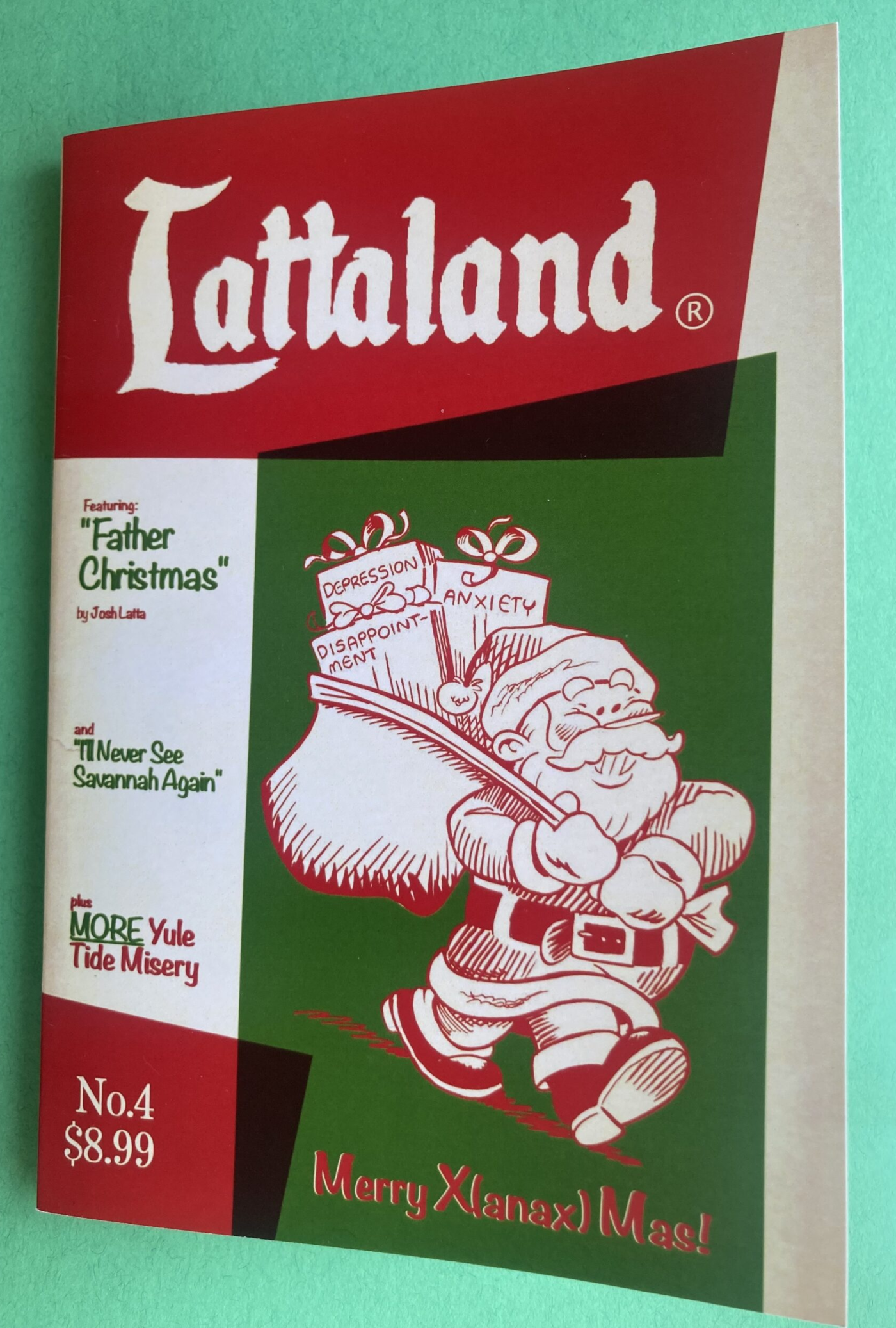
Lattaland #4, Josh Latta. I really Josh's series of nasty gag panel comics, but this one contains something different. A personal story about his dying father set in a nursing home during the holidays.
Leo Derek – In the Heart of Danger, James Stewart & Joshua Stewart. This actually came out … a while ago. It’s a 40-year-old treasure that has been unearthed. Definitely worth gawking at. It’s one of the many fantastic offerings from the new indy comics distributor Power Pulp.
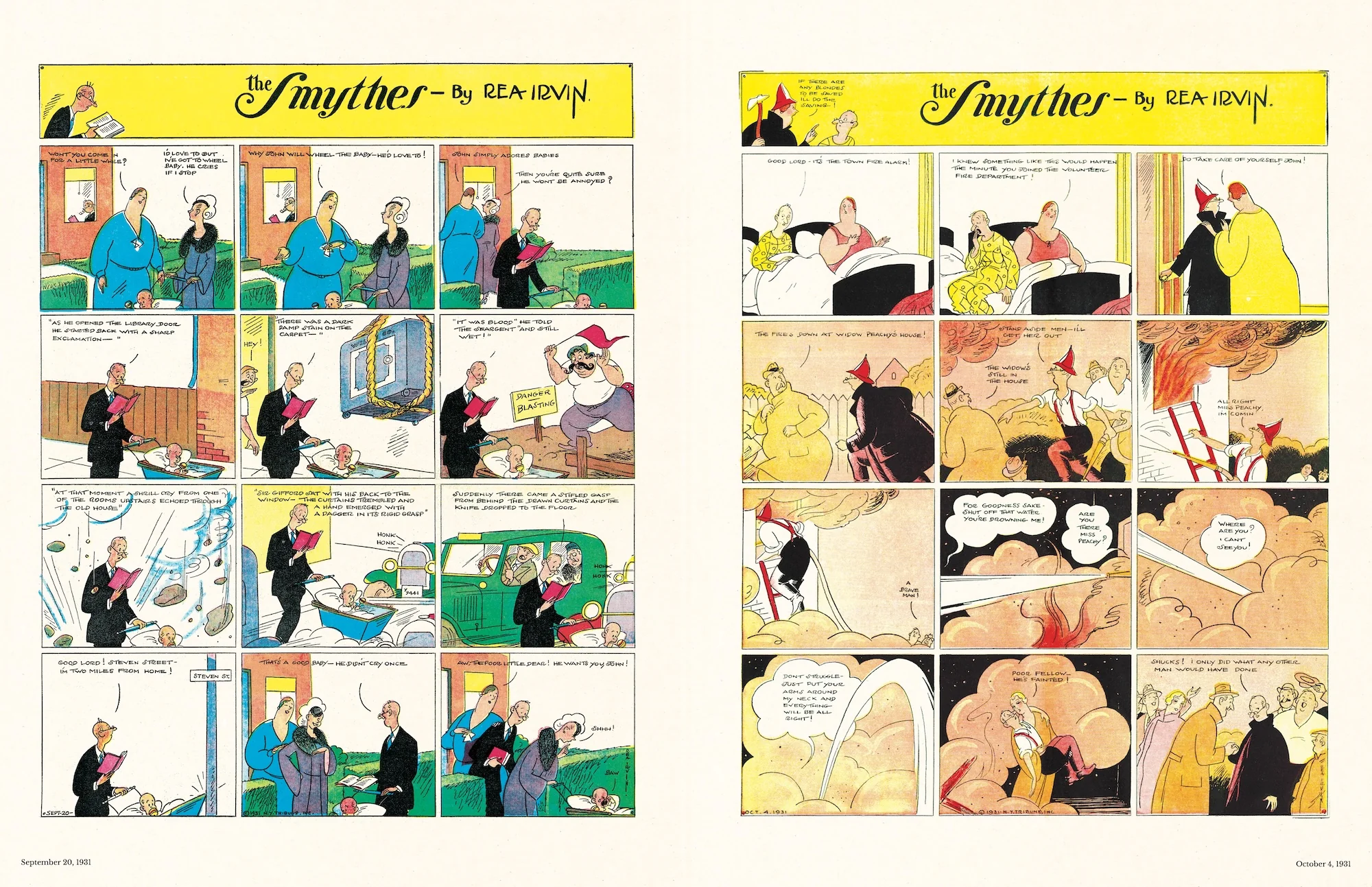
The Smythes, Rea Irvin, edited and with an introduction by R. Kikuo Johnson and Dash Shaw, afterword by Caitlin McGurk (New York Review Books). Like many, I would imagine, the only thing I knew about Irvin’s The Smythes were the couple of pages in Bill Blackbeard’s Smithsonian Collection of Newspaper Comics (1977). Johnson and Shaw collect more than 160 of Irvin’s gorgeous pages that show off his wit and subtle humor. ou can read Tammi's analysis of the book for The Comics Journal here.
Scorpio Venus Rising #4, Corinne Halbert. Every page is great. Read a TCJ interview with the very talented Corinne here.
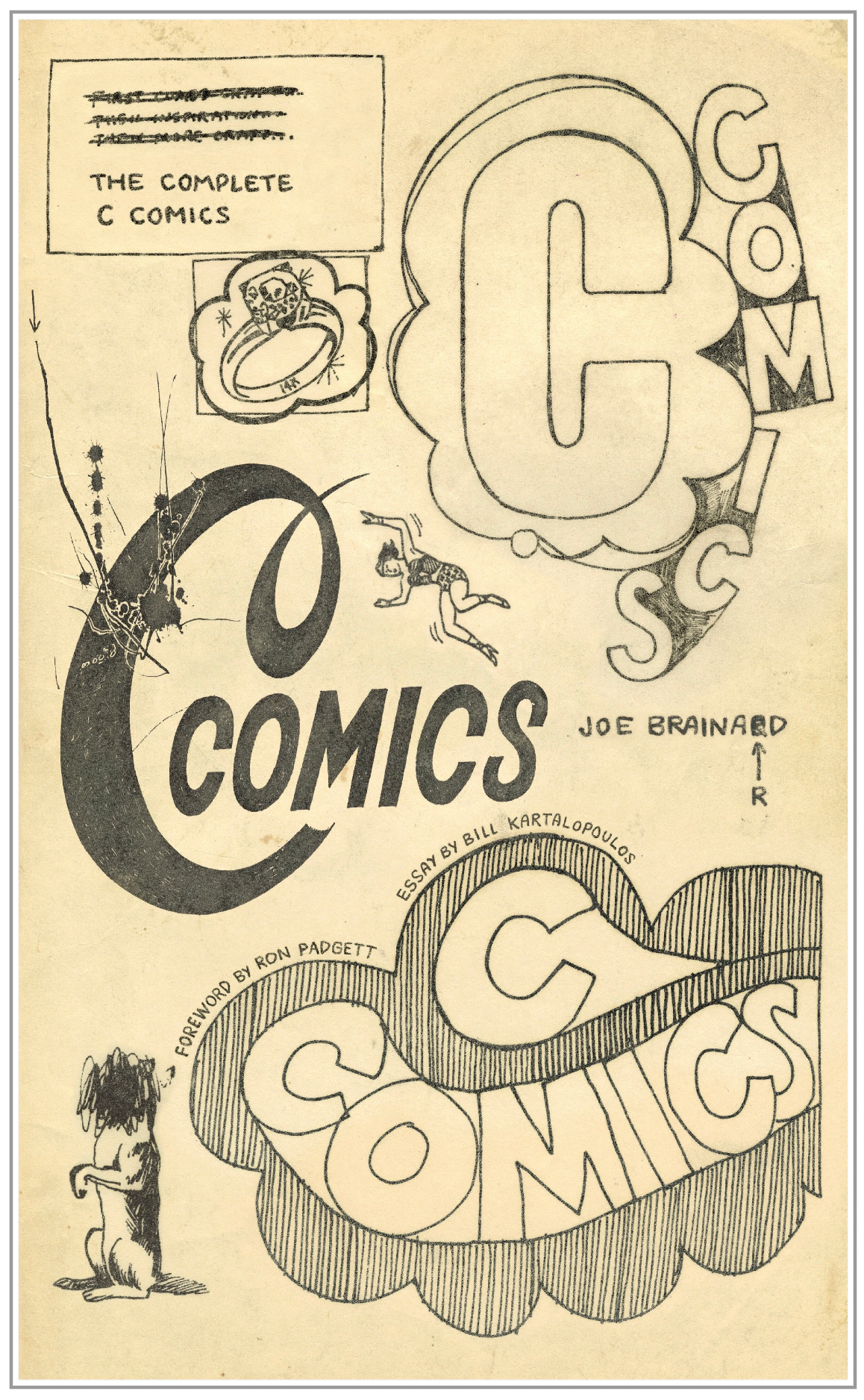
The Complete C Comics, Joe Brainard, with a foreword by Ron Padgett and essay by Bill Kartalopoulos (New York Review Books). People can finally see for themselves the two volumes of obscure art comics that Brainard — and a host of collaborators — cooked up and self-published in the 1960s.
HYPE*PUPjr, Frank Santoro. Frank's latest issue of his zine, which served as a recap of his inaugural Destination Dealers Con held here in Pittsburgh in November, took almost two years to come out. And this may be it for Frank's monthly color broadsheet. I'll miss getting these in the mail if that's true. They remind me of hardcore punk singles from the early '80s somehow. Hopefully all 48 issues will be collected some day.
The Ephemerata, Carol Tyler (Fantagraphics). A beautiful book about a troubling subject, but one that we all must face. Carol spent many years — and hours at the drawing board — charting out her thought about grief to create her most ambitious book yet.
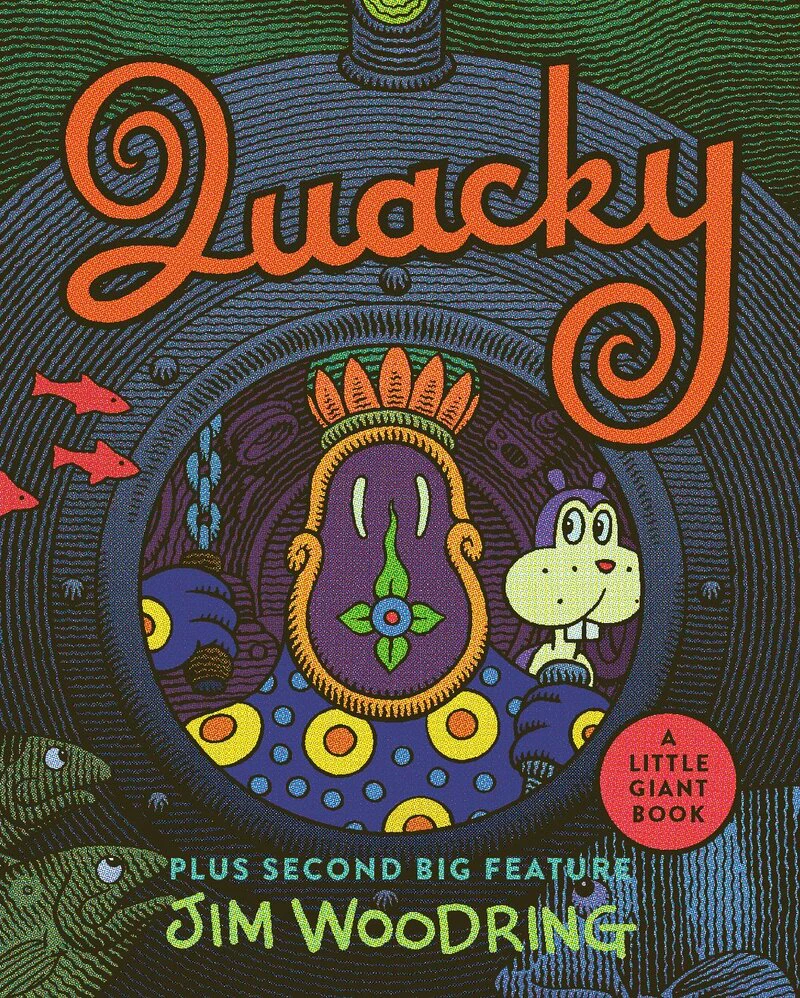
Also, I had the great fortune to get a sneak peek at a few things by some of my favorite artists. I’ve read a bunch of the penciled pages for Kim Deitch’s work-in-progress tentatively titled, Living the Dream, and cannot wait for this one to come out. What I’ve read are autobiographical pages about his breaking into underground comix and they are wonderful. I’ve also read a chunk of Jim Woodring’s mind-blowing take on the style and format of a 1930s Big Little Book, Quacky. It’s nuts in all the best ways and unlike any Frank story you’ve ever read. Jim perfectly captures the awkward narration of those books and gives them his own strange twist.
That’s it for now. Stay safe everyone, and try to stay sane.
***
Hank Kennedy
Absolute Batman and Absolute Martian Manhunter proved the cape-and-tights crowd might still have some life left in them.
Peter Kuper’s Insectopolis explained the importance of nature’s creepy-crawlies.
Mattie Lubchansky avoided the sophomore slump with Simplicity.
Don’t let the colors and layouts fool you, Kayla E’s Precious Rubbish made for bracing reading.
Patchwork by Kate Evans sewed together the threads of Jane Austen’s life.
Ben Passmore’s Black Arms to Hold You Up: A History of Black Resistance dramatized undertold episodes from American history.
Yazan Al-Saadi’s Lebanon is Burning and Other Dispatches had relevance in this year of ceasefires where the firing never ceased.
Finally, Taha Siddiqui and Hubert Maury’s The Dissident Club combined combing of age story and political thriller.
***
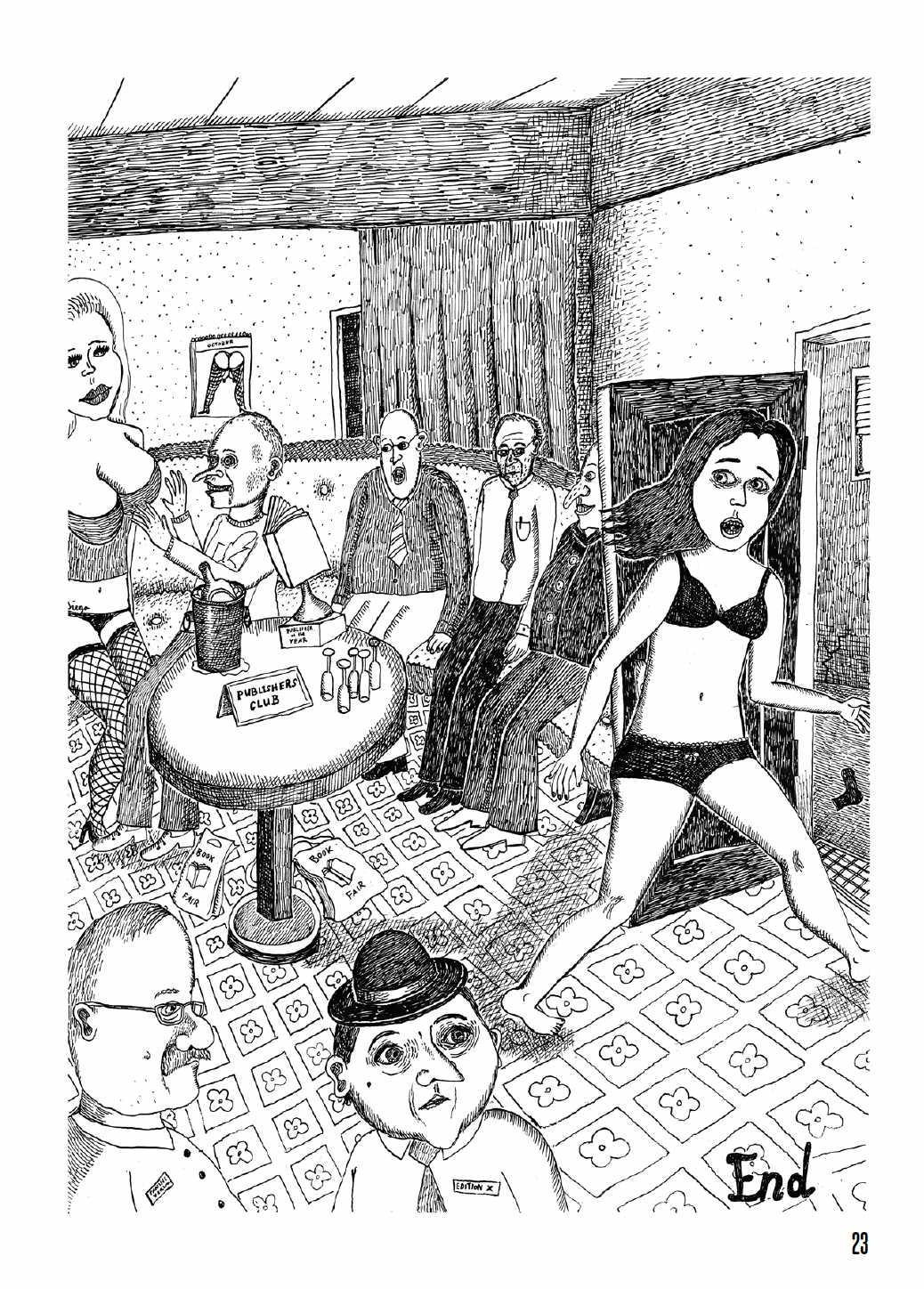 “The New Carreer” by Simone F. Baumann, from Hairspray Magazine.
Christina Lee
2025 was strange: I witnessed a cultural reset that felt like a complete assault on my senses. Rhian Teasdale, the lead singer of Wet Leg, wearing a shirt that says, “Men are so back” is a good visual summary of this past year, and I’ve been coping by simultaneously gorging on junk food (rom-coms, reality TV) and healthy meals (books, good comics). As the gender divide gets deeper and discourse becomes rife with binary thinking, I found comfort in work that wasn’t afraid of ambiguity; that encouraged conversation and discourse, especially from a unique point-of-view. Here were some of the bright spots during an otherwise confusing and weird year:
Do Admit! The Mitford Sisters and Me by Mimi Pond (Drawn & Quarterly): A 440-page historical graphic biography and memoir about the Mitfords, a noble British family of six eccentric sisters who were highly active in politics during the 20th century. Pond worked on this book for six years and it shows: Do Admit! is a marvel of research, writing, and drawing. Pond’s expert hand produces a light and breezy line, while dimensions and details are rendered in a Prussian Blue ink wash: her drawings are just as charming as they are immersive. While reading the book, I realized it somewhat disturbingly functions as a mirror to the present day as it recounts the history of fascism through the female perspective. As it becomes weirder and weirder to be a woman each and every day, I take solace in Decca (Jessica) Mitford’s story, who became a prominent muckraker and civil rights activist despite her gender and family’s conservative politics, making me believe that if she could do it, maybe we all aren’t so doomed after all.
The Ephemerata by Carol Tyler (Fantagraphics): The first Carol Tyler comic I read was “Uncovered Property” (1987) from Crumb’s Weirdo #20, in which she weaves in a subtle statement about gender dynamics through a funny childhood anecdote. Tyler has continued to explore her family in her decades-long cartooning career, culminating in The Ephemerata, the first installment of a two-part graphic memoir detailing a decade in which she experienced many deaths in quick succession. The book is breathtakingly rendered with deliberate crosshatching that reminds me of Tove Jansson; I have never seen anyone draw trees like Tyler can. Though the journey through Griefville can be painful (I did cry while reading this book), The Ephemerata has a relatable candor that will make readers who have also experienced significant loss feel seen.
Miss Ruki by Fumiko Takano, translated by Alexa Frank (New York Review of Comics): This is a complete collection of Fumiko Takano’s “Miss Ruki” comics, which appeared monthly in Japanese woman’s magazine, Hanako, from 1988-1992. These full-color, 2-page comics are about Ruki and Ecchan, two women exploring their newfound freedom as working professionals in Japan’s 1980s economic bubble. The book serves as a happy antidote to my overstimulated eyes, and it is no surprise that Otomo and Matsumoto were huge fans. Miss Ruki boasts clear lines, simple pastel colored palettes, and minimal yet well-balanced backgrounds. Most radically, Takano uses her comic as a vehicle for critique of this rapidly changing time in Japan: I think of the comic from April 9, 1992, where Ecchan calls Ruki for help with her brand new rice cooker. Ecchan uses her cordless phone to contact Ruki with ease, but Ruki, still using a corded phone, humorously runs back and forth from her rice cooker to her phone to give Ecchan the instructions; making me think about how when technology makes our lives easier, faster, and more efficient, we begin to revere the minor inconveniences of yesterday.
Kus #54 ‘It’s All Good!!!’, anthology edited by Caroline Cash (Kus): Cash’s editorial voice in this full-color 160-page pocket-sized anthology is best captured through her contribution to the book, “Drunk Girls”, an autobiographical comic about an off-kilter encounter in the dive bar bathroom. Featuring 20 international cartoonists, Kus #54’s comics observe the quotidian through an absurd Larry David-esque, yet emotionally intelligent, lens. I loved the comics by Tara Booth, Anand, Jurijs Tatarkins, and Leo Fox. My favorites include: “Magic Novice” by Emma Hunsinger, a story that uses magical realism to explore the nature of love; “Double Trouble” by Vivianna Maria Stanislavska, a comedic yet existential exploration of work, life, and death; and “Jessica” by Margot Sounack, who defines the “Jessica poster effect” during a drunken party that is beautifully rendered in pencil and marker. Akin to her own visual voice, Cash has curated a simultaneously thought-provoking and gut-busting reading experience in Kus #54.
Hairspray Magazine #1, anthology edited by Karla Paloma (Self-published): Printed in black and white and featuring 10 international contributors, Hairspray Magazine features comics centered on the female experience, especially sex— Paloma’s editorial vision is simultaneously grotesque and accessible, making the anthology feel like a worthy companion to Chevli and Farmer’s Tits & Clits. My personal favorites from this anthology include “Me and my Bouffant” by Martina Sarritzu, “The Terrible Story of my Hair” by Noemie Barsolle, and perhaps the funniest one of the book, “The New Carreer” by Simone F. Baumann, whose visual style reminds me of the late Aline Kominsky-Crumb’s — a 9-pager about a woman leaving her publishing career to become a sex worker. Bold, defiant, and capturing the spirit of underground comix, Hairspray Magazine won “Best Alternative Comic” at the 2025 Angouleme Comics Festival, and I’m looking forward to the next issue debuting January 2026.
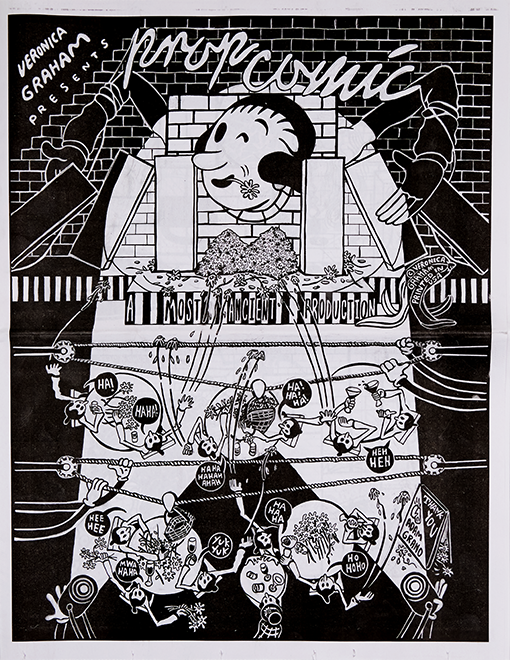 Prop Comic by Veronica Graham (Most Ancient): A feminist reimagining of Popeye in the form of a broadsheet 20-page minicomic: Instead of Popeye, what if Olive Oyl was the main character? Through dizzyingly creative page layouts that brings to mind the idiosyncratic compositions of Chris Ware, Graham presents Olive as an avatar to explore our modern day anxieties about digital communication, the economy, and relationships. Artfully poetic, I always discover something new when I re-read this comic.
Szarolatka by Jas Hice (Frog Farm): An 80-page risograph minicomic about a young mother whose life becomes upended by a strange neighbor. Beautifully printed in Federal Blue and Red, Hice’s visual language is simultaneously playful and somber; making her depiction of female-specific experiences, such as objectification and motherhood, refreshingly accessible and a pleasure to read. I haven’t seen anyone depict female interiority with such subtle mastery as Hice does.
Big Gamble Rainbow Highway by Connie Myers (Cram Books): A risograph minicomic depicting a surreal, psychedelics-fueled horror story about friendship and creative passion. Myers’s storytelling is poetic yet sincere, and her art exhibits a virtuosic talent for inking. There is an amazingly jaw-dropping spread near the end that I think about every now and then. I hope Myers makes comics forever.
Wedding Juice, Issue 3 by Sanika Phawde (Self-published): I was lucky to get a sneak peek of the third installment of this Ignatz award-winning series at Gutter, a Brooklyn-based comic reading show hosted by Clar Angkasa and Mikey Maiden, back in June 2025. Wedding Juice is an autobiographical series that depicts the days before an Indian-American wedding. In this issue, Phawde uses bold colors and unique camera angles to show the hijinks that ensue when figuring out “wedding underwear” and “wedding priest” (you will have to read it to find out more!). Wedding Juice is distinct in its charming, empathetic, and humorous approach in depicting the cross-cultural experience– I’m excited for Issue 4.
Tarwar by Ilan Manouach (Nero Editions): I stumbled upon this book at Printed Matter and was immediately drawn to its formal qualities: a black cover with its title in rainbow holographic letters, fuschia endpapers, and interior pages full of black panels that transform speech bubbles, onomatopoeias, and motion lines into main characters. Tarwar is a collection of black panels collected from millions of digitized comics across various countries and genres. Captivated by its aesthetic appeal, I purchased it immediately. Upon further research, I learned about Manouach’s conceptual approach to comics, which makes him no stranger to scrutiny, including of course, here at TCJ. Controversy aside (I’d rather eat glass than talk about AI Art), Tarwar is a beautiful book that fits perfectly in Manouach’s catalog as it asks more questions than it answers. Is it poetry? Is it theft? Is it art? Is it even … a comic?? For me, the only thing I can answer is that Manouach’s work scratches that navel-gazing itch that art school unfortunately trained into me.
***
Chris Mautner
No time for explanations or exclamatory descriptions! Too many holiday things to do! Here, in no particular order, are 10 of my favorite comics this year:
- My Name Is Shingo Vol. 4-5 by Kazuo Umezz (Viz)
- Milk White Steed by Michael Kennedy (Drawn and Quarterly)
- Absolute Wonder Woman #4-14 by Kelly Thompson and Hayden Sherman, et. al. (DC Comics)
- Terminal Exposure by Michael McMillan
- Crickets #9 by Sammy Harkham (self-published)
- Red Night by Hanawa Kazuichi
- Precious Rubbish by Kayla E.
- Big Gamble Rainbow Highway by Connie Myers
- Alive Outside, edited by Cullen Beckhorn and Marc Bell
- Beautiful Monster by Suehiro Mauro
Honorable mention: Absolute Martian Manhunter, Miss Ruki, The Smythes, The Once and Future Riot, Roy #1, Holy Lacrimony
***
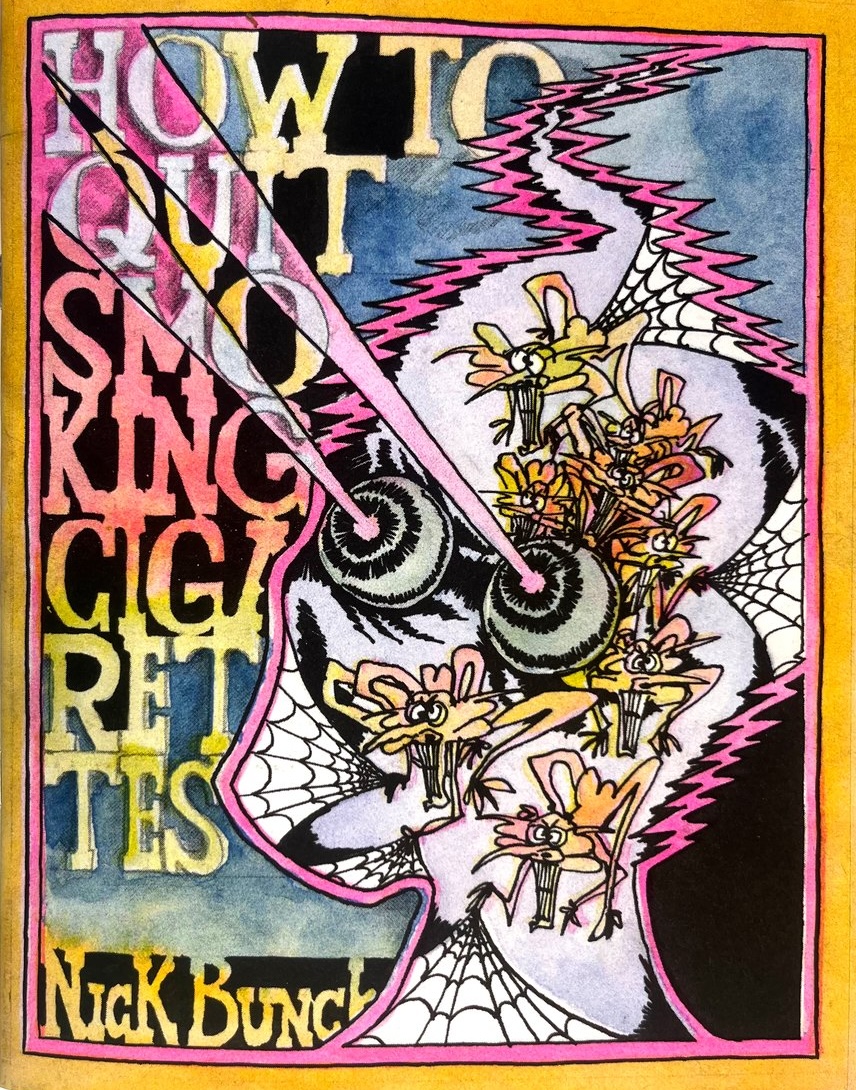
Sean McCarthy
I’ll start with Valley Valley/Idella Dell by Audra Stang, since it deals directly with the spiritual rot of resentment and self-loathing predictably bred by popularity contests, artistic or otherwise. Evocative, discontinuous one-page vignettes cluster around a rivalry between the two title characters; Valley (at one point shown ice skating) is the Tonya Harding to Idella’s Nancy Kerrigan. Stang’s cartooning is pared down and punchy, served well here by each page having its own rich two-color Riso palette, courtesy a knockout print job by Frog Farm head honcho Alexander Laird. The story is littered with screens, mirror images, and projections of both the electronic and psychological variety, while the zine itself is a material argument in favor of printing and binding.
I first became aware of Suerynn Lee at a panel of New Yorker cartoonists at the Art Students League early last year. The organizers ran a slideshow of the participants’ cartoons on a screen overhead while the panelists talked, and Lee’s had a depth and bite the others seemed to lack. Later Lee revealed that she alone among the panelists started making each cartoon by drawing rather than writing. Now, I think Chris Ware was onto something when he said that “allowing one’s drawings to suggest the direction of a story is comics’ single greatest formal advantage,” and by all appearances Lee makes full use of that advantage. The drawings in her zine Two Snakes (published by Christina Lee’s Alright Editions) are gorgeous — sinuous brush lines and atmospheric washes, translated beautifully into stochastic screens of melancholy ultramarine blue. A haunting fable about intimacy, art, and the ways we periodically outgrow ourselves and each other, it makes me hope that Lee keeps making comics like this in addition to single-panel cartoons.
I’m sure Kayla E.’s Precious Rubbish will — and certainly deserves to — appear on many of these lists, but I’m going to make a case for I’ve Always Known You!, a Riso zine printed by Travis Head at Virginia Tech. Where Kayla E.’s other comics get a lot of mileage out of the tension between the horrors of the story and the airtight slickness of the drawing and design, I enjoy the way the printing here brings a soft, slightly grubby touch to the presentation. Given her many allusions to classic kids comics, it’s a thrill to see some authentic misregistration, and at a certain level I think a story like this — characteristically concerned with abject abuse and neglect, as well as almost unfathomable pain and the miraculous possibility of its ultimate transcendence — should leave the reader’s hands a little dirty.
I’ve already written about how much I love Gary Panter’s issue of Smoke Signal from this year, but I’d also like to shine a light on the very next issue by Tara Booth. While many cartoonists have broken out a paint box now and again, I can’t think of any whose work engages the language of painting — not only color but touch, viscosity, transparency, etc. — in the service of cartooning more successfully than Booth’s does. In this way her forms fully embody her primary theme of the tragicomic indignities of hungry, sweaty corporeality. Like Kayla E., Booth has an ambitious hardcover book out that should find its way onto many best-of lists, but for me the broadsheet format of Smoke Signal provides a more generous canvas for her discomfiting, hilarious, and often strikingly beautiful work.
Nick Bunch’s How to Quit Smoking Cigarettes (Cram Books) is a sublimely cynical and enjoyable addiction/recovery memoir. Bunch, like a lot of younger cartoonists, seems to have learned to draw from watching The Point! on YouTube while eating fistfuls of brown acid and caffeine gum — and yes, I’m saying that like it’s a good thing. How to Quit Smoking Cigarettes is manic, breathless, claustrophobic, and compulsively readable. There's a grotesquely funny scene where Bunch’s lymphatic system is wrenched free of his body and subsequently holds a publishing meeting that’s worthy of Burroughs.
I had a blast reviewing Mansect for TCJ.com, and two subsequent Smudge titles — Face Meat and especially My Gorilla Family— are also favorites from this year: glorious slabs of vintage Japanese grand-guignol weirdness brought Stateside with tender loving care by translator Ryan Holmberg and publisher/designer Sean Michael Robinson.
And finally, the belated appearance of a U.S. collection of Quino’s Mafalda (Elsewhere Editions) — arguably the most important Latin American comic strip in history — is a major event, despite the nearly unforgivable lack of a contextualizing essay or even the years in which the strips were originally published. Speaking of context: if you want to be chilled to the bone, read it while keeping in mind Quino’s answer to a reporter’s question of what Maflada would have been like as a grownup: “Mafalda never would have reached adulthood. She would be among Argentina’s thirty thousand disappeared.”
***
Tate McFadden
From the World of Capes
Runaways by Rainbow Rowell, Elena Casagrande, and Roberta Igrata
I have a strange and secret soft spot for Marvel’s Runaways, a book which definitely belongs under the "capes" label, but just barely. When the team was first created by Brian K. Vaughan and Adrian Alphona in 2003, the series was hailed as one of the most fascinating titles from Marvel at the time. The team had a wonderful mix of X-Men melodrama, Fantastic Four sci-fi concepts, and a Buffy-esque sense of the teenager. Second only to Vaughan, Runaways is defined by the writing of Rainbow Rowell, who has written runs on the series several times at this point, and likely has more Runaways issues under her belt than Vaughan himself. Rowell brings the same vibrancy essential to this run, which started in June 2025. It spawned from the rather uninteresting "One World Under Doom" event which recently ended to a collective yawn and eye roll, but Runaways exists largely apart from the greater Marvel universe. At its heart the run is a fun, jaunty character piece full of angsty teen witches, psychic velociraptors from the future, and existentialist Doombots. The series, which is coming out in trade in February 2026, is well worth picking up from your local comic shop.
New Gods by Ram V and Evan Cagle
DC’s New Gods is one of those rare superhero comics that were so incredibly ambitious, strange, and masterful when they were first created by Jack Kirby, that it’s hard to imagine topping its original run ever again. Ram V and Evan Cagle might just have done it. New Gods is one of the best monthly comics to be hitting the shelves of your comic shop. Full. Freaking. Stop. V nails the grand, sweeping tone that makes DC comics so compelling. Paired with Cagle’s intricate, jaw-droppingly beautiful art along with hall-of-famer guest artists such as Travis Moore and Filipe Andrade, the tales of Kirby’s Fourth World come to life once more. If you’re looking for a carbon copy of Kirby’s Fourth World saga, you’re not necessarily going to find it, but many of the really important parts of Kirby’s story are all there. V’s story is all about the grand forces of war and peace, beauty and ugliness sweeping powerful beings up in their path. I’ve always felt that Kirby’s work on the Fourth World contained in it a lot of the sadness of a man who had seen the awful realities of war and lived to tell its gutted tale. That melancholia, that sense of grief for a reality mired in conflict is all there in V’s New Gods, but also there is hope for peace and love that underscores all of Kirby’s New Gods comics. Ram V’s work is often compared to that of the British invasion, and until new gods his notable capes titles, such as his Detective Comics, have been in conversation with that movement. New Gods however, feels like the exact kind of elaboration on Kirby’s work that the King of Comics would have wanted.
Absolute Martian Manhunter by Deniz Camp, Javier Rodridguez, and Hassan Otsmane-Elhaou
If New Gods is one of the best monthly comics hitting shelves this year, Absolute Martian Manhunter is the best monthly comic of 2025. Combining Deniz Camp’s astounding writing with the auteurship of Javier Rodriguez, Absolute Martian Manhunter recreates its titular character in a way no one but these two wildly talented creators could. Camp, who will appear again later on this list, is one of the best contemporary comic writers working. Absolute Martian Manhunter reimagines one of DC’s strangest and least appreciated Justice Leaguers as a counter-terrorism intelligence agent who begins to be able to visualize, touch, and taste other people’s thoughts and emotions as the world is overcome by a great and terrifying evil: Darkseid. New Gods and Absolute Martian both reimagine Darkseid in ways that put his other modern and contemporary depictions to shame, imagining him as a sublime, unintelligible force of irrational "anti-life." Rodriguez’s art, which blew me away in his Zatanna and Defenders: Beyond has
evolved to unimaginable heights. Opening up Absolute Martian to Rodriguez’s colorful depictions of the human consciousness is one of the great joys of comics this year. I would be remiss not to also sing the praises of my favorite letterer of all time Hassan Otsmane-Elhaou, who is a frequent partner of Camp, and makes it impossible to ignore the wondrous alchemy of lettering.
Ultimate X-Men by Peach Momoko
Peach Momoko needs very little introduction to readers interested in the more fringe elements of the superhero comics world. Momoko had a rich background in underground manga before becoming a phenom for her watercolor cover art and her X-Men miniseries Demon Days. Momoko is a true auteur, writing, drawing, and water-coloring her books. When Demon Days first hit the stands I was blown away by both the sheer scale of the project and its striking quality. Like Javier Rodriguez in Absolute Martian, however, Momoko has outdone herself in her newest X-Men book, which reimagines the team as a group of Japanese middle-schoolers who gain powers and are swept up in the battle between good and evil. Like much of the great shonen manga coming out of Japan right now, Ultimate X-Men takes what could have been a pretty cut and dry story concept, and imbues it with an emotional weight and maturity you wouldn’t necessarily expect from a book starring middle-schoolers who get powers. The book revolves
around the conflicting forces of grief and isolation, and friendship and connection.
Batman Superman World’s Finest by Mark Waid, Dan Mora, and Tamra Bonvillain
I’ve praised a lot of DC’s current editorial direction over the last year or two, but their current event, "DC K-O," is one of the most half-assed, lackluster, and generally uninspired attempts at a story I’ve read in a long time. That being said, some of its offshoots, like those of "One World Under Doom" have impressed me. Waid and Mora’s Worlds Finest is one such series. Waid is one of those true industry pros who tends to really get his characters right. He’s worked on excellent runs of Daredevil, Fantastic Four, and Flash to name a few. When I say World’ s Finest may be the Mark Waid comic I am most impressed by, it really means something to me. He’s doing God’s work in combatting the kind of punch-em-up driven idiocy that is at the foundation of K-O, choosing instead to write a rare character portrait of the two most legendary superheroes of all time. The book is driven, fundamentally, by the friendship between its two titular heroes, along with their love for their various Bat- and Superfamilies. Mora’s art has the dynamism of Jorge Jimenez mixed with Chris Samnee, and it’s hard not to find a smile plastered across your face looking at the candy-colored blurs of Superman and Batman flying across the page. Plus it’s got some really excellent banter between Supes and Bats, which I really can’t get enough of.
Batman by Matt Fraction and Jorge Jimenez
After a bit of a mixed bag run on the title by Chip Zdarsky, fellow comics powerhouse Matt Fraction took on the Batman mantle with Jorge Jimenez, who was also a standout artist on Zdarsky’s own run. Jimenez and Fraction’s first four issues on Batman may become a generationally excellent run akin to Grant Morrison’s time on the title. Jimenez’s layouts are filmic, conveying action with a cool dynamism that a character like Batman just needs for a good run. Fraction also brings all the best parts of Zdarsky’s run into his own, focusing on a Bat family unified by love and support, rather than the typical catty strife that lazier writers return to over and over again.
Supergirl by Sophie Campbell and Tamra Bonvillain
Sophie Campbell’s Supergirl is one of the most enjoyable DC comics coming out right now. It’s heartening to see a female superhero book written and colored by two trans women, and edited by an all-woman team, especially after the Red Hood debacle. Campbell brings a refreshing messy goofiness to Supergirl that I found immediately satisfying. Campbell clearly cares a lot about the characters she’s writing, bringing a great deal of respect to every page without taking herself or the series too seriously. Each issue is emotionally compelling but also downright hilarious, with this month’s issue being a touching and rather horrifying holiday special about abandonment and trauma.
Ultimate Spider-Man by Jonathan Hickman, Marco Checcheto, and David Messina
Jonathan Hickman. The name rings with a kind of super-hero sanctity. Hickman became famous for his work on operatic Marvel stories like House of X/Powers of X, Secret Wars, and his runs on Avengers and Fantastic Four. These stories are spoken of in reverent tones by comics nerds. They’ve become the standard by which all other superhero events are judged, and very few events measure up. That’s why it was so shocking to find that Hickman was writing a single-character book on Ultimate Spider-Man. The premise of this book is simple: what if Peter Parker became Spider-Man as a forty year old husband to Mary Jane and a father of two? The answer is a sweet, funny, and beautiful story far more about family and community than it is about loneliness. I think of Ultimate Spider-Man as a portrait of what our superhero comics would look like if we ever allowed them to break free of the horrifying chronal stasis they are trapped in. Hickman’s Peter Parker is a character who evolves and matures, is allowed to love and laugh and grieve. I hope the series is indicative of the direction Hickman wants to take his future work. The art in these issues really shines as well, with some of the best inking from Checcetto and Messina as well as the best non-Momoko coloring from Matt Wilson.
From the Independents
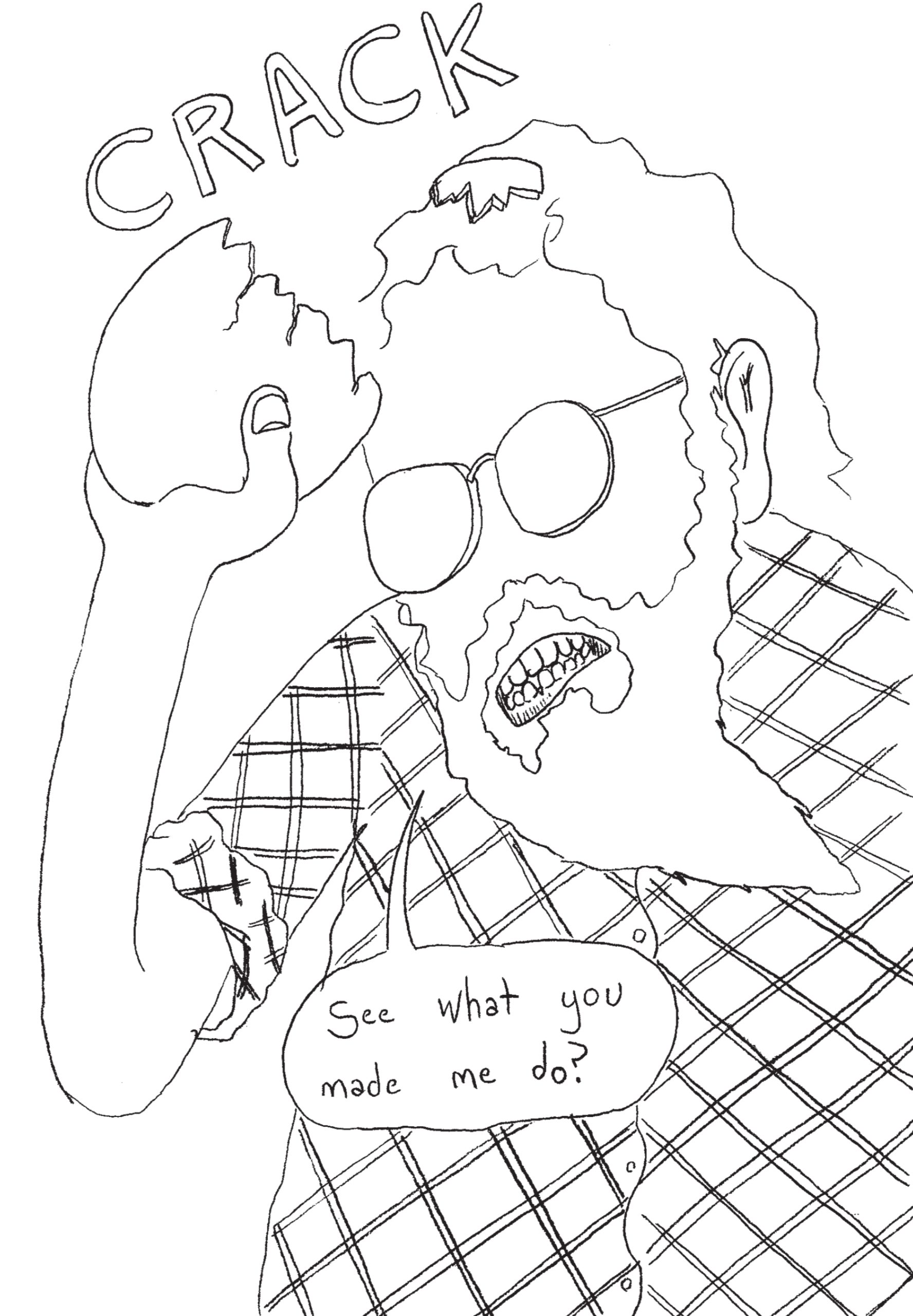 page from Black Cohosh by Eagle Valiant Brosi, Drawn & Quarterly, 2025)
Black Cohosh by Eagle Valiant Brosi
Black Cohosh is one of the most fascinating books I’ve read this year. Brosi’s work is an experimental tour de force in this novel. Ignoring the confines of the panel and perspective, his art grows out of the page with the free wildness of an untamed wood or a child’s mind. Black Cohosh is a tough read, as most books about painful childhoods are. The autofictional memoir follows Eagle as he grows up in an alternative living commune in Appalachia. His speech impediment makes him a target for child and adult bullies alike, and his only nurturing relationship is with his mother, who takes him out into the woods to hunt for plants and herbs. I would liken this book to Jeannette Walls’s seminal memoir The Glass Castle, which details her nomadic childhood brought up by similarly eccentric and neglectful parents. Black Cohosh is narratively and aesthetically virtuosic and I would not hesitate to say that, if you are looking for something akin to an American avant-garde in comics and literature, Eagle Valiant Brosi is a card-carrying member.
Cannon by Lee Lai
Lee Lai is the cartoonist who came closest to making me cry this year. Lee is one of the most important contemporary queer artists of our time. The book is a whirlwind of queer love, rage, friendship, and loneliness. Cannon follows the harrowing friendship of Cannon and Trish as they navigate the trials and travails of an aging friendship between adults. Cannon is a book that could only exist as a comic, melding the interior worlds of its characters with the external one, creating a novel which hovers somewhere between magical realism and gut-wrenching novel.
Assorted Crisis Events by Deniz Camp, Eric Zawadzki, Jordie Bellaire, and Hassan Otsmane-Elhaou
As foreshadowed, Deniz Camp appears twice on this list. Assorted Crisis Events is probably the most formally interesting work on this list, aside from, perhaps, Black Cohosh. The central question of this science fiction anthology masterpiece is "what if all the strange things that happen in a capes crisis even were happening to normal people all over the place?" In each issue, of which there are now seven, we follow a new protagonist as they are plunged into one of these crisis events; in one issue, a woman grapples with PTSD after she was forced to relive the same sixty seconds over and over again millions of times; in another, a woman must care for her husband who wakes up as a child with no memories of her one day, and as an old man the next. Camp’s work on Assorted Crisis Events feels very much in line with the formal experimentation of the great British Invasion writers and artists, who took it upon themselves to combine their narrative prowess with the untapped potential of comics as a medium. Like the great books of the Vertigo era, Assorted Crisis Events is the brilliant product of Camp, Zawadzki, Bellaire, and my beloved Otsmane-Elhaou, who come together in this book to make something greater than the sum of its parts. I should warn that this book is not for the faint of heart. Its vision of the future is apocalyptic, rarely, if ever cathartic, and all almost always heart-breaking.
Adventure Time: The Bubbline College Special by Caroline Cash
Caroline Cash’s Marceline and Princess Bubblegum lesbian love story one-shot for Oni Press’ newly revived Adventure Time comics is a real light in the darkness of this year. Written, drawn, colored, and lettered by Cash, the issue is in its third printing, and for good reason. Cash is doing what she does best: making hilarious and adorable lesbian rom-com comics. There’s a bit of her Peepeepoopoo comics in the one-shot, but really this is a book for young gay kids who are either discovering themselves or are in desperate need of self-representation. It’s a wonderful primer into the world of gay love stories in much the same way that the original Adventure Time was for a whole generation of kids. I’ve already bought two printings of the Bubbline College Special, and I’m contemplating getting a third, it’s that fun.
Adventure Time by Nick Winn and Derek M. Ballard
I’ve reviewed Winn and Ballard’s Adventure Time comics twice for Fanbase Press, at this point, and I could do it several more times without losing steam. I was an avid reader of the original comics from the 2010s, and these are very much in line with those weird little comics masterpieces. There’s a sense of freewheeling whimsy in these pages that reminds you of the importance of play and wonder not just in comics but life. If you’re a stickler about adaptations, and I certainly am about Adventure Time at least, you’ll be pleasantly surprised by what Winn is doing in his main stories, as well as Ballard’s back-up mini comics. They preserve the sense of
the original cartoon and the old comics adaptation.
***
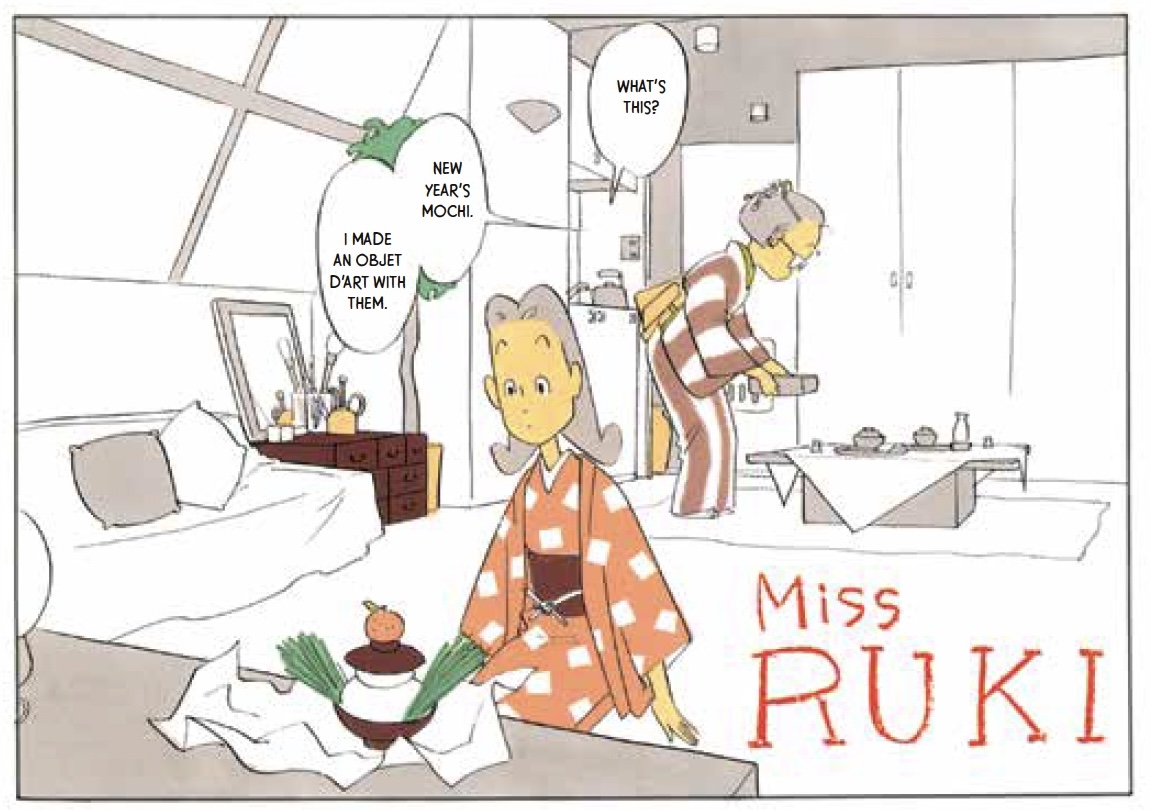 Panel from Miss Ruki.
Daniel Meyerowitz
There's one in every comics library – that irresistible, untranslatable foreign masterpiece. You deploy DeepL and Google, but they surrender, unable to make sense of its distinctive dialogue. The gorgeous illustrations pull you back in anyway, inviting you to search each panel for clues. Yet even without understanding a word, this is a volume you pull out often, sharing it with friends, and dipping in at unexpected moments, like a favorite book of poems.
Now, Fumiko Takano's slim, gorgeous Miss Ruki is finally available in English, deftly translated by Alexa Frank. This sweet, singular volume, praised by manga stars from Katsuhiro Otomo (Akira) to Keigo Shinzō (Tokyo Alien Bros.), is one of my books of the year.
Miss Ruki is 58 kaleidoscopic views of friendship. Two small-town girls, meeting again as adults under the bright lights of Tokyo, try for a bond which eluded them in childhood. With each snapshot of their grown-up lives, Takano is manga's Cartier-Bresson, capturing life's decisive moments with laughter and surprise. Her pen lavishes attention on the least utensil, bicycle basket, and library book, while bringing each shop clerk as fully to life as her two main characters. This is how Takano sees, how Ruki sees and, by the end of this lovely book, how we do as well.
Perhaps that's the biggest gift of this delightful collection, granting us a sixth sense – of humor. After reading this book, Takano's unique take on life's fads and foibles stays with you, revealing Miss Ruki moments everywhere you turn.
***
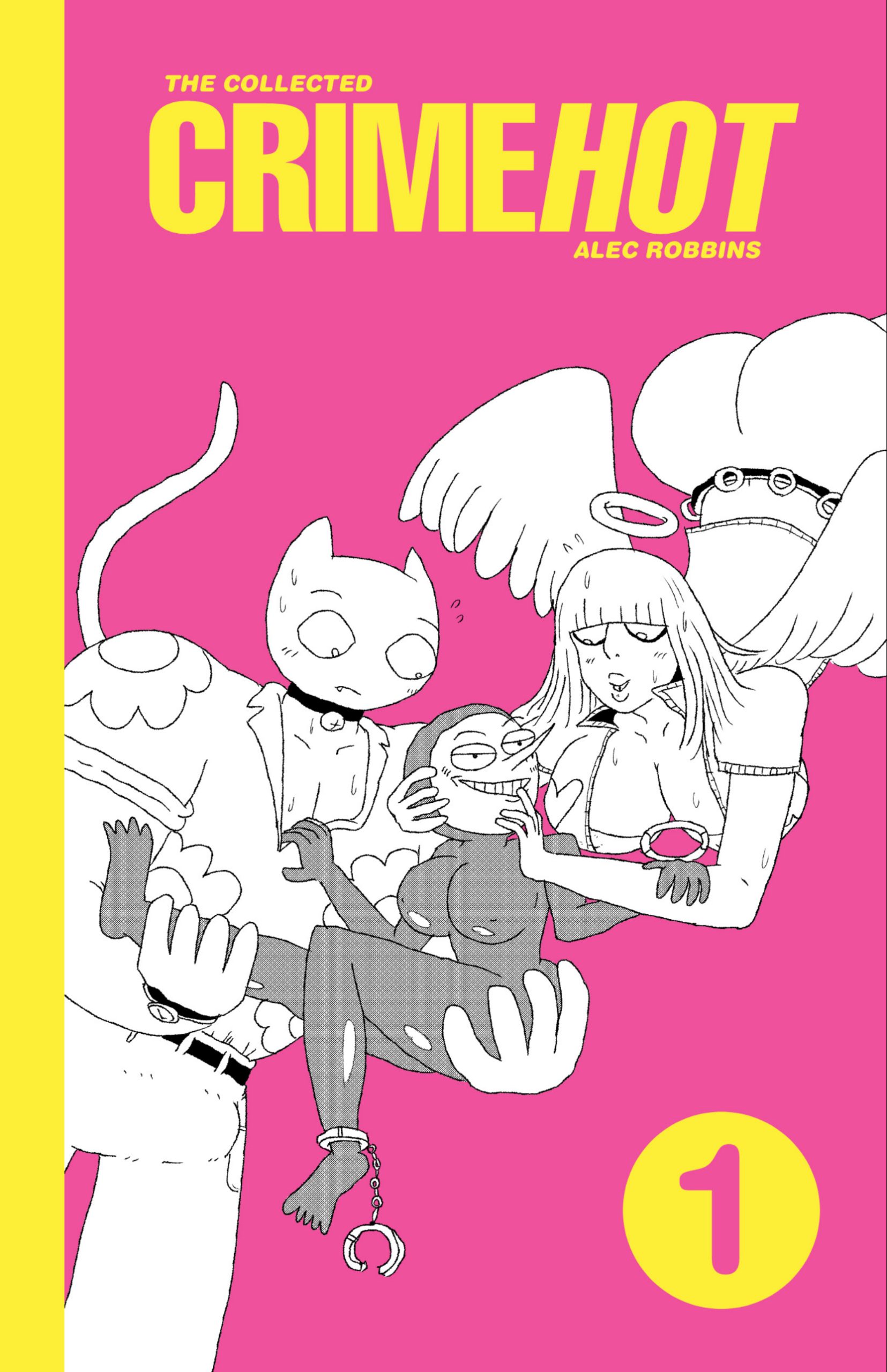 The Collected Crimehot: Volume 1 by Alec Robbins (Silver Sprocket, 2024)
Claire Napier
Crimehot, Alec Robbins, Silver Sprocket
Rly good.
Valley Valley/Idella Dell, Audra Stang, Frog Farm
Audra Stang cartoons with such emotional audacity that the weak will doubt there’s any effort to it.
Miss Ruki, Fumiko Takano, New York Review Books
Charming and delightful strips, beautifully drawn, which, considered in sum and with the context of Alexa Frank’s excellent translator’s essay at the end, portray how economics impact the use that normative social systems have for difference. When money is good, a friendly weirdo can be someone whose choices simply don’t align with the mainstream but whose presence affirms that mainstream as a site of choice for those within it. “They” can flourish well enough in warm juxtaposition. When money is bad, the Other is no longer tolerable because their different value set has been vindicated — they become an unwanted example to normal, formerly-successful, people suffering a loss of security. My hope is that people reading Miss Ruki will see the folly, or at least the cruelty, in that kind of reactionary exclusion. A secondary recommendation — Miss Ruki as an asexual equivalent to Pusztai’s Jucika! Light-hearted, responsive capers, once again offering affirmation through difference in conviction. She and Jucika would be penpals, I think.
Mal Maywood’s Cliff & Father Eugene, Instagram
This is not a finished comic, or a three-block narrative. Cliff & Father Eugene exist on Maywood’s instagram and Patreon, and on Tapas; very short episodes, moments captured. It’s the warmth, though—there’s such a gentle, dogeared masculinity present, like a leather wingback rubbed to a shine — it’s the tenderness of rendering and narrative choice combined with fridge-like solidity in build that reminds me of men from storybooks I read as a child. Gabrielle Vincent’s Ernest, or Raymond Briggs’ comfortable, cheeky adults: the worn-in, tired loveliness cues you that this combination of young gay parishioner and old gay priest is supposition rather than argument — what if everything could be alright? Well. What if?
World Within the World, Julia Gfrörer, Fantagraphics
As mentioned, alchemically firming.
The Perfect Mistake, Yev Yanko, Instagram
Also not a finished work to any degree, also available mainly via Instagram, The Perfect Mistake perfectly represents the comics I want to be reading every day, casually, easily: psychologically-driven horny bad-person romance, drawn deliciously with verve and dashing conviction and texture. If you like Baldur’s Gate, Yanko has additional content you may enjoy.
The Stone Cold General & the Maid Perplexed by his Burning Passion, Iruka Bando & Youka Koinada, MangaPlaza
Beautiful, refined, operatic lifework with real commitment to character and costume design, over a framework of straight-faced yet devious world building and narrative design. It’s great and in my opinion socially healthy to see straight-laced, kind, thoughtful and serious characters give each other emergency handjobs without this being dismissed as either a gag or emotionally inconsequential.
Plus-Sized Misadventures in Love, mamakari, MangaPlaza
Cute and funny and DEMANDING. If you find yourself troubled by the returning onslaught of thinspo, take shelter here. What if I Feel Pretty was good? Like really good.
Show It To Me Baby!, Keiko Hagiwara, MangaPlaza
MangaPlaza hosts a plethora of “adult romance” comics, which means sex-forward visuals and very involved sound effects — amongst them are some of strong narrative quality. Show It To Me, Baby! is an example which pursues the tentative, creeping, insecure and self-sabotaging internal yearn of career-women’s-problems romance classics like You’re My Pet without assuming that the directly sexual must come later in the story.
***
 Life Drawing by Jaime Harnandez.
Brian Nicholson
Life Drawing, Jaime Hernandez (Fantagraphics)
I read a few Gilbert Hernandez graphic novels I’d previously skipped this year — Marble Season, Bumperhead, Love From The Shadows -—and while they were all great, Life Drawing reaffirmed why Jaime is my guy. The culmination of plot threads begun in Tonta and Is This How You See Me, Life Drawing splits its focus intergenerationally, attending to both the aging members of the established cast and the fresh-faced youth introduced more recently. The tone feels wistful and melancholic in its sense of retrospect but also captures what it’s like to experience feelings for the first time, the combo stirring up depths of emotion constantly, even when it reads like Archie comics shenanigans, making for a reading experience that feels as profound as life itself.
Misery Of Love, Yvan Alagbe (New York Review Comics)
I bought a French edition of this a few years back, assuming it would never be translated, as the depictions of explicit sex that made such an immediate impression on a flip-through suggested a nonstarter for the book trade, and that each such image was a beautiful painting made it function as an art book even if the narrative were abstracted to me. Now that I can read Donald Nicholson-Smith’s translation, instead of my tentative fumblings with Google Translate, I can begin to suss out exactly how many feelings are contained within the bodies and expressions Alagbe renders so gorgeously. A reread of Alagbe’s Yellow Negroes helps to contextualize these passions within a more linear framework, but as much as I like that book’s stark black and white, the painterly washes of Misery Of Love are more appealing, while the story they suggest is shiftier, providing more to return to. (I should shout out NYRC’s collection of the works of Michael McMillan, Terminal Exposure, which is just really cool — his career begins with comics that serve as the historical connective tissue between the underground’s Kim Deitch and the later generation of Mark Beyer and Richard Sala, and then moves on from there to something that engages the undergrounds’ nostalgia for the visual culture of yesteryear to more personal-poetic ends than his peers.)
Key Change, Miles MacDiarmid (self-published)
There are cartoonists who do alright for themselves making comics about bad interactions with strangers at bars, or awkward interactions with roommates, but Miles MacDiarmid is unparalleled in his ability to write such scenes with a degree of specificity and comedic timing, so that readers understand what is charged about each scenario, while others coast on a reader’s sense of identification with a protagonist to say, “Ha ha, you get it,” before a joke is even attempted. You could call this “sitcom comics,” but MacDiarmid’s control of the page is closer to filmic than televisual: See the economy at which the first two pages of Key Change establish the premise and contextualize and explain the front cover, before we even get to the sequences of dialogue that escalate tension as the story goes on. MacDiarmid was a member of the Freak collective of comics-makers, and I must also mention issue 8 of Shaheen Beardsley’s Oboy, a series whose first six issues were collected alongside MacDiarmid’s The Hive: Coronation by Freak a few years ago. If most of the efforts of the younger generation of baffle and depress you, these are the sort of funny and well-drawn comics that will keep your enthusiasm for the medium going.
Absolute Martian Manhunter, Deniz Camp and Javier Rodriguez (DC Comics)
Credit editor-in-chief Marie Javins, because after years of mainstream comics being the worst they’ve ever been, DC has resumed putting out comics people actually want to read, with the Absolute line generating comic shop chatter. Even if you enjoyed issues of Al Ewing and Steve Lieber’s Metamorpho revival, it’s not hard to see why the Absolute line would connect with a larger, younger audience by abstaining from DC’s typical nostalgia for the 1960s. At least the sixties as manifested in silver age comics: Javier Rodriguez constructs a cartooning language in Absolute Martian Manhunter that employs the skill he’s honed as a colorist, designing his work for color to make for particularly bold, flowing page layouts that speak the argot of silkscreened psychedelic poster design in a way that can communicate to readers weaned on manga’s black and white pages. Deniz Camp provides the artist with a script to work with that’s not YA-brained garbage; characters move through these layouts with purpose and rhythm, telling a story with more on its mind than just IP rejuvenation. I’m taking one page’s description of a nuclear bomb screaming as a reference to Gravity’s Rainbow, while a plot point involving cookie poisoning seems to refer to both David Foster Wallace’s story “Mister Squishy” and how for decades the most famous bit of Martian Manhunter’s characterization was that Keith Giffen and JM DeMatteis made him like eating Oreos. It’s hard for me to resist this combination of formalist cartooning brio and a sense of having read actual books, and it’s rare that it even comes up.
Tongues Volume One, Anders Nilsen (Pantheon)
With congratulations comes a concomitant casting of blame: I suspect Absolute Wonder Woman, with its combination of strong drawing, elaborate layouts, and recasting of mythology, overshadowed Anders Nilsen’s Tongues, which did similar things, and I thought was certain to crossover to a mainstream fantasy-inclined audience. Tongues has a stately pace, years in the making, which Absolute Wonder Woman trades for the fast-moving continual escalation assembly-line-produced comics can afford, boosted in the attention economy by the presence of a beloved corporate trademark, coming off like the American remake compared to Nilsen’s European art film. Tongues is the greater accomplishment, simmering as the reader sinks into it, moving between plot threads it slowly braids together. Unfortunately, the 360-page Volume One feels like it just stops, rather than reaching an ending, with the climax and conclusion forthcoming in book two. While I’ll be there for the second collection of Absolute Wonder Woman when it’s out in February, (as well as checking out the collection of artist Hayden Sherman’s work on Batman: Dark Patterns), I’ll also be anticipating Tongues’ conclusion, likely to appear a decade from now, which indicates a staying power few artists can be bothered to be imbue their work with, in these days where the ambitions of art are flattened by the demand for content above all.
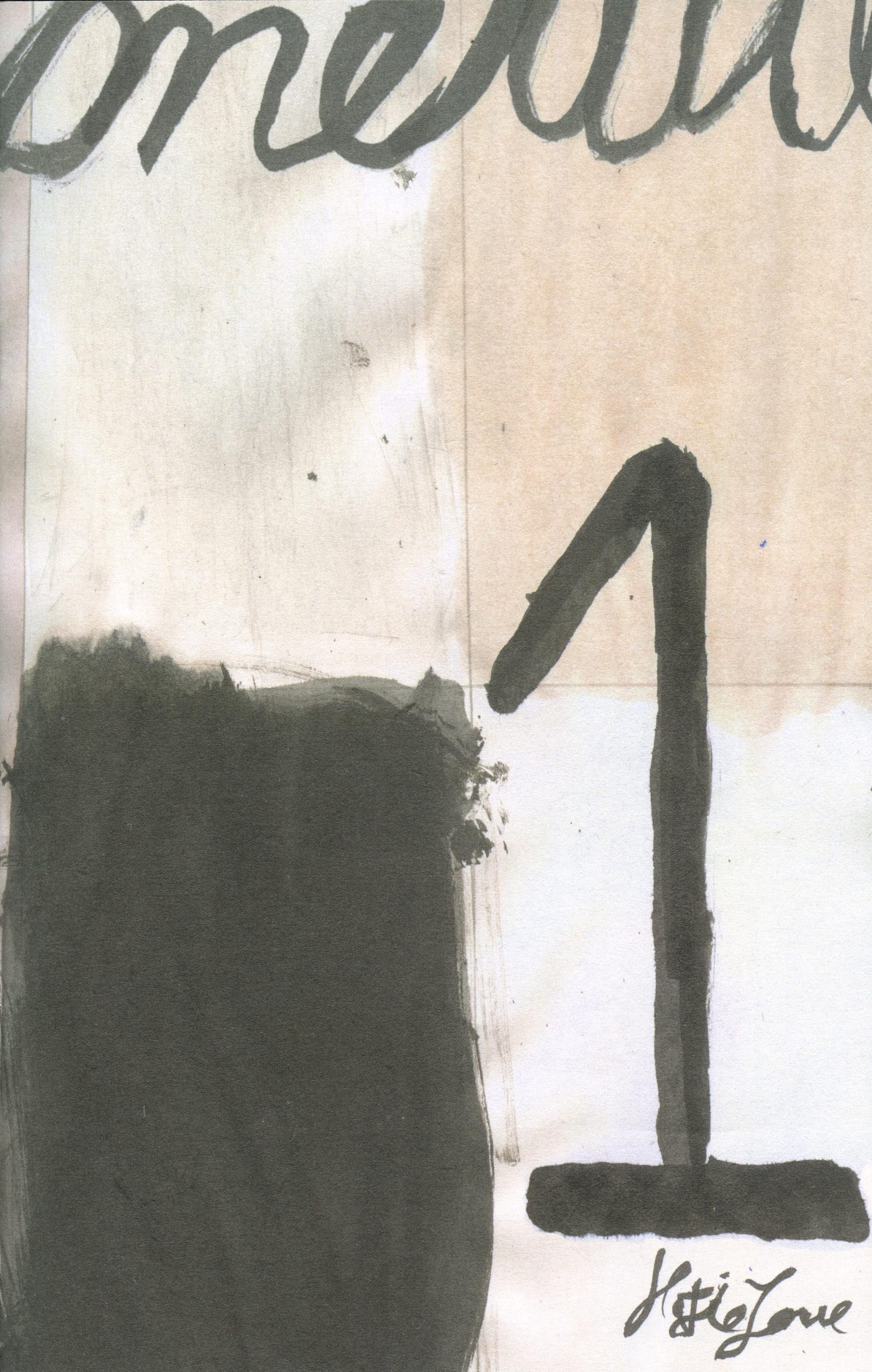
***
Isaac Odai
Girls Gone Wild #1 by Katie Lane (2d Cloud): Katie Lane’s comic has two sections; however, the Girls Gone Wild story has stayed with me more than any other comic I have read this year. Lane’s line feels drawn from life, as she collages moments into one. Lane’s dense, scratchy lettering is complemented by drawings that fill the page and capture perspectives in the quiet moments of conversations.
Big Gamble Rainbow Highway by Connie Myers (Cram): Big Gamble Rainbow Highway is filled with paranoid compact pages; each panel builds anxiety and paranoia. Myer’s ink-only line is expressive and fluid. The moments that break open and Myers’ drawing chops break out of the page’s confines are what made this one of my favorite comics of 2025.
Key Change by Miles MacDiarmid (Self-Published): Key Change scratched an itch for me this year. I was a fan of MacDiarmid’s Hive from a few years back and was very excited about another venture into his character's world. Characters that MacDiarmid can make endearing and engaging within a page of their appearance. MacDiarmid’s ear for the interpersonal is translated into one of the most entertaining and funny reads of the year.
Leone in “Blood from the Stone” and Other Stories by Max Burlingame (Cram): This year, I became obsessed with Max Burlingame’s mark-making. It would be easy to get lost in the hatching and patterns of any given panel if the story didn’t also propel the reader through its blood-obsessed world. Shout out to Cram for the excellent presentation of Burlingame’s work.
***
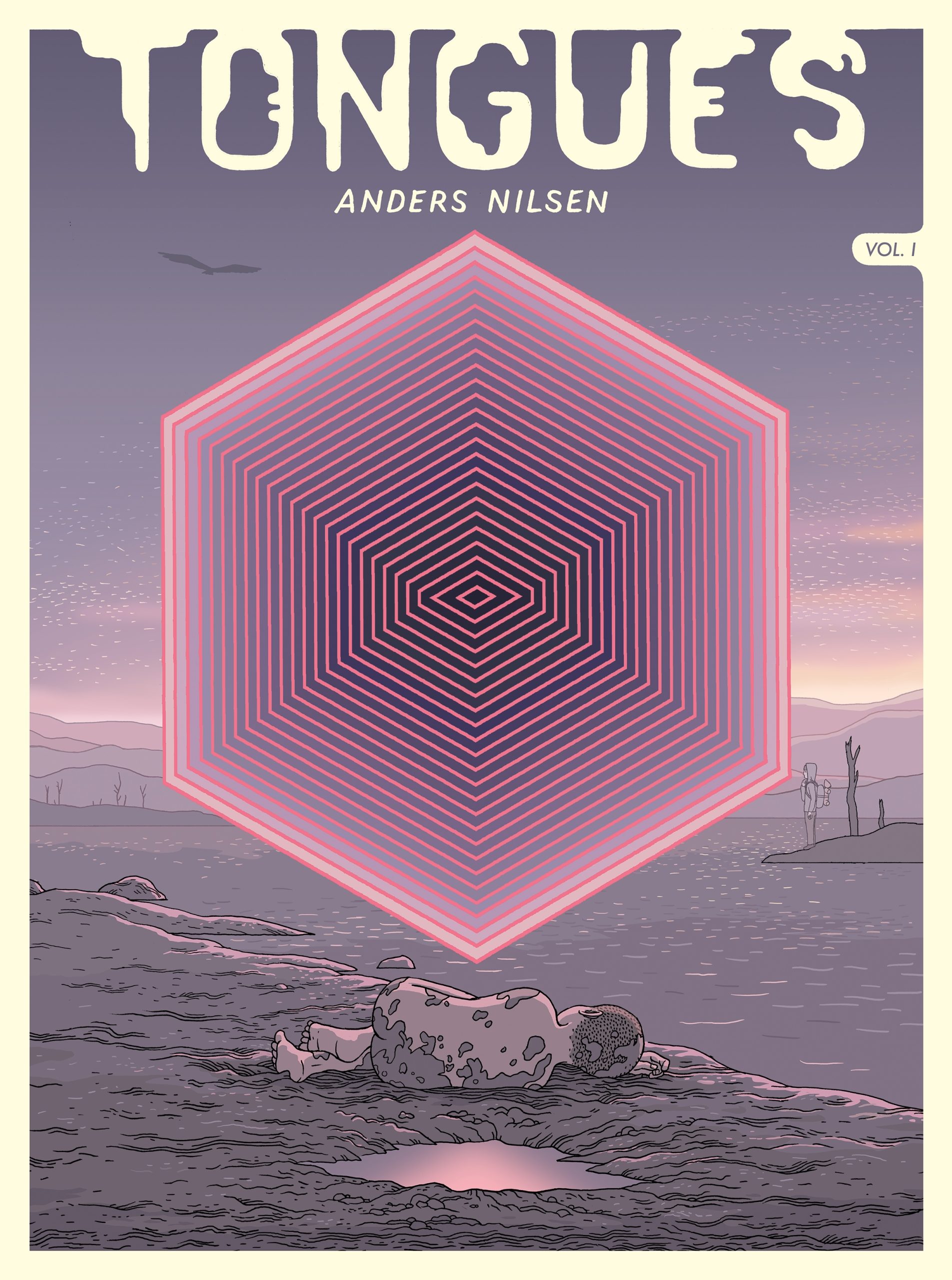
Hagai Palevsky
"I don’t even know if I like comics anymore," narrates Tara Booth at the start of her contribution to issue #54 of kuš!’s š! anthology. This year has been, as ever, an interesting one — between unrelated personal malaises and various industrial impediments (the final downfall of Diamond, for one), my reading has slowed down somewhat substantially. But now here I am, reminding myself that there is, in fact, some beauty left in the world of comics. And what better way to start than with — you guessed it — š! #54. I’m always quite fond of the guest-edited issues, and in this instance guest co-editor Caroline Cash delivers a strong showing, balancing kuš! favorites with a nice bit of shock to the Baltic system; of the latter category, Emma Hunsinger’s lesbian fantasy-drama and Leo Fox’s almost-Nabokovian narratorial play certainly stand out.
Elsewhere, though I typically don’t tend to sort by publishers in these write-ups, New York Review Comics continue to be perhaps the single most vital curatorial line we have in our little Anglosphere. Misery of Love by Yvan Alagbé is one of the most moving instances of form-following-function that I’ve encountered yet, while Miss Ruki is just about the platonic ideal of a crowd pleaser that still manages to please; Michael McMillan’s Terminal Exposure, meanwhile, subverts the common taboo-busting narrative of first-generation underground comix by looking outwards, both artistically and physically, for inspiration. (A special mention likewise goes to The Complete C Comics, which is a beautiful achievement of archiving in itself but which I have yet to read in its entirety; ditto Dash Shaw and R. Kikuo Johnson’s collection of Rea Irvin’s The Smythes, which I was hoping to read by the time of this write-up, but, alas, life gets in the way.)
Outside of NYRC, too, we got two quite monumental reprint releases courtesy of Fantagraphics: World within the World is the long-overdue Julia Gfrörer shorts collection we’ve all been jonesing for (all of us with taste, anyway), while the archival Night Drive by Richard Sala serves as a beautiful road-map to the late great cartoonist’s restless career.
The return of Anders Nilsen with the first collected volume of Tongues (Pantheon) and the first book of Linnea Sterte’s A Garden of Spheres (Peow2) proved a surprising complement, both of them focusing, through a genre-inflected lens, on that apocalyptic storm looming on the horizon and the beings charged, for better or worse, with bringing it forth. For Nilsen, this comes with some surprising divergences from his usual form (full coloring, for one; a much heavier narrative bent, for another); in Sterte’s book (which, in the interest of full disclosure, I had the pleasure of proofreading part of, for its self-published serialization), the cartoonist appears fully in her wheelhouse, with a charmingly-languorous approach to world-building in the vein of Angélica Gorodischer.
Elsewhere, Michael DeForge (keep an eye out for my interview with him sometime in the new year) and Kayla E. both used life experience as a launchpad. For DeForge, the launchpad is a narrative one, as Holy Lacrimony (Drawn & Quarterly) draws — in part, and irreducibly—on DeForge’s own struggles to further that thematic fixture, the authenticity of human connection; Kayla E.’s Precious Rubbish (Fantagraphics), meanwhile, draws on comics history as a mechanism of aesthetic detachment (and emotional repression) in a frenzy to clean that which cannot be cleansed. The first issue of Joe Walsh’s The Shifting Ground (self-published) offered a similar aesthetically-driven take on autobio, marrying the textural directness of Frank Santoro with the cogitative digressions of Kevin Huizenga, while Nick Bunch’s How to Stop Smoking Cigarettes (Cram) saw Bunch venture ever deeper into textural frenetics while still maintaining a beautifully vivid and immediately-intuitive grasp on flow and legibility.
In what must, for want of a better term, be termed “literary fiction,” two more of comics’ finest observers of human interaction returned this year: Lee Lai’s second long-form outing, Cannon (Drawn & Quarterly) is a mental spiral in the truest sense of the term, running in all directions with painful clarity; Carol Swain’s three-piece revue Another Way Out (Dark and Golden) takes a more sedate approach, forcing its readers to do their own mental and inferential calculus.
And what of the future? This year saw the release of three striking books by cartoonists entirely new to me: Milk White Steed by Michael D. Kennedy (Drawn & Quarterly) merges a distinct strain of the D&Q lineage, from Seth to DeForge, with ruminations on the intersection of political and personal; Hidden Islands by Cameron Arthur (Bubbles) offers up some beautiful anti-adventure stories; and Big Gamble Rainbow Highway by Connie Myers (Cram) packs both an emotional rattle and a graphic one.
Maybe I do like comics, narrates Tara Booth at the end of her š! #54 contribution. Ain’t that just the way. Until next year …
***
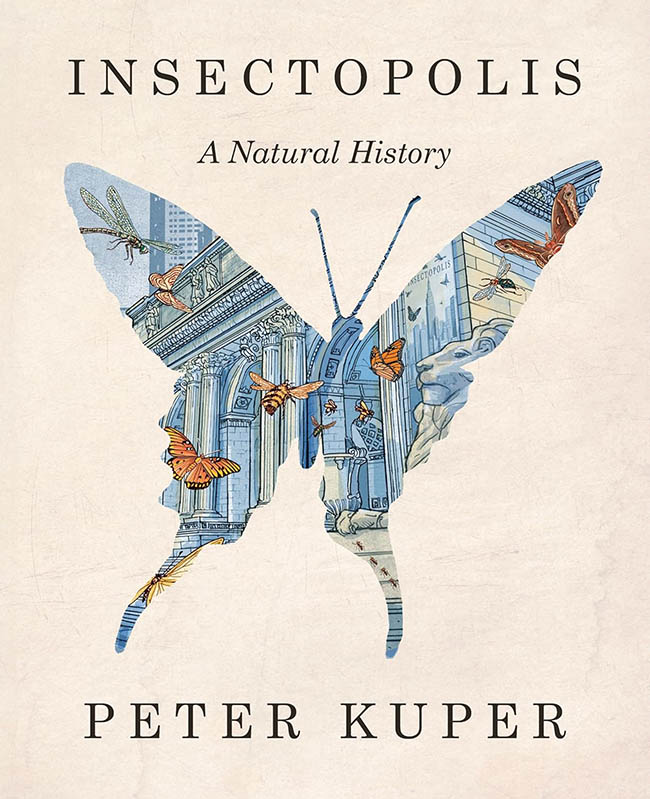
Leonard Pierce
For someone whose one and only lasting dream job is writing a workplace sitcom starring members of the circa-1987 Defenders, I fell off superhero comics hard in 2024.
I've drifted away from the genre for years, mostly on account of basic growing up, but this year, absolutely nothing clicked. Friends and colleagues insist that a lot of quality cape books came out in the last year, and I'm sure they're right; in fact, you can probably read all about them in this very article. But the few times I tried, I just couldn't stick with it. Maybe the whole idea of reading about imaginary heroism when we live in a time of such complete lack of courage leaves me flat. Maybe I'm just being old.
Regardless, it wasn't hard to pick ten great ones from a year where culture so often failed us. I struggle to find a common theme: In many ways, it found me looking back at the great creators of the last few decades, but maybe that's simple nostalgia. But maybe it's also thinking of one's self as increasingly part of the past, as the future becomes something that feels all used up. A thread of something ending, even to just transform into something else with or without you, runs through it, of history as a nightmare from which we are forever haunted. These are ten I won't easily forget.
Insectopolis: A Natural History, Peter Kuper (W.W. Norton & Company)
The insect apocalypse has been much on my mind this year, and I'm not alone. In his latest, Peter Kuper asks: What if it already happened? What if the insects studied us the way we once studied them? And what if ... it really wasn't all that bad, after all? Kuper's wild, whimsical history of the relationship between man and bug is informative, entertaining, expertly constructed, funny, tragic, and addictive, everything a comic by a real pro should be.
Life Drawing, Jaime Hernandez (Fantagraphics)
It is often a conflict when praising the work of an established talent in the comics world: Are you praising them because of excellence or because of familiarity? Luckily for all of us, Jaime Hernandez leaves no space between them: these stories, with seemingly only the thread of the complicated dynamic between Tonta and Maggie between them, ultimately cohere with a shimmering unity that matches his tremendous draftsmanship, seemingly getting better every year, to a tee.
The Mongoose, Joana Mosi (Pow Pow Press)
One of the best meditations on grief that I've read in a decade, The Mongoose, with its deceptively simple black-and-white line art and its expanses of silence, reminded me of nothing on first encounter as much as the late Chantal Akerman's masterful Jeanne Dielman. Only the presence of a playful, ominous, and possibly imaginary mongoose keeps its head above the clouds, but the combination is transcendent: sad, funny, smart, meaningful, and with quiet, stunning emotional power.
More Weight: A Salem Story, Ben Wickey (Top Shelf Productions)
At times like this, when it's easy to believe this country was doomed from the start, it's almost trite to praise a book that so convincingly makes that very argument, hitting a large and prominent nail right on the head with the story of a group of puritanical fanatics that start looking for a special scapegoat. Wickey's canny art, the elegance of which skates right up to the edge of the grotesque, makes More Weight the complete package, the most successful combination of art and story of the year.
Muybridge, Guy Delisle [Helga Dascher & Rob Aspinall, translators] (Drawn & Quarterly)
Artists in every medium have been drawn to retell the story of Eadweard Muybridge. And why not? He practically invented the modern conception of a moving picture, and it's no surprise that someone as curious and capable as Guy Delisle would want to take another crack at him. Muybridge's life was almost too eventful to comprehend, but Delisle draws the heart of the man and his work out at just the right moments, his clean and expressive lines providing perfect framing for his subject's genius.
Nocturnos, Laura Pérez, translated by Andrea Rosenberg (Fantagraphics)
The most powerful and effective treatment of the menacing nature of nighttime since Roger Ekirch's At Day's Close, Pérez's new graphic novel establishes that the dark hours are just as full of mystery as they ever were. With nebulous art that throbs with the same eerie energy that infuse the stories, it's a series of vignettes that have the same incomprehensible logic of an inescapable dream. The use of color may be the most effective of any book I read in 2025.
The Once and Future Riot, Joe Sacco (Metropolitan Books)
Joe Sacco has been on an absolutely Olympian tear of late. More productive than he's ever been, he's also honed his visuals to a razor's edge, and the clarity and the insightfulness of his approach has proven itself crucial to the moment. This gorgeously limned account of the Uttar Pradesh riots in India over a decade ago, it reverberates into the present with undeniable demands about the nature of violence, how we know what we know, and the bloody ways in which those things connect.
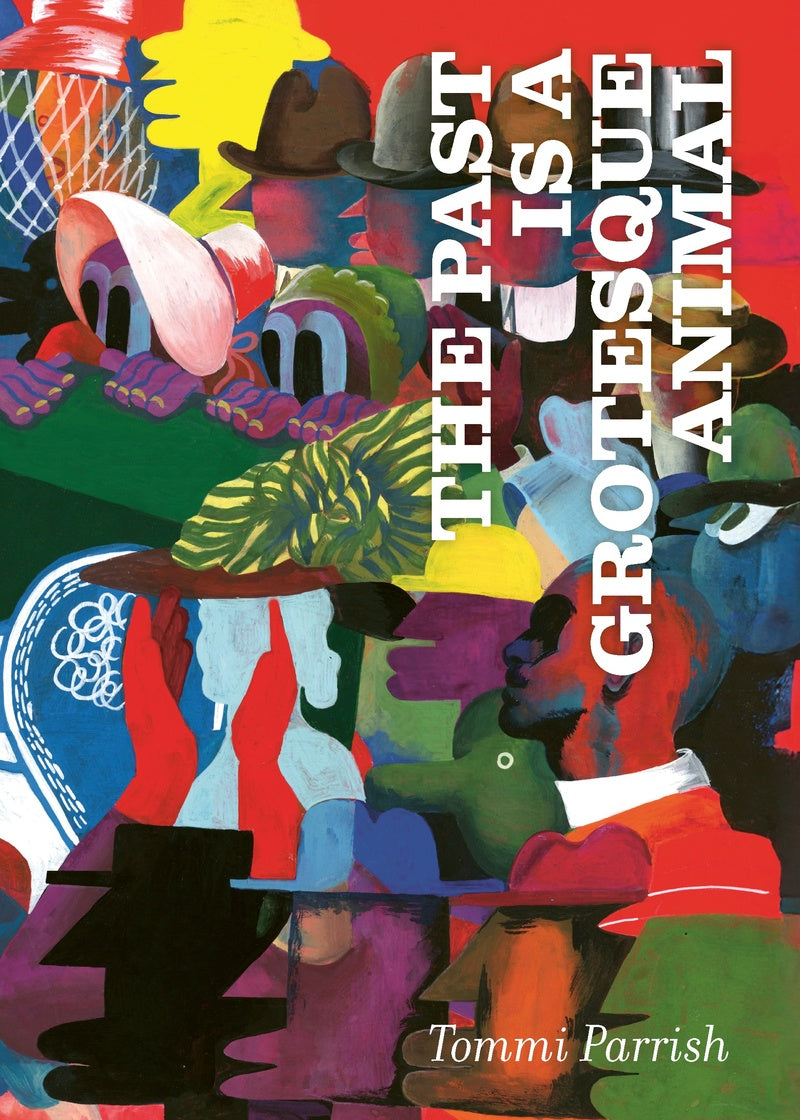 The Past is a Grotesque Animal, Tommi Parrish (Fantagraphics)
The tumbling, ranging nature of Tommi Parrish's sumptuous work about identity, relationships, sexuality, and just about everything else under the sun wouldn't shine the way it does without its exquisite visuals, with their vibrant shifting painted surfaces, but it doesn't have to. The combination leaves us with a shockingly intimate creation, like walking through a stranger's house and learning more about them in every room. A vital piece of trans art at a time it is desperately needed.
Salt Green Death, Katarina Thorsen (Conundrum Press)
A historical reconstruction, an intricate mystery, and an investigation of the way we are harmed and helped by the people meant to have care of us, Thorsen's book — composed of masterful waves of shifting colored pencils that fit its historical period magnificently — tells the story of a disturbed man named Joseph O'Dwyer's life-altering encounters with the psychiatric system of Canada in the postwar years. It's a tremendous piece of work, making a small story resonate into much greater meaning.
Tongues, Anders Nilsen (Pantheon Books)
When I first encountered Anders Nilsen's riveting retelling of the myth of Prometheus, brought squalling into Afghanistan in the 21st century, I thought it was instantly one of the most memorable things I'd seen in a long while. Time and repeat reading has not disabused me of that belief. There is unexpected depth in the portrayal of its archetypical characters, and its honeycomb structures mirror each other and reflect its themes of language and history with precision and intricacy.
HONORABLE MENTION
Black Cohosh, Eagle Valiant Brosi (Drawn & Quarterly)
Calavera, P.I., Marco Finnegan (Oni Press)
Do Admit: The Mitford Sisters and Me, Mimi Pond (Drawn & Quarterly)
Drome, Jesse Lonergan (23rd St.)
Gaza in My Phone, Mazen Kerbaj (OR Books)
The Giant: Orson Welles, the Artist and the Shadow, Youssef Daoudi (23rd St.)
Holy Lacrimony, Michael DeForge (Drawn & Quarterly)
In the End We All Die, Tobias Aeschbacher [Andrew Shields, translator] (Helvetiq)
John Muir: To the Heart of Solitude, Lomig (NBM Publishing)
Lovers and Haters, Gilbert Hernandez (Fantagraphics)
The Magnificent Adventure, Milo Manara (Fantagraphics)
The Murder Next Door: A Graphic Memoir, Hugh D'Andrade (Street Noise Books)
The Pit, Erik Kriek (Living the Line)
Simplicity: A Novel, Mattie Lubchansky (Pantheon Books)
World within the World: The Collected Short Comix 2010-2022, Julia Gfrörer (Fantagraphics)
***
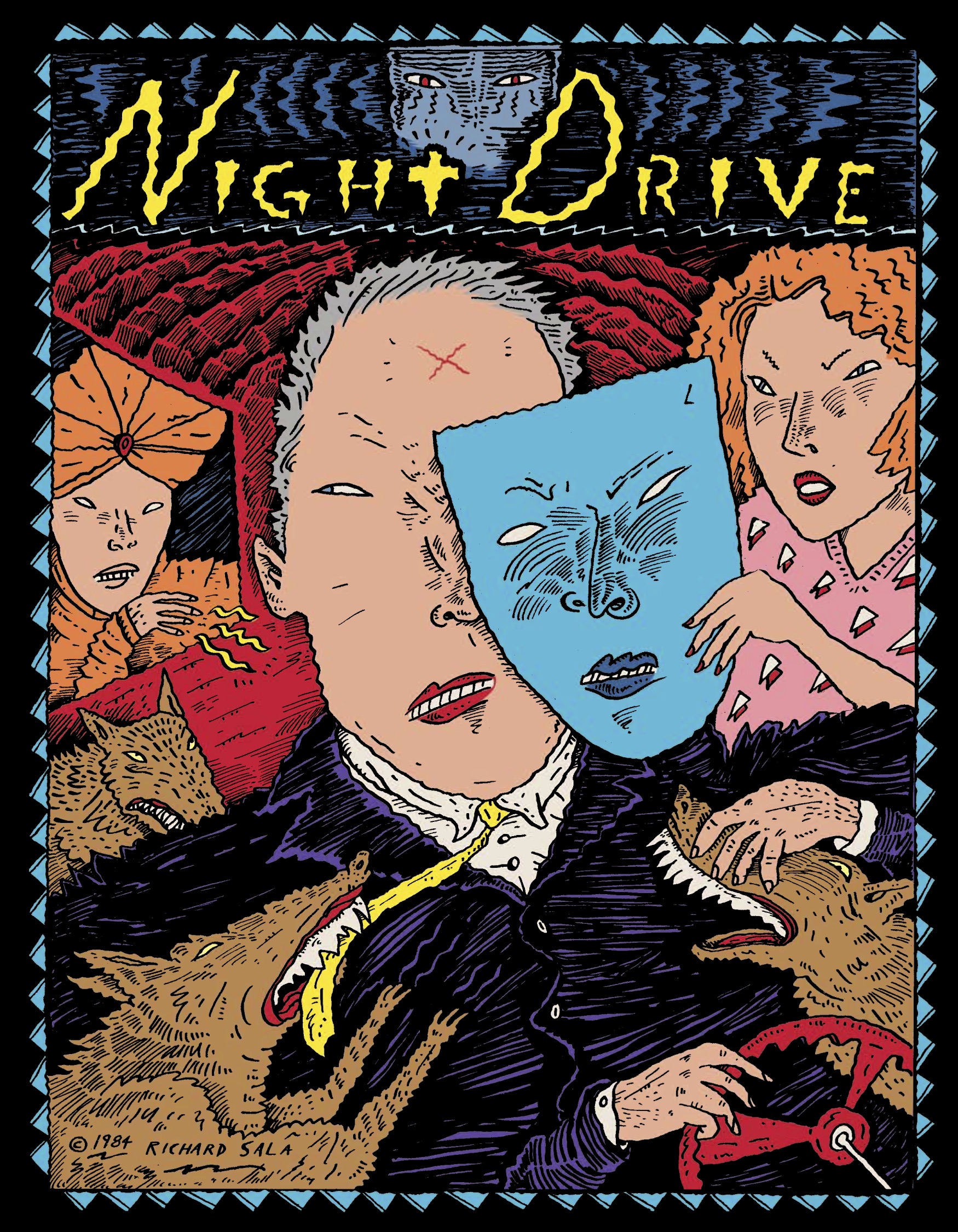
Richard Pound
2024 was a terrific year for the medium, with new releases by greats like Olivier Schrauwen, Rick Altergott, Maurice Vellekoop, Emil Ferris, Peter Bagge, Dash Shaw, and many others (not to mention a bumper crop of books by Charles Burns). Could this year possibly live up to it? Well, pretty much. Although some long-awaited projects (like Jay Stephens’ Figgy Furthermore and the fifth volume of D&Q’s Yoshiharu Tsuge series) got pushed back to 2026, there was more than enough to make up for it. I’ve thoroughly enjoyed everything listed below, and could have included many more if time (and space) allowed. So, in no particular order …
Tongues, Volume 1 by Anders Nilsen (Pantheon)
Surely this will be on many people’s lists. Superbly written, beautifully illustrated, and charged with a lightning crackle of dry humor, this bold reimagining of the story of Prometheus weaves three separate narratives into a complex (and timely) meditation on the present state of humanity. Nilsen’s most ambitious project yet, its visual inventiveness never lets up for a second, every page bursting with ideas that can sometimes barely be contained, but which never seem superfluous. To say it’s the work of a Promethean talent would just be too obvious. But I’ve done it now, so what the hell.
World Within the World by Julia Gfrörer (Fantagraphics)
From a distance, this beautifully presented volume looks like some long-forgotten collection of obscure fairy tales. The scary kind. And that seems appropriate, as some pretty horrible things happen within its pages. But no matter how grim they get, it’s impossible to look away from these utterly compelling tales of human misery, which are infused with a dark eroticism and flashes of pitch-black humor. Although recalling at times the work of Eddie Campbell, Tony Millionaire, or early Chester Brown, Gfrörer’s work remains utterly unique, the product of a fiercely intelligent cartoonist who isn’t afraid to stare into the abyss.
Night Drive by Richard Sala (Fantagraphics)
One of the best reissues of the year. Fantagraphics did an exemplary job resurrecting this early gem by the late Richard Sala (all but impossible to find in its original form), expanding the original self-published comic into a handsome hardcover designed by Daniel Clowes and rounding it out with a lengthy introduction and several previously unpublished pages. A delightfully eccentric mélange of gothic noir, Universal monster films, and the surreal serial epics of Louis Feuillade, it had everything you could want from this irreplaceable master of the macabre.
The Weight by Melissa Mendes (Drawn & Quarterly)
Ten years in the making, it was wonderful to see this sprawling coming-of-age tale finally published in a single volume. Loosely based on a memoir written by her grandfather, Mendes has crafted a brutal, but deeply moving and occasionally uplifting story that delves deep into the messy, confusing business of being alive. Epic in scope, but intimate in design, the whole book is a masterclass in cartooning. Deftly paced and using minimal dialogue, Mendes relies on subtle shifts in facial expression and body language to communicate a whole range of emotions, while layers of ink wash bring a richness of depth and texture to the everyday details of mid-century rural America that drip from every page.
Another Way Out by Carol Swain (Dark & Golden Books)
After more than a decade of silence, the prospect of any new material from Carol Swain had begun to seem very distant indeed, so the sudden appearance of this comic from UK-based Dark & Golden Books came as a welcome surprise. Featuring two previously unpublished stories and an extract from a forthcoming graphic novel (more good news!), it was a perfect showcase for her atmospheric pencil and charcoal drawings, and dreamlike, mysterious tales which seem both eerily familiar and one step removed from the world we know. It was like she’d never been away.
Beat It, Rufus by Noah Van Sciver (Fantagraphics)
One of the most prolific cartoonists working right now, it seems almost surprising that Noah Van Sciver has only released one new book this year. But that one was an absolute treat. Mining similar territory to his beloved Fante Bukowski series, this tale of a washed-up musician who heads out on a desperate, drug-fueled road trip was another perfectly observed study of the delusional but ever-optimistic losers in which he’s specialized for more than a decade. Very funny and oddly moving, it’s a paean to those people who, for better or worse, just can’t stop dreaming.
Do Admit: The Mitford Sisters and Me by Mimi Pond (Drawn & Quarterly)
You’d think enough had been written about the Mitford sisters over the years, but this captivating book somehow managed to make the story of Nancy, Diana, Unity, et al. seem fresh again. It helped that it wasn’t just a straight biography, but a beautifully designed and exquisitely drawn account of the spell these eccentric and quintessentially English characters cast over Pond when she was a young girl growing up in Southern California. Without letting up for a second, she combines their individual stories into a single dizzying narrative, told with a kind of dry humor that would have made its subjects proud.
Tedward (Fantagraphics) and Pleasure Beach #1 (Self-Published) by Josh Pettinger
It’s been a good year for Pettinger, with a complete collection of everybody’s favorite “Old Fashioned Guy” hitting the shelves alongside the first issue of what looks like being his most ambitious series yet. Both blend moments of laugh-out-loud humor with nightmarish undercurrents that give them a real emotional weight. The first issue of Pleasure Beach reads like an anxiety-ridden fever dream about returning to the place you grew up. But with several different plot strands already up in the air, we can only wait and see where the story might be going.
War Epic #3 by Nathan Cowdry (Self-Published)
Cowdry apparently had a hard time completing this third installment of his self-described "epic," which might not bode well for its future. But we can only hope that he finds a way of moving forward, as this tale of a Nazi camp commandant attempting to mount a production of Chekov’s The Cherry Orchard with his unfortunate prisoners is one of the funniest, weirdest books out there at the moment. Although wrong on so many levels, it never feels like Cowdry is just doing this for the shock value, and it’s been a real pleasure watching his already considerable talents improve from issue to issue.
My Name is Shingo, Volumes 4&5 by Kazuo Umezz (Viz)
Volumes 4 and 5 of this ongoing series take Umezz’s weirdly prescient tale of artificial intelligence gone wrong (through no real fault of its own) into increasingly bizarre and unhinged territory. What began as a seemingly innocent tale of young love has gradually shifted into a delirious meditation on humanity’s relationship with technology. By the end of volume 5, things are beginning to crack at the seams, the story operating at a frenzied pitch several notches above anything that could reasonably be described as rational (and no, that isn’t meant as a criticism). Volume 6 will be the last in the series, but how this will end is anybody’s guess.
Being Alive by Simon Hanselmann (Instagram)
After the disappointing news that Hanselmann’s zombie epic, You Will Own Nothing And You Will Be Happy, is on indefinite hiatus, Megg & Mogg fans were rewarded this summer with an unexpected treat. Serialized on Instagram à la 2020’s Crisis Zone, this was a rollercoaster ride of weird clown sex and unsanitary car-toilets, flowing with exemplary comic timing and packed with hilarious one-liners. It began by introducing unforgettable characters like Butts Farto and Potatoes O’Brien, and clmaxed with the most inappropriate birthday party you could ever hold for a 9-year-old, where one of the principal cast members was forced to give himself a long, hard look. The blend of outrageous humor and genuine pathos gave the ending an unexpected poignancy that made it feel like an instant classic. A print version should be on the way soon.
The Smythes by Rea Irvin (NYRC)
Perfectly timed to coincide with The New Yorker’s 100th anniversary, that venerable magazine’s first art editor is honored with a beautifully presented collection of his little-known 1930s newspaper strip. At first glance a sort of elegant cross between Frank King and Crockett Johnson (although a bit too early for the latter, I know), a closer look reveals something entirely his own. The Smythes was a light-hearted satire of social pretension with a refined, Art Deco aesthetic that stood apart from many of his more boisterous contemporaries, and this is a wonderful introduction, ably curated by Dash Shaw, R. Kikuo Johnson, and Caitlin McGurk.
Crumb: A Cartoonist’s Life by Dan Nadel (Scribner)
Of course, this isn’t a comic as such, but it has to be included anyway. An in-depth biography of the father of Underground Comix was long overdue, and Nadel unquestionably did the project justice, producing a well-researched and critically astute study that delved deep into Crumb’s work and background, exploring the personal, political, and social realities that shaped his monumental oeuvre. Packed with fascinating details (Leonard Cohen almost wrote the introduction to Head Comix!?), and not afraid to take its subject to task when necessary, it will surely stand as the definitive account for many years to come.
And if time allowed…
Goes Like This by Jordan Crane (Fantagraphics), Crickets #9 by Sammy Harkham (Self-Published), Photographic Memory by Bill Griffith (Abrams), Red Night and Light of the Moon & Other Stories by Hanawa Kazuichi (Breakdown Press/Mansion Press), Holy Lacrimony by Michael DeForge (D&Q), Paul Auster’s New York Trilogy by Paul Karasik, Lorenzo Mattotti & David Mazzucchelli (Pantheon), Cornelius: The Merry Life of a Wretched Dog by Marc Torices (D&Q), Barnaby, Volume 5 by Crockett Johnson (Fantagraphics), The Art of Milt Gross, Volume 1 by Paul C. Tumey (Erratic Press), The Cabbie, Vols. 1&2 by Marti (Fantagraphics), The Once and Future Riot by Joe Sacco (Metropolitan Books), Alienation: Final Cut by Inés Estrada (Floating World), Brain Damage by Shintaro Kago (Fantagraphics)
***
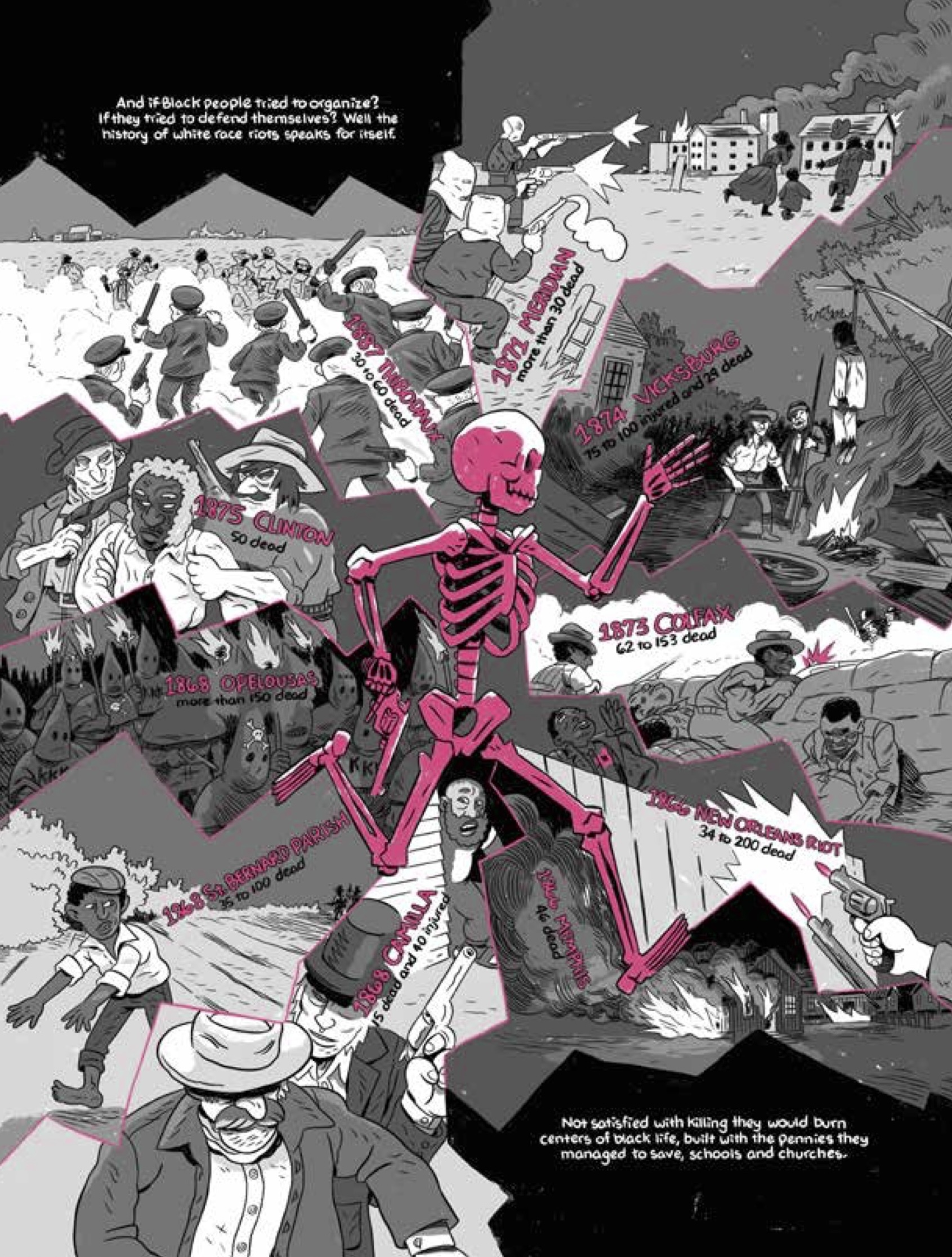 From Black Arms to Hold You Up.
Zach Rabiroff
2025 was a hell of a time. The year in which America descended into a fascist government also turned out to be the strongest year for comics in recent memory, and certainly in the time I’ve been writing about them. Who knows: maybe that old canard about bad times producing good art might have something to it after all.
In any case, a brief listing of some of the year’s superlatives:
Most Cascading Dominos Due to an Industry Bankruptcy: Diamond Comic Distributors Inc.
Seediest Self-Immolation of a Longstanding Comics Institution: Angoulême Comics Festival
Best Republication of a Near-Forgotten Manga Classic: Drawn and Quarterly’s new collection of Shirato Sanpei’s The Legend of Kamui
Most Predictable Aborted Retirement From Superhero Comics: Grant Morrison
Most Alarming Looming Possibility for Corporate Interference: David and Larry Ellison’s bid to purchase DC Comics owner Warner Bros. Discovery.
Five Best Books of 2025
The Once and Future Riot by Joe Sacco. Sacco’s latest (and supposedly last, for a time) work of journalistic cartooning is also his best since 1996’s Palestine. It’s also an unexpectedly relevant, if not to say prophetic, commentary on the nature of violence and democracy in action. My pick for the best book of the year.
Do Admit: The Mitford Sisters and Me by Mimi Pond. Speaking of unexpectedly relevant commentaries on fascist eras. Mimi Pond’s vibrant, funny biography of the celebrated British sisters is more joyous and enjoyable than it has any right to be. Pond has been working for decades, mostly under the radar, but if this is the book that finally makes hers a name to reckon with it will be well-earned.
Black Arms to Hold You Up: A History of Black Resistance by Ben Passmore. Passmore’s passionate, unflinching look at a century of revolutionary defiance against racial oppression is often grim but never bleak: its underlying theme is one of hope, and a confidence that silence is the one thing no amount of tyranny or apartheid can ever fully achieve. Boy, I do seem to be going heavy on the historical nonfiction this year, don’t I? Maybe it’s the tenor of the times. Better liven things up with something fanciful.
Batman and Robin: Year One by Mark Waid and Chris Samnee. Am I cheating by shoehorning a mainstream superhero comic onto this list? Absolutely. Is it legitimately better, on an objectively literary level, than, say, World Within the World by Julia Gfrörer or Tedward by Josh Pettinger, both of which my arbitrary cap of five entries prevented me from including? It is not. But it was as delightful and true a distillation of the mainstream superhero ethos as one could hope for; Mark Waid (having been unleashed at last on his proper home of DC Comics after a decade in exile) is at the top of his game; and Chris Samnee remains an artist incapable of making an unnecessary pencil stroke. I liked it.
Existential Comics: Selected Stories 1979-2004 by R. Crumb. Like most sensible critics, I have ambivalent feelings about Robert Crumb. His new floppy of original material this year, Tales of Paranoia, was a reminder of the sort of unreconstructedly retrograde and paranoid worldview Crumb has always embodied (his continued adherence to anti-vax conspiracies was, alas, predictable). But this Dan Nadel-edited collection of some of Crumb’s most outstanding comics is a reminder of the other side of that personality — the originality, lack of apology, and phenomenal artistic versatility that has always made R. Crumb inimitable in his field. The book is wonderful and troubling, as an underground ought to be.
***
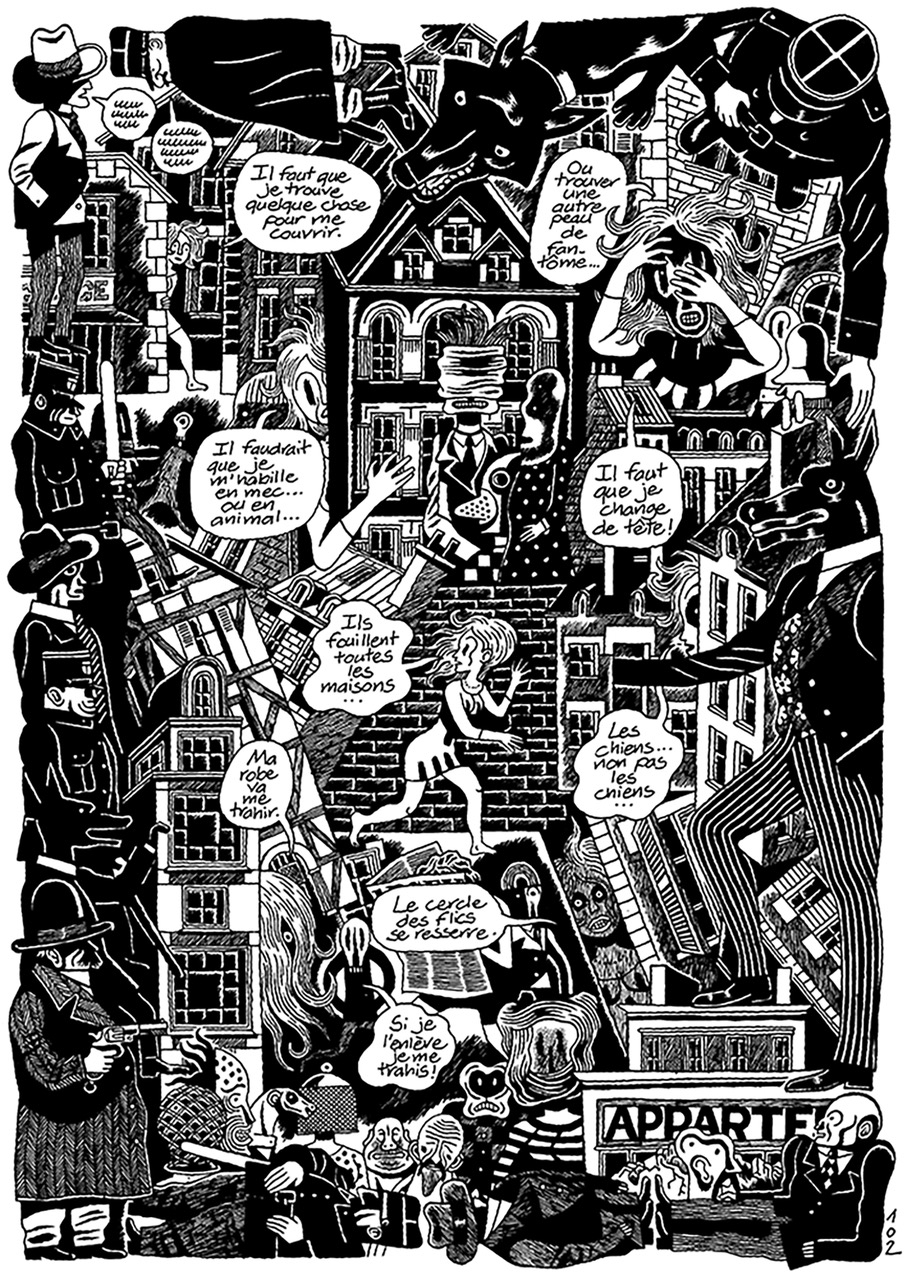 From Monsieur Chouette by David B.
Cynthia Rose
1. Monsieur Chouette, David B, L'Association
This is a tale about the nature of fear, the imagination and the afterlife. It's also the best thing David B has done since Epileptic. BUT: After 35 years, the trailblazing L'Association risks extinction due to production/transport costs, the squeeze on indie bookstores and the huge amount of well-publicized competition from big BD publishers. I urge you to join as a member (benefits include a discount their on their 800+ work catalogue, which gave you Epileptic, Persepolis and Emmanuel Guibert's Alan's War). Or just make a small contribution here.
2. Béla sans monde, Simon Roussin, Editions 2042
Roussin is one of today's most original artists. This is psychedelia beyond psychedelia, with poetic storytelling and specially-printed, fluorescent pages. Gorgeous and hallucinatory.
3. An Illustrated Treasury of Russian Curses, Ass Edition (жопа), Pollard & Kuznetsova
Canadian cartoonist Jess Pollard and journalist Elmira Kuznetsova turn мат, Russia's age-old art of cursing into English counterparts with matching cartoons. Their work is now a globally popular, five-book series. (I'm a Russian student, but you don't have to be.) All volumes come as E-books; not recommended for kids, unless they're kids who want to shock immigrant parents. In 2026, also look for Pollard's upcoming It's Just Crabs, "a tragic tale of crab evolution".
4. Le repaire de la Meduse, Brecht Evens, Actes Sud BD/ Musée Thomas Henry
The French/English catalogue of a museum show (the cover unfolds into a two-sided artwork) that featured Evens' work with Atelier Michael Woolworth. In it, the artist discusses visual language, his artistic partnership and different forms of printing, alongside special pages from his exceptional, ongoing Le Roi Meduse ("The Jellyfish King").
5. Marseille tatouée ("Marseille tattooed"), group work, Éditions Fotokino
A great idea, beautifully executed by some favorite folks: Annabelle Perrin, Nine Antico, Bonnefrite, Cagne Canine and Simon Roussin. Artists asked residents of Marseille about their tattoos, then drew the speakers. A special mention also for Nine Antico's 2025 album Une Obsession (Dargaud).
6. L'Enquete qui Pietinait ("The Stalled Investigation"), Benoit Jacques, Benoit Jacques Books
A 32-page parody of a police procedural in the simple form of a newsprint paper. Matchless silliness and hilarity from of my all-time favorite artists. Helped make my year.
7. Smoke Signals, Gary Panter, Desert Island, Brooklyn
Another newsprint gem; more people should be drawing and printing these! Newsprint has a great comic history; use it more!
8. Vu de L'Atlantique, Serge Clerc, Éditions Barbier
L'Atlantic is one of several bars Clerc frequented during a couple of difficult years. This contains his sketchbook from the time, with everything he sketched and overheard. All the art is in his signature angular, retro style and page 180 has one of the best bar stories I've ever heard.
9. Signé Coco, Les Arènes, Corinne "Coco" Rey
A nice fat collection of cartoons by Coco, a true pioneer (and not because of her sex). Organized by theme and containing the Charlie Hebdo cover Coco drew after the Nov. 13 massacres: the spirit of French cartooning in an image.
10. Les Oiseaux, Noam Courtois, Brigitte Boulent Editions 2025
Noam, who was seven-and-a-half during the Covid quarantine, kept himself occupied by drawing birds. This is a collection of them published by his grandmother. No one sees like kids.
***
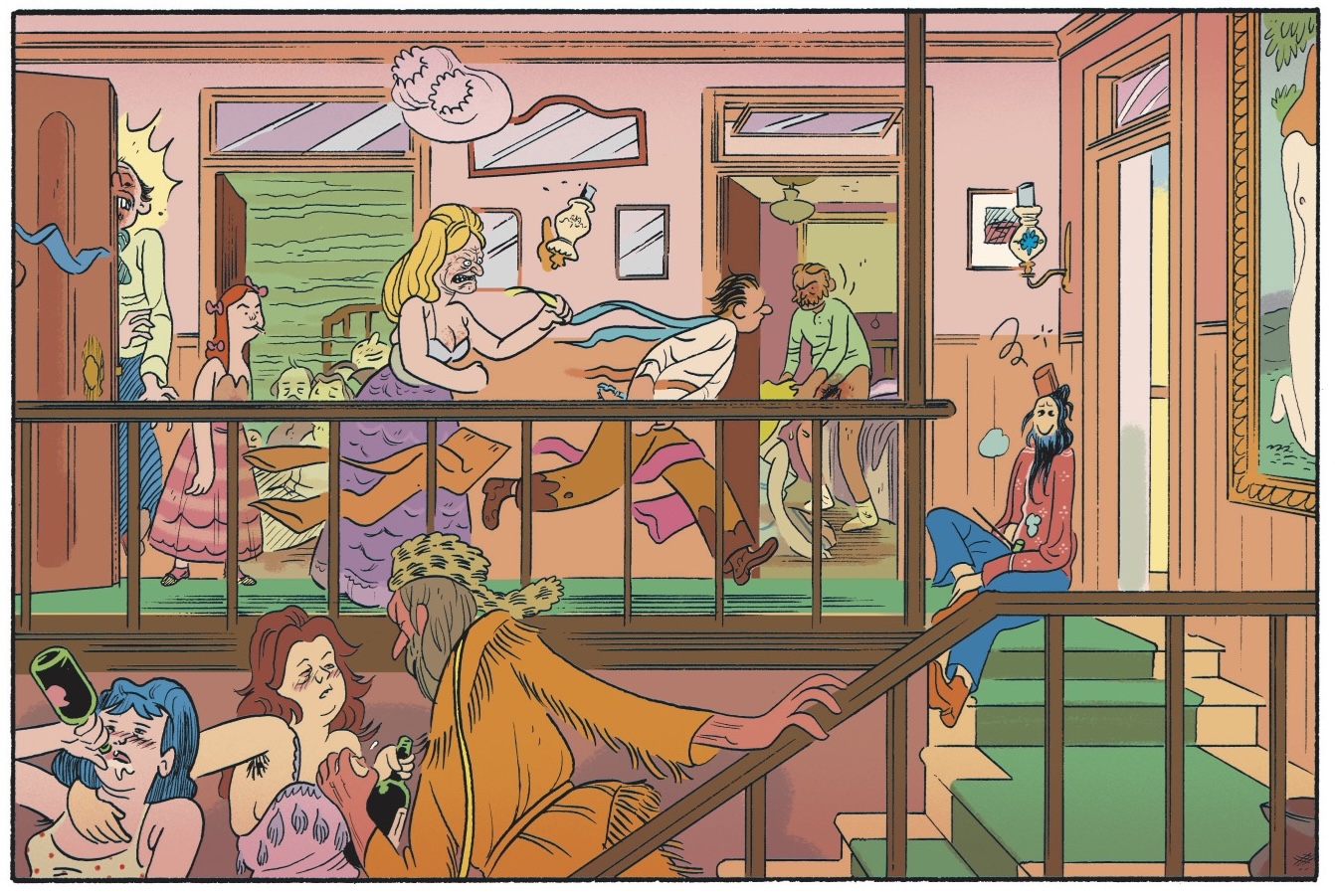 From Crickets #9.
Tom Shapira
Res ipsa loquitur
“Cast” (Hagai Palevsky, Aaron Losty, Marissa Louise, Claire Napier, Self-Published). A wind-up gag, the type of joke in which the build-up to the punchline becomes the actual subject, is very hard to do right; it requires a dozen tiny variations on the same thing, a slow rising of the stakes, each one functioning as a joke by itself. “Cast” is a near-perfect example of such a gag, building its sixteen pages ever upwards until one almost reaches the heaven (that is both figurative and literal in this case)
Last Summer at Camp Righteous (Ollie Hicks, Good Comics). A continuation of Hicks’ usual themes (Americana, religious hypocrisy, fucking) that never fail to entertain. There’s a knife-edge balance to these characters, who can both caricatures and people at the same time.
Nap Comix (Rachel Smith, self-published). Kids say the darndest things.
Crickets #9 (Sammy Harkham, Breakdown Press). The best part of Blood of the Virgin was the cowboy actor story (the one in color); so it’s nice to see Harkham surrendering to popular demand and doing another cowboy story in living color. This issue starts in a more traditional manner before going to Looney Tunes territory for its (extremely long, extremely satisfying) climax. No need to read any previous entries, or even follow the plot that heard, just sit back and enjoy world-class cartooning.
Judge Dredd: And To the Sea Return (Rob Williams, Henry Flint, Annie Parkhouse, Rebellion). I wasn’t quite as keen on this story as some of the previous Judge Dredd "epics" (which are thankfully still rather short), never the most subtle of strips but he can certainly make the implicit into the explicit one time too many. Still … any excuse to see Henry Flint make another showcase of himself. You find yourself wondering why the American market didn’t try to poach him and thankful he isn’t misused on some terrible superhero story. A rare talent that started great and just keeps getting better.
“Duke Ellington on Mars” (Michael D. Kennedy, Drawn & Quarterly). The rest of Kennedy’s 2025 collection of comics, Milk White Steed, swings between ‘very good’ to ‘very very good’ but this short story is outright great. Pure comics poetry, as ridiculous as it is sublime.
Red Night (Hanawa Kazuichi, translated by Ryan Holmberg, Breakdown Press). This book is gross, sick, violent, pornographic, morally reprehensible, visually nauseating, intellectually confused, physically painful (it gave me a paper cut) … god help me, I loved it.
Legend of Kamui (Shirato Sanpei, translated by Richard Rubinger, Noriko Rubinger, Alexa Frank, Drawn and Quarterly). Shirato Sanpei’s massive historical saga seems like the stuff cliches are made of, but it is simply because you are looking at the pure source of these cliches. And, of course, everything that you think you know of historical manga, the kind that glorified battle and the bravery of the samurai, is best forgotten about. Sanpei casts his net wide as he chronicles the life of the rich and the poor, the noble and the worker, the great and the small … the only weakness one could point to is that the net is sometimes too wide — with the cast of characters becoming as complex as that of a Tolstoy novel. Would that all works would make such complaints necessary.
“Zorn’s Lemma” (Chloe, self-published). A new work by Chloe that is like a Jazz standard run through the thematic obsession of an early grindcore album. Not sure if its aiming at John Zorn but it is the closest a comic book (or probably any other non-music medium) came close to aping the sensation of listening to Naked City for the first time.
World Within the World: Collected Minicomix and Short Works 2010-2022 (Julia Gfrörer, Fantagraphics). The most striking things about this collection is: a) that Julia Gfrörer is only with us since 2010, since the impact of her work is so crushing you just assume she'd been there long before; B) even when doing stuff that reads like a typical webcomics gag (what is Fraser met Akira?) her pencils and attitude give the whole thing a sharp sensation that raises above the obviousness of the gag. That’s her work, a small knife so sharp you fail to notice you’ve been stabbed until you look down and see the pool of blood.
***
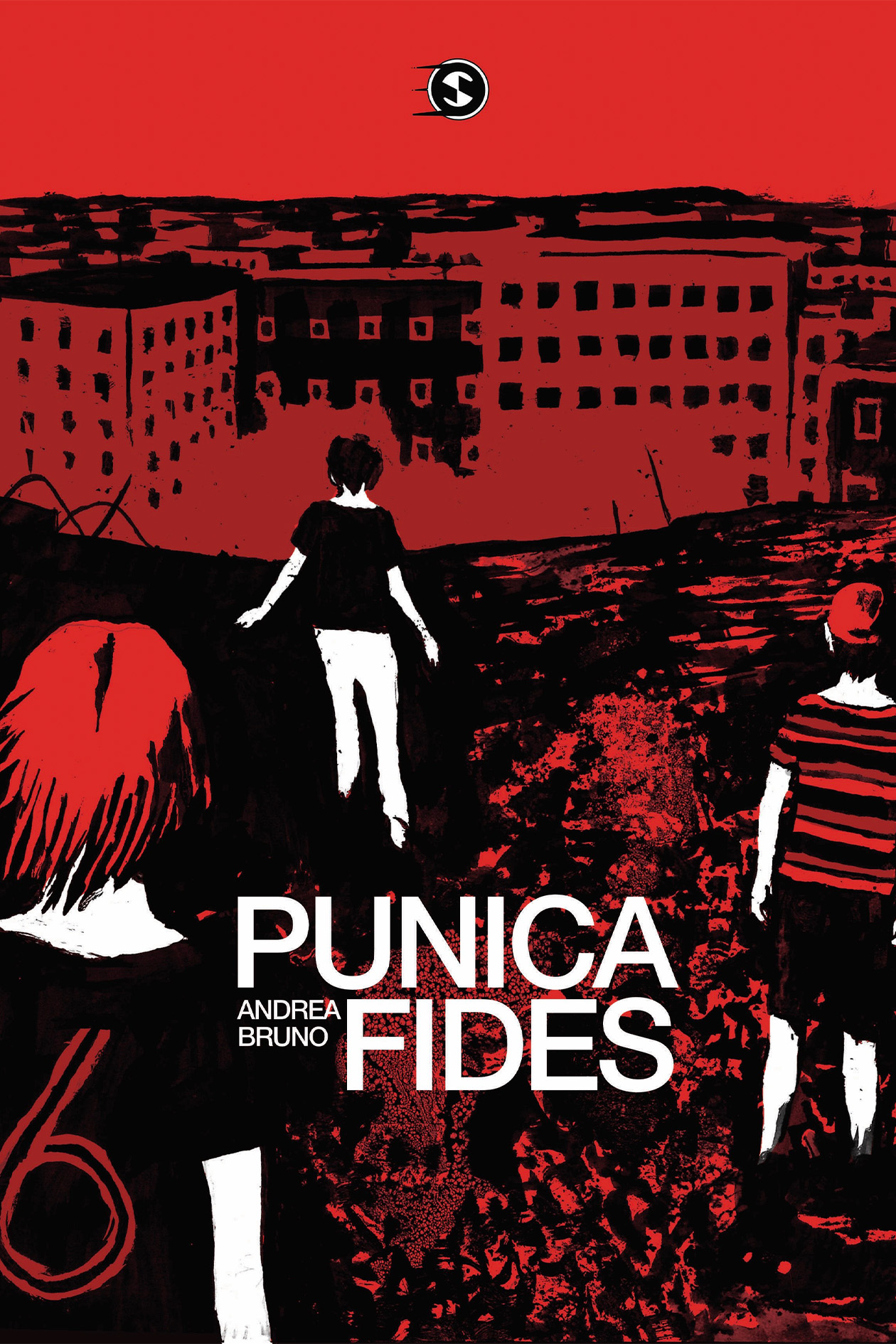
Valerio Stivè
Punica Fides. A new book by one of the greatest Italian artists active today. It tells the story of a city in ruins, where the population is fighting in a never-ending conflict within itself and with the authorities. Bruno’s imagery is intense and dark, soaked in dense black inks. Bruno is a pure comic artist, one who never compromises his vision.
The JoJolands. Many years after the last time I read anything from JoJo’s Bizarre Adventure, this new installment brought me back to Hirohiko Araki’s work. He probably has already invented and done everything he had to, but after nine series the madness of this series and the super dynamic art is still so exhilarating. I’m collecting the Japanese edition, which looks beautiful.
Penguin Gohan. In Your In Face Comix, a very courageous small Italian publisher has released a collection of short stories by Shigesato Itoi and Terry King, the master of heta-uma, and I couldn’t be happier. The craziest stuff you could ever come across, still looking so fresh and avant-garde after over 40 years. Still from the same publisher, I also had the chance to read a collection of shorts by Kazuichi Hanawa from the 70s, entitled Chiaro di Luna, who some may remember for his autobiographical Doing Time. His fiction is disturbing and deeply fascinating.
Les moutons veulent du sel, a graphic novel by my friend Emanuele Cantoro, published in France by Ça et Là, tells the story of a child growing up on the outskirts of Rome who finds a form of salvation through nature and a flock of sheep. Cantoro’s art is spontaneous and strikingly fresh.
Monsieur Chouette. The new graphic novel by Monsieur David B (in France by L’Association and in Italy by Sigaretten with the title Signor Civetta) is a wild, oneiric journey into the land of the dead, somewhere between the Divine Comedy and Alice in Wonderland. The book is a thick, visionary, funny, and unsettling experience.
Takemitsu Zamurai and Nihon no Kyōdai. Two manga by Taiyo Matsumoto were published in Italy this year. Both are relatively old works and very different from each other. Takemitsu Zamurai (originally published in Japan between 2005 and 2009, in Italy by Edizioni BD/J-Pop Manga) is a slow, dreamlike samurai story with mesmerizing artwork, while Nihon no Kyōdai (in Italy by Coconino Press) is a collection of stories from the early 1990s that tell you what Matsumoto was going to become in the future and at the same time almost feel as if they could have appeared in Garo in the 1970s.
My Friend Kim Jong Un, a thoroughly researched and very entertaining book on the history of the Korean Peninsula, confirms once again the talent of Keum Suk Gendry-Kim, one of the most brilliant cartoonists working today. I live how her comics can be so many things at the same time: funny, intelligent, grotesque, delicate, and so much alive, just like her smooth and fascinating art. I’ve read the Italian edition by Bao Publishing, while in France the book is available from Futuropolis and in English soon by Drawn & Quarterly.
The short-story collection The Green Hand and Other Stories by Nicole Claveloux was finally published in Italian by Eris Edizioni (available in English by New York Review Comics, 2022), and a major exhibition dedicated to her work was held in my hometown, Bologna, during the A occhi aperti festival. Claveloux was part of the French comics new wave of the late 1970s and '80s, blending psychedelic atmospheres with highly technical, Topor-inspired drawing. Reading her work pushed me into a '70s trip, collecting old issues of classic French magazines like Charlie and, of course, Métal Hurlant.
I also discovered the work of Lika Nüssli from Switzerland — amazing artist and wonderful person — and returned to old sentimental sports manga by Mitsuru Adachi, as well as early issues of Rumiko Takahashi’s Ranma ½. I’ve recently picked up the new Crickets by Sammy Harkham and Gary Panter’s Smoke Signal. I haven’t read the collection Tongues by Anders Nilsen (which I expect to see mentioned often on this page), just because I am already collecting the series (which I hope to see in Italy soon, hopefully translated by me, just like Big Questions).
Toward the end of the year, Canicola delighted Italian readers with two books I had been eagerly waiting for: the dreamy and stylish Il sogno della cicala by Dario Sostegni and Raffaele Sorrentino, and Il bus incantato, a true story from Iran told by the very talented Majid Bita.
And then, a big shout-out to all the good comics I forgot to mention.
***
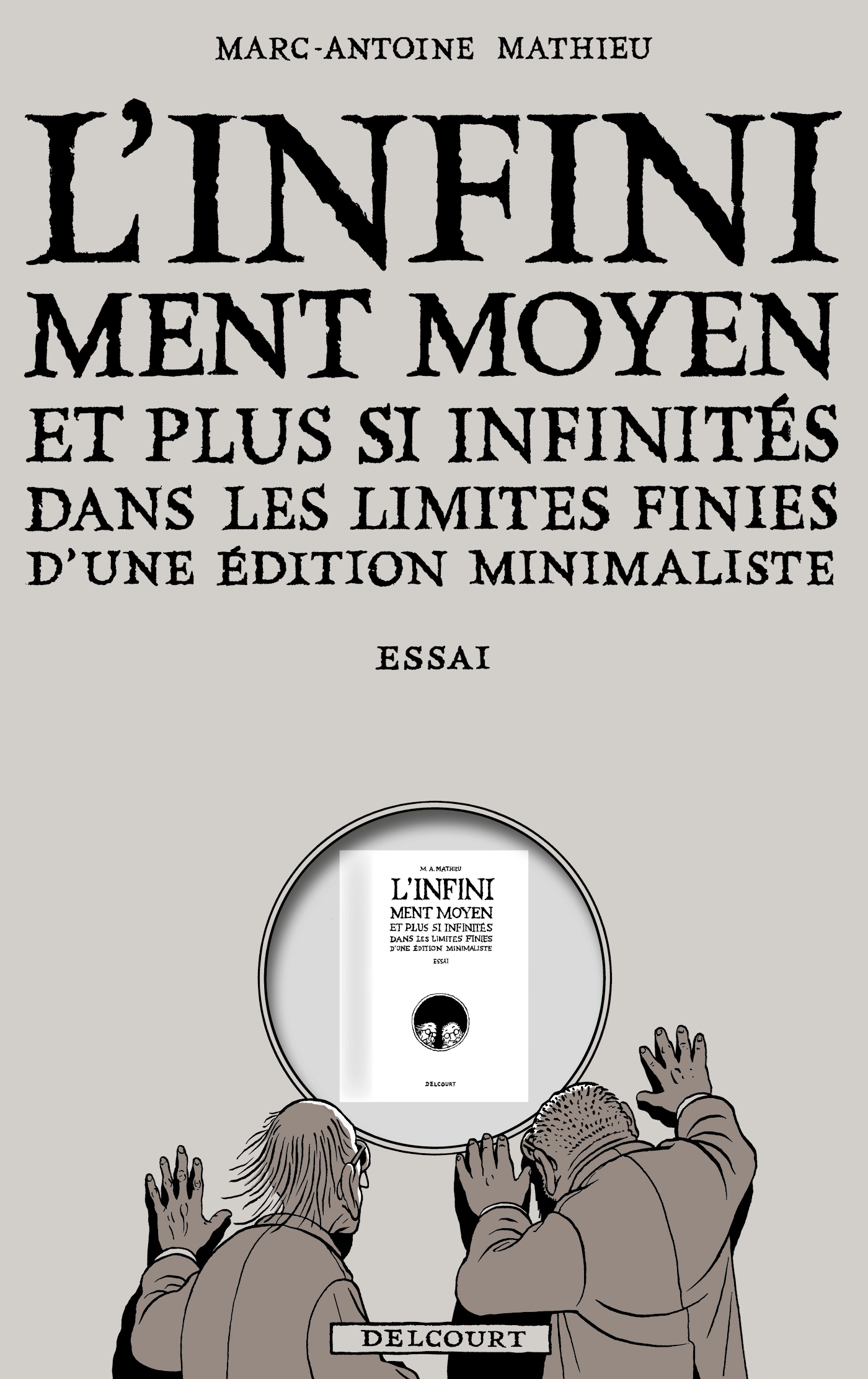
Marc Tessier
Favorite books of 2025 … Frankly, I still have a huge pile of more than 30 unread books beside my bed! I also skipped talking about all the small press gems that I gathered this year in Montreal, Toronto and Rome. So here goes: a mixture of English and French, some familiar to the Comics Journal readership and some secret gems for the more curious and audacious readers out there.
Books whose design and format transcend the norm; where the artist went further and farther to produce a cross between a graphic novel and an art book/object. These books are usually treasured for a long time and 2025 produced a lot.
Goes Like This, Jordan Crane, Fantagraphics Books
I have every comic book Jordan Crane ever did and I probably have already seen all the material in this compilation but WOW! When I got a hold of this book and flipped through it, the beauty of the design, from the texture of the paper to the the printing and the spine, knocked me out. It is just an incredibly beautiful book that showcases the advance in printing technics. Granted, it’s not cheap! It’s a must for anybody interested in that type of art book/graphic novel hybrid that rises above all the others. Thank you Fantagraphics for taking risks and producing such gems.
Tongues Vol. 1, Anders Nilsen, Pantheon Books
Over the years I did buy from Nilsen at TCAF a few of the individual chapters but when this volume came out, I was curious to see if it was going to include the cut out pages and all the little extras that cost a fortune to print and is usually reserved for shorter hand assembled print runs. Well, Pantheon did an amazingly fateful job on this one.
L’infiniment moyen et plus si infinités dans les limites finies d’une édition minimaliste, Marc-Antoine Mathieu, Delcourt
I don’t think any of his boundary pushing work has been translated in English, am I wrong? All of his books are narrative experiments, and Mathieu manages each time to produce a theatrical experience within the pages of his graphic novels. So far, he’s included cut out panels, a pop-up, conceptual stories where for example, you begin that story in the middle, a story that takes place within seconds. This artist challenges himself at every opportunity. His latest is very cheeky. Using a magnifying glass, he drew as small as he could an 82 pages story fitting in a one inch book that is packaged with a magnifying glass. Mathieu has managed to draw something even smaller than the smallest Chris Ware text! The packaging is beautiful, it’s an art object/graphic novel/high concept album. It’s also funny in a Kafka way, as the title is probably the longest ever for the tiniest graphic novel ever drawn and printed.
Muséum, Eric Lambé, FRMK
FRMK are know for difficult books and as ambitious as FRMK are, their books are not for the average reader of comics. They produce gorgeous books for adults interested in the combination of literature and art. Eric Lambé has had great success lately with Antipodes (Casterman), an album written by David B. that came out in 2024. In this solo outing, Lambé’s book is about what you experience and take away from a museum, images bound in sensations and feelings. Lambé manages to create a playful narrative, sometimes abstract, sometimes surreal with very little dialogue. The work of a master.
Lézards rêves, Jean Giraud Moebius, Moebius production
Moebius production’s new book explores and showcases excerpts from the artist sketchbooks. It’s like discovering a caché of gems that Giraud/Moebius left behind after passing away. This book is filled with gorgeous improvised illustrations and short stories that reminds us of his mastery in fishing out striking images from his subconscious mind. The book itself is small, a beauty to hold and behold.
The Moon and the Serpent Bumper Book of Magic, Alan Moore and Steve Moore, Top Shelf
This reminds me of The Museum of Lost Wonder by Jeff Hoke, published by Weiser in 2006. It tackled the same subject, magic and the occult sciences, in the same way, both sharing an illuminating vision of the world of magic, explaining and putting these things in perspective. They are fun books: playful, erudite but accessible. In the case of The Moon and the Serpent, probably the last ever comics from Alan Moore. Just for that reason (but there are many more), seek it out.
And a few more, in a more classical format.
Bowling with Corpses, Mike Mignola, Dark Horse
When I heard Mignola was doing original stories after Hellboy, I bought this book but I put it away because, somehow, I expected to be disappointed. How could he top his work with Hellboy? Well I can report that it was quite the opposite. Unshackled by the heavy mythology created for the Hellboy universe, these new stories are a breath of fresh air. Funny, whimsical and amazing page layouts, this book shows that Mignola is a master storyteller/artist and I look forward with glee to what he will uncover in this new universe that he’s created.
Soozy No 1 and no 1 1/2, Seosie, self-published
Okay, here’s at least one independent book from TCAF that I got it this year. New pages from Seosie were also published in Charlotte mensuel in France. It’s really difficult to illustrate sexual situations and make it cute and and funny. A lot of people still associate pleasure with violence and punishment. Not so here with Seosie. She is such a talented artist, able to paint realistic canvas and then switch to cartoony figures for these books, while her drawings are still exquisite and expressive. The French in France have already discovered her! Your turn now…
Absolute Martian Manhunter, Camp and Rodriguez, DC
I am not that into multiverses and superhero comic books — corporate products spiked with new sauces every few years! A good friend gave me Absolute Martian Manhunter by Camp and Rodriguez knowing I would like that one … and I did. The LSD-tinged visuals within create a really interesting narrative mixing nearly abstracts visuals and symbols within a more classic comics grid, but with a modernistic twist. A really interesting experiment by both authors within the trappings of the genre. Wishing they’ll attempt something like that someday, but in a more adult vein with their own characters.\
Tales of Paranoia, Robert Crumb, Fantagraphics books
I have missed Crumb, it’s been decades since I bought one of his 32-page comic book. Here, he reminds us that he is still a master at this! His stories are rich, compact, deep and layered. More please Robert!
And here we enter the French zone ...
L’association strikes back! This year, as l’Association still struggles with the financial comic book bubble that is bursting in France, three founders of l’Association came out with excellent graphic novels and story collection, reminding us that they are still at the top of their creative game.
Monsieur Chouette, David B., L’Association
After many years, a return to a longer black and white narrative that follows two main characters as they go into hell as imagined by David B. David’s stark black and white images result in some of the most interesting and gorgeous composition within a page that I have seen in 2025. No one is more adept at balancing black and white masses and turning them into light and darkness. A work by a master storyteller.
La fin du monde, Stanislas, L’Association
This is a collection of short stories in a ligne claire style. It's a melt-in-your-mouth goodness though the eyes experience! A complete delight.
 MENU, 30/40, Jean-Christophe Menu, L’Apocalypse
Comic legend and designer Etienne Robial relaunched the 30/40 collection that he used to publish at Futuropolis with an issue written and drawn by Jean-Christophe Menu. Again, Menu shows off his complete mastery of the form and proposes multiple stories, longer works on the passing of his father and mother are moving and touching, elegys from the heart. Menu also revisits past series and characters and shows that he is still one of the mort important contemporary French comic creator.
Québec highlights. Distributed mostly in Quebec book shops (with a few copies shipped out to France and Belgium), most of the States and English Canada have no idea that such a vibrant community publishes really distinctive and original works in French within Canada. Once in a while Drawn and Quarterly, Conundrum Press and POW POW will translate some, but it’s just the tip of the iceberg.
ROTOTO, Richard Écrapou, Monsieur ED
Richard Écrapou (best know as Richard Suicide), winner in 2015 of the best Québec graphic novel, has been illustrating books for kids for quite some time with great success. This is the first time Richard, who is know in Quebec comics for his writing stye for adults, tackles his first kids story by himself. What you wind up is kinda of an artists book for kids, in the vein of Françoise Mouly’s Toon Books but with a sharper and edgier vision.
Libres d’Obéir, Casterman et Le Prince des Oiseaux de Haut Vol, La Pastèque, Philippe Girard
Philippe Girard, who burst on the international scene with the Leonard Cohen biography, On A Wire (Drawn and Quarterly), had a stellar year in 2025. His book chronicling Antoine de St-Exupéry’s stay in Québec during world war two, and months prior to writing The Little Prince, explores where he was in his life and suggests what might have led him to writing the second most popular book of all time. This graphic novel by Philippe and the following that came out a few months after, Libre d’Obéir showcases his innovative layouts which often plays with graphics and symbols. adapted from Johann Chapoutot’s essay, it is essential to understanding our current events as it explores how the Nazi work ethics was co-opted by big corporations, from Germany to the United States. Really good adult subject matter rendered by an author reaching a peak in his career.
Interludes de Courtoisie, Noémie Poulin, Moelle Graphik
Three stories, weaved both symbolically and figuratively into a wordless narrative. Not quite abstract, this book somehow casts a spell: an hypnotic flow of images takes over you when you start reading. Mysterious and hard to define, an expending worldview told though images. Magical in the purest way possible, like real life can sometimes be.
Filles du Roy (origines), Louis Rémillard and Dom Leblond, Septentrion
Louis Rémillard is one of the first self-publishing Quebec artists who became active in the '70s. In the last few years, as he passages seventy years of age, he managed to hit his stride with richly detailed and historically accurate stories about the First Nations in Quebec and Canada. His latest, working with scriptwriter Dom Leblond, is a long term chronicle about the King’s daughters (les filles du Roy), mostly women living in poverty in France who in 1663, who were enticed to sail to the new world and settle in New France (Québec), marry and populate the French colonies. With his eye for fascinating details, Rémillard illustrates a engaging story about the trip these women undertook to get to North America. A rich, entertaining and fascinating read.
Pierre Fournier: Le Capitaine Québec, Jean-Dominic Leduc, La Pastèque,
Okay, at least one French book on Québec comics history. It might even be sold out by the time this list appears. Still, Jean-Dominic Leduc does an incredible job of retelling Pierre Fournier’s journey as he attempts, through the creation of comic book characters like Capitaine Kébec, to create a viable space for Quebec comics creator to thrive in the seventies and eighties. Much more than a biography, thought Fournier’s eyes, we witness how the pioneering efforts by Fournier and other like Jacques Hurtubise, played out and created the basis for what would become the modern Quebec comic book/bande dessinée Montreal scene. A fast paced fantastic read with a rich visual iconography.
Spread Love Comix No. 30, edited by Uncle Gil, Spread Love
Smaller than a regular comix, Spread Love has been coming out monthly for a few years now. A love letter to those underground seventies anthologies, it features a lot of new young underground comix voices like Robin Bougie and Dexter Cockburn. It usually has an interesting short interview conducted by Uncle Gil (with the likes of Dennis Kitchen and Dave Cooper) and a selection of comics that are trashy, a bit shocking to some, but in the end, it all amounts to good clean (and dirty) fun. This one is published in English.






 English (US) ·