
Valerio Stivé | April 23, 2026
The Summer Hikaru Died is built on the idea of absence and resilience. On what remains when someone disappears, and the realization that a tragic event might signal a profound change for the entire community. A drama of quiet psychological unease resisting easy classification, the story's strength lies precisely within its ambiguity. It is hard to define what the series is really about, which genre it falls into, where its creator comes from artistically, and what kind of readership it is addressed to. Put this way, it might sound like a list of defects, but the ephemeral, the elusive, the ungraspable are what The Summer Hikaru Died is made of. With a slow narrative pace that keeps the reader hanging in a limbo of disbelief—the same feeling that never seems to leave its main character. After working on two short stories, Nandemo Shite kureru Dōkyūsei and Period, the artist Mokumokuren was noticed by the Japanese publisher Kadokawa, thanks to art shared on social media. In August 2021, Mokumokuren's The Summer Hikaru Died started serialization in the online magazine Young Ace UP (published by Kadokawa), and by the beginning of 2026 had reached 8 volumes.
Mokumokuren works with a soft, thin line that makes white spaces as important, if not moreso, than the black. Perhaps the most important evanescent element in Mokumokuren’s pages is gray, a predominant and meaningful presence, shaping a scenario of misinterpretations and events that never fully appear into focus. Mokumokuren tells the story a disappearance, a reappearance, an abduction of the most mysterious kind, and the constant threat of it happening again. Despite the slow growing plot, The Summer Hikaru Died is mostly the story of the feeling that remains when someone is gone, their non-physical presence can become even more overwhelming, unavoidable, and haunting.
What has taken his place is uncertain, but the Hikaru the friend Yoshiki loved and still loves so much, is certainly gone. Hikaru candidly confesses this to Yoshiki’s face—a face melting like ice cream, like a grim memory falling apart and losing its definition. Hikaru has not been the same since the day he returned to his town after apparently going missing on a hiking trip. That is not really Hikaru, but he resembles him in almost every respect. So if Hikaru admits that he is not the Hikaru Yoshiki used to know, who is this person now? A ghost? An impostor? A yōkai? A vision? Or that same person now possessed by some mysterious creature? This is obscure, both to Yoshiki and to the reader.
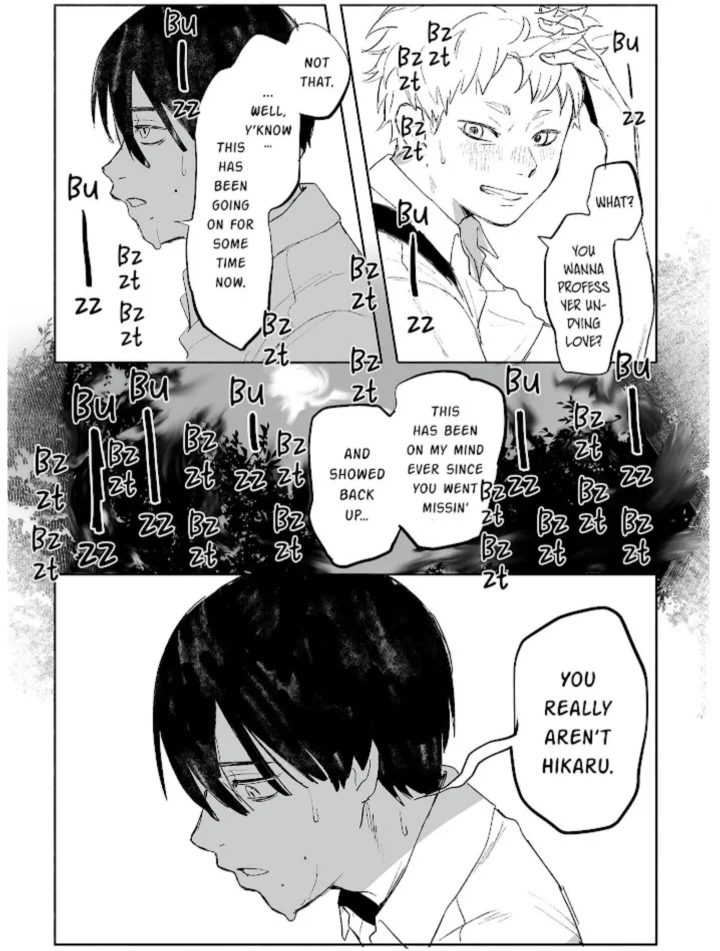
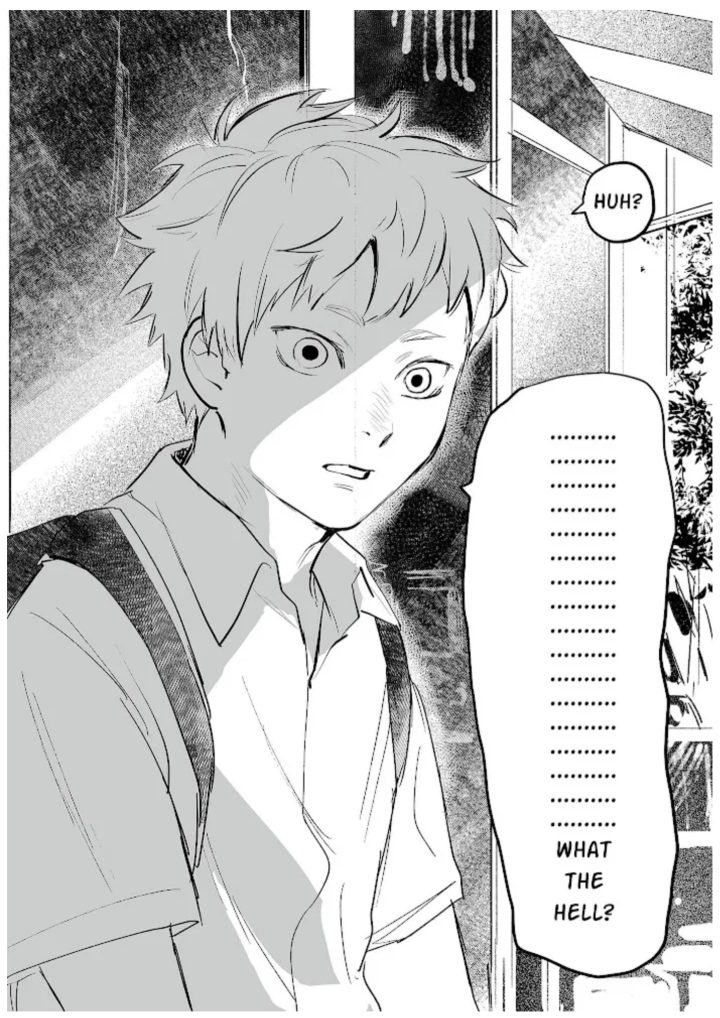
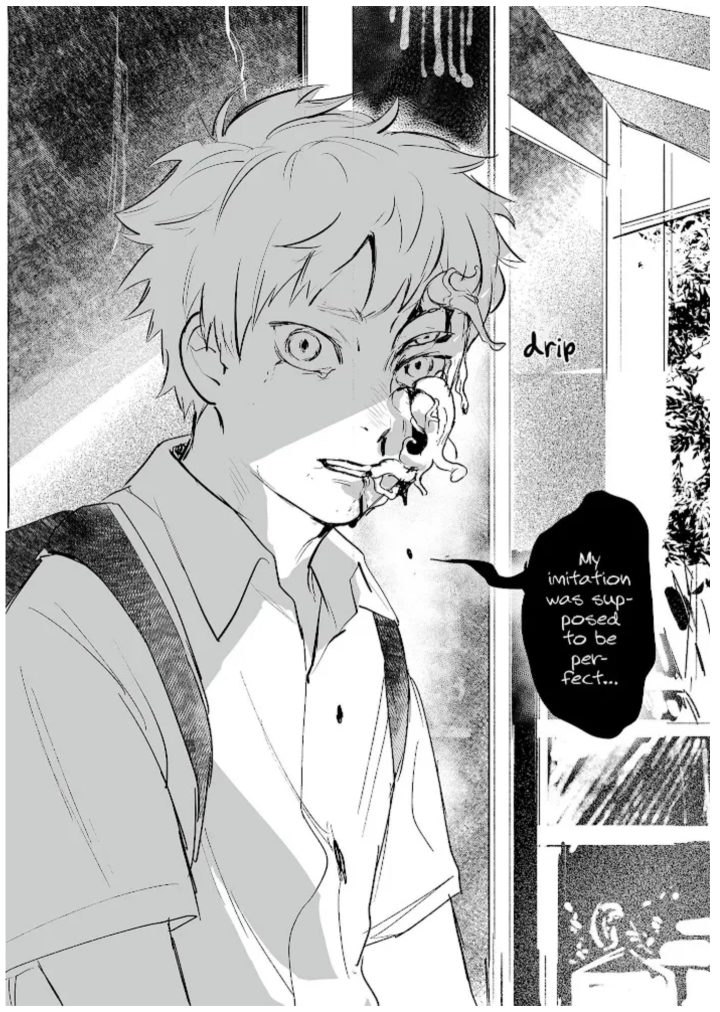
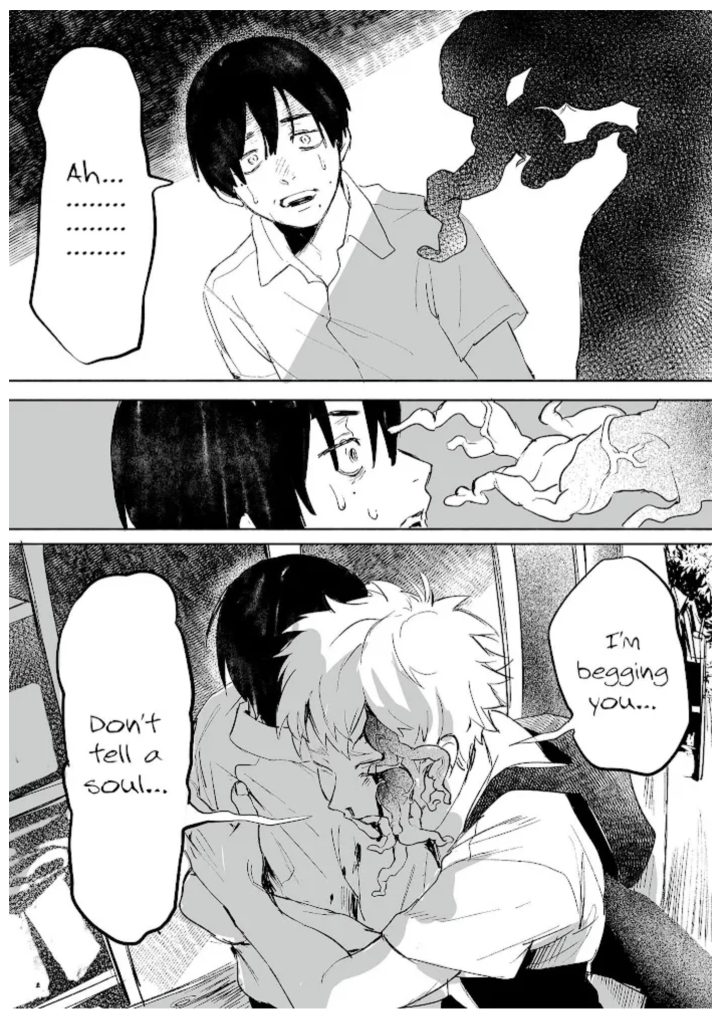
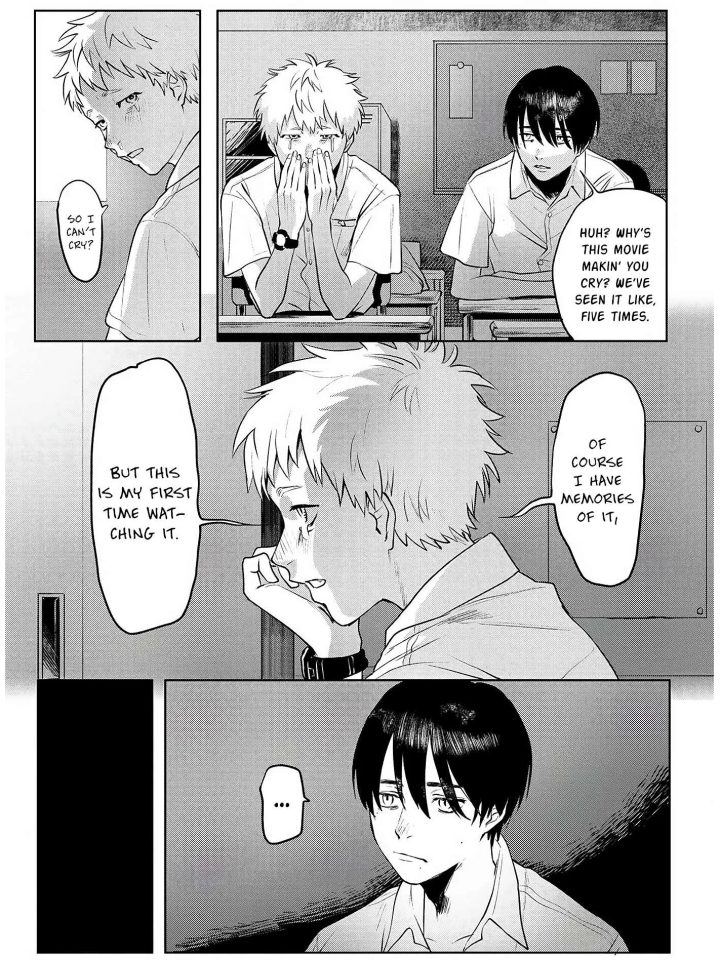
Nothing is certain in this story. Mokumokuren's lines are clear in a physical sense: he does not waste strokes, no more is drawn than what is strictly needed. What is left undrawn is as much a part of the story as what is left unsaid. The process of understanding is a shared path for both reader and characters. What is the nature of their friendship? Some tensions have the dynamics of romance; other elements belong to the realm of a horror rooted in the old tradition of Japanese ghost tales, bathed in a dreamy atmosphere.
While in the first chapters the manga seem as if it could move in several directions, the reader gradually realizes that Mokumokuren’s vision is long-term. The chapters never feel repetitive; the story unfolds with the natural tension of real life, never forced, never too obvious. As the scenery becomes dense with complexity, more people in town grow involved and aware of a malicious reality, turning the series into an intriguing and unsettling horror. I am intentionally avoiding any kind of spoiler here, trying to be as vague as Mokumokuren, in order not to ruin the author’s story construction of small bricks of subtle hints, slowly laid upon each other one at a time.
Behind Hikaru’s disappearance—or rather, his mysterious substitution with a mysterious alter ego—and the disappearance of other kids as well, there are supernatural and malevolent forces that push the story toward disturbing moments of body horror, reminiscent of the lessons of Hitoshi Iwaaki’s Parasyte, in which aliens posses humans, taking control of parts of their body and causing brutal abrupt transformations. In a balance between what could be reality and what could be a product of Yoshiki’s mind, Mokumokuren’s story goes on as a reflection on what remains of the people we love and lose, how tightly we hold on to our memories. Though the mystery is well constructed, this kind of reflection is what I think what matters most in the story.
There's a great sensitivity built from Mokumokuren's understated visual and narrative metaphors, constructing pacing around flashbacks and moments of evocative magical realism. The themes of loss and the potential complexities of ambiguous relationships are woven together in a way that doesn't find obvious explanations while touched by the supernatural. The subdued tone adopted by the author is evident in many choices. The story does not take place in a big city and, like several recent Japanese manga and anime, it embraces a renewed fascination with rural Japan—Your Name. is one well-known example, although it follows a more realistic approach. Here, Mokumokuren instead seems to be searching for a balance between traditional and modern Japanese horror, mystery, and contemporary tales of teenage friendship. The ingredients are many and varied. The story is dense and tense, marked by a maturity and a level of awareness that is quite rare to encounter.








 English (US) ·