
Kevin Brown | April 2, 2026
Alex Potts’ latest graphic novel follows Philip, a forty-something, single, heterosexual man living in what appears to be Dover based on the white cliffs in one scene. There’s nothing remarkable about his life, as he mainly goes about his days working, visiting coffee shops, and trying to make a connection with anyone he can, though he struggles to do so. What is remarkable about the book is Philip’s interior life and his anxiety over every aspect of his life, which feels remarkably apt for where we find ourselves in the twenty-first century.
Like more and more people, Alex works from home in a job that doesn’t seem to provide much fulfillment, not to mention opportunities for true connection. When he does have those chances, though, he analyzes them to an unhealthy degree, often asking himself some version of “Was that normal?” For example, he lives with Caroline, his landlady/roommate, but he goes to great lengths to avoid having conversations with her. He tries to pay attention to the noises she makes to determine where she is, so he can sneak out to the bathroom or kitchen without encountering her. In fact, he’s even oiled the lock on the bathroom door so that it won’t make a sound that might alert her to his presence.
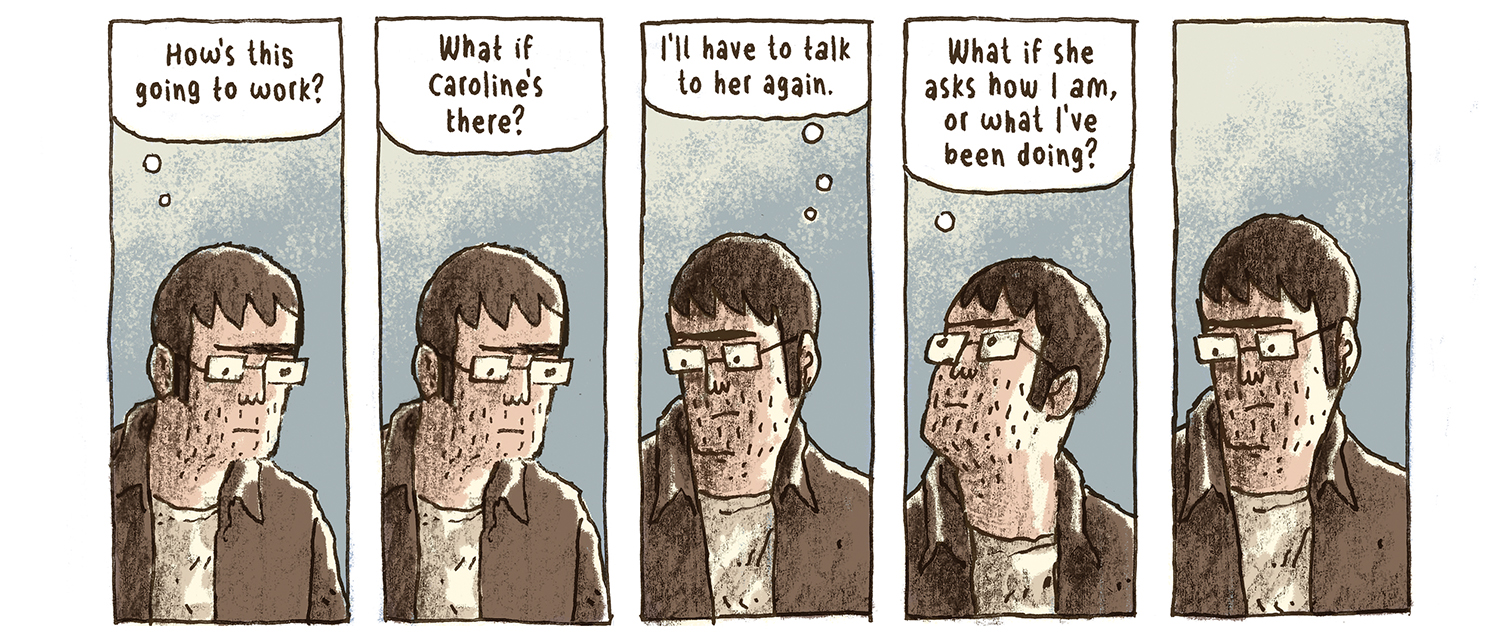
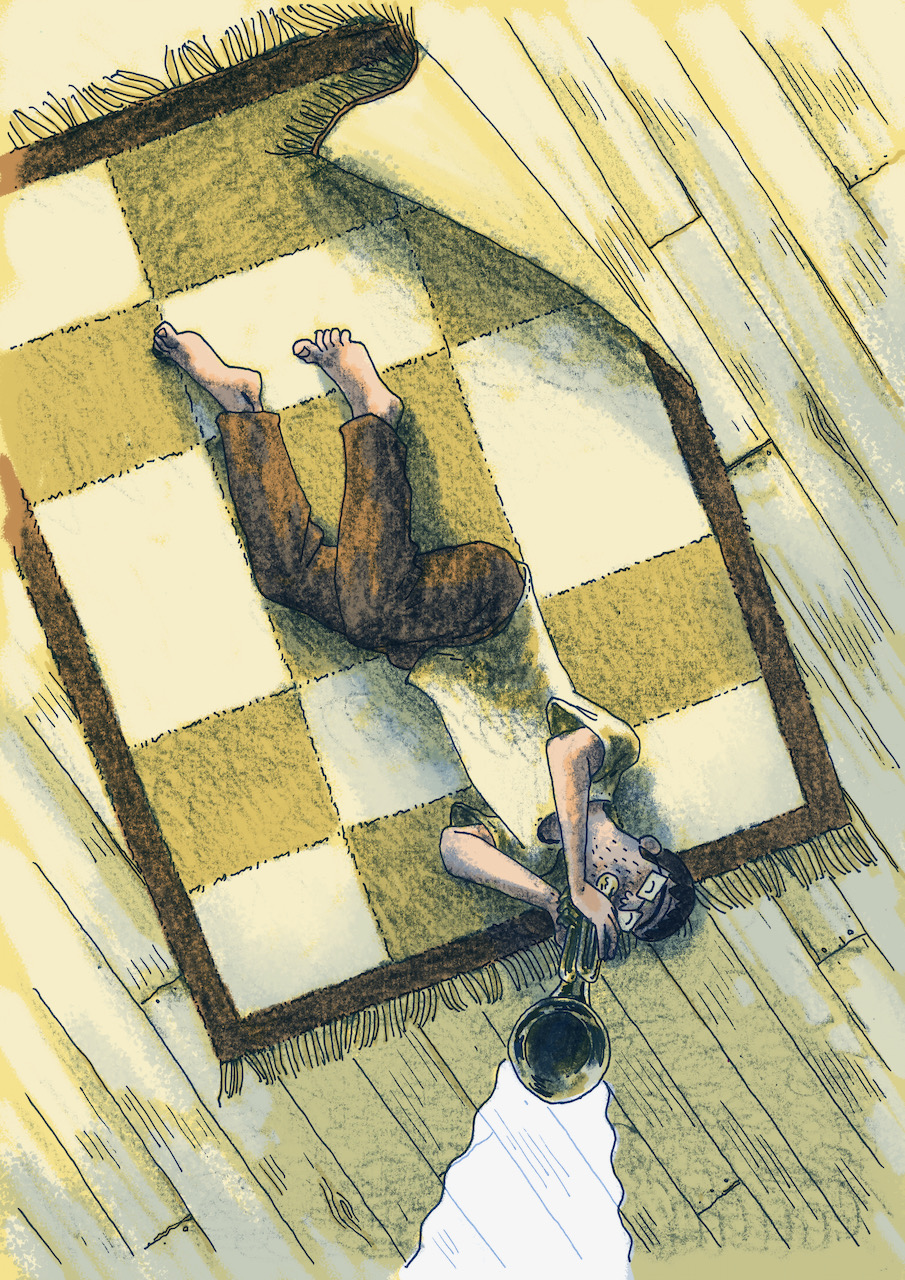
Potts often uses his art to reinforce Philip’s isolation, setting up a clear contrast between him and those around him. In the opening scene, Philip sits alone in a pub drinking, isolated in small panels by himself, while the crowd scenes show people packed together in wider spreads all interacting with one another, enjoying the companionship of their friends or dates. Similarly, when Philip is working from home, Potts crafts overhead views or distant shots with Philip looking smaller in the middle of the panel, or he’ll draw close-ups to show how focused Philip is on the meaningless work he’s paid to do.
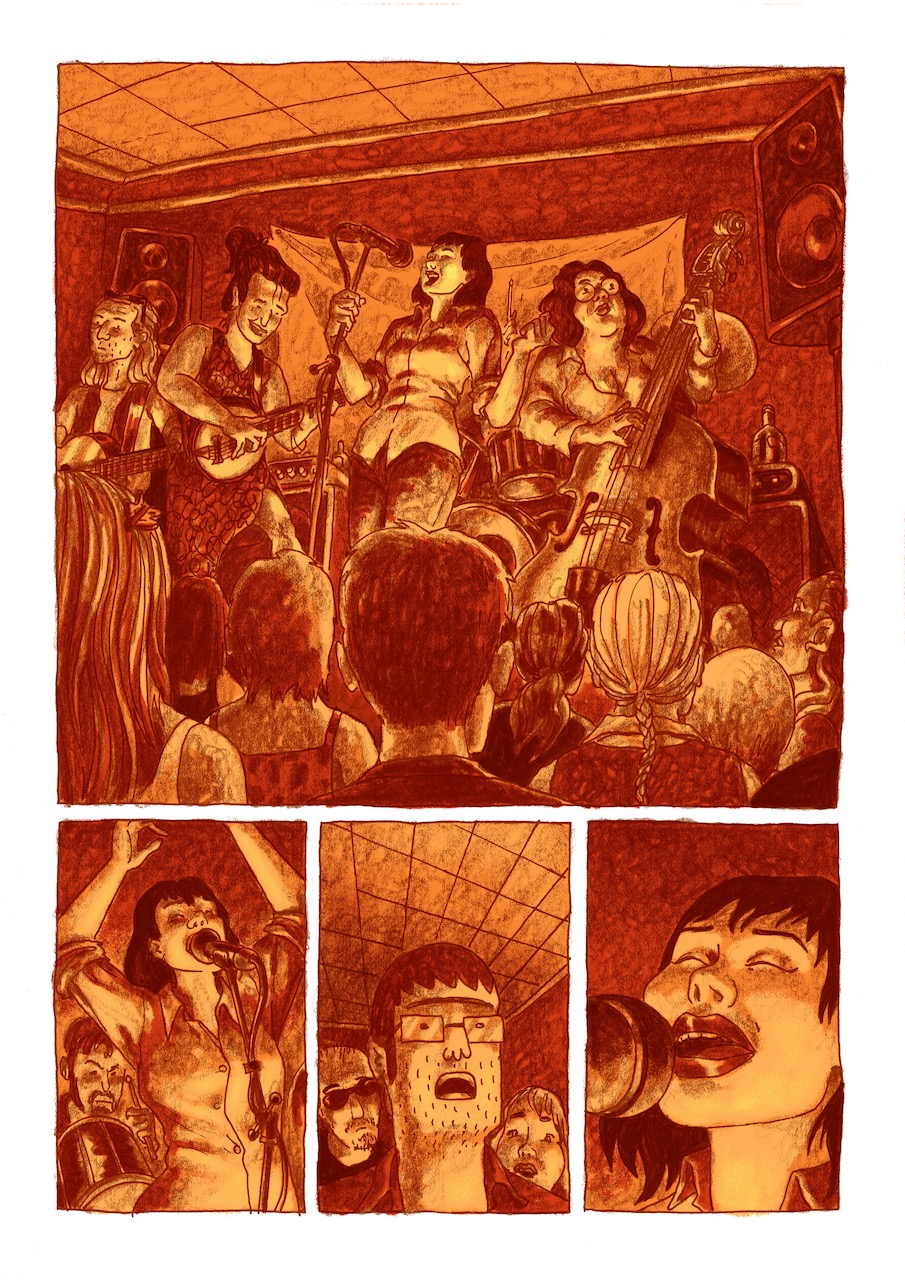
Philip does have a chance at a connection, though, as he ends up at a bar called the Quagmire where he hears a band he doesn’t much enjoy, but he’s intrigued by the lead singer, Gina. She bumps into him, literally, at a coffee shop, but she seems to barely remember him. He later sees her with Lee, whom he believes to be her boyfriend, and he creates a narrative in his mind that they’re happy with one another, which turns out not to be true. Ultimately, he decides to ask her out on a date, which changes his entire outlook.
That shift in outlook continues to swing back and forth throughout the work, as whenever he believes the relationship with Gina is going well, his entire life seems to be worth living, but the reverse is also true. He’s so enamored with how their relationship is going at one point, he completely ignores a tragedy everybody in town seems to be talking about. Much like Landscape with the Fall of Icarus (which scholars now think Peter Bruegel the Elder didn’t paint), Philip goes on with his life, while tragedy happens outside of his view and purview. Similarly, nobody is aware of the happiness in his life, as they go about dealing with the tragedy.
During those shifts in outlook, Potts also seems to be echoing T.S. Eliot’s “The Love Song of J. Alfred Prufrock,” as the titular character there is also obsessed with finding connection, especially with a woman to love, but he spends so much time in his head (some readers believe the entire poem is in Prufrock’s mind) that it prevents him from seeing the world as it really is. After Gina agrees to go on a date with Philip — a scene that leads to a full-page spread of Philip’s reaction of her acceptance — he texts her to set up plans, but it takes her a while (in text time, anyway) to reply. He spends page after page, panel after panel, with thoughts literally surrounding him, as he debates what people with think of him, ranging from “She’s probably told her friends. What if I go out to the Quagmire and they see me and they all know …” to “Nobody cares enough to have an actual conversation about you. You’re insignificant" to “I’m pathetic. This is it. My life is basically over. I haven’t managed to do what most people do.” Of course, when she does respond, his attitude toward something as simple as sitting outside and drinking coffee changes yet again.
The narrator reinforces such feelings about Philip, and often comments on the pointlessness of his work or how he views himself, even referencing the fact that readers can see what Philip is doing at one point. In a scene of Philip’s sitting in front of his computer working, the narrator comments, “If you find the right angle, you can see him from the street. Pedestrians can. Potentially, watch what he’s doing. Not that any of them would want to. I mean, who’d want to spend any amount of time looking at this? Ooh look, Carol, it’s a sad, middle-aged man sitting alone in a dark room, looking into a computer screen. Oh my God, move over, let me see! That’s not going to happen.” That sarcastic tone reiterates how Philip feels about himself, even if he’s never that honest about his life. He might feel that way, but he doesn’t quite give voice to it that harshly.
What’s ironic is that Philip really does have parts of his life that give him joy and meaning, but he’s so caught up in looking for a connection with another person that he often misses it. One night, Gina continually texts him to try to get him to come out and meet her, but he’s reading a book and truly enjoying it. He keeps responding to her texts, but he also tries to continue reading the book, and he never leaves to meet her. Similarly, on the lengthiest date they have, he takes her outside the city and shows her fields and trails where one can walk and see more of nature and the sea. Even Gina comments on how beautiful it is. It’s clear Philip has come there numerous times before, as he references maps online of a variety of trails, and he takes great pleasure in being there.
However, what he would really love is somebody to share those joys with. He doesn’t seem to understand how to connect with others, though, how to find those people who also enjoy books and nature, which leaves him lonely, disconnected, and isolated. It would be easy to see Philip as self-centered, as he doesn’t find ways to reach out to others, but that would be a misreading. When people are lonely, everything they see reinforces that loneliness — see the scene where he believes Gina and Lee are happy based on watching them walk pass him — so they see the world differently. Philip wants a different life, but his viewpoint prevents him from finding a way to that life. Potts’ work lays out this contemporary struggle, as so many people feel disconnected between the life they believe others are having and the life they’re living. It's a feeling that seems all too normal these days.














 English (US) ·