
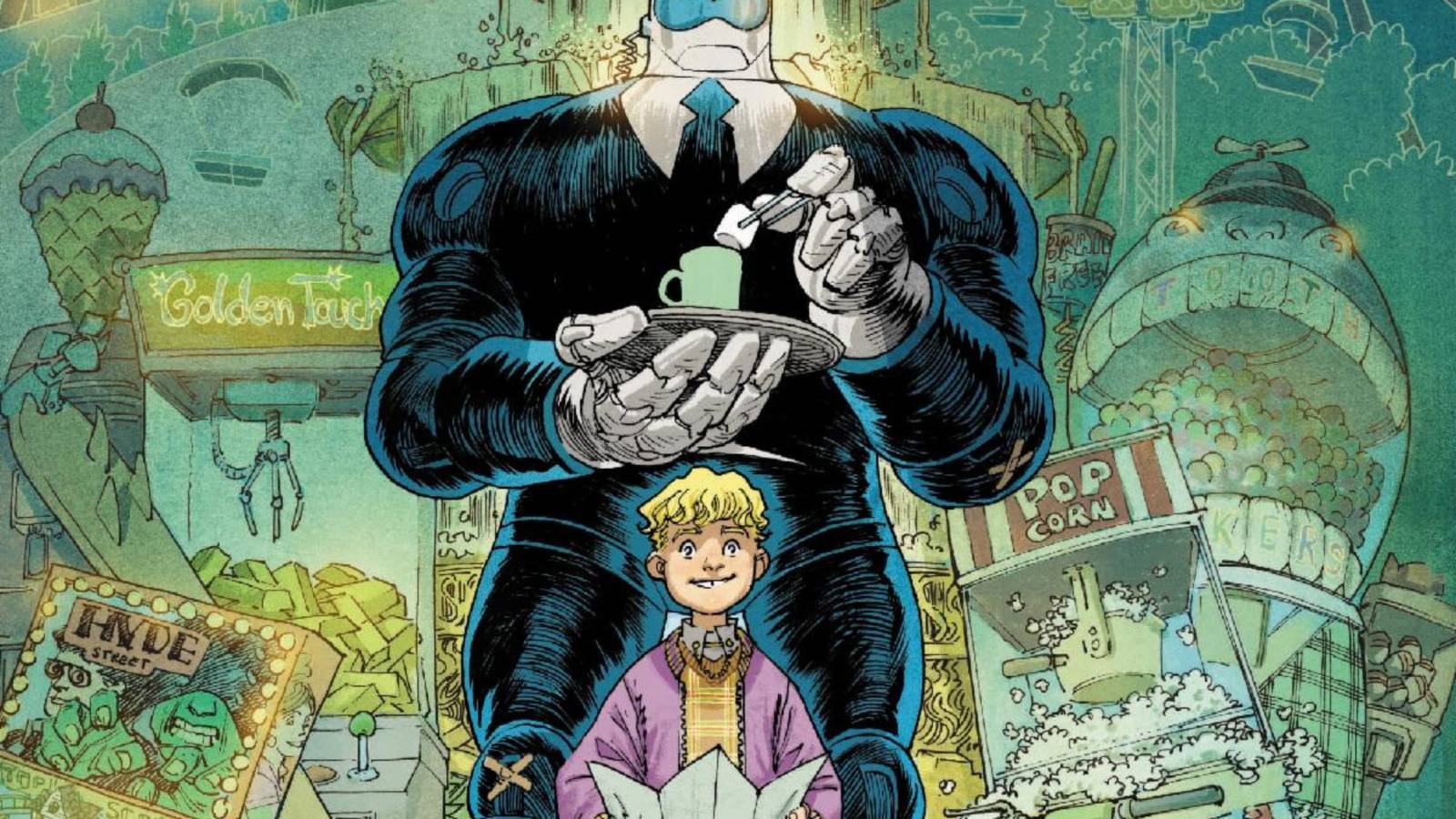
Crowdfunding runs on trust. It’s the unspoken contract between creators and backers: support us early, and you’ll be rewarded first, and often best. That’s why the ongoing situation surrounding BAD IDEA’s Hank Howard, Pizza Detective Kickstarter campaign deserves a closer look, not as a pile-on, but as a cautionary tale for the entire comics crowdfunding space.
A little over a year ago, 446 backers pledged $114,105 to fund the Kickstarter campaign, but now, at the heart of the frustration is something that simply shouldn’t happen in crowdfunding: retail customers getting product before backers. In early 2026, standard single issues like The Two Hollywoods #1 and #2 began appearing in comic shops as scheduled. Meanwhile, many Kickstarter backers—particularly those who pledged for premium tiers like the Ultra-Deluxe Hardcovers—were still waiting.

Not delayed by a few weeks. Not even a few months. In many cases, delayed by over a year—with little to no communication. That gap between retail availability and backer fulfillment cuts directly against one of the core expectations of crowdfunding. Backers aren’t just customers—they’re early supporters who take on risk. When they end up last in line, the model starts to break down.
But the situation becomes bigger than just one campaign. With the breakdown of the traditional distribution model, lots of comic book creators, and many publishers, regularly use crowdfunding as a way to raise capital to produce their projects, but those campaigns very often don’t meet their goals and are abandoned. When that happens, interested backers are expected to get a full refund, and many times the creator retools the campaign project and will try again. But there are some campaigns that do achieve their financing goals and yet are never fulfilled at all, including from names like Grant Morrison and Donny Cates for example, which hasn’t updated backers in over three years.
This is an unfortunate growing pattern of creators and publishers struggling, or outright failing, to meet their crowdfunding obligations. In some cases, campaigns are being accused of non-delivery, poor communication, and of backers being left in the dark for extended periods, even years. While each situation has its own nuances, the common thread is erosion of trust once communication stops and timelines slip without accountability.

Other high-profile creators aren’t immune from criticism in this space either. Rob Liefeld, the creator of Youngblood for example, has been openly critical of traditional distribution channels like comic shops, calling them “unreliable” in getting books to customers. But critics have pointed out that fulfillment issues and unfinished projects have been part of his own crowdfunding efforts, which has backers demanding refunds after waiting for 13 years on their rewards. Distribution problems are one thing, but failing to deliver, or communicate, with refunding supporters is bad form all around.
Delays happen. Most backers understand that. I’ve run multiple crowdfunding campaigns myself and it never goes to plan. I’ve regularly experienced delays over printing issues, logistics problems, rising costs, and so on. These are realities of publishing. And to their credit, Bad Idea did cite a major disruption: roughly $200,000 in unexpected tariff-related costs tied to Canadian imports. That’s not insignificant, and it’s the kind of curveball that can derail even well-planned campaigns.
But the issue isn’t just the delay, it’s the silence. Backers have reported long stretches, approaching a year, without meaningful updates through official Kickstarter channels. For a campaign of this scale, that absence creates a vacuum. And in crowdfunding, a vacuum gets filled quickly, with frustration, speculation, and ultimately, distrust.
Some fulfillment did begin in early 2025, particularly for lower-tier rewards. That matters, and it should be acknowledged. But crowdfunding campaigns aren’t judged on partial delivery—they’re judged on whether they follow through on all promises.
As of April 2026:
– High-tier rewards remain outstanding for many backers
– Communication through Kickstarter has largely stalled
– Retail initiatives, including upcoming releases like A Slice of Life, continue moving forward
That last point is particularly difficult for backers to swallow. Watching new retail products roll out—sometimes through experimental programs like the “Blind Pizza Box”—while their pledged rewards remain in limbo sends the wrong signal, regardless of the underlying reasons.

As I’ve said, this isn’t just about one publisher or one project. Campaigns like Hank Howard, Pizza Detective will shape how people feel about backing future projects, especially in comics, where crowdfunding has become a vital alternative to traditional publishing. When backers see repeated examples, whether it’s delayed fulfillment, lack of updates, or in more extreme cases, projects that never fully materialize, it creates a chilling effect. Supporters become more cautious. New campaigns face higher scrutiny. And the entire ecosystem takes a hit.
Even creators who consistently deliver feel that negative impact.
This situation isn’t beyond repair. What backers are asking for isn’t unreasonable:
– Clear, consistent updates—even when the news isn’t good
– Transparent timelines, even if they shift
– Prioritization of backer fulfillment over continued retail expansion
Most importantly, they want acknowledgment—not just of delays, but of the frustration those delays have caused. Crowdfunding works when creators treat backers as partners, not just pre-order customers.
I think there’s still time for Bad Idea to course-correct and rebuild goodwill. The books will eventually ship. The question is whether the trust will. Because in crowdfunding, trust is the real product. And once that slips too far behind schedule, it’s much harder to deliver.
***






 English (US) ·