
Helen Chazan | June 2, 2026
 art from 'Kisses' by Kiriko Nananan collected in Sake Jock (Fantagraphics, 1995)
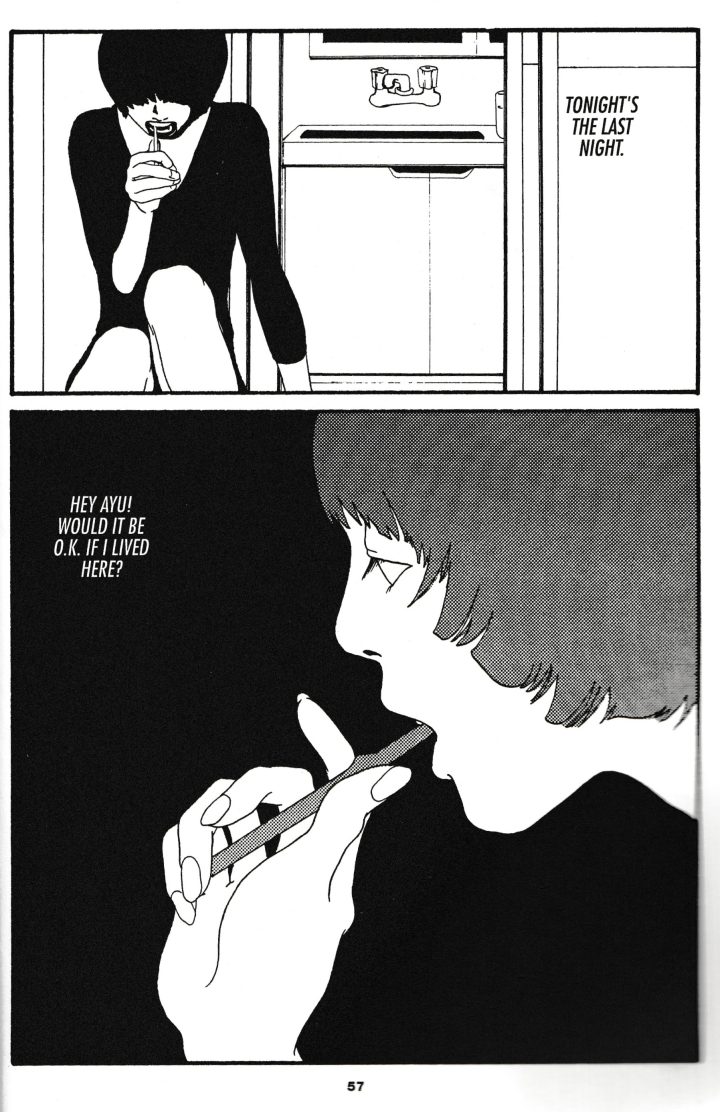
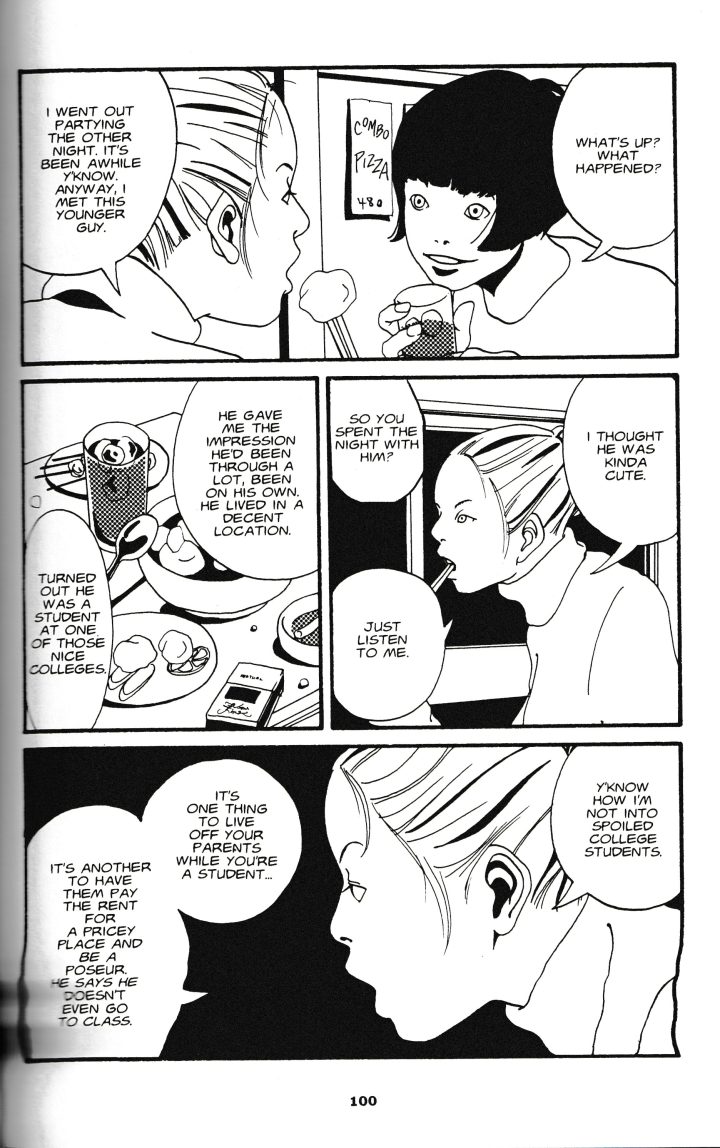
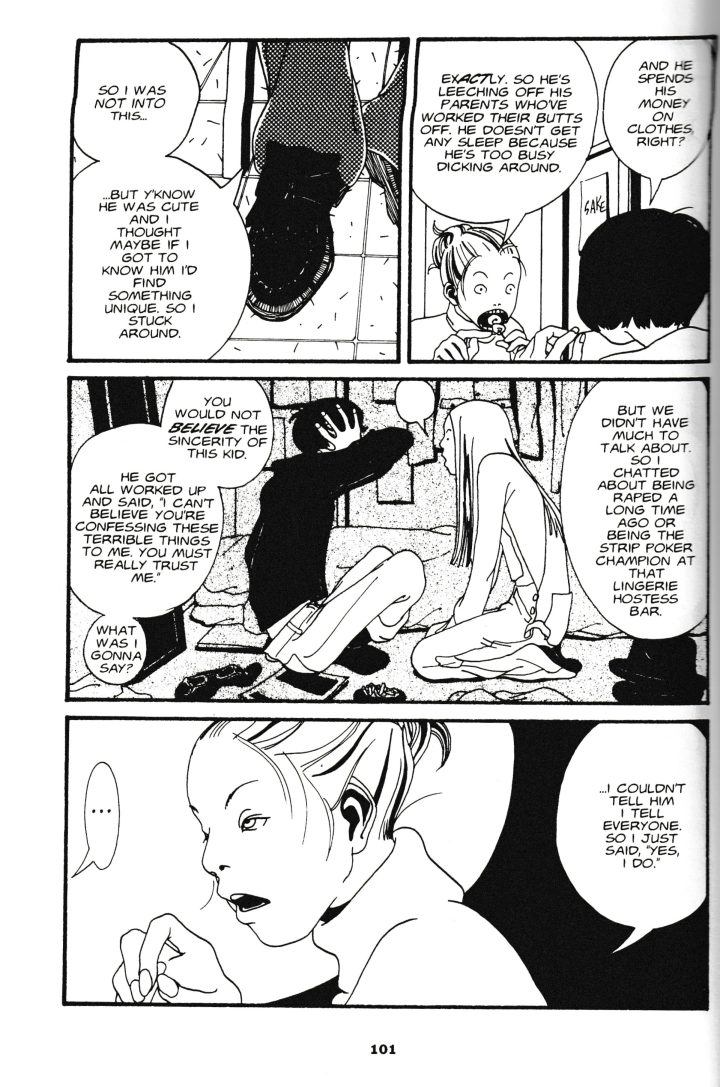
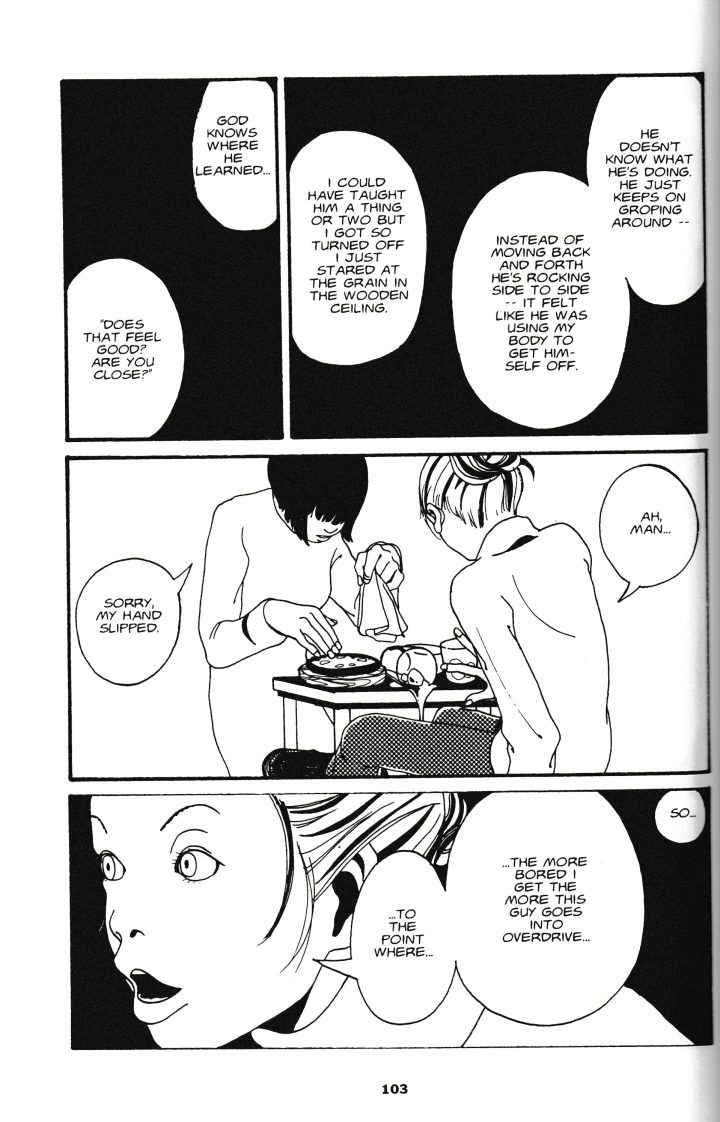
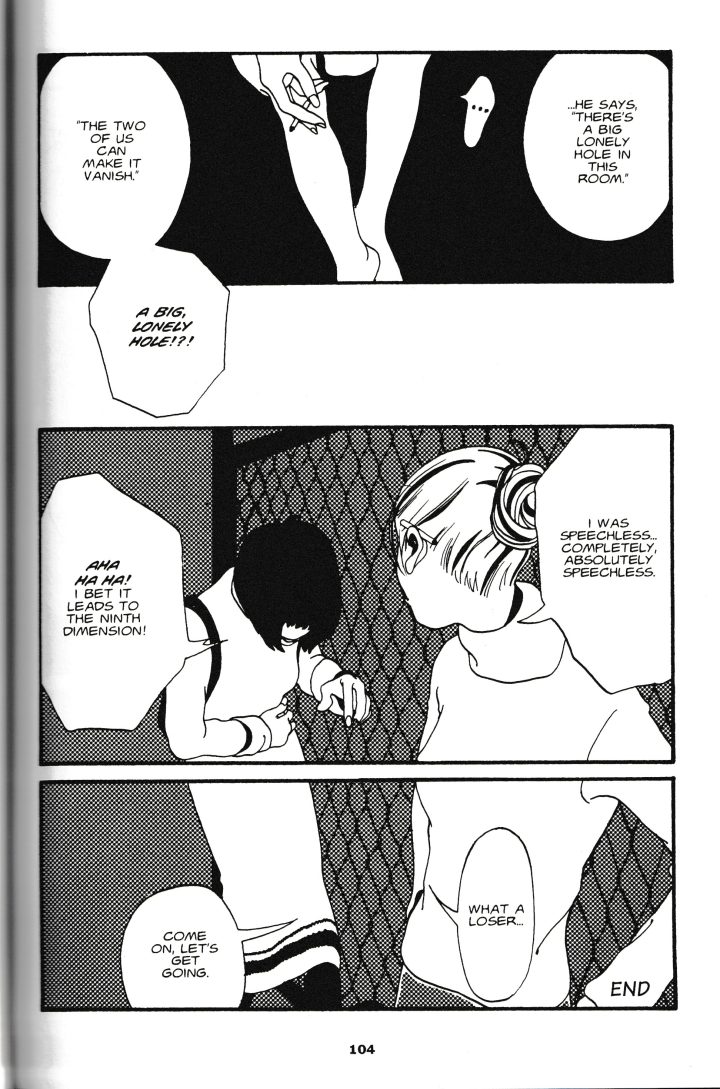
The image of a woman curled up in pain. Her words, disembodied: “Don't go.” Her wailing form is oddly familiar, a near spitting image of the young man at the end of Seiichi Hayashi's Red Colored Elegy, bemoaning the filth of his life and the absence of his lover. Like Hayashi's young lovers, the protagonist of Kiriko Nananan's “Kisses” has brought a lover into the squalor of her apartment, his incessant urgings to let him in, disembodied alongside the words of her friends begging her not to. Toothbrushes and household sundries are scattered across the bare hardwood floor. We see her in side profile briefly, in the mundane act of brushing her teeth, before she crumples to the floor. The message is clear enough. A violent relationship, and a sudden departure. The torturous, nearly unspoken story of so many gekiga ballads, a woman's suffering foams at the surface of “Kisses”. As the heroine likens her agony to vomiting “mouthfuls of white bubbles and blood” there's an uncertainty as to whether she is really speaking in metaphor. And yet, in this disturbing, short, poetic reflection, Nananan's woman remains sentimental. The toothbrush was her lover's. “You'll use my good-bye gift without even knowing it,” she muses, “Completely unaware as I cover you in kisses... I like that.”
We would like to imagine her smiling, maybe laughing through the salt of her tears, but save for the panel of her brushing, where her expression is blank, even dissociated, all our eyes may access of her is the back of her head. Every strand of her hair is so neatly defined, the curve of her spine, the hinges of her knees, every tensed digit of her fingers is seen in such vivid clarity, in such a stark and confident line. But her emotions, her torment, so calmly and clearly established in narration, are kept out of sight. She is looking away from us. We may never look her feelings in the eye.
For many international readers, “Kisses” would be their first impression of Kiriko Nananan, and indeed one of their first of gekiga as a movement, arriving in an English translation by Adam Glickman and Mari Tamura through the Fantagraphics anthology Sake Jock in 1995, only two years after her debut in the pages of Garo in 1993. Nananan would appear again in the anthology Secret Comics Japan, with two stories from her debut collection Water (1996) and a short essay from Garo editor Chikao Shiratori, which contextualizes Nananan's work in a lineage of female mangaka telling stories from the everyday lives of women, depicting sexuality frankly and with honesty, beginning with Murasaki Yamada and continued by the likes of Kyoko Okazaki and Shungiku Uchida. It is fitting that Nananan would become an international primer on both the avant garde wing of Garo and of feminist comics from Japan, because in many ways Nananan heralded the end of a generational wave of cartooning, her Garo debut arriving at the beginning of the storied publication's final decade.

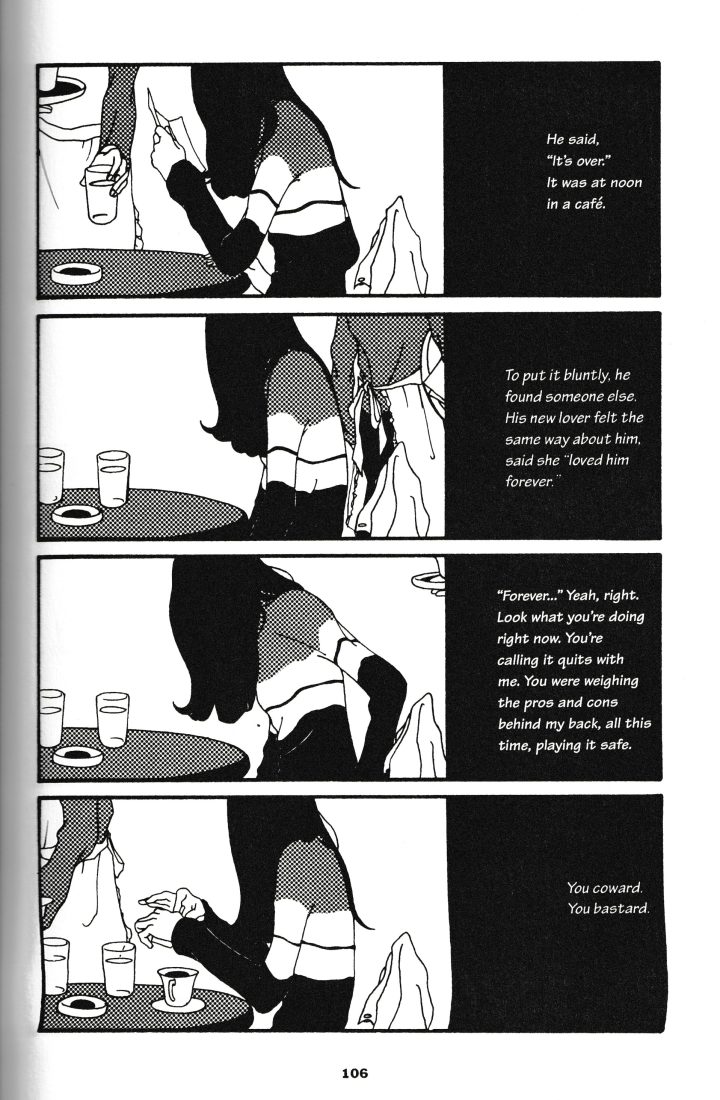


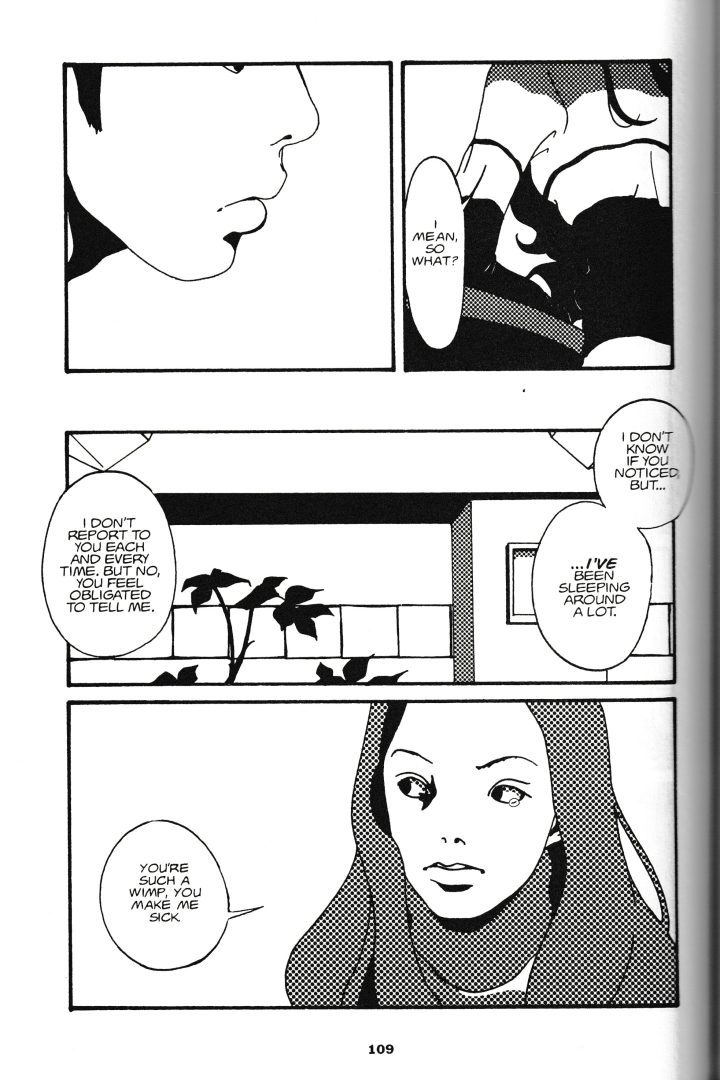
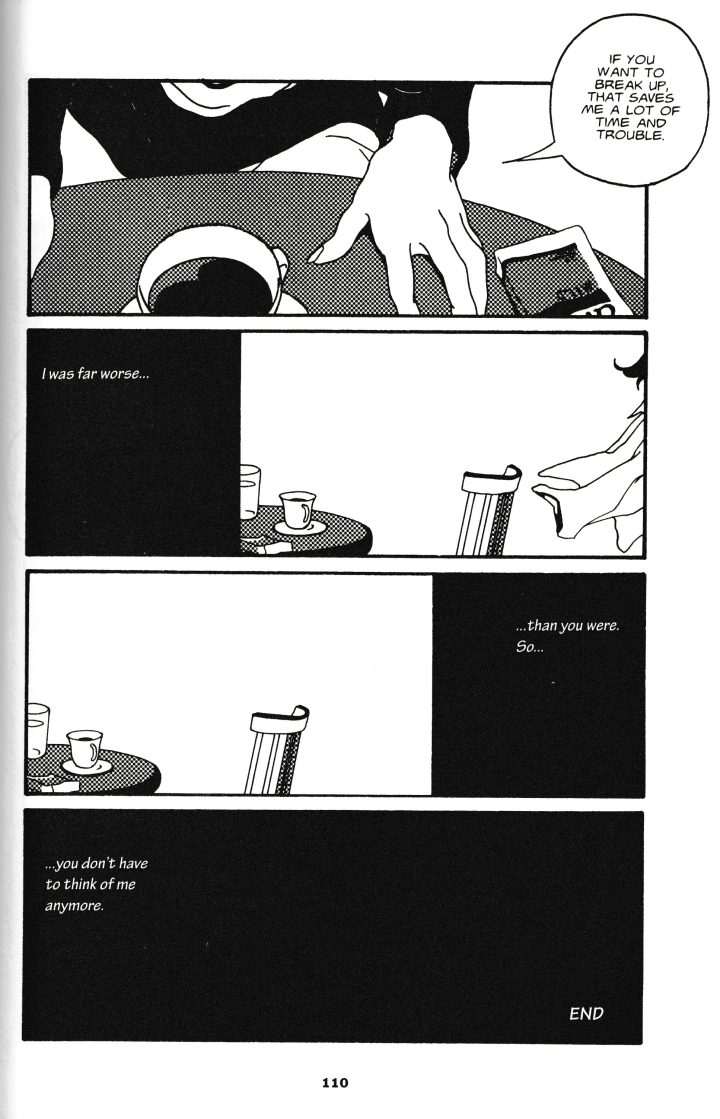
Today, we can read Nananan's work in conversation with the women and men who came before her. Like Murasaki Yamada, Nananan's stories linger on jealousy toward a phantasmic “other woman,” and like Kyoko Okazaki her work plumbs the seedy, often violent, underbelly of the lives of sexually active women and girls. Nananan inherits the postmodern, sentimental drift of Seiichi Hayashi's gekiga and the literary wandering focus of the brothers Tsuge. But there is a brutal yet poignant precision to Nananan's art that is totally her own. Her comics are fatal, lonely, quiet works, stories which linger like the dissociative calm after a breakdown. Nananan's art has the intensely real brightness of an overexposed photograph. Faces are obscured, emotions are delayed. To read Nananan's gekiga is to trespass into memory, the intimate moments of schoolgirls, the suffering of battered girlfriends, the vicious gossip of other womens' friends.
The distant melancholy longing of Nananan's short stories find their apotheosis in her graphic novel Blue. Blue makes the sapphic gaze of Nananan's short stories, the lingering on collarbones and shuddering backs, explicit, the story of two high school girls whose friendship grows into newfound romantic desire and erotic fixation. Kirishima, a quiet girl with a couple of gossipy friends, finds herself fascinated with her classmate Endo, a sullen tomboy whose return from a yearlong suspension has brought with it rumors of delinquency and teenage pregnancy. The two begin to spend time together, drawn into each other's lives. At a sleepover, Kirishima confesses her feelings to Endo. The following page is a spectacular composition, three vertical panels barely revealing Kirishima's back as she sobs while Endo, laughing, wipes away Kirishima's tears. A vertical panel showing the lower half of Endo's face suspends the moment before the girls kiss almost endlessly, an image of childish passion too overwhelming to see directly. The following page, their kiss, is crushingly filled by white negative space, the black of Endo's hair, her uniform, covering Kirishima's face, hiding her features from the reader. It is a direct clear, image, romantic, tragic, erotic in a tender adolescent way that is true to life, but the reader is not allowed to see it all.
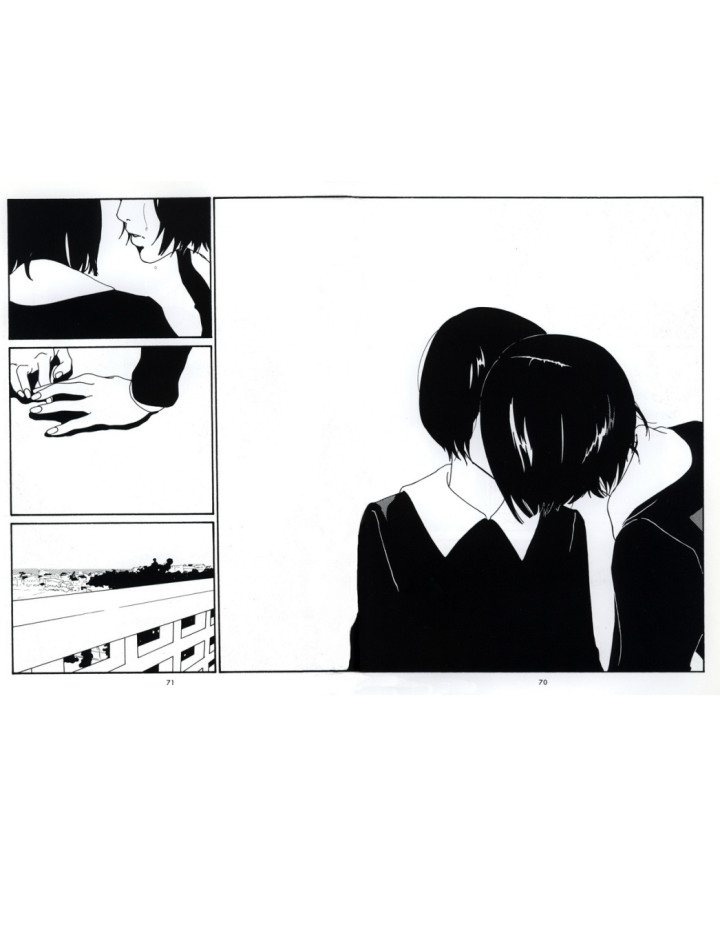
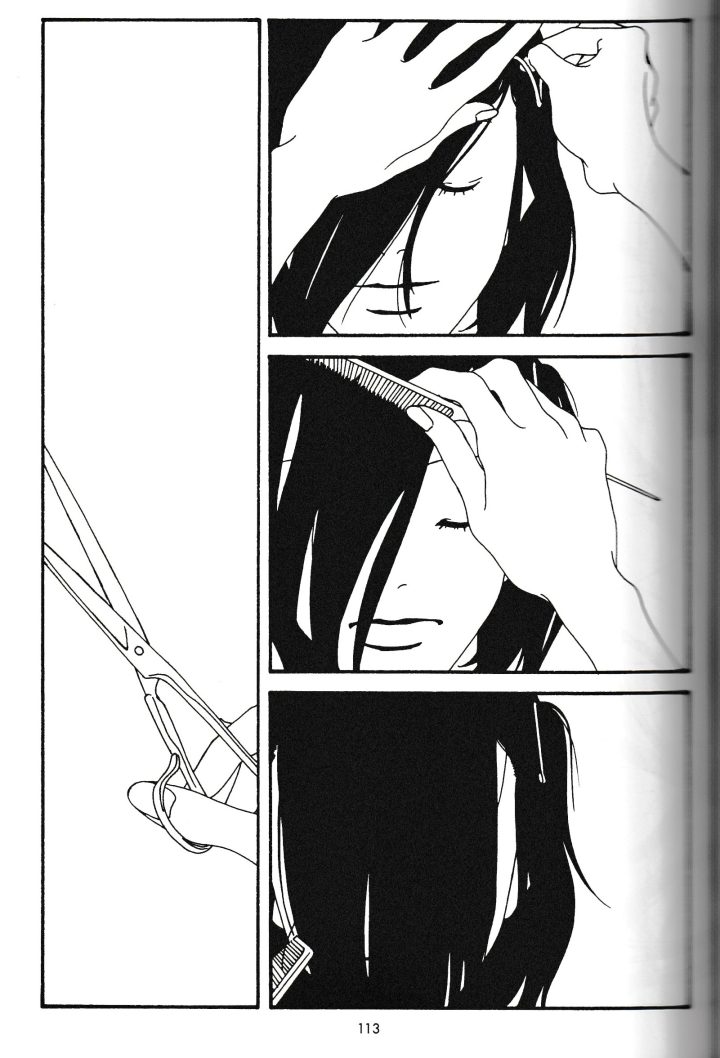
Where Nananan's early works brought the reader into a gaze that looked longingly but not directly into the lives of troubled women and girls, beautiful, struggling people, Blue tells the story of a girl whose eyes can't help but linger on such a girl. Although our view is always distant from the girls, little moments stay with the reader as if they were Kirishima seeing them - Endo cutting her hair and laughing about it, Endo leaving her home one day and returning without a word, Endo crying in a corner of a school hallway. Reading Blue at once forces readers into a sobering remove and deep proximity to Kirishima's emotional world, confronting us with painful feelings no adolescent is ready to understand at a distance that only seems to give them greater sting. Nananan tells their story without judgement, yet also without mercy -- in a moment where Endo expresses sympathy for her adult lover, a married man who most readers will intuit is exploiting her, the impression one is left with most is not whether she had agency but how harrowing it is to be a girl caught amid adult problems, conflicts and people she so badly wants to understand and cannot. Blue is a story of first love between girls without drama, without exaggeration, told with a mature awareness that these moments of queer awakening feel like the end of the world.
Blue became Nananan's breakthrough work, catching international attention in no small part thanks to finding a place in Frederic Boilet's Nouvelle Manga project, where it arrived to readers alongside such seminal works of naturalistic cartooning as Jiro Taniguchi's The Walking Man and Kazuichi Hanawa's Doing Time. Blue would be the first of Nananan's works to reach many English language readers, and sadly also the last, despite an effort by CPM to localize her follow up lesbian work Strawberry Shortcakes, stalled by that publisher's bankruptcy. Blue is a comic of peculiar importance to myself, as it may have been the first lesbian love story I ever read, almost certainly the first I consciously sought out, at a tender and precocious teenage year when I found myself increasingly drawn to stories of women loving women without really understanding why.
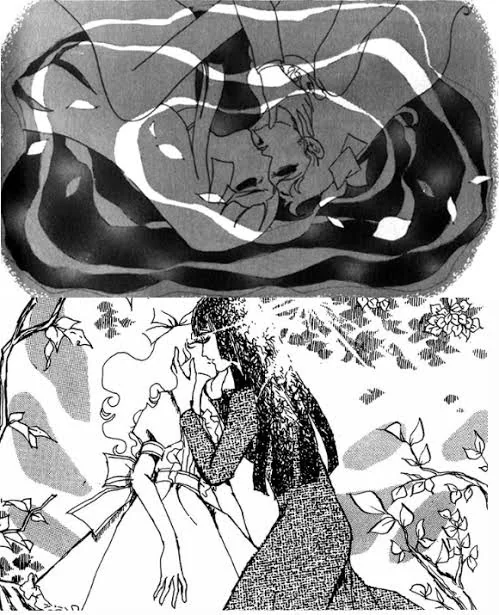
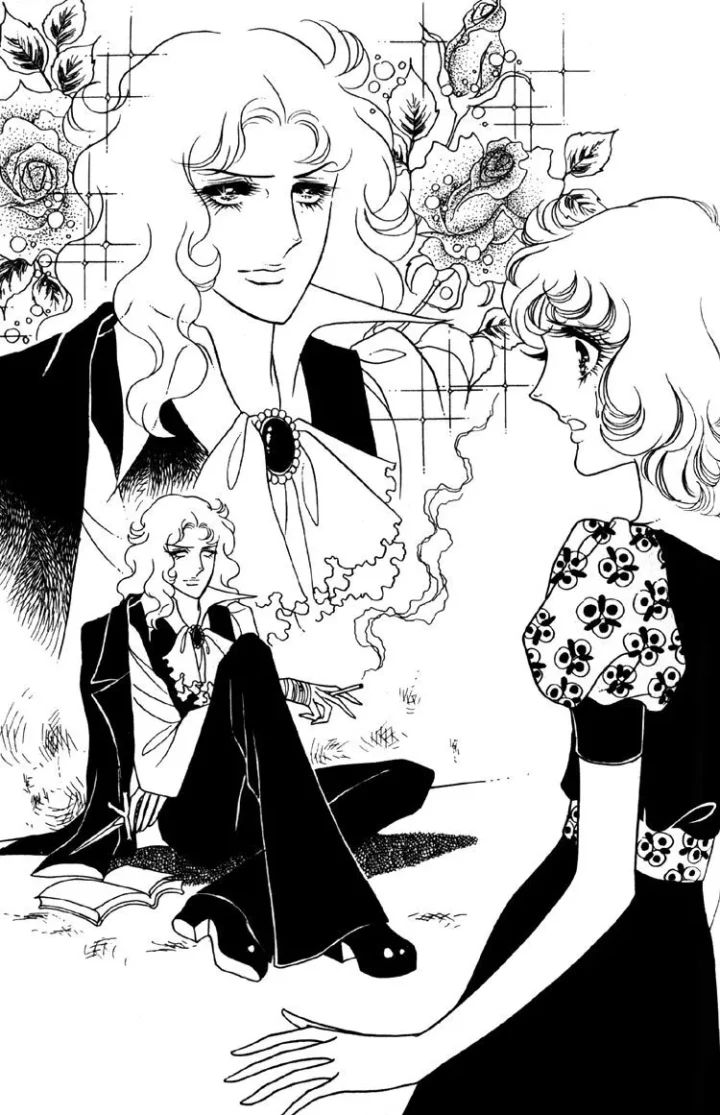
Blue is in many ways a work in the classic mould of yuri romance, with its nostalgic eye cast on high school and school uniforms, its overwhelming tragedy -- a straight-laced outsider girl falling for a beautiful, troubled delinquent is a story breathlessly recounted in yuri from the likes of Ryoko Yamagishi's Couple of the White Room and Ryoko Ikeda's Dear Brother onwards. Aside from completely eschewing the breathless florals of its shojo manga precursors, Blue's distant perspective also is a far more sympathetic one. In classic yuri, the focus on high school and on two lovers torn apart by tragedy works to convey a message that girls loving girls is a rite of passage, something to feel in adolescence and put away before meeting a man. Yamagishi and Ikeda condemn their willowy dykes to death, their heroines keeping their memory in their hearts while stepping forward towards a presumably heterosexual future. Of course, nobody dies in Nananan's story - Kirishima goes to college, the lovers are separated by circumstance. Endo says goodbye to her at the train, we linger on Kirishima quietly crying, collecting herself as she stands in the subway car. In many other respects, it's a similar story to the 70s shojo classics, wallowing in the memory of high school, the fascination one girl feels for another, the sense of adulthood as a looming disaster that tears lovers away from one another. But Nananan's story is not moral, not instructive. It is an honest, loving, respectful depiction of a first queer love. In my early 20s when I found myself a lesbian, I would think back to Blue and recognize some of the old and new pain I felt in my own long queer awakening. Blue is a comic that radiates a mundane and honest sympathy for difficult, unhappy girls, looking at us from afar.
On December 25, 2025, Kiriko Nananan's death was announced to the world. She had passed away a year prior, but at her and her family's request, the news was kept private for a year. She was 52. We international readers in the English language grieve Nananan at a year's remove, and 20 years after our last opportunity to read her work in translation. Like the everyday tragic heroines of her stories, Nananan averted her gaze from her audience at the end of her life, her final moments belonging to herself. I hope we may meet her again in the pages of her comics, but at this moment, I stay with her own thoughts on her work, in her author's note on “Kisses” from the pages of Sake Jock:
“As I finish this story, it's growing warm in Tokyo. Today, I dressed lightly and went for a walk to the top staircase of a nearby apartment building. From there you can see over a group of plum trees into a neighboring town.”
I would like to remember Nananan, the keen observer of the world, the author who chooses to tell her reader about the weather on the day she finished drawing her comic rather than offer an interpretation, a woman who walks to another building to look at distant plum trees from a rooftop. A woman who looks away from us, into the distance, into the hearts of women all over the world.




![Stargate Fans Bring #SaveStargate Campaign to San Diego Comic-Con 2026 [UPDATE]](https://sdccblog.com/wp-content/uploads/2026/07/Screenshot-2026-07-13-at-2.35.21-PM.png)






 English (US) ·