
Helen Chazan | June 16, 2026
She found a monster in the attic. Setting to work to render the leering creature complete, the battered girl took to the darkness of that hidden room above. The dwarf gave her a gift - his massive, rotten penis. With the power of a man, the power to kill her depraved father, the maniac shore off her hair and took to the night, slaying men with her rock hard cock, “the power of hell” - a gun.
In Noroi Michiru's short stories, gender and sexual violence whirl hysterically around familiar motifs of genre staples and at times ludicrous gore and take on a unique intensity all their own. It is well known at this point that the Japanese audience for specialty horror manga is often geared to women and girls, with artists like Inuki Kanako and Ito Junji catering to a (commercially) feminine appetite for creeping hysteria. Noroi's work bears comparison to his late 90s contemporaries both with its oppressive atmosphere and eager veer into absurdist black comedy. But unlike the almost austere Lovecraftian terrors of Ito, the comics collected in the first volume of The Horrors of Noroi Michiru, early works from the first five years of his prolific career in the horror genre, are firmly rooted in the realm of shlock and shock in the tradition of The Evil Dead - always campy, more referential than novel, and constantly intense. Many of these stories concern girls discovering their capacity for sexual deviance, homosexual, homicidal, monstrous and all too human.
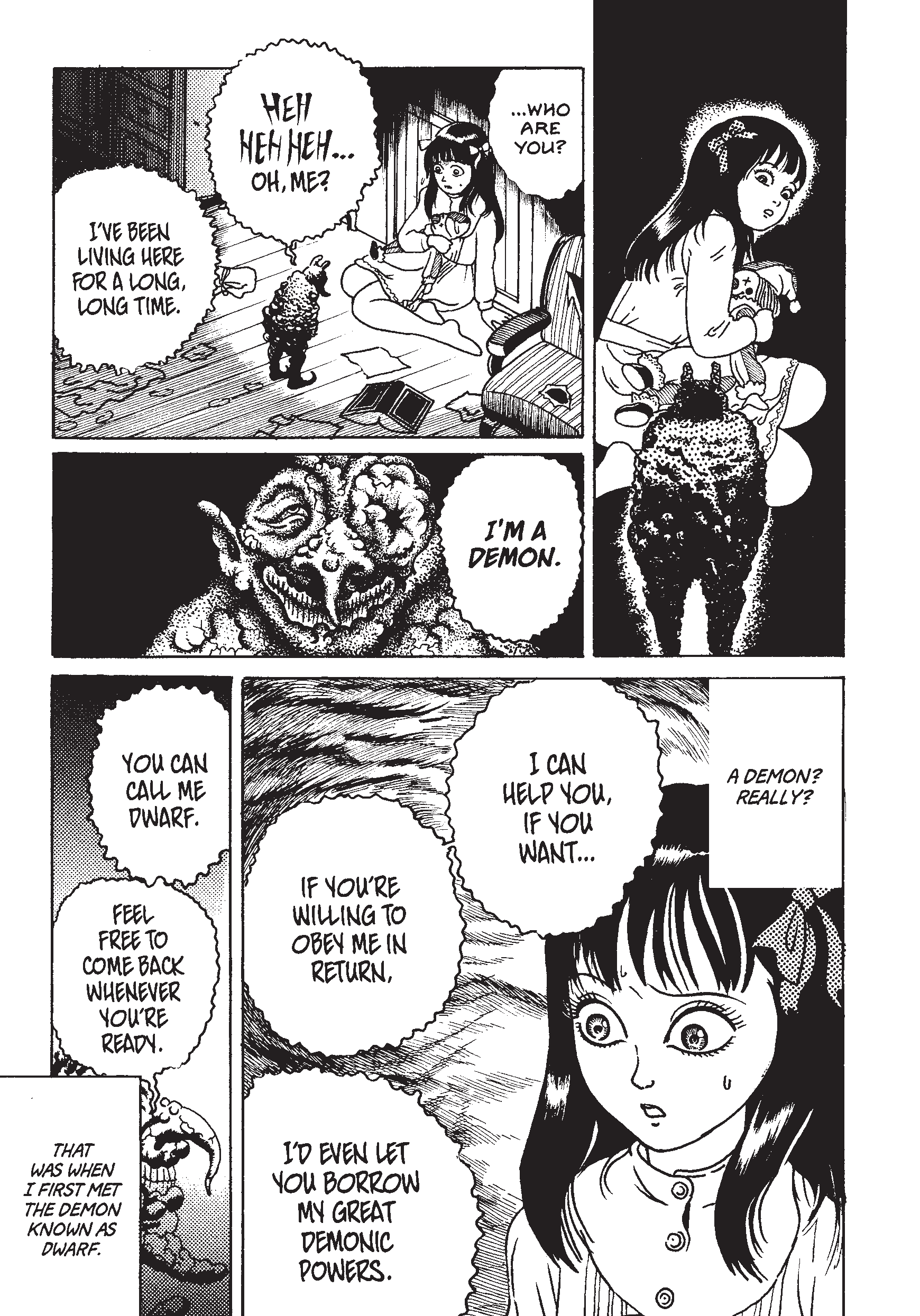
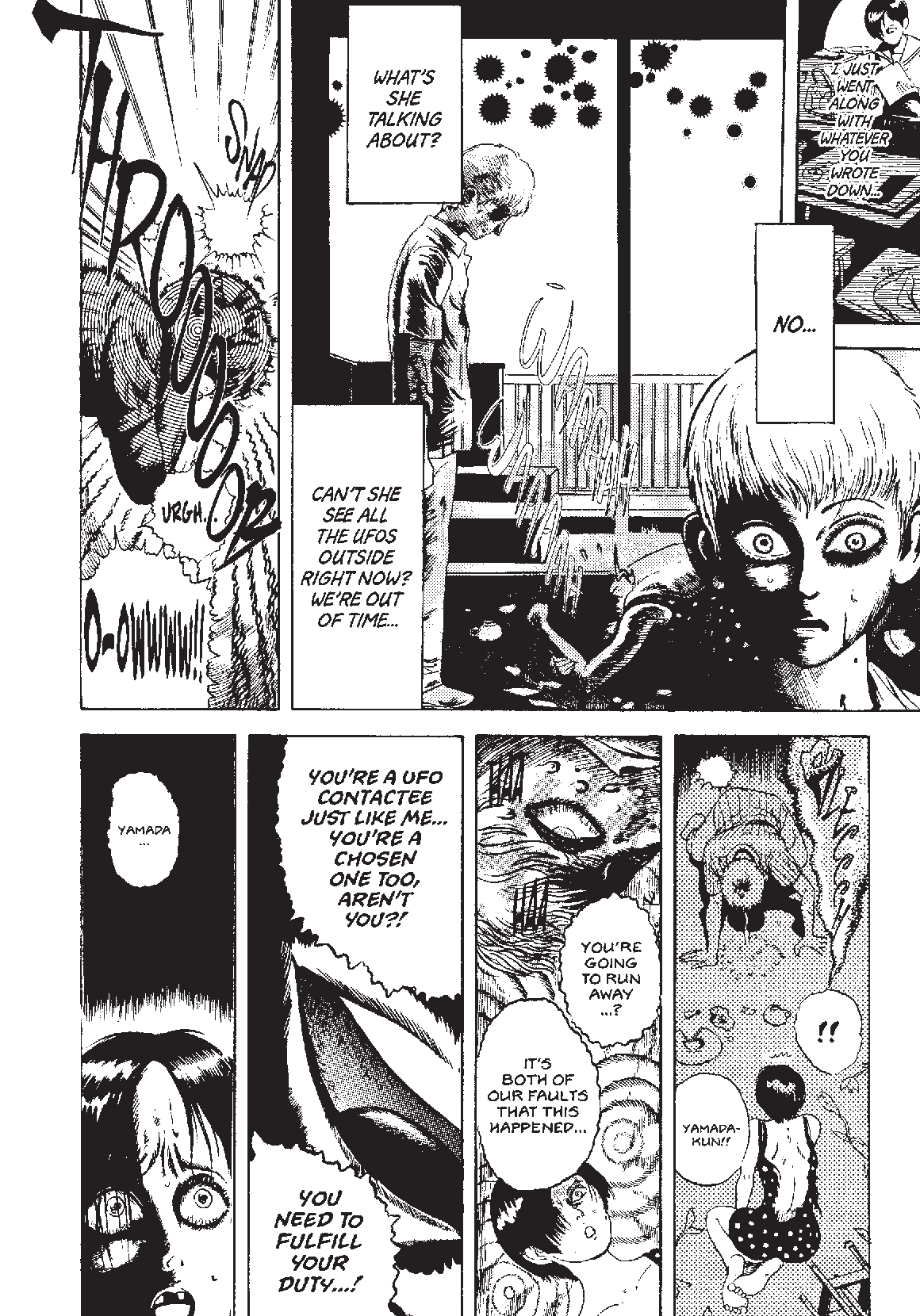
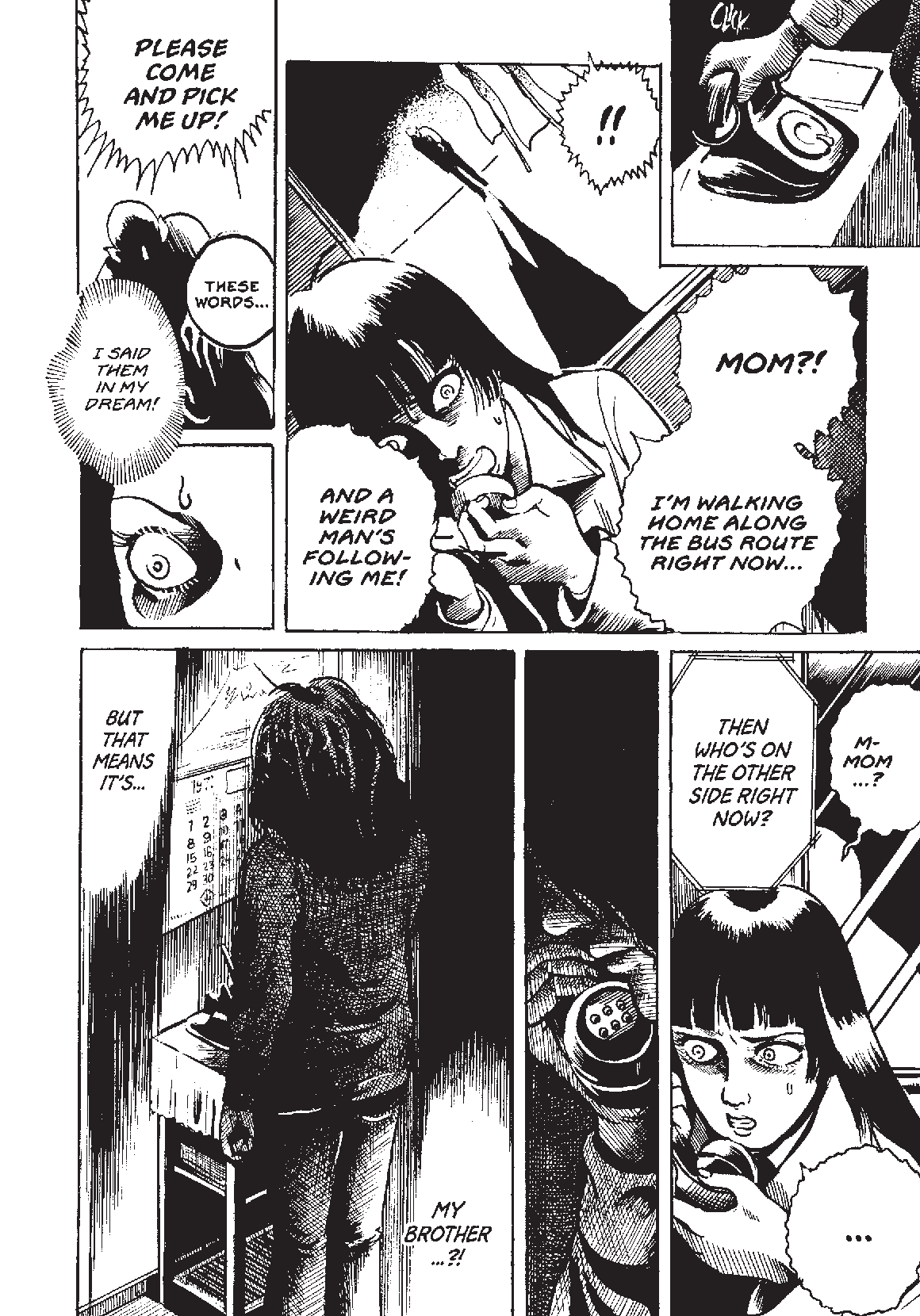
The Horrors of Noroi Michiru leads the reader through a procession of psychosexual variations on horror genre standbys. The aforementioned story of The Dwarf is a pastiche of ero guro and gothic horror, albeit one which suddenly veers into a psychosexual noir send up. The Demon Saucers in the Blue Sky tackles the cosmic horror found in the likes of Morohoshi Daijiro, and indeed Ito Junji, the story of a boy who can see horrific flying saucers and a girl who claims she can see him too. The boy sinks deeper into delusion, murdering the girl and fatally wounding himself in a splattery attempt to prove the alien's existence. In a demystifying twist straight out of a code era horror comic, the aliens are revealed to be a delusion after all, caused by parasitic sea urchins which resemble the UFOs of the boy's psychic visions — although I can't image the comics code authority would approve of a high schooler hacking out a girl's skull and then stabbing himself repeatedly even in its more lax years. “This Isn't What I Dreamed” drops a leering Nosferatu and frightened girl on the phone into a surreal landscape remeniscent of post-Nejishiki surreal gekiga, and “Wooly in my Closet” remixes elements of Edogawa Ranpo's The Caterpillar into a creature feature.
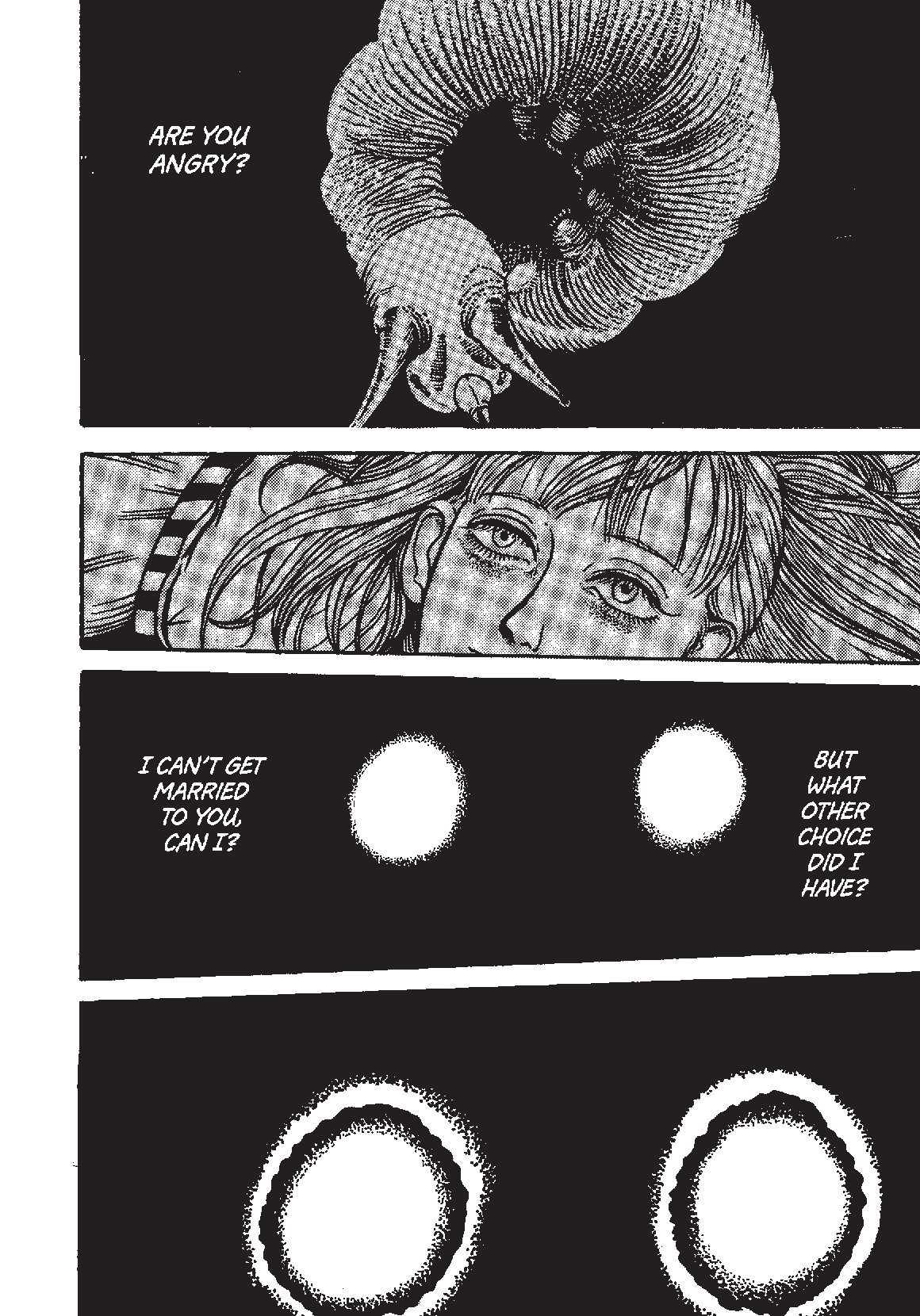
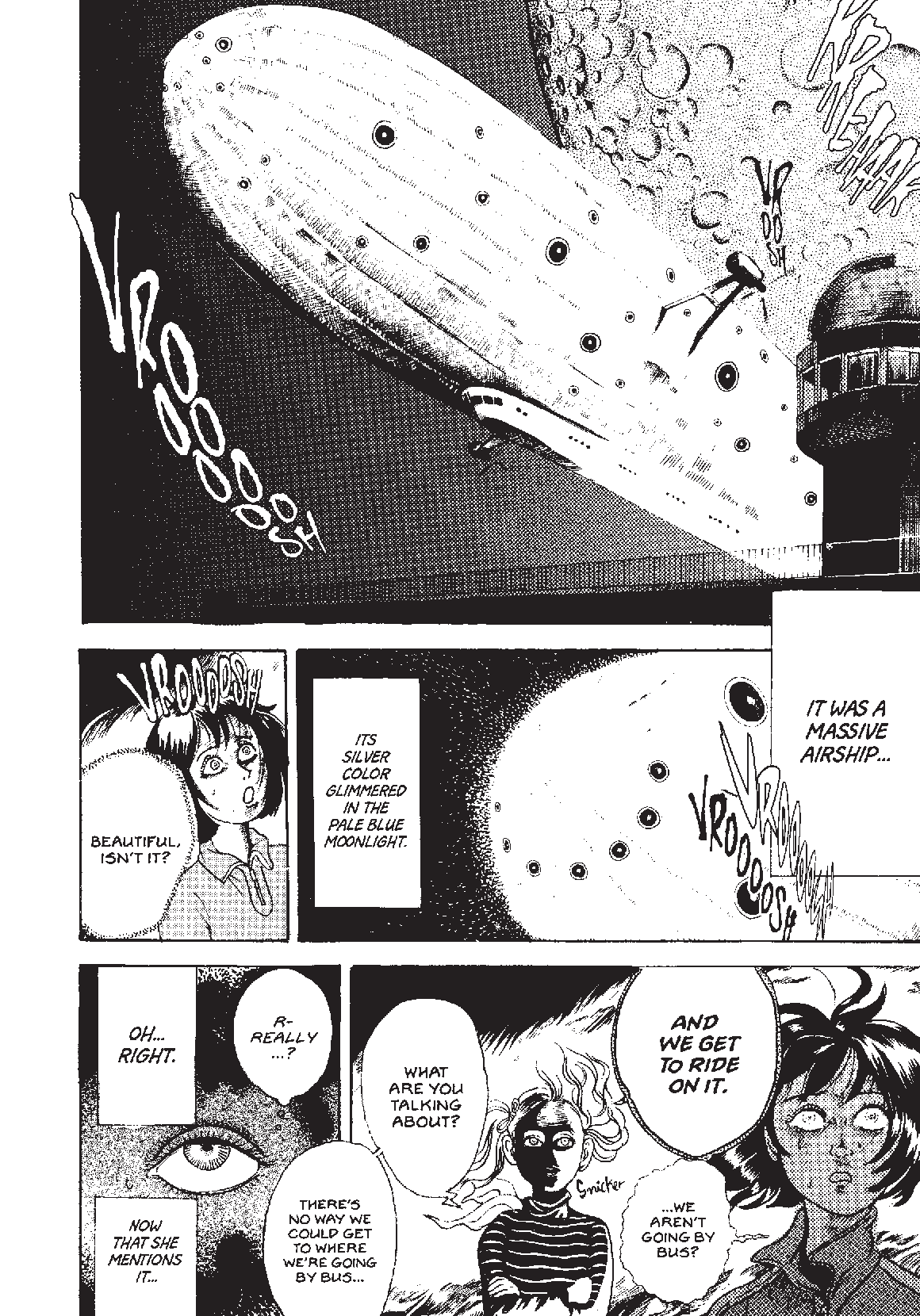
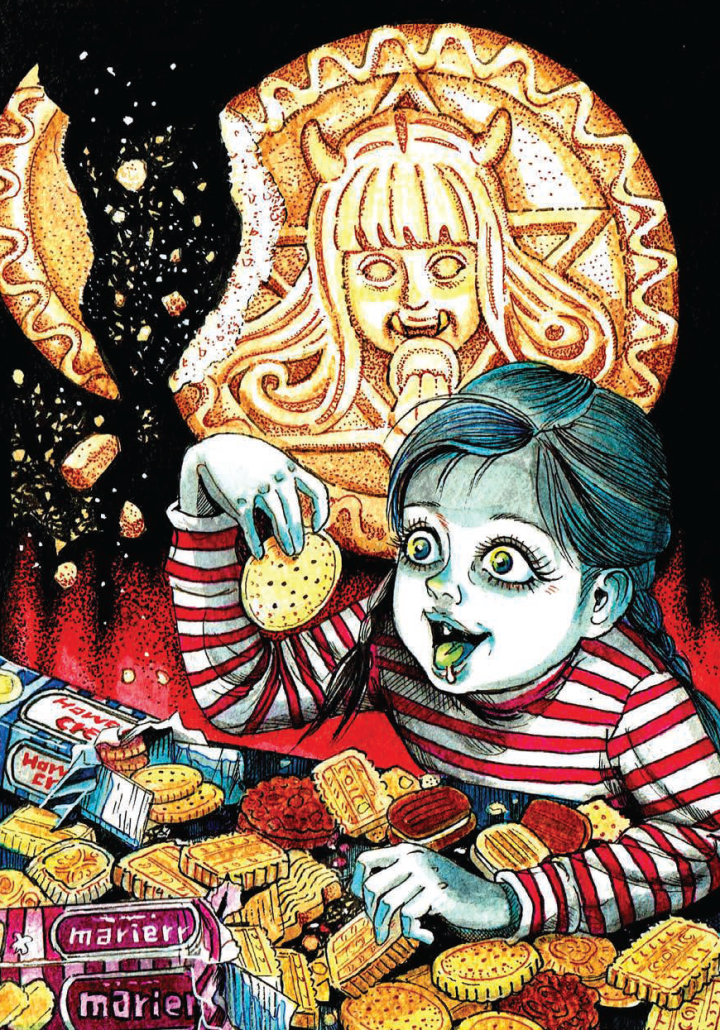 art from The Horrors of Noroi Michiru (Glacier Bay, 2026) by Noroi Michiru
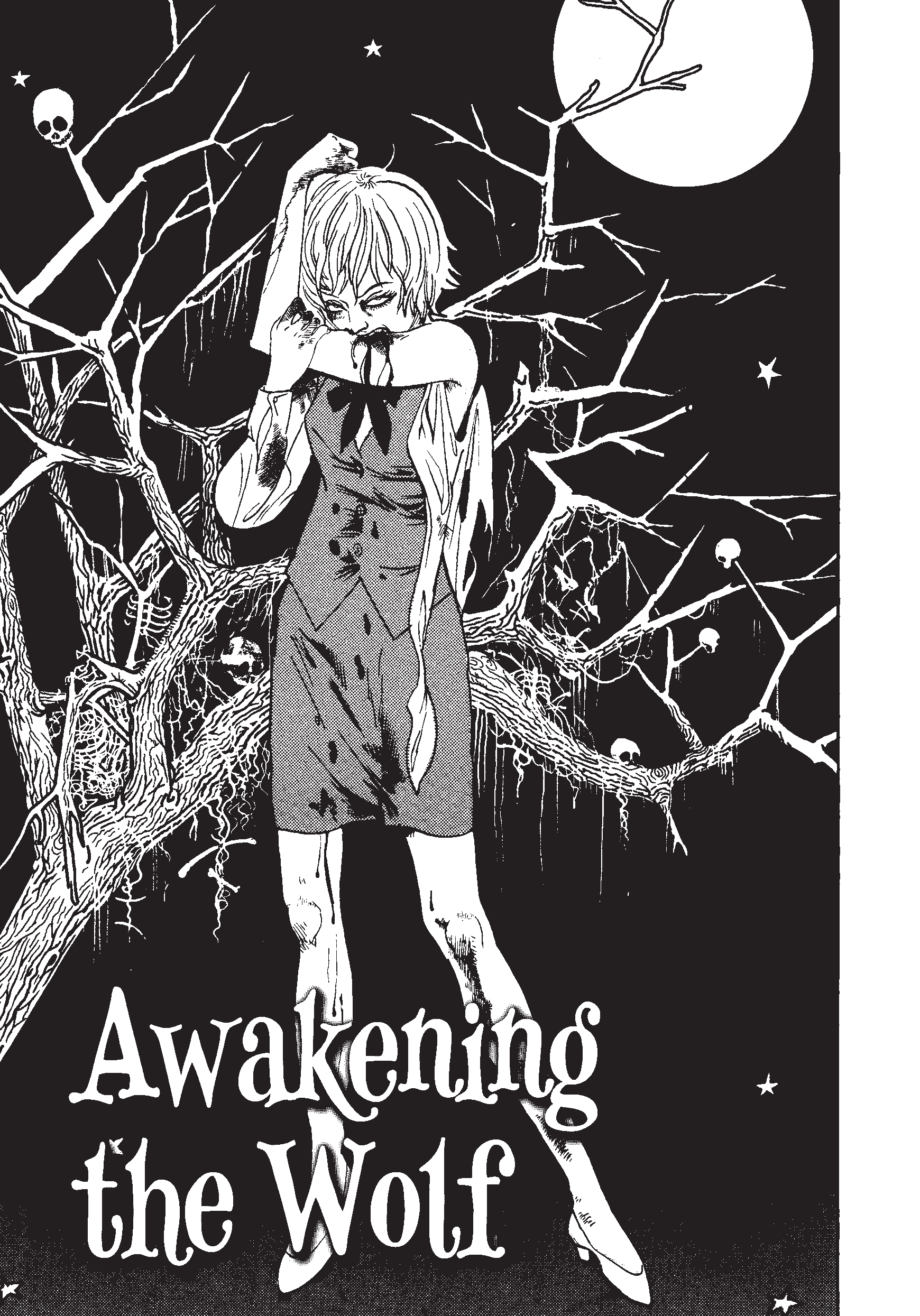
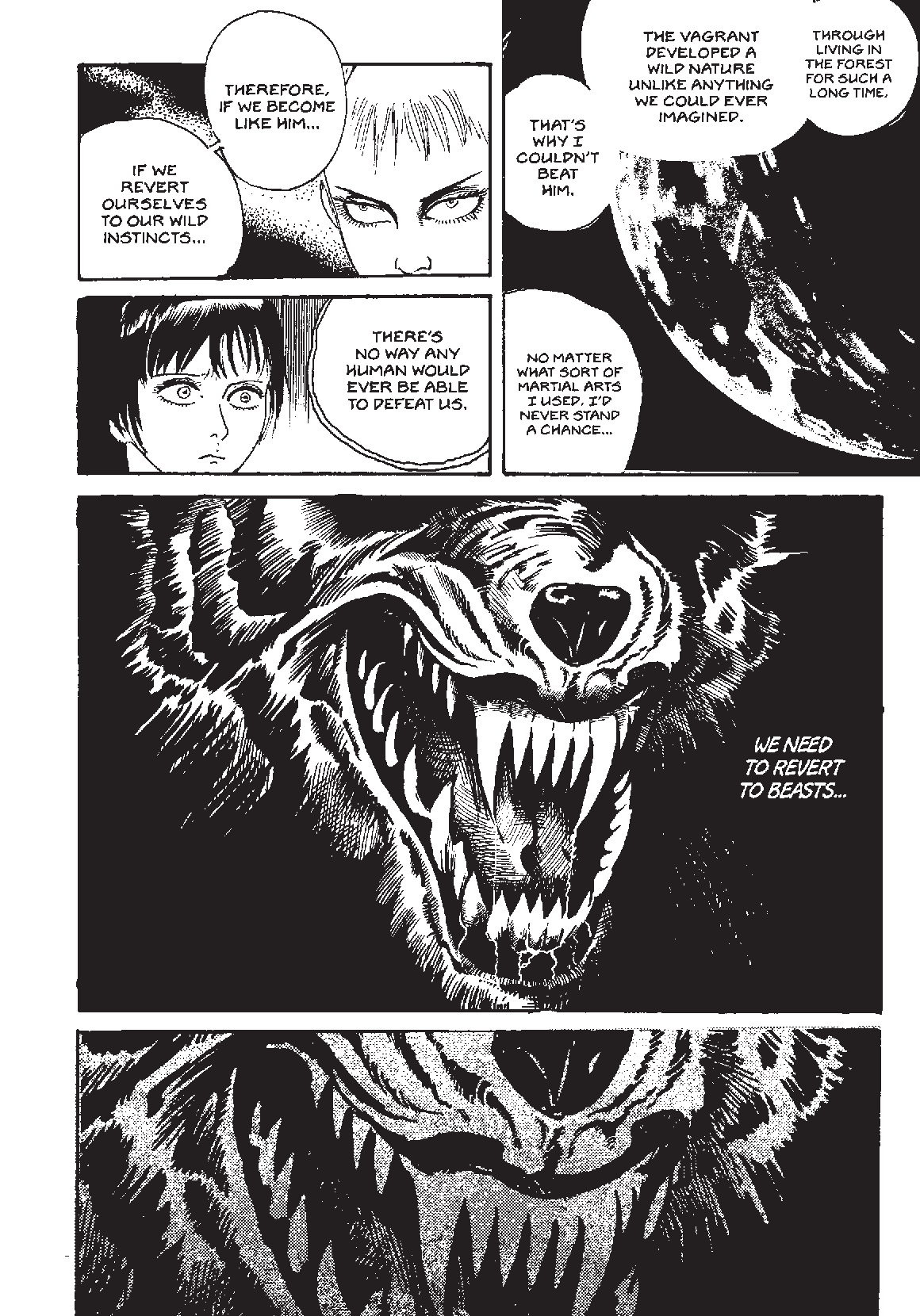
Where Noroi's work shines is its manic pacing and gory body horror, lurid and crude to the point of absurdity. And when it comes to writing psychotic women, Michiru is a master. “The Homunculus Horror” presents a love triangle between a crazed female doctor, her terrified assistant, and the handsome Frankenstein's monster they build, whose good looks and apparently kind heart are balanced by an appetite for human flesh, building to a bizarre climax involving ghosts, centipedes, and what I can only describe as a really scary dick joke. “The Mysteries of Transformation” returns to the dynamic of occult mad scientist and frightened assistant, two sisters attempting practicing dark arts in the night, one less than willingly, this time deflated by reality (and a fair amount of fleeing maggots), leading to the hysterically funny punchline of the the reluctant sister musing “Looks like... god doesn't exist after all.” “Awakening of the Wolf” presents an office lady cursed by “violencephobia” overcoming her cowardace in the face of sexual harrassment through a martial arts self-defense program that teaches her a love of cannibalism. These absurd stories about women driven to obscene and comedic levels of violent retaliation mixed with sexual obsession in the face of their conditions are where Michiru shines, vivid, indelible stories of awesome women and girls who are evil, horny, angry, freaked out and/or dead.
The pinnacle of Noroi's work in this mode is the final, longest story in the collection, actually the earliest work in the book, his debut in horror manga “The Girl in the Clock Mansion.” The story begins as a florid, flowery and lurid yuri romance with schoolgirl Eriko pining for her new classmate Kanare, a waifish little thing -- “she's so beautiful it's almost creepy...” muses Eriko -- with sunken doe eyes and long blonde hair adorned with a western ribbon. Students jealous of Kanare's beauty gossip about her illness and how strange she is, bully her and leave her isolated at her new school. But purehearted Eriko sees the real Kanare, a shy, soft spoken girl who collects clocks, wind-up toys and mechanical curios. A pure girl, free of all that Eriko considers filth. A girl she can love, alone, forever, “best friends to the end.” Without spoiling the frankly astonishing climax too much, things take a turn for the psychotic and grizzly, and although Michiru's afterward mentions a longer first manuscript with “far more grotesque, immoral, and erotic content” what remains is nonetheless captivating and disturbing in its body-shredding extremity. The final page sees the girls fused together with doll parts and motorcycle pieces, laughing maniacally as they thunder down the highway in the open air, madly affirmed in their love for one another. It's exhilarating much like how the end of Tetsuo: The Iron Man is exhilarating, a vile yet erotic, fatal yet liberating climax, an ode to love and hyperviolence, where girls survive patriarchy by way of enjoying fucked up shit. And that's what horror's all about isn't it? Something nasty for us girls to enjoy when we're feeling down. A gift from the monster, the one hiding in the attic.









 English (US) ·